To save content items to your account,
please confirm that you agree to abide by our usage policies.
If this is the first time you use this feature, you will be asked to authorise Cambridge Core to connect with your account.
Find out more about saving content to .
To save content items to your Kindle, first ensure no-reply@cambridge.org
is added to your Approved Personal Document E-mail List under your Personal Document Settings
on the Manage Your Content and Devices page of your Amazon account. Then enter the ‘name’ part
of your Kindle email address below.
Find out more about saving to your Kindle.
Note you can select to save to either the @free.kindle.com or @kindle.com variations.
‘@free.kindle.com’ emails are free but can only be saved to your device when it is connected to wi-fi.
‘@kindle.com’ emails can be delivered even when you are not connected to wi-fi, but note that service fees apply.
Current food systems pose risks to both population and environmental health. Reducing the intake of animal-based foods, such as dairy products, and increasing consumption of plant-based foods align with priorities for addressing climate change and promoting overall health. Plant-based alternatives to cow’s milk can be readily substituted for cow’s milk without altering meal patterns and food habits, making them a popular choice among those reducing animal-product consumption. However, plant-based milk alternatives do not necessarily provide the same nutrients as cow’s milk, particularly essential micronutrients like iodine. While national data indicate that the UK is iodine-replete, certain population subgroups (such as pregnant women, women of reproductive age, and vegans) remain at risk of iodine deficiency. Young women are more likely than other age groups to consume plant-based milk alternatives, heightening public health concerns about iodine insufficiency in this demographic. Current consumers of plant-based milk alternatives in the UK have lower iodine intake and status compared to consumers of cow’s milk. Population-level effects of replacing milk with plant-based alternatives vary and depend on factors such as the role of plant-based milk alternatives in the diet (i.e. in addition to, or as a replacement for milk), the presence of other iodine sources in the diet, the consumer’s life stage, and whether the alternatives are fortified with iodine. This review examines the literature on plant-based milk alternatives and iodine intake, focusing on implications of this dietary shift and strategies to improve iodine intake in those opting for plant-based milk alternatives in the UK population.
Pineapple cultivation is of economic importance for farmers; however, pineapple production can be affected by pests and diseases. Recently, the presence of mealybugs and pineapple mealybug wilt-associated viruses (PMWaV)-1, -2, and -3 has been reported in the provinces of Satipo and Chanchamayo, in Peru’s central jungle. This study aimed to molecularly identify mealybugs collected from the Hawaiiana cultivar and the MD-2 hybrid in those provinces to determine if they are indeed hosts of the PMWaV-1, -2, and -3. Through amplification and sequencing of the internal transcribed spacer ribosomal genes, the mealybugs were identified as Dysmicoccus brevipes. In the phylogenetic analysis of these D. brevipes, Peruvian isolates were associated with isolates from India, China, Taiwan, and Japan. In addition, our results confirmed the presence of PMWaV-1, -2, and -3 in all mealybug specimens collected from both the Hawaiiana cultivar and the MD-2 hybrid tested, with these PMWaVs showing a 99% sequence identity with others recently reported in Peru. Therefore, D. brevipes is a host and probable vector of PMWaV-1, -2, and -3 for the cultivar Hawaiiana and the hybrid pineapple MD-2 in Satipo and Chanchamayo, Peru. Based on these findings and observations of crop management strategies in these provinces, we recommend integrated management practices to control this pest.
In this paper, we dissect how different regimes of labour were crucial to the success of the British and Brazilian expeditions which observed the 1919 total solar eclipse in Príncipe and Sobral. We connect regimes of labour with degrees of invisibility and discuss plausible justifications for various absences/presences in the written records. We discuss reasons for the inclusion of Cottingham, the artisan–technician expert on clockwork mechanisms, into the teams; the entanglements of forced labour with scientific and technical work in Príncipe; and the various regimes of labour in place at Sobral. We argue that the impact of various regimes of labour in Príncipe and Sobral cannot be confined to the provision of infrastructural support, but include critical location choices, the possibility of scientific success during the observations themselves, and the processing of plates following observations.
This paper presents the design and experimental validation of a robust flight control strategy for quadrotor unmanned aerial vehicles (UAVs) based on the Interconnection and Damping Assignment Passivity-Based Control (IDA-PBC) methodology. The proposed approach is specifically tailored to the Parrot Bebop 2, a commercial UAV. The IDA-PBC control law is derived using the Hamiltonian model of the UAV dynamics obtained from experimental data to represent the dynamics of all six degrees of freedom, including translational and rotational motions. The control strategy was validated through numerical simulations and experimental tests conducted in an indoor flight setup using MATLAB, Robot Operating System, and an OptiTrack motion capture system. Numerical and experimental results demonstrate that the controller effectively tracks desired flight trajectories, ensuring stable and robust performance.
The descriptive representation of stigmatized groups has numerous benefits both to group members and society at large. We study the extent to which LGB members of the US Congress provide increased support for LGBT rights. While LGBT substantive representation has been studied extensively, descriptive representation has been examined extensively at only the local and state levels. The absence of research at the federal level is important because federal policy is essential to expanding gay rights. We overcome issues related to the small number of openly LGBT Members of Congress and the few bills either introduced or receiving votes by examining LGB legislators over 24 years (i.e., 6,425 legislator–Congress pairs) using Human Rights Campaign scores. Using Coarsened Exact Matching, we find a substantively small but statistically significant and consistently positive effect: LGB members of Congress are more supportive of LGBT rights than other members with a similar background and from a similar district. The use of matching may provide a useful approach for scholars who are interested in studying the link between descriptive and substantive representation for other small groups.
The Publicity Department of the Austrian Fatherland Front served the Ständestaat regime (1933–38). An elaborate organization on paper, the Fatherland Front's actual work was bound up in the performance of para-fascism and the surveillance of opposing parties. Each of these modes of being mutually reinforced the need for the other and created a unique self-awareness of failure within the movement. As such, the Publicity Department offers a microcosm of the larger challenges of the Ständestaat, which faltered in the face of economic collapse, political violence, and a population largely indifferent to its attempt to secure Austrian sovereignty in the 1930s.
The migratory phase is a critical time for Fasciola hepatica as it must locate, penetrate and migrate through the alimentary tract to the liver parenchyma whilst under attack from the host immune response. Here, scanning and transmission electron microscopy were used to monitor the in vitro effects of sera (with, and without, complement depletion) on F. hepatica newly excysted juveniles (NEJs) and flukes recovered at 7, 35, 70 and 98 days post infection (dpi) from the liver and bile ducts of rats. Test sera were from these F. hepatica-infected rats. A F. hepatica NEJ-specific rabbit antiserum was also used. All fluke stages demonstrated release of the tegumental glycocalyx and microvesicles and intense activity within the tegumental syncytium characterized by eccrine secretion of T-0/T-1/T-2 secretory bodies with subsequent microvillar formation and shedding of microvesicles from the apical plasma membrane. Exposure of both NEJs and 35 dpi flukes to 35 and 70 dpi rat sera produced significant amounts of eccrine-derived secretory material and putative attached immunocomplex. Rabbit anti-F. hepatica NEJ-specific antiserum produced similar responses at the NEJ tegument, including binding of putative immunocomplex to the surface, but with additional blistering of some regions of the apical plasma membrane. Our data suggest that immune sera stimulates multiple interrelated secretory mechanisms to maintain the integrity of the tegumental barrier in response to immune attack. Concurrent release of microvesicles may also serve to both divert the immune response away from the fluke itself and permit delivery of immunomodulatory cargo to immune effector cells.
Through a series of example research studies, we illustrate processes in translating case report forms to increase language diversity in study populations while simultaneously highlighting implications for data collection and analyses. The Northwestern University Data Analysis and Coordinating Center manages the translation of participant-facing study documents into languages other than English through a process that has been refined over several years, adjusting for changes in technical capabilities in electronic case report forms. This approach to manage, examine for context, and implement certified case report form translations offers an efficient workflow to streamline data capture in multiple languages.
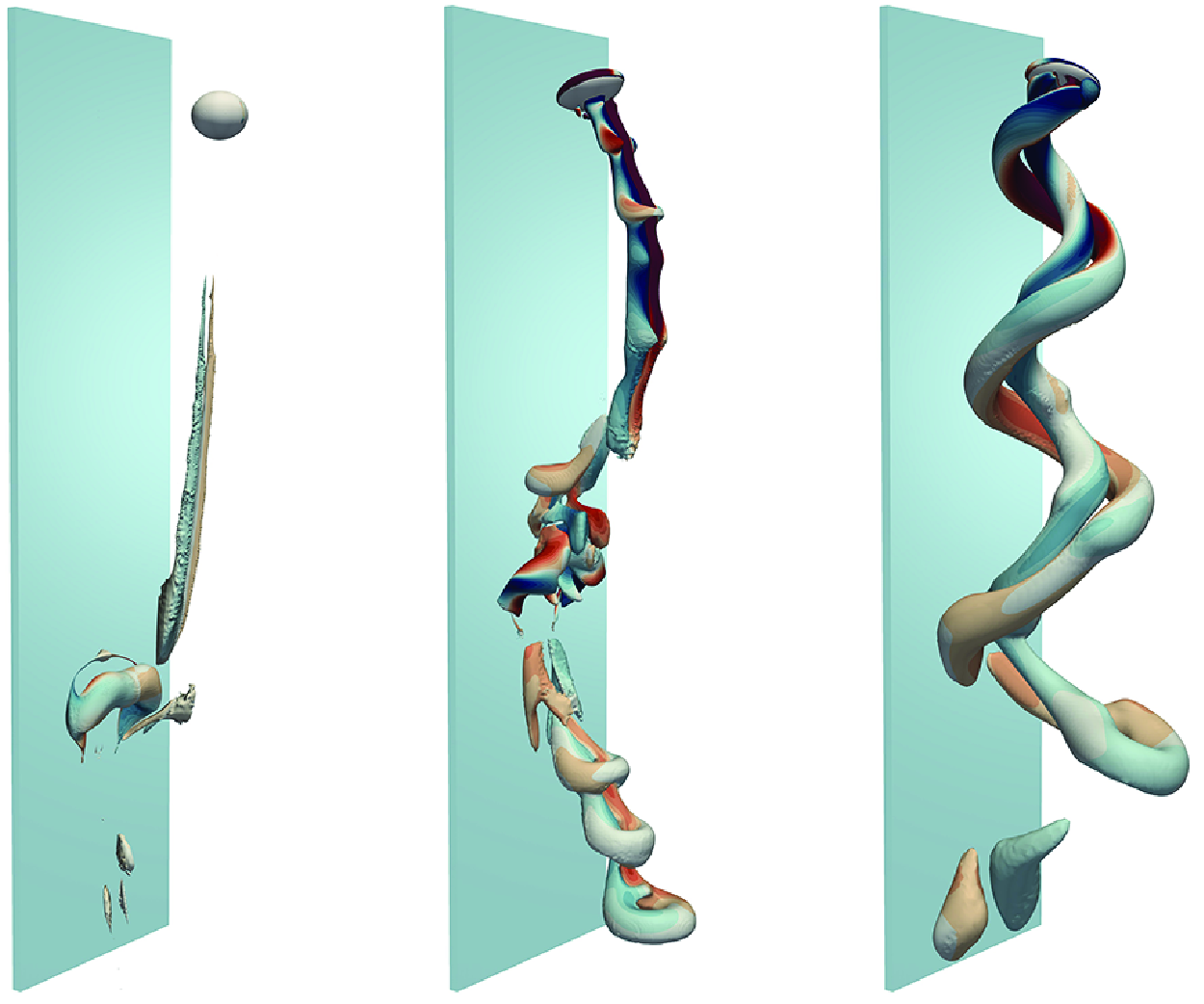
The fate of deformable buoyancy-driven bubbles rising near a vertical wall under highly inertial conditions is investigated numerically. In the absence of path instability, simulations reveal that, when the Galilei number, $Ga$, which represents the buoyancy-to-viscous force ratio, exceeds a critical value, bubbles escape from the near-wall region after one to two bounces, while at smaller $Ga$ they perform periodic bounces without escaping. The escape mechanism is rooted in the vigorous rotational flow that forms around a bubble during its bounce at high enough $Ga$, resulting in a Magnus-like repulsive force capable of driving it away from the wall. Path instability takes place with bubbles whose Bond number, the buoyancy-to-capillary force ratio, exceeds a critical $Ga$-dependent value. Such bubbles may or may not escape from the wall region, depending on the competition between the classical repulsive wake–wall interaction mechanism and a specific wall-ward trapping mechanism. The latter results from the reduction of the bubble oblateness caused by the abrupt drop of the rise speed when the bubble–wall gap becomes very thin. Owing to this transient shape variation, bubbles exhibiting zigzagging motions with a large enough amplitude experience larger transverse drag and virtual mass forces when departing from the wall than when returning to it. With moderately oblate bubbles, i.e. in an intermediate Bond number range, this effect is large enough to counteract the repulsive interaction force, forcing such bubbles to perform a periodic zigzagging-like motion at a constant distance from the wall.
StopAsianHate protests arose in the West during the COVID-19 pandemic, opposing a perceived increase in hate incidents directed against Asians in general and Chinese people in particular. These events raise a question: what is the nature of attitudinal biases about Chinese people in the English-speaking world today? Here, we seek answers with AI and big data. Using BERT language models pre-trained on massive English-language corpora (books, news articles, Wikipedia, Reddit and Twitter) and a new method for measuring natural-language propositions (the Fill-Mask Association Test, FMAT), we examined three components of attitudinal biases about Chinese people: stereotypes (cognitive beliefs), prejudice (emotional feelings) and discrimination (behavioural tendencies). The FMAT uncovered relative semantic associations between Chinese people and (1) cognitive stereotypes of low warmth (less moral/trustworthy and less sociable/friendly) and somewhat low competence (less assertive/dominant but equally capable/intelligent); (2) affective prejudice of contempt (vs admiration); and (3) behavioural discrimination of active/passive harm (vs help/cooperation). These findings advance our understanding of attitudinal biases towards Chinese people in the English-speaking world.
Leopard seals (Hydrurga leptonyx) lead solitary lives, mainly associated with sea ice, and they are parasitized by the sucking louse Antarctophthirus ogmorhini, one of the few known marine insects and probably the only group adapted to survive in deep-ocean environments. A challenge for seal lice is that their eggs do not survive underwater, requiring them to complete their life cycle during the host’s reproductive or moulting season. We investigated the infestation parameters of A. ogmorhini in leopard seals on the Danco Coast, Antarctic Peninsula, estimating prevalence and mean abundance, comparing by sex, age class and interannual variability and determining the relationship between these parameters and the body condition of the seals. Over four field seasons (2014, 2015, 2019 and 2020), we collected data from 50 seals: 12 females and 38 males, including 47 adults and 3 juveniles. The overall prevalence (14%) was the lowest recorded for an Antarctic seal, with higher rates in juveniles (33.3%) than adults (12.8%) and in males (15.8%) compared with females (8.3%). Generalized linear models analysis, considering body condition and interannual variability, did not reveal a strong correlation between body condition and lice infestation. Although no strong correlation was found, there is some indication that seals in poorer condition may be more heavily infested.
Among the less considered ‘conversions’ of the Confessions is the conversion of grief. The Confessions traces how Augustine learns to grieve justly and with hope. Augustine’s grief in book four is presented in stark contrast to his grief in book nine. In many ways, these two books serve as a counter image of each other. The striking narrative similarities that Augustine presents between the death of his boyhood friend in book four and that of his mother in book nine serve, however, to highlight the significant differences that Augustine wants to accent between these two experiences of death and grief. Holding these two scenes next to each other allows us to witness another profound conversion of the Confessions, namely, how Augustine learns to grieve profound loss in hope.
What is persuasion and how does it differ from coercion, indoctrination, and manipulation? Which persuasive strategies are effective, and which contexts are they effective in? The aim of persuasion is attitude change, but when does a persuasive strategy yield a rational change of attitude? When is it permissible to engage in rational persuasion? In this paper, I address these questions, both in general and with reference to particular examples. The overall aims are (i) to sketch an integrated picture of the psychology, epistemology, and ethics of persuasion and (ii) to argue that there is often a tension between the aim we typically have as would-be persuaders, which is bringing about a rational change of mind, and the ethical constraints which partly distinguish persuasion from coercion, indoctrination, and manipulation.
Hydrogen, a deceptively simple element, plays crucial roles in regulating life on Earth. The concentration of hydrogen ions (H+) determines the pH of biological systems and dictates virtually all biochemical processes. The pH modulates the structure, physicochemical properties and function of most macromolecules. The plant cell surface is characterized by tremendous variations in apoplastic pH, serving as informative signals shaping plant development and its interaction with the environment. Here, we discuss the principles underlying cell surface H+ homeostasis, the molecular tipping points that regulate fast, controlled and informative changes in apoplastic pH, as well as open questions regarding the regulation of plasma membrane H+-ATPases.
This study aimed to assess the surgical and patient reported outcomes for monocanalicular and bicanalicular silicone stent insertion in endoscopic dacryocystorhinostomy for distal nasolacrimal duct obstruction.
Methods
A retrospective cohort study was undertaken for all endoscopic dacryocystorhinostomy cases performed collaboratively by ENT and ophthalmology at Royal Blackburn Hospital.
Results
A total of 60 patients were included in the study. Tubes were used in 95 per cent of cases; 92 per cent reported a positive outcome. Minor post-operative complications occurred in 30 per cent. When further broken down by tube type, success rates were 94 per cent for monocanalicular and 95.5 per cent for bicanalicular stents, however, the difference was not statistically significant. In contrast, the complication rates were 22 per cent for monocanalicular stents and 63.6 per cent for bicanalicular stents, with this difference being statistically significant.
Conclusion
Both monocanalicular and bicanalicular stents showed similar high surgical success rates. However, monocanalicular stents were better tolerated by patients and associated with fewer complications.
Ketamine exerts potent but transient antidepressant effects in treatment-resistant depression (TRD). Combinations of ketamine and psychotherapy have attracted interest, but no trial has investigated a psychedelic model of ketamine–psychotherapy for TRD to our knowledge.
Aims
This secondary analysis of a randomised clinical trial (RCT) explores the therapeutic effects and experiential mechanisms of the Montreal Model of ketamine–psychotherapy for TRD, with or without music.
Method
A two-centre, single-blinded, RCT conducted in Montreal, Canada, between January 2021 and August 2022 (NCT04701866). Participants received ketamine–psychotherapy for TRD – six subanaesthetic infusions over 4 weeks and psychological support – with either music or matched non-music support during ketamine doses, as per random group assignments. The primary therapeutic outcome was the Montgomery–Åsberg Depression Rating Scale, assessed by blinded raters. Psychedelic-like experiences, evaluated by the Mystical Experience Questionnaire and Emotional Breakthrough Inventory, and their session-by-session relationships with depression were explored with multilevel, time-lagged covariate models with autoregressive residuals.
Results
Thirty-two participants with severe and highly comorbid TRD, including high rates of personality disorder and suicidality, received 181 ketamine infusions. Therapeutic outcomes and psychedelic experiences did not differ between music (n = 15) and non-music (n = 17) interventions. Both groups experienced significant reductions in clinician-rated and self-reported depression (d = 1.2 and d = 0.87, respectively; p < 0.001), anxiety (d = 0.8, p < 0.001) and suicidality (d = 0.4, p < 0.05) at 4 weeks, fully maintained at 8-week follow-up. Ketamine experiences were highly emotional and mystical. Converging analyses supported mystical-like ketamine experiences as mechanisms of its antidepressant effects.
Conclusions
This trial found large and notably sustained benefits of ketamine–psychotherapy for severe TRD, with or without music, and psychedelic experiences of comparable intensity to those observed with psilocybin. Mystical-like experiences may particularly contribute to ketamine’s immediate and persistent psychiatric benefits.
Submarine melting is one of the major mechanisms of ice loss from marine-terminating glaciers and ice shelves, but its contribution is yet to be fully understood. Here, we demonstrate the feasibility of monitoring melting using passive underwater acoustics, by sensing the loud crackling sound produced during melting due to the release of pressurised ice-trapped bubbles. We profile the acoustic field in glacial bays in Svalbard using a hydrophone array and show that the sound level in the bay contains clues on the melt activity. The sound level’s interpretation is hindered by its spatial variability, which we suppress using a model of melt-induced acoustic activity. Thereby, we show that the sound generated at the glacier terminus is correlated with the ablation rate at the calving glacier front and the water temperature and thus linked to the melt rate. This marks a step forward in using passive acoustics to monitor submarine melt, paving the way for an autonomous, long-term, large-scale monitoring tool providing data that can inform assessments and simulations of ice sheet loss and sea level rise.