To save content items to your account,
please confirm that you agree to abide by our usage policies.
If this is the first time you use this feature, you will be asked to authorise Cambridge Core to connect with your account.
Find out more about saving content to .
To save content items to your Kindle, first ensure no-reply@cambridge.org
is added to your Approved Personal Document E-mail List under your Personal Document Settings
on the Manage Your Content and Devices page of your Amazon account. Then enter the ‘name’ part
of your Kindle email address below.
Find out more about saving to your Kindle.
Note you can select to save to either the @free.kindle.com or @kindle.com variations.
‘@free.kindle.com’ emails are free but can only be saved to your device when it is connected to wi-fi.
‘@kindle.com’ emails can be delivered even when you are not connected to wi-fi, but note that service fees apply.
One common approach to solve multi-objective reinforcement learning (MORL) problems is to extend conventional Q-learning by using vector Q-values in combination with a utility function. However issues can arise with this approach in the context of stochastic environments, particularly when optimising for the scalarised expected reward (SER) criterion. This paper extends prior research, providing a detailed examination of the factors influencing the frequency with which value-based MORL Q-learning algorithms learn the SER-optimal policy for an environment with stochastic state transitions. We empirically examine several variations of the core multi-objective Q-learning algorithm as well as reward engineering approaches and demonstrate the limitations of these methods. In particular, we highlight the critical impact of the noisy Q-value estimates issue on the stability and convergence of these algorithms.
In this article, we examine the determinants of citizens’ democratic preferences in federal states with politically significant national or linguistic diversity. Using original survey data from Belgium, Canada and Switzerland, we test whether members of national or linguistic minorities prefer different (electoral, direct or deliberative) forms of decision-making than majority members – since some give advantage to them more than others. While we find effects of citizens’ objective and subjective minority-majority position on their democratic preferences, individual-level predictors such as satisfaction with the current functioning of democracy, economic well-being and political ideology remain at least as strong predictors. These findings enrich the literatures on democratic fatigue, reform and innovation by showing that even in states with significant national-linguistic diversity, democratic preferences seem to transcend communities, indicating room for cross-group consensus. Yet, since group-level factors have some relevance, democratic reforms need to pay attention to them to be inclusive of all societal segments.
Over the past two decades, political science has produced varied examples of ethnographic approaches. These approaches have not only tackled epistemological dilemmas but also exposed a second methodological dimension of ethnographic practice that is not so systematically explored: the relationship of researchers to their research participants. In this article, we focus on this second dimension, using emblematic texts in political science, especially in comparative politics, to develop a fourfold typology of political ethnographies that takes into account the emotional dynamics between researchers and participants. We use this typology to analyze various gradations through which these emotional dynamics develop in fieldwork. Focusing on the navigation between distance and proximity that these dynamics entail, we propose the concept of “emotional proximity” to capture relations between the researcher and the participant. We investigate the validity of this novel typology by applying it to ethnographic studies of far-right actors. The political distance separating researchers and participants in these studies allows us to investigate the methodologies of disconnecting political from emotional dynamics across this fourfold schema of ethnographic varieties. We argue that the “infidelity” of emotional distance (instead of proximity) is not an objectivist epistemological necessity but a methodological tool that is indispensable to the practice of participant observation.
In natural speech, phonetic cues that distinguish lexical items can be hyperarticulated when there is a minimal pair competitor, a process known as contrastive hyperarticulation. Building upon prior work, this article examines the cue-specific nature of contrastive hyperarticulation in Japanese, focussing on stop voice onset time (VOT) using a speech corpus. We confirmed that the existence of a voicing minimal pair competitor in the lexicon triggers hyperarticulation of VOT duration on the target segment (shorter for voiced stops and longer for voiceless stops), while other contrasts (singleton vs. geminate) did not. The results also suggest that contrastive hyperarticulation (a) is more compatible with casual speech than slow/clear speech, (b) is sensitive to position in a word (greater in word-initial position than in non-initial position) and (c) applies to a greater degree in Japanese than in English due to properties of stops. This provides further evidence that the phonetic specificity of contrastive hyperarticulation is cross-linguistically relevant.
Tell settlements often provide a unique window into prehistoric lifeways due to remarkable preservation and safeguarding from modern disturbances. Vésztő-Mágor in Hungary is one such tell with stratigraphy, features and finds that reflect thousands of years of prehistoric settlement. In 2021, the Vésztő-Mágor Conservation and Exhibition Program began the work of stabilizing, documenting and preserving prehistoric deposits, features and artefacts exposed in an in situ exhibition trench at Vésztő-Mágor. In the process, an exceptionally well-preserved carbonized item was discovered embedded in a series of Middle Bronze Age house floors. We describe the object and context of discovery, and interpret it as matting inside a wattle-and-daub house. We expand our discussion to similar contexts known from Vésztő-Mágor, in the Carpathian Basin, and beyond, to highlight the technologies involving organic materials used at prehistoric tell sites and their significance for understanding lifeways at these settlements.
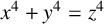
In this paper, we generalise to the family of Fermat quartics $X^4 + Y^4 = 2^m, m \in \mathbb {Z}$, a result of Aigner [‘Über die Möglichkeit von $x^4 + y^4 = z^4$ in quadratischen Körpern’, Jahresber. Deutsch. Math.-Ver.43 (1934), 226–228], which proves that there is only one quadratic field, namely $\mathbb {Q}(\sqrt {-7})$, that contains solutions to the Fermat quartic $X^4 + Y^4 = 1$. The $m \equiv 0 \pmod 4$ case is due to Aigner. The $m \equiv 2 \pmod 4$ case follows from a result of Emory [‘The Diophantine equation $X^4 + Y^4 = D^2Z^4$ in quadratic fields’, Integers12 (2012), Article no. A65, 8 pages]. This paper focuses on the two cases $m \equiv 1, 3 \pmod 4$, classifying for $m \equiv 1 \pmod 4$ the infinitely many quadratic number fields that contain solutions, and proving for $m \equiv 3 \pmod 4$ that $\mathbb {Q}(\sqrt {2})$ and $\mathbb {Q}(\sqrt {-2})$ are the only quadratic number fields that contain solutions.







Meaning-making in psychotic experiences may affect mental health recovery by influencing the degree to which a person experiences Meaning in Life (MIL). However, how meaning made in such experiences impacts MIL is poorly understood. We aimed to explore how service users engage in meaning-making in their experience of a first-episode psychosis (FEP) (as well as subsequent and current psychotic experiences), and to identify if and how this meaning has influenced their current perspective on MIL.
Methods:
The study aim was addressed using Interpretative Phenomenological Analysis (IPA). We used purposive maximum variation sampling and conducted semi-structured interviews with 16 members of an epidemiologically complete FEP incidence cohort in the Republic of Ireland. Data analysis was guided by IPA procedures.
Results:
We found psychotic experiences both contributed to and eroded MIL but also created memory blanks, blocking the process of meaning-making. Meaning-making in psychotic experiences involved: Living with the impact of psychosis on the self and identity (Survival); Reconnecting with time to move forward in time (Restoring temporality); Navigating agency and powerlessness in chaos (Reclaiming control); Generating Meaning in Life in a vacuum (Presence in absence); and Trying to find a home for psychosis or not needing to (Narrative re-storying).
Conclusions:
Findings challenge current meaning-making theory; suggesting that it may not be fully applicable to the lives of people experiencing psychosis. Our data also have implications for the implementation of trauma informed care, the recovery approach in mental health, clinical practice, and research.
Existing measures of Actively Open-Minded Thinking (AOT) primarily assess the acceptance of rational thinking norms and standards, rather than actual thinking and resulting behavior. These scales can be susceptible to impression management, often yield inflated scores, and may not accurately capture how individuals think in real-life contexts. To address these limitations, we developed and validated a novel Situational Judgment Test for Actively Open-Minded Thinking (AOT-SJT), designed to assess behavioral tendencies related to AOT in realistic scenarios. AOT is conceptualized as the disposition to consider alternative viewpoints, seek disconfirming evidence, and revise beliefs in light of new information. Across 4 studies, we constructed and refined the AOT-SJT using scenarios that simulate everyday decision-making. In Study 1, we tested initial items among Croatian participants, resulting in a 13-item measure with solid psychometric properties. Study 2 confirmed the test’s convergent validity with cognitive and personality constructs and its predictive power for different forms of rational thinking. In Study 3, new items were introduced to enhance construct coverage, particularly around evidence search direction. Study 4 extended validation to an English-speaking sample, supporting cross-linguistic applicability, although effect sizes related to convergent validity were somewhat lower than before. Findings across studies show that the AOT-SJT aligns with theoretical expectations, demonstrates solid convergent validity with existing AOT scales, and effectively distinguishes levels of open-mindedness. By measuring behavioral intentions rather than standards acceptance, the AOT-SJT offers an externally valid assessment of AOT.
Suicidal thoughts and behaviours (STBs) are common within healthcare systems. Diagnosing and treating them is challenging for healthcare professionals. Therefore, the way they respond to patients’ STBs constitutes regular grounds for complaints filed against them. Studies on disciplinary complaints regarding STBs are scarce and thus far have exclusively focused on death by suicide and primarily investigated psychiatrists.
Aims
To gain more insight into disciplinary law cases concerning patients’ STBs in The Netherlands.
Method
A total of 108 public cases between 2010 and 2021 were codified and analysed.
Results
Most complaints concerned undertreatment and insufficient involvement of the patient’s relatives or other healthcare professionals. Nearly half of the complaints were filed against psychiatrists.
Conclusions
Overall, compared with the number of health professionals in The Netherlands, risk of litigation appeared to be very low. Further research could be conducted on the discrepancy between the number of founded and unfounded complaints in first-instance and appeal cases.
To describe the antimicrobial management of and examine the etiology of intracranial suppurative infections (ISIs) at a single pediatric institution.
Design:
Retrospective review.
Patients:
We included children hospitalized at a 367-bed freestanding pediatric institution for treatment of an ISI (epidural or subdural empyema, brain abscess) between January 1, 2015, and September 30, 2023. ISIs were identified using international classification of diseases 9/10 discharge diagnosis codes.
Methods:
We collected data regarding patient characteristics, infection etiology and complications, antimicrobial choice and route (empiric, definitive, and outpatient), microbiology results, treatment duration, and treatment-related outcomes from the electronic health record.
Results:
A total of 72 patients met inclusion criteria. Most patients received a third- or fourth-generation cephalosporin, metronidazole, and vancomycin empirically (69.4%), while a third- or fourth-generation cephalosporin in combination with metronidazole was the most common definitive regimen (63.9%). Almost half of patients (44%) were transitioned to an entirely oral antibiotic regimen, after a median of 27 days of intravenous therapy. The median duration of antimicrobial therapy was 45 days (interquartile range = 33,56). Organisms in the Streptococcus anginosus group were the most common pathogens identified (62.5%). Treatment-related complications occurred in 12 (16.7%) patients.
Conclusions:
Empiric therapy targeting resistant gram-positive organisms was not required to treat ISIs at our institution. Further data are needed on timing and requirements for oral antibiotic transition and treatment duration. In the future, there is opportunity for multi-institutional collaboration and data-sharing to determine the most appropriate management of pediatric ISIs.
Catatonia, a neuropsychiatric syndrome, can be associated with inflammatory conditions of the central nervous system.
Aims
To explore steroid-responsive catatonia with possible autoimmune origins.
Method
A retrospective investigation was conducted of clinical and paraclinical features, including imagining, serum, and cerebrospinal fluid findings in ten patients presenting with subacute onset catatonia and treated with steroid pulse therapy between January 2022 and January 2024.
Results
A retrospective chart review identified ten patients (of a total of 56) with steroid-responsive subacute onset catatonia. Catatonia types varied. All patients were positive for delirium and psychotic symptoms. Imaging and cerebrospinal fluid results indicated non-specific signs of central nervous system inflammation. Intravenous 1 g methylprednisolone pulse therapy resulted in complete remission in all patients. Autoantibodies for limbic and paraneoplastic encephalitis were negative for all patients. None of the patients fulfilled the criteria for definite autoimmune encephalitis or autoantibody-negative probable autoimmune encephalitis.
Conclusions
Diagnosis of autoimmune catatonia is challenging without autoantibody markers, but steroid responsiveness, combined with clinical and paraclinical features, may suggest an autoimmune mechanism.
Numerical studies on the statistical properties of irregular waves in finite depth have to date been based on models founded on weak nonlinearity; as a consequence, only lower-order (usually third-order) nonlinear interactions have thus far been investigated. The present study performs numerical simulations with a fully nonlinear, spectrally accurate model to investigate the statistics of irregular, unidirectional wave fields in finite water depth initially given by a Texel, Marsen and Arsloe spectrum. A series of random unidirectional wave fields are considered, covering a wide range of water depth. The wave spectrum and statistical properties, including the probability density function of the surface elevation, exceedance probability of wave crests and occurrence probability of extreme (rogue) waves, are investigated. The importance of full nonlinearity in comparison with third-order results is likewise evaluated. The results show that full nonlinearity increases kurtosis and enhances the occurrence probability of large wave crests and rogue waves substantially, in both deep water and finite water depth. Therefore, we propose that full nonlinearity may contribute significantly to the formation of rogue waves. Furthermore, to account for the effects of higher-order nonlinearity on modulational instability, we analyse the relationship between the Benjamin–Feir index (BFI) and maximal excess kurtosis. Our results show a strong linear relationship i.e. $({\mathcal{K}}_{max}-3)\propto {\textrm{BFI}}$, in contrast to $({\mathcal{K}}_{max}-3)\propto {\textrm{BFI}}^2$ based on the assumptions of weak nonlinearity, a narrow-banded spectrum and deep-water conditions. Above, $\mathcal{K}_{max}$ is the maximal kurtosis.
According to the traditional conception of epistemic responsibilist virtue, virtuous traits are evaluatively and conceptually primary. Virtuous acts are derived from, or proceed from, virtue. If an agent performs an act based on good epistemic motives but does not possess the virtue, it is merely an act that a virtuous agent would perform, but is not itself virtuous. In contrast, according to the view I propose and call Act First Responsibilism (AFR), virtuous acts are evaluatively and conceptually primary. Acts based on good motives are virtuous regardless of whether they issue from a virtuous trait. The possession of a virtuous trait is defined derivatively in terms of the performance of virtuous acts. With the new dispositional model of virtues I propose, AFR provides the metaphysical foundation for taking virtuous acts as evaluatively and conceptually primary. I argue that AFR is not normatively slight, meets the demands of an exemplarist virtue theory, and fares better than the traditional view in explaining, predicting, understanding, and evaluating an agent, as well as considering someone worthy of imitation.
To evaluate the impact of telemedicine on the workload of primary care physicians (PCPs).
Background:
Telemedicine, including video visits, telephone visits, and digital correspondence, is increasingly offered by physicians, particularly since the COVID-19 pandemic. It is still unclear whether increasing the variety of services creates an increase in demand and therefore causes an increase in the workload of PCPs. In this study.
Methods:
A population-based descriptive study, conducted during the 2020–2021 period, on a cohort of 464,119 patients, all members of Leumit Health Services and without a diagnosis of COVID-19. The patients were stratified into three distinct groups based on the nature of their healthcare visits: Patients who used only face-to-face (FTF) visits; Patients who used asynchronous visits with or without FTF visits but did not use synchronous telemedicine visit; and patients who used synchronous telemedicine visits with or without other types of visits. We performed a comparative analysis on Accumulated Annual Duration of Time (AADT) as an index for workload, across the different periods, using standard descriptive statistics methods.
Findings:
Telemedicine use was higher in older persons, females, those of higher socioeconomic status, and patients with comorbidities. The greater the number of telemedicine visits, the greater the time the PCP spent on visits during the year. The largest increase in AADT (56.1%) was observed in patients who had only FTF meetings in 2020 but in 2021 made all types of visits. Overall, there was an increase of 2.5% in time invested in 2021 and a 5.8% increase in the number of patients making digital visits.
Conclusions:
Policymakers encouraging telemedicine should consider the additional load on PCPs associated with telemedicine use and plan resources accordingly.
The breakdown of liberal hegemony, the rise of the New Right, and the violent realignment of world order have been accompanied by a retreat from traditional humanist concerns in critical international theory, including emancipation, political subjectivity, social totality, universal history, and the anticipatory-utopian dimension of critique. Scholars have identified numerous shortcomings in first-generation and contemporary critical International Relations (IR), and our discipline still questions its purpose and object of study. This article proposes a more radical and realistic approach to critical international theory based on a reappraisal of Andrew Linklater’s oeuvre. It frames the critical project in IR as a Lakatosian research programme and calls for a progressive problem shift that foregrounds what Linklater, drawing from Kant and Marx, calls the necessarily tripartite structure of critical theory. I argue that by tracing an alternative path through classical sources of the tradition, pivoting from Hegel and the deep social relationalism that follows, while integrating a tripartite commitment with a more rigorous reflexive methodology, we can revitalise the emancipatory approach to IR and provide renewed purpose and direction to the discipline. Grounded in a left-Hegelian tradition of thought, the argument aspires to resonate with other critical theoretical traditions both within and beyond IR.
The Avicennan text De congelatione et conglutinatione lapidum had a great influence on the alchemical thought of the thirteenth century. This Latin text disputed both the veracity of alchemy and the possibility of alchemical transmutation by arguing that art is inferior to nature and that the alchemists cannot manipulate a metal because its true characteristics are hidden from our senses; thus an alchemist cannot change something which is unknown to him. Newman’s pioneer studies examined the diffusion and impact of the first Avicennan argument on medieval alchemy and he shed light on the art-versus-nature debate. This paper has a twofold aim: on the one hand it aims to further Newman’s study by focusing on the second Avicennan argument, which is closely related to the problem of substantial form, and on the other hand it aims to show how the aforesaid problem paved the way for the emergence of corpuscularianism, which flourished during the early modern period. In this regard, it will become clear that the historiographical case of alchemy and its problem of substantial form can serve as an exegetical tool for ‘bridging’ the Middle Ages and the early modern period with respect to the relation between Aristotelianism and corpuscularianism.
When we learn that someone holds irrational beliefs, we often respond by reducing our epistemic trust in them. In this paper, I will propose a novel account of such trust reductions. The recently popular relationship-modification account (RMA) of epistemic blame will serve as a foil for this project. RMA says that epistemically blaming others for their epistemic failings involves modifying our epistemic relationships with them, paradigmatically via a reduction of epistemic trust. RMA has recently faced two challenges of extensional inadequacy, which I will show result from a mistaken view about what type of response trust reductions are. I will draw on resources from legal theory to show that trust reductions bear all the hallmarks of so-called non-punitive measures, which serve preventative collective purposes. I will argue for an account of trust reductions as non-punitive epistemic measures that serve the purpose of preventing unreliable informants from negatively affecting the epistemic commons. My account explains when and why it is appropriate to reduce epistemic trust and shows where RMA goes wrong.
This article examines the financial strategies employed by Genoese businessmen in Atlantic Castile during the late fifteenth and early sixteenth centuries, focusing on the relative value of private enterprises. It reveals how the interplay between Castilian market characteristics and the unique financial culture of Genoese merchants predominantly supported short-term and transient economic ventures. These methods significantly reduced the need for centralised corporate structures and redundant accounting procedures, supported by a robust notarial system. Consequently, trading in securities and credit extensions became prominent features of this financial market. The research demonstrates that the widespread use of account money, credit and bills of exchange allowed Ligurians to engage in trade and access markets with flexibility and agility through quantitative and functional economic analyses. It also highlights the importance of various credit arrangements, such as loans, bills of trade, or IOUs, which extend beyond merely deferring payments.
Following the announcement of lunar programs by the US and China in recent years, a new round of lunar competition has commenced. In the absence of effective international regimes, there is a pressing need to develop legal measures to preserve lunar security and safety. Rules on demilitarization and deconfliction are particularly crucial. The 1967 Outer Space Treaty establishes the principles of ‘peaceful purposes’ and ‘exclusively for peaceful purposes’, but their interpretation remains contested. The rise of cislunar space strategies further complicates the application of these principles. Meanwhile, for managing daily operations on the lunar surface, the US-led Artemis Accords propose safety zones to prevent harmful interference. However, non-signatories like China and Russia are not bound by these provisions. As a significant player in the lunar competition, China should contribute to the establishment and improvement of legal measures to ensure lunar security and safety. For lunar demilitarization, China should refine the PPWT draft to address the specific security demands of cislunar space and the Moon. Concurrently, China should actively participate in formulating norms, rules, and principles of responsible behavior to mitigate threats in cislunar space and on the Moon until a universally accepted legally binding treaty is achieved. For lunar deconfliction, considering that the creation of safety zones may become the earliest practice to fulfill the obligation to avoid harmful interference, China needs to coordinate with the US to negotiate detailed rules on the size, scope, nature, behavior, and dispute settlement measures related to safety zones.

