To save content items to your account,
please confirm that you agree to abide by our usage policies.
If this is the first time you use this feature, you will be asked to authorise Cambridge Core to connect with your account.
Find out more about saving content to .
To save content items to your Kindle, first ensure no-reply@cambridge.org
is added to your Approved Personal Document E-mail List under your Personal Document Settings
on the Manage Your Content and Devices page of your Amazon account. Then enter the ‘name’ part
of your Kindle email address below.
Find out more about saving to your Kindle.
Note you can select to save to either the @free.kindle.com or @kindle.com variations.
‘@free.kindle.com’ emails are free but can only be saved to your device when it is connected to wi-fi.
‘@kindle.com’ emails can be delivered even when you are not connected to wi-fi, but note that service fees apply.
Securitization scholars in Canada have investigated how settler-colonial governments discursively construct extractive infrastructure and policing on Indigenous lands as “critical” for Canada’s economic security. Less literature exists about how Indigenous activists through provincial institutions counter colonial securitization discourse and legislation. This article interrogates discourse in the Manitoba Legislature pertaining to three “critical infrastructure” bills presented by the PC government during the fall 2020 and winter 2021 sessions: Protection of Critical Infrastructure Act (Bill 57), Animal Diseases Amendment Act (Bill 62), and The Petty Trespassers Amendment and Occupiers’ Liability Amendment Act (Bill 63). The study combines an analysis of the bills’ debates, drawn from Hansard, with an interview with then-official opposition house leader, Nahanni Fontaine, to explore the interactions between securitization and counter-securitization discourse(s) and defeat of Bill 57. The study hypothesizes that Indigenous MLAs’ counter-securitization discourse reconstructed the bills as attacks on Indigenous ontological, environmental, and physical security.
Economic policy and research rely on the accurate measurement of welfare. In nearly all instances, measuring welfare requires collecting data via long household surveys. If survey response patterns change over the course of a survey to introduce measurement error, this measurement error can be either classical (i.e., changing distributions, leading to noise) or non-classical (i.e., changing expectations, leading to bias). We embed an experiment in a survey by randomly assigning a questionnaire with either the assets module near the beginning of the survey or the assets module at the end of the survey, delaying enumeration of assets by about 60 minutes. We find no evidence in the full sample that survey ordering introduces differential response patterns, either in the number of reported assets or the reported value of those assets. In exploratory analysis of heterogeneity, we find evidence of non-classical measurement error due to survey ordering within sub-samples of respondents who (i) are from larger households or (ii) have low levels of education. Our experimental design can be generalized to serve as an ex-post test of data quality with respect to questionnaire length.
Data-driven neural word embeddings (NWEs), grounded in distributional semantics, can capture various ranges of linguistic regularities, which can be further enriched by incorporating structured knowledge resources. This work proposes a novel post-processing approach for injecting semantic relationships into the vector space of both static and contextualized NWEs. Current solutions to retrofitting (RF) word embeddings often oversimplify the integration of semantic knowledge, neglecting the nuanced differences between relationships, which may result in suboptimal performance. Instead of applying multi-thresholding to distance boundaries in metric learning, we compute taxonomic similarity to dynamically adjust these boundaries during the semantic specialization of word embeddings. Benchmark evaluations on both static and contextualized word embeddings demonstrate that our dynamic-fitting (DF) approach produces SOTA correlation results of 0.78 and 0.76 on SimLex-999 and SimVerb-3500, respectively, highlighting the effectiveness of incorporating multiple semantic relationships in refining vector semantics. Our approach also outperforms existing RF methods in both supervised and unsupervised semantic relationships recognition tasks. It achieves top accuracy scores for hypernymy detection on the BLESS, WBLESS, and BIBLESS datasets (0.97, 0.89, and 0.83, respectively) and an F1 score of over 0.60 on four types of semantic relationship classification in the shared Subtask-2 of CogALex-V, surpassing all participant systems. In the analogy reasoning task of the Bigger Analogy Test Set, our approach outperforms existing RF methods on inferring relational similarity. These consistent improvements across various lexical semantics tasks suggest that our DF approach can effectively integrate distributional semantics with symbolic knowledge resources, thereby enhancing the representation capacity of word embeddings in downstream applications.
Despite worldwide uptake, there has been little published evaluation of actually delivering the World Health Organization (WHO) Mental Health Gap Action Programme (mhGAP) in typical low- and middle-income countries (LMICs). This paper aims to evaluate the impact of a pilot study in which mhGAP guidelines for mental health sensitisation of community leaders were implemented in 1-day training events across 25 urban and rural health facilities (n = 1004 community leaders) in Uganda. A multiple choice mental health questionnaire was used to assess the community leaders’ mental health knowledge before and after completing the training. Training was evaluated across multiple sites and qualitative feedback comments were used to identify key themes on the impact of the training. The sensitisation training was found to be affordable, accessible and effective, and could be replicated in other LMICs and settings with local adaptations.
The Taylor–Melcher leaky dielectric (LD) model is often used to study the physics of electrosprays operating in the cone-jet mode. Despite its success, there are electrospraying conditions in which the ion concentration fields must be retained, which requires an electrokinetic model. This article reproduces cone-jets with two electrokinetic formulations: the standard Poisson–Nernst–Planck (PNP) equations, and a modified electrokinetic (MEK) model that accounts for overscreening and overcrowding of electrolytes, which is important in fluids with high electrical conductivities such as ionic liquids (Kilic et al. 2007 Phys. Rev.E vol. 75, no. 2, 021502, 021503; Bazant et al. 2011 Phys. Rev.Lett. vol. 106, no. 4, 46102). In the case of liquids with low electrical conductivities, it is observed that the LD and PNP models agree under certain limiting conditions, but they are less restrictive than previously proposed (Baygents & Saville 1990 AIP Conf. Proc. vol. 197, 7–17; Schnitzer & Yariv 2015 Fluid Mech. vol. 773, 1–33); the effects of dissimilar ion diffusivities are also investigated. In the case of liquids with high electrical conductivities, in particular ionic liquids, overscreening and overcrowding effects are important, resulting in significant differences between the solutions of the PNP, MEK and LD models. In particular, the electrokinetic models yield increased dissipation and self-heating, leading to higher temperature variations and currents, in agreement with measurements. Furthermore, the MEK formulation describes the ion concentration fields with higher fidelity than the PNP equations.
Mental ill-health has a major impact on young people, with pain often co-occurring. We estimated the prevalence and impact of pain in young people with mental ill-health.
Methods
Longitudinal data (baseline and three-month follow-up) of 1,107 Australian young people (aged 12–25 years) attending one of five youth mental health services. Multi-level linear mixed models estimated associations between pain characteristics (frequency, intensity, and limitations) and outcomes with false discovery rate (FDR) adjustment. Pain characteristics were baseline-centered to estimate if the baseline score (between-participant effect) and/or change from baseline (within-participant effect) was associated with outcomes.
Results
At baseline, 16% reported serious pain more than 3 days, 51% reported at least moderate pain, and 25% reported pain-related activity limitations in the last week. Between participants, higher serious pain frequency was associated with greater anxiety symptoms (β[95%CI]: 0.90 [0.45, 1.35], FDR-p=0.001), higher pain intensity was associated with greater symptoms of depression (1.50 [0.71, 2.28], FDR-p=0.001), anxiety (1.22 [0.56, 1.89], FDR-p=0.002), and suicidal ideation (3.47 [0.98, 5.96], FDR-p=0.020), and higher pain limitations were associated with greater depressive symptoms (1.13 [0.63, 1.63], FDR-p<0.001). Within participants, increases in pain intensity were associated with increases in tobacco use risk (1.09 [0.48, 1.70], FDR-p=0.002), and increases in pain limitations were associated with increases in depressive symptoms (0.99 [0.54, 1.43], FDR-p<0.001) and decreases in social and occupational functioning (−1.08 [−1.78, −0.38], FDR-p=0.009).
Conclusions
One-in-two young people seeking support for mental ill-health report pain. Youth mental health services should consider integrating pain management.
This study investigates the applicability of generative artificial intelligence (AI) in early-stage architectural design by evaluating the daylight performance of AI-generated sustainable housing plans across five distinct climate zones. A three-phase methodology was implemented: (1) Plan generation using text-to-image diffusion models (ChatGPT, Copilot, and LookX); (2) digital reconstruction in AutoCAD; and (3) daylight simulation via Velux Daylight Visualizer. Climate-adaptive prompts were formulated to guide the AI tools in producing context-specific floor plans with passive strategies. Out of 31 initial plans, eight valid outputs (five from ChatGPT and three from Copilot) were reconstructed in AutoCAD and simulated. Quantitative simulations were conducted on equinox and solstice dates, and average illuminance values were analyzed for key interior spaces (living room, kitchen, and bedroom). ChatGPT-generated plans demonstrated higher spatial clarity and more balanced daylight performance, whereas Copilot outputs varied significantly, and LookX was excluded due to insufficient architectural legibility. Results revealed that none of the models consistently integrated solar orientation or seasonal lighting considerations, indicating a gap between generative representation and environmental logic. The research contributes a replicable workflow that bridges generative AI and performance-based evaluation, offering critical insight into the current limitations and future potential of AI-assisted architectural design. The findings underscore the need for next-generation AI systems capable of semantic, spatial, and climatic reasoning to support environmentally responsive design practices.
This Element explores the relation between historiography and testimony as a question about what it means to know and understand the past historically. In contrast with the recent rapprochement between memory accounts and history in historical theory, the Element argues for the importance of attending to conceptually distinct relations to past actions and events in historical thinking compared with testimony. The conceptual distinctiveness of history is elucidated by placing historical theory in dialogue with the epistemology of testimony and classical philosophy of history. By clarifying the rejection of testimony inherent in the evidential paradigm of modern historical research, this Element provides a thoroughgoing account of the ways in which historical knowledge and understanding relates to testimony. The argument is that the role of testimony in historiography is fundamentally shaped by the questioning-activity at the core of critical historical research. This title is also available as Open Access on Cambridge Core.
Following the French example, the Meloni government has introduced the phrase ‘sovranità alimentare’ (sovereignty in food) into the title of the ministry of agriculture, and makes clear that it is engaging in a very determined effort to defend and promote the cultural heritage of Italian cuisine on all fronts, at home and abroad. But the origins of this impulse go back to the 1980s and the arrival of the McDonald’s hamburger chain, which gave birth to the Slow Food movement, now a global phenomenon. All this conceals several paradoxes: Italian cuisine has always been open to hybridised versions invented elsewhere (especially in America); production in key sectors, including wine, depends on large numbers of immigrant workers at a time when the government is trying to discourage immigration; and the ‘sovereignty in food’ concept unwittingly unites the government and some of its most radical opponents. But the very basis of this concept is challenged by the hyper-protectionist trade policy of the Trump administration.
This article examines the Philippines’ engagement with international law and institutions under Duterte’s populist presidency. While populism is often associated with hostility toward multilateralism, this case study reveals a more nuanced dynamic. The article argues that state engagement under populist administrations is more complex than assumed, and populist rhetoric does not uniformly dictate international behaviour. Using a novel conceptual framework and empirical data, it analyzes the Philippines’ multilateral interactions in human rights, trade, and health. Duterte’s government displayed ritualistic engagement with the United Nations Human Rights Council (UNHRC), constructive engagement with the World Trade Organization (WTO) and World Health Organization (WHO), and destructive disengagement from the International Criminal Court (ICC). Key themes include the divergence between rhetoric and action, instrumental use of institutions for domestic priorities, and the critical filtering role of domestic institutions. These findings offer broader insights as to how populist states balance domestic imperatives with international commitments, offering broader insights into the interplay between populism, foreign policy, and multilateralism.
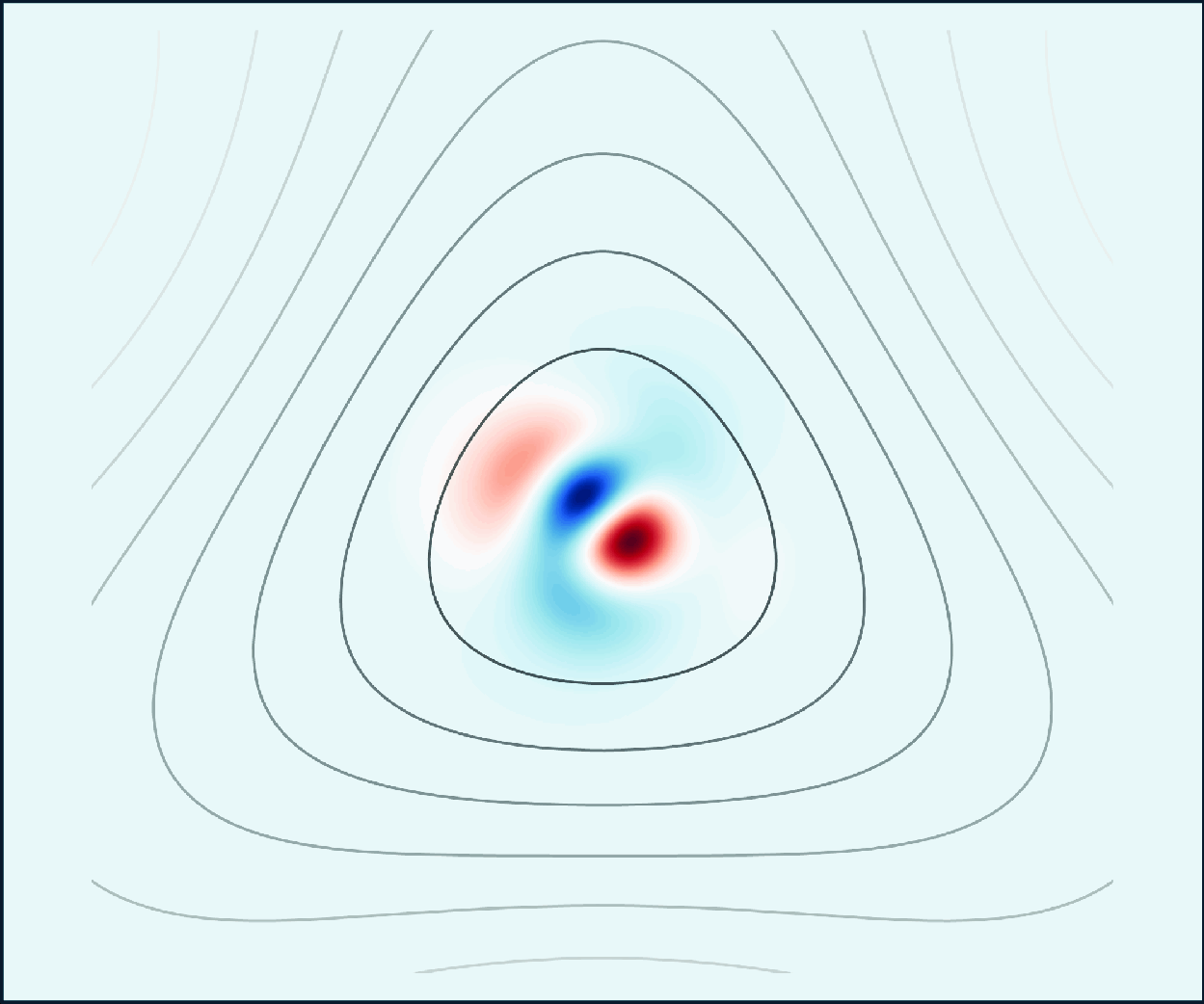
In this study, we demonstrate, for the first time, the existence of a short-wave instability in a Lamb–Oseen vortex subjected to a triangular strain field generated by three satellite vortices, which we term the triangular instability. We identify this instability by numerically integrating the linearised Navier–Stokes equations around a quasi-steady base flow to capture the most unstable mode and validate it by comparing results with theoretical predictions. We evaluate this instability by calculating the growth rates associated with the parametric resonant coupling of two Kelvin waves with the triangular strain field in the limit of small strain rate and large Reynolds number. Our analysis reveals that resonance occurs only for combinations of the azimuthal wavenumbers $m = 1$ and $m = - 2$ (or their symmetric counterparts with opposite signs). We observe several unstable modes with positive growth rates for a moderate viscous Reynolds number $10^4$ and straining parameter value $\epsilon = 0.008$, defined as the cube of the ratio of the core size to the distance from the satellite vortices. The most unstable mode, dominant at typically high Reynolds numbers, has $k \approx 5.18/a$ and $\omega \approx - 0.312\Omega$ (where $a$ and $\Omega$ denote the core size and central angular velocity). It exhibits negligible critical layer damping and remains the most unstable mode over a wide range of ${Re}$ and $\epsilon$. At lower Reynolds numbers, another mode with $k \approx 1.76/a$ and $\omega \approx - 0.407\Omega$, despite significant critical layer damping, becomes the most unstable.
Collaboration is both a process and an outcome. Collaboration is based on the idea that interactions between participants with a common goal, working together as partnerships and sharing resources, can solve complex or “wicked” problems that are not possible to solve in isolation. Collaboration may be simple, occurring between individuals, or more complex interorganizational arrangements across sectors, with the life cycle and size of the collaboration determined by the issue at hand. HTA collaborations may involve a wide range of stakeholders, including HTA agencies at the national, regional, or global level, academia, government (including regulatory authorities), industry, clinicians, providers, and patient organizations. Regardless of the number or type of participants, collaborations need a shared understanding of the common goal, an agreement on aims, and a commitment to shared solutions.
Industry and agency members of the Health Technology Assessment International (HTAi) Asia Policy Forum (APF) met in Seoul, South Korea, in November 2024 for open discussions on how to facilitate and improve the collaborative process between all stakeholders in the health system, including government, HTA agencies, industry, academia, clinicians, as well as patients. Over the three days, these discussions identified some of the risks and obstacles to collaboration in the region, how to develop and use collaboration better, as well as articulating the value and benefits of collaboration both in the region and globally.
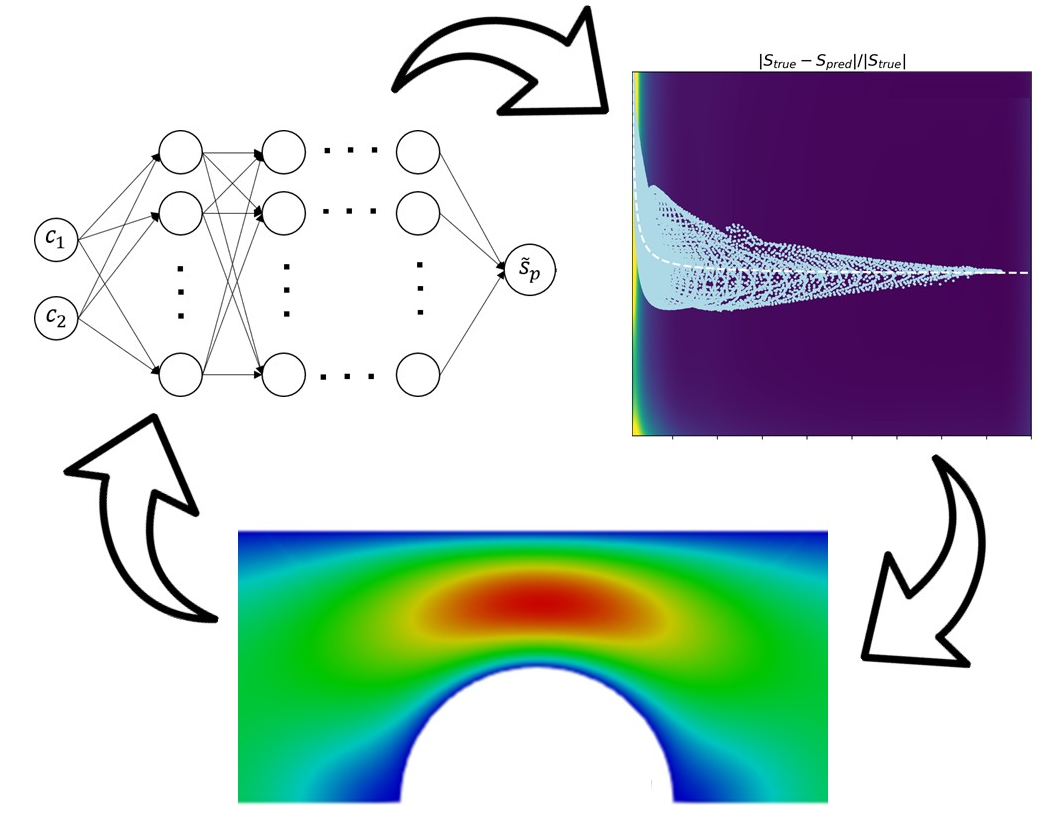
We present a versatile framework that employs Physics-Informed Neural Networks (PINNs) to discover the entropic contribution that leads to the constitutive equation for the extra-stress in rheological models of dilute polymer solutions. In this framework the training of the neural network is guided by an evolution equation for the conformation tensor, which is GENERIC-compliant. We compare two training methodologies for the data-driven PINN constitutive models: one trained on data from the analytical solution of the Oldroyd-B (OB) model under steady-state rheometric flows (PINN-rheometric), and another trained on in silico data generated from computational fluid dynamics (CFD) simulations of complex flow around a cylinder that use the OB model (PINN-complex). The capacity of the PINN models to provide good predictions is evaluated by comparison with CFD simulations using the underlying OB model as a reference. Both models are capable of predicting flow behaviour in transient and complex conditions; however, the PINN-complex model, trained on a broader range of mixed-flow data, outperforms the PINN-rheometric model in complex flow scenarios. The geometry agnostic character of our methodology allows us to apply the learned PINN models to flows with topologies different from those used for training.
This article reflects on my experience recovering and organising two judicial archives in Uganda — the High Court and Mengo Court archives — which had long been neglected due to bureaucratic disinterest and legal hierarchies inherited from the colonial period. Together, these archives contained over 150,000 uncatalogued case files documenting how ordinary Ugandans used both native and colonial British courts to contest injustice and claim rights. Their exclusion from formal archives was not incidental; it reflected a legal order that considered British colonial statutes, appellate decisions and English-language records as authoritative expression of law, while dismissing native court records, as informal without precedential value and unworthy of preservation. Drawing on critical scholarship and my own archival experience, I argue that the archive of law should not be seen merely as a collection of sources or as sites of power and knowledge, but as a space where legal authority and legitimacy are produced, preserved, and erased. The recovery of these records not only unearthed a neglected legal history shaped by ordinary people but also challenges dominant narratives of legal authority in Africa. This work also exposed the omissions in the archival collections, the influence of colonial memory, and the importance of vernacular legal records for both historical research and contemporary legal practice.
The Grothendieck construction establishes an equivalence between fibrations, a.k.a. fibred categories and indexed categories and is one of the fundamental results of category theory. Cockett and Cruttwell introduced the notion of fibrations into the context of tangent categories and proved that the fibres of a tangent fibration inherit a tangent structure from the total tangent category. The main goal of this paper is to provide a Grothendieck construction for tangent fibrations. Our first attempt will focus on providing a correspondence between tangent fibrations and indexed tangent categories, which are collections of tangent categories and tangent morphisms indexed by the objects and morphisms of a base tangent category. We will show that this construction inverts Cockett and Cruttwell’s result, but it does not provide a full equivalence between these two concepts. In order to understand how to define a genuine Grothendieck equivalence in the context of tangent categories, inspired by Street’s formal approach to monad theory we introduce a new concept: tangent objects. We show that tangent fibrations arise as tangent objects of a suitable $2$-category and we employ this characterisation to lift the Grothendieck construction between fibrations and indexed categories to a genuine Grothendieck equivalence between tangent fibrations and tangent indexed categories.
A common feature of public policy in Australia in recent decades has been use of wage caps to restrain public sector wage growth. In this paper we explore the nature of the relationship between wage growth in public and private sectors, and thereby whether wage caps have also influenced private sector wage growth. Despite the differences in wage setting institutions and mechanisms, analysis presented reveals that private and public sector wage growth are closely entwined at the aggregate level for Australia, and in all states and territories. Naïve Vector Error Correction Models identify the private sector as the long run wage leader for Australia and half the states and territories. However, after controlling for a structural break occurring during the COVID-19 era, our results indicate that joint or bi-directional wage leadership between both sectors is the norm. Findings suggest that wage caps implemented after the GFC to suppress public sector wage growth likely spilled over to the private sector, contributing to widespread wage stagnation experienced throughout the 2010s. More recently, these public sector wage caps stifled the ability of public sector wages to adjust to rapid private sector wage growth. These findings have important policy implications for public sector wage policy as a key contributor to governments’ labour market and macroeconomic management.
Patient involvement enhances transparency, legitimacy, and responsiveness in pharmaceutical reimbursement decisions. Guided by the mosaic model, this study recognizes effective patient engagement requires diverse context-specific approaches. Despite Taiwan’s National Health Insurance Administration (NHIA) implementing policies, gaps remain between intent and practice. This study evaluates NHIA’s incorporation of patient inputs into reimbursement decisions and examines factors influencing involvement.
Methods
We analyzed pharmaceutical company-initiated reimbursement submissions for catastrophic illnesses reviewed by the Pharmaceutical Benefit and Reimbursement Scheme Joint Committee (PBRS) from 2016 to 2023. Data sources included PBRS meeting records, the Online Patient Opinion Platform (OPOP), and NHIA notification E-mails. Generalized linear models identified predictors of patient involvement. The association between patient involvement and PBRS decisions was also explored.
Results
Patient involvement occurred in 28.4 percent (80/282) of all submissions, increasing from 17 percent (2016) to 44 percent (2023). Despite aligning with OPOP criteria, patient involvement remained incomplete. Discussion-type submissions, oncology drugs, and new drug applications showed higher involvement, whereas autoimmune diseases and new indication submissions had lower involvement. Budget impact and innovation categories were not significant predictors in adjusted models. The presence of patient involvement was not significantly associated with the PBRS approval rate. Ad hoc analysis revealed increased involvement for new indications following policy expansion.
Conclusions
Despite NHIA’s efforts, patient involvement implementation remains suboptimal. Structured mechanisms and expanded patient involvement beyond high-profile submissions and PBRS are crucial to broaden patient involvement. This study provides practical insights for East Asian healthcare systems advancing patient involvement amid limited empirical research.
The overall objective of this study is to shed light on the disaster preparedness status of geriatric patients visiting tertiary hospitals in Istanbul while assessing the relationship between frailty scores, self-efficacy, and independence among geriatric patients.
Methods
This prospective cross-sectional study was conducted in the Emergency Medicine Departments of 2 tertiary centers in Istanbul. In the survey, health and frailty status, demographics, and earthquake preparedness and planning were assessed. The Clinical Frailty Scale (CFS), Tilburg Frailty Indicator (TFI), and PRISMA-7 score were administered. Contingency tables were constructed to examine the associations between frailty categories and categorical outcomes related to disaster preparedness, self-efficacy, and independence.
Results
A small portion (5.4%) of patients had received earthquake preparedness training. Regarding emergency preparedness, 32.4% had easy access to a list of emergency contacts, and 32.1% knew the location of the emergency kit. A relationship was found between the presence of an earthquake preparedness kit and the CFS and TFI (P<0.005). All the self-efficacy and independence parameters needed during disasters were found to be significantly higher among frailer patients (P<0.005).
Conclusions
Inadequate disaster preparedness, characterized by low self-efficacy and high external dependence, are influenced by frailty. Enhancing disaster preparedness requires identifying and supporting frail individuals.