Refine listing
Actions for selected content:
153969 results in Open Access

U-shaped power: Infantas and the ritual-political nexus of Formative-period monumentality in the Chillón Valley, Perú
-
- Article
-
- You have access
- Open access
- HTML
- Export citation
Human traces in Arctic soils: Geoarchaeological evidence from 19th-century herders and farmers
-
- Journal:
- Polar Record / Volume 61 / 2025
- Published online by Cambridge University Press:
- 08 July 2025, e17
-
- Article
-
- You have access
- Open access
- HTML
- Export citation
Measuring Judicial Ideology Through Text
-
- Journal:
- Journal of Law and Courts / Volume 14 / Issue 1 / April 2026
- Published online by Cambridge University Press:
- 08 July 2025, pp. 65-82
-
- Article
-
- You have access
- Open access
- HTML
- Export citation
Institutionalization of Health Technology Assessment of medical devices: a cluster analysis of EU, EEA, and EFTA countries
-
- Journal:
- International Journal of Technology Assessment in Health Care / Volume 41 / Issue 1 / 2025
- Published online by Cambridge University Press:
- 08 July 2025, e44
-
- Article
-
- You have access
- Open access
- HTML
- Export citation
Phonologization of cumulative phonetic length in Kashubian
-
- Journal:
- Journal of Linguistics / Volume 62 / Issue 2 / April 2026
- Published online by Cambridge University Press:
- 08 July 2025, pp. 295-327
- Print publication:
- April 2026
-
- Article
-
- You have access
- Open access
- HTML
- Export citation
Researcher and community partner perspectives on community-engaged research during the COVID-19 pandemic
-
- Journal:
- Journal of Clinical and Translational Science / Volume 9 / Issue 1 / 2025
- Published online by Cambridge University Press:
- 07 July 2025, e163
-
- Article
-
- You have access
- Open access
- HTML
- Export citation
A contextual formalization of structural coinduction
- Part of
-
- Journal:
- Journal of Functional Programming / Volume 35 / 2025
- Published online by Cambridge University Press:
- 07 July 2025, e14
-
- Article
-
- You have access
- Open access
- HTML
- Export citation
The China-Pakistan Economic Corridor: the Politics of Development
-
- Journal:
- Critical Pakistan Studies ,
- Published online by Cambridge University Press:
- 07 July 2025, pp. 1-25
-
- Article
-
- You have access
- Open access
- HTML
- Export citation
Morphological variation in Southwestern Norwegian children’s role-play registers
-
- Journal:
- Nordic Journal of Linguistics , First View
- Published online by Cambridge University Press:
- 07 July 2025, pp. 1-29
-
- Article
-
- You have access
- Open access
- HTML
- Export citation
Pulse-length dependence of the laser-induced damage behavior of a fused-silica antireflective metasurface
-
- Journal:
- High Power Laser Science and Engineering / Volume 13 / 2025
- Published online by Cambridge University Press:
- 07 July 2025, e64
-
- Article
-
- You have access
- Open access
- HTML
- Export citation
Universal in Scope and Appeal? The Politics of ‘National’ vs ‘International’ Opera at Post-war Covent Garden
-
- Journal:
- Transactions of the Royal Historical Society / Volume 3 / December 2025
- Published online by Cambridge University Press:
- 07 July 2025, pp. 229-252
- Print publication:
- December 2025
-
- Article
-
- You have access
- Open access
- HTML
- Export citation
An antimicrobial stewardship intervention on antibiotic prophylaxis for transrectal prostate biopsies in a veteran population
-
- Journal:
- Antimicrobial Stewardship & Healthcare Epidemiology / Volume 5 / Issue 1 / 2026
- Published online by Cambridge University Press:
- 07 July 2025, e148
-
- Article
-
- You have access
- Open access
- HTML
- Export citation
Numéro spécial sur la normativité : introduction
-
- Journal:
- Dialogue: Canadian Philosophical Review / Revue canadienne de philosophie / Volume 64 / Issue 1 / April 2025
- Published online by Cambridge University Press:
- 07 July 2025, pp. 3-11
-
- Article
-
- You have access
- Open access
- HTML
- Export citation
SPECIAL RICCI–HESSIAN EQUATIONS ON KÄHLER MANIFOLDS
- Part of
-
- Journal:
- Journal of the Australian Mathematical Society / Volume 120 / Issue 1 / February 2026
- Published online by Cambridge University Press:
- 07 July 2025, pp. 57-77
-
- Article
-
- You have access
- Open access
- HTML
- Export citation
-
Special Ricci–Hessian equations on Kähler manifolds $(M,g)$, as defined by Maschler [‘Special Kähler–Ricci potentials and Ricci solitons’, Ann. Global Anal. Geom. 34 (2008), 367–380], involve functions $\tau $ on M and state that, for some function $\alpha $ of the real variable $\tau\kern-0.8pt $, the sum of $\alpha \nabla d\tau\kern-0.8pt $ and the Ricci tensor equals a functional multiple of the metric g, while $\alpha \nabla d\tau\kern-0.8pt $ itself is assumed to be nonzero almost everywhere. Three well-known obvious ‘standard’ cases are provided by (non-Einstein) gradient Kähler–Ricci solitons, conformally-Einstein Kähler metrics, and special Kähler–Ricci potentials. We show that, outside of these three cases, such an equation can only occur in complex dimension two and, at generic points, it must then represent one of three types, for which, up to normalizations, $\alpha =2\cot \tau\kern-0.8pt $, $\alpha =2\coth \tau\kern-0.8pt $, or $\alpha =2\tanh \tau\kern-0.8pt $. We also use the Cartan–Kähler theorem to prove that these three types are actually realized in a ‘nonstandard’ way.


Disseminating Evidence-Based Assessments to Educators in South Africa and Vietnam Through Behavioural Skills Training
-
- Journal:
- Australasian Journal of Special and Inclusive Education / Volume 49 / Issue 2 / December 2025
- Published online by Cambridge University Press:
- 07 July 2025, pp. 77-93
-
- Article
-
- You have access
- Open access
- HTML
- Export citation
Developing digital image processing methods to quantify internal and interfacial convection in the Hele-Shaw cell, with applications to the laboratory ice–ocean boundary layer
-
- Journal:
- Journal of Glaciology / Volume 71 / 2025
- Published online by Cambridge University Press:
- 07 July 2025, e86
-
- Article
-
- You have access
- Open access
- HTML
- Export citation
VLBA astrometry of PSRs B0329+54 and B1133+16: Improved pulsar distances and comparison of global ionospheric models
-
- Journal:
- Publications of the Astronomical Society of Australia / Volume 42 / 2025
- Published online by Cambridge University Press:
- 07 July 2025, e098
-
- Article
-
- You have access
- Open access
- HTML
- Export citation
-
Very long baseline interferometry (VLBI) astrometry is used to determine the three-dimensional position and proper motion of astronomical objects. A typical VLBI astrometric campaign generally includes around ten observations, making it challenging to characterise systematic uncertainties. Our study on two bright pulsars, B0329+54 and B1133+16, involves analysis of broadband Very Long Baseline Array (VLBA) data over $\sim30$ epochs (spanning approximately 3.5 yr). This extended dataset has significantly improved the precision of the astrometric estimates of these pulsars. Our broadband study suggests that, as expected, the primary contribution to systematic uncertainties in L-band VLBI astrometry originates from the ionosphere. We have also assessed the effectiveness of the modified total electron content (TEC) mapping function, which converts vertical TEC to slant TEC, in correcting ionospheric dispersive delays using global TEC maps. The astrometric parameters (parallax and proper motion) obtained from the multiple datasets, calibrated using the traditional and the modified TEC mapping functions, are consistent. However, the reduced chi-square values from least-squares fitting and precision of the fitted astrometric parameters show no significant improvement, and hence, the effectiveness of the new TEC mapping function on astrometry is unclear. For B0329+54, the refined parallax estimate is $0.611^{+0.013}_{-0.013}$ mas, with best-fit proper motion of $\mu_{\alpha} = 16.960^{+0.011}_{-0.010}\, \textrm{mas}\,{\rm yr}^{-1}$ in R.A. and and $\mu_{\delta} = -10.382^{+0.022}_{-0.022}\,\textrm{mas}\,{\rm yr}^{-1}$ in Dec. These correspond to a distance of $1.64^{+0.03}_{-0.03}$ kpc and a transverse velocity of $\sim 154\, \textrm{km}\,{\rm s}^{-1}$. For B1133+16, the new estimated parallax is $2.705^{+0.009}_{-0.009}$ mas, with proper motions of $\mu_{\alpha} = -73.777^{+0.008}_{-0.008}\, \textrm{mas}\,{\rm yr}^{-1}$ and $\mu_{\delta} = 366.573^{+0.019}_{-0.019}\, \textrm{mas}\,{\rm yr}^{-1}$, implying a distance of $370^{+1}_{-1}$ pc and a transverse velocity of $\sim 656\, \textrm{km}\,{\rm s}^{-1}$. The proper motions of B0329+54 and B1133+16 are consistent within $1\sigma$ of the most precise values reported in the literature to date while achieving more than a twofold improvement in precision. Similarly, the parallax measurements for both pulsars show a $\sim 73\%$ enhancement in precision, with differences of approximately $\lt 1\sigma$ compared to the most precise published values to date.


Notes on the Difficulty of Studying State Archives in Egypt
-
- Journal:
- Comparative Studies in Society and History / Volume 67 / Issue 4 / October 2025
- Published online by Cambridge University Press:
- 07 July 2025, pp. 785-810
-
- Article
-
- You have access
- Open access
- HTML
- Export citation
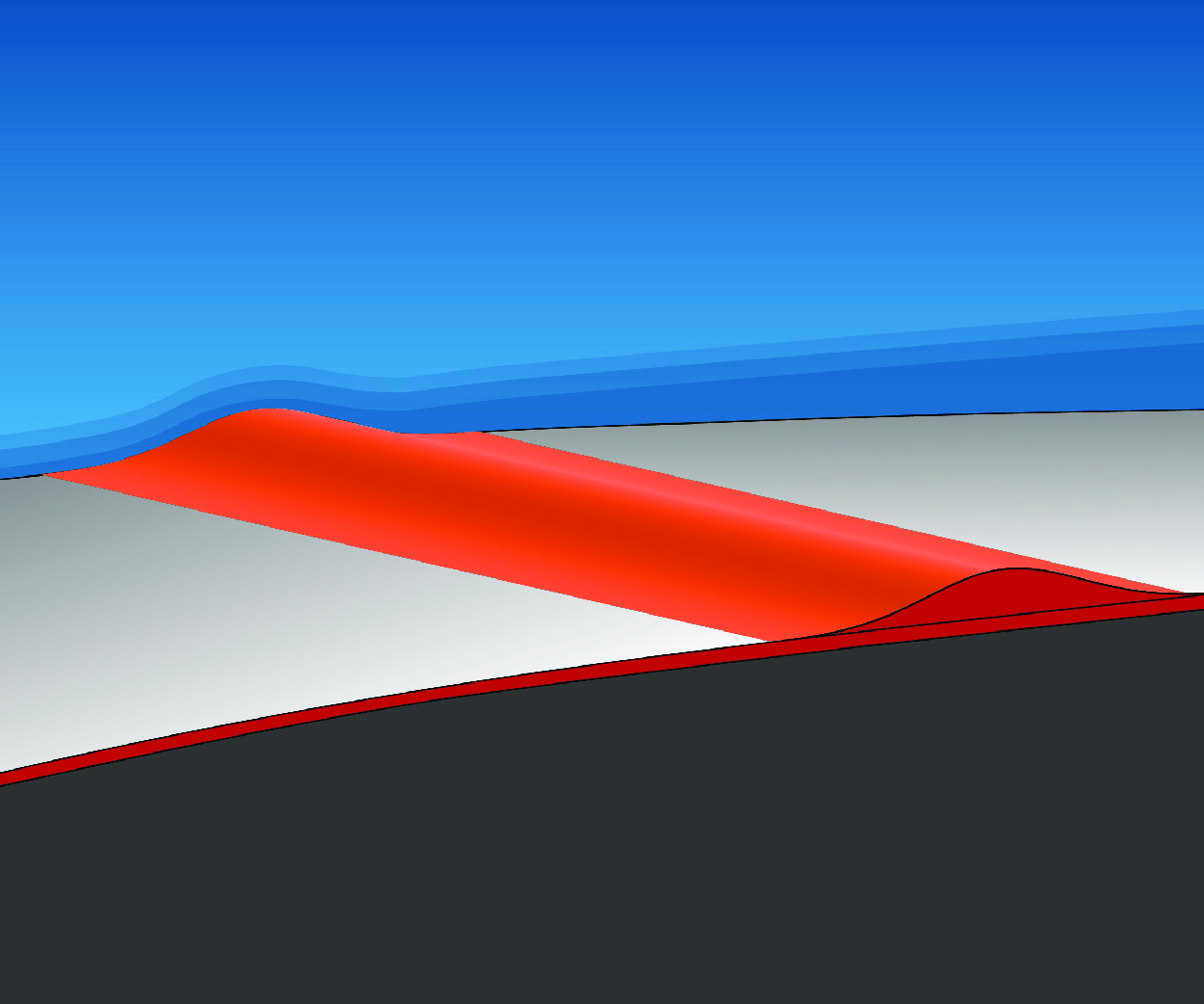
Delay of swept-wing transition using a surface hump
-
- Journal:
- Journal of Fluid Mechanics / Volume 1014 / 10 July 2025
- Published online by Cambridge University Press:
- 07 July 2025, A35
-
- Article
-
- You have access
- Open access
- HTML
- Export citation
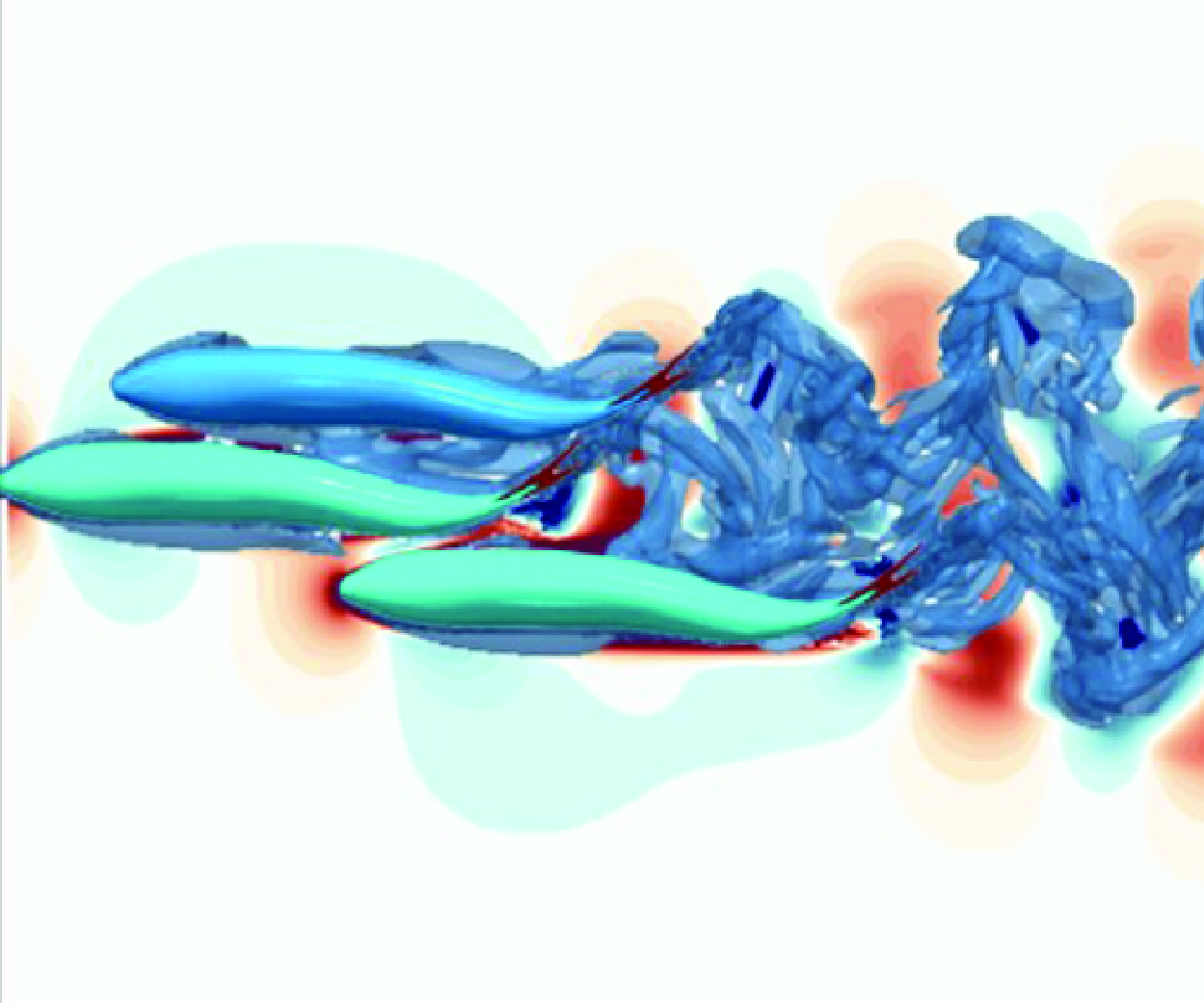
Hydrodynamically beneficial school configurations in carangiform swimmers: insights from a flow-physics informed model
-
- Journal:
- Journal of Fluid Mechanics / Volume 1014 / 10 July 2025
- Published online by Cambridge University Press:
- 07 July 2025, A32
-
- Article
-
- You have access
- Open access
- HTML
- Export citation
