Refine listing
Actions for selected content:
142672 results in Open Access
Part II - Structural Considerations
-
- Book:
- Good Governing
- Published online:
- 23 October 2024
- Print publication:
- 17 October 2024, pp 171-280
-
- Chapter
-
- You have access
- Open access
- HTML
- Export citation
Community and informal institutions in reforms under crises: the odyssey of a 350-year-old functionally credible water commons
-
- Journal:
- Journal of Institutional Economics / Volume 20 / 2024
- Published online by Cambridge University Press:
- 17 October 2024, e33
-
- Article
-
- You have access
- Open access
- HTML
- Export citation
National Interests as Positive Externalities: Headquarters Retainment as Justification for Hybrid State-owned Enterprises in Norway (2000–2021)
-
- Journal:
- Enterprise & Society / Volume 26 / Issue 3 / September 2025
- Published online by Cambridge University Press:
- 17 October 2024, pp. 796-817
- Print publication:
- September 2025
-
- Article
-
- You have access
- Open access
- HTML
- Export citation
Snap bean tolerance to preemergence applications of dimethenamid-P, flumioxazin, lactofen, metribuzin, saflufenacil, and sulfentrazone
-
- Journal:
- Weed Technology / Volume 38 / 2024
- Published online by Cambridge University Press:
- 17 October 2024, e62
-
- Article
-
- You have access
- Open access
- HTML
- Export citation
2 - The Police Power in Our Republic’s First Century
- from Part I - Power for the People: Creating the Modern Police Power
-
- Book:
- Good Governing
- Published online:
- 23 October 2024
- Print publication:
- 17 October 2024, pp 42-83
-
- Chapter
-
- You have access
- Open access
- HTML
- Export citation
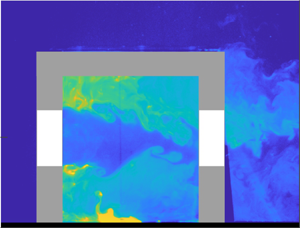
Flow through a hollow cube in a turbulent boundary layer: towards understanding indoor pollutant dispersion
-
- Journal:
- Flow: Applications of Fluid Mechanics / Volume 4 / 2024
- Published online by Cambridge University Press:
- 17 October 2024, E19
-
- Article
-
- You have access
- Open access
- HTML
- Export citation
-
We experimentally investigate the flow through a hollow cube, with an indoor ground-level passive scalar source, immersed in a rough-wall turbulent boundary layer inside a water tunnel. The focus is on characterizing scalar transport within the cube, through simultaneous scalar and flow measurements using planar laser-induced fluorescence and particle image velocimetry. To understand the role of window positioning, three cube configurations, labelled as ‘centre’, ‘up-down’ and ‘down-up’, distinguished by window positions at the upstream and downstream ends, are studied. Varying window position alters the flow characteristics within the cube, resulting in differences in scalar concentration and distribution. The steady-state concentration is highest for ‘centre’, followed by ‘up-down’ and ‘down-up’ configurations. Regarding the scalar distribution, ‘centre’ showed accumulation near the top and bottom walls, while ‘up-down’ and ‘down-up’ exhibited scalar buildup in the lower and upper half of the cube, respectively. The flow patterns and scalar transport mechanisms remained consistent across different Reynolds numbers ( $Re=U_{Ref}H/\nu = 20\ 000$, 35 000, 50 000) for each configuration; $U_{Ref}=$ incoming flow velocity at cube height ( $H$), and $\nu =\,$ kinematic viscosity of water. The analysis is extended by revising the classical box model, accounting for practical complexities such as non-perfect mixing. Our results can help better understand and model indoor–outdoor pollutant exchange in complex urban environments.


Part III - The Police Power’s Promise
-
- Book:
- Good Governing
- Published online:
- 23 October 2024
- Print publication:
- 17 October 2024, pp 281-332
-
- Chapter
-
- You have access
- Open access
- HTML
- Export citation
Cost and resource comparison analysis for THA in Switzerland and Austria
-
- Journal:
- International Journal of Technology Assessment in Health Care / Volume 40 / Issue 1 / 2024
- Published online by Cambridge University Press:
- 17 October 2024, e36
-
- Article
-
- You have access
- Open access
- HTML
- Export citation

Equilibrium of fluid fluxes in the wake of a three-dimensional flat-back bluff body
-
- Journal:
- Journal of Fluid Mechanics / Volume 997 / 25 October 2024
- Published online by Cambridge University Press:
- 17 October 2024, A60
-
- Article
-
- You have access
- Open access
- HTML
- Export citation
-
The turbulent wake behind a flat-back Ahmed body is investigated using stacked stereoscopic particle image velocimetry. The wake is disturbed by a steady jet from the centre of the base and the effects are quantified for key blowing rates. The unactuated wake exhibits bistable dynamics in the horizontal plane that are completely subdued for the optimal blowing case, yielding a base drag reduction of 9 %. The three-dimensional mean wake is reconstructed and used to evaluate the wake mass fluxes whose equilibrium determines the recirculation length. The results for the unactuated wake show that up to 80 % of replenishment fluid flux entering the recirculation bubble from the free-stream flow is provided through the low-pressure side of the base, where the symmetry-breaking shear layer roll-up occurs near the base. For the optimal blowing configuration, where the wake becomes symmetric, the flux of wake replenishment is severely reduced. This flow configuration results in elongated shear layers on all sides, which terminate the bubble with a roll-up of reduced intensity at a further downstream location. The dominant cause of bubble growth and the accompanying drag reduction is attributed to the momentum of the base blowing, and the new regime is referred to as the ‘favourable momentum regime’. Similar trends are observed when the model is at $5^{\circ }$ yaw where a reduction of drag and yaw-induced asymmetry are obtained. Proper orthogonal decomposition of the wake reveals the coherent structures related to the bistable flow and the symmetric wake under optimal blowing coefficient.

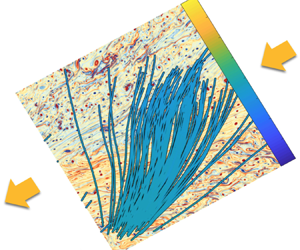
Wave propagation in random two-dimensional turbulence: a multiscale approach
-
- Journal:
- Journal of Fluid Mechanics / Volume 997 / 25 October 2024
- Published online by Cambridge University Press:
- 17 October 2024, A51
-
- Article
-
- You have access
- Open access
- HTML
- Export citation
Depo-Provera, Class, Race, and the Domiciliary Family Planning Services in Glasgow and Haringey, 1970–1983
-
- Journal:
- The Historical Journal / Volume 68 / Issue 1 / February 2025
- Published online by Cambridge University Press:
- 17 October 2024, pp. 216-238
- Print publication:
- February 2025
-
- Article
-
- You have access
- Open access
- HTML
- Export citation
Dr. SB Wey: a path of influence and discovery in hospital epidemiology
-
- Journal:
- Antimicrobial Stewardship & Healthcare Epidemiology / Volume 4 / Issue 1 / 2024
- Published online by Cambridge University Press:
- 17 October 2024, e179
-
- Article
-
- You have access
- Open access
- HTML
- Export citation
8 - The Police Power and Federalism
- from Part II - Structural Considerations
-
- Book:
- Good Governing
- Published online:
- 23 October 2024
- Print publication:
- 17 October 2024, pp 261-280
-
- Chapter
-
- You have access
- Open access
- HTML
- Export citation

Leveraging biotechnology design principles to advance brain understanding and improve biotechnological device efficiency and scalability
-
- Journal:
- Research Directions: Biotechnology Design / Volume 2 / 2024
- Published online by Cambridge University Press:
- 17 October 2024, e14
-
- Article
-
- You have access
- Open access
- HTML
- Export citation

Gene expression of kynurenine pathway enzymes in depression and following electroconvulsive therapy
-
- Journal:
- Acta Neuropsychiatrica / Volume 37 / 2025
- Published online by Cambridge University Press:
- 17 October 2024, e34
-
- Article
-
- You have access
- Open access
- HTML
- Export citation
A non-destructive approach in proximal sensing to assess the performance distribution of SPAD prediction models using hyperspectral analysis in apricot trees
-
- Journal:
- Experimental Agriculture / Volume 60 / 2024
- Published online by Cambridge University Press:
- 17 October 2024, e25
-
- Article
-
- You have access
- Open access
- HTML
- Export citation
Index
-
- Book:
- Good Governing
- Published online:
- 23 October 2024
- Print publication:
- 17 October 2024, pp 333-345
-
- Chapter
-
- You have access
- Open access
- HTML
- Export citation
An Environmental Agreement in a Trade Court – Is the WTO's Agreement on Fisheries Subsidies Enforceable?
-
- Journal:
- World Trade Review / Volume 24 / Issue 1 / February 2025
- Published online by Cambridge University Press:
- 17 October 2024, pp. 25-49
-
- Article
-
- You have access
- Open access
- HTML
- Export citation
Value Chains and Environmental Impact Assessments: Lessons from Two French Legal Cases on Bioenergy Facilities
-
- Journal:
- Transnational Environmental Law / Volume 14 / Issue 1 / March 2025
- Published online by Cambridge University Press:
- 17 October 2024, pp. 121-144
-
- Article
-
- You have access
- Open access
- HTML
- Export citation
A systematic review and meta-analysis of bovine tuberculosis occurrence and burden in Bangladesh, 1970–2023
-
- Journal:
- Epidemiology & Infection / Volume 152 / 2024
- Published online by Cambridge University Press:
- 17 October 2024, e126
-
- Article
-
- You have access
- Open access
- HTML
- Export citation
