To save content items to your account,
please confirm that you agree to abide by our usage policies.
If this is the first time you use this feature, you will be asked to authorise Cambridge Core to connect with your account.
Find out more about saving content to .
To save content items to your Kindle, first ensure no-reply@cambridge.org
is added to your Approved Personal Document E-mail List under your Personal Document Settings
on the Manage Your Content and Devices page of your Amazon account. Then enter the ‘name’ part
of your Kindle email address below.
Find out more about saving to your Kindle.
Note you can select to save to either the @free.kindle.com or @kindle.com variations.
‘@free.kindle.com’ emails are free but can only be saved to your device when it is connected to wi-fi.
‘@kindle.com’ emails can be delivered even when you are not connected to wi-fi, but note that service fees apply.
Our systematic review aims to synthesise the evidence on interventions targeting improvement in patient adherence to psychological treatments for common mental disorders. A search was conducted on six electronic databases using search terms under the following concepts: common mental disorders, adherence, psychological treatments and controlled trial study design. Due to the heterogeneity in intervention content and outcomes evaluated in the included studies, a narrative synthesis was conducted. Risk of bias was assessed using the Cochrane Risk of Bias Version 2 tool for randomised controlled trials and the Cochrane ROBINS-I tool for non-randomised controlled trials. The search yielded 23 distinct studies with a total sample size of 2,779 participants. All studies were conducted in high-income or upper-middle-income countries. Interventions to improve patient adherence to psychological treatments included reminders and between-session engagement (e.g., text messages), motivational interviewing, therapy orientation (e.g., expectation-setting) and overcoming structural barriers (e.g., case management). Interventions from 18 out of 23 studies were successful in improving at least one primary adherence outcome of interest (e.g., session attendance). Some studies also reported an improvement in secondary outcomes – six studies reported an improvement in at least one clinical outcome (e.g., depression), and three studies reported improvements in at least one measure of well-being or disability (e.g., days spent in in-patient treatment). By incorporating these interventions into psychological treatment services, therapists can better engage with and support their patients, potentially leading to improved mental health outcomes and overall well-being.
This study provides researchers, practitioners, and policy makers with a profile of older adults’ travel behaviour and the older adult population that reports unmet travel needs. In addition, we quantified associations between reporting an unmet travel need and measures of health and social connectedness. Data came from the second follow-up survey of the Canadian Longitudinal Study on Aging, collected from 2018 to 2021 (n = 14,167). Nine in ten (90.2%) older adults aged 65 years and older indicated that driving is the main way they get around. Older adults with an unmet travel need were more likely to be women, have lower household incomes and education levels, and have a mobility limitation. People with an unmet travel need had 2.7 times the odds of reporting fair or poor general health (OR = 2.66, 95% CI: 2.19, 3.22) and 3.1 times the odds of feeling socially isolated (OR = 3.10, 95% CI: 2.57, 3.72) compared to those without an unmet need.
Trapped surface waves have been observed in a swimming pool trapped by, and rotating around, the cores of vortices. To investigate this effect, we have numerically studied the free-surface response of a Lamb–Oseen vortex to small perturbations. The fluid has finite depth but is laterally unbounded. The numerical method used is spectrally accurate, and uses a novel non-reflecting buffer region to simulate a laterally unbounded fluid. While a variety of linear waves can arise in this flow, we focus here on surface gravity waves. We investigate the linear modes of the vortex as a function of the perturbation azimuthal mode number and the vortex rotation rate. We find that at low rotation rates, linear modes decay by radiating energy to the far field, while at higher rotation rates modes become nearly neutrally stable and trapped in the vicinity of the vortex. While trapped modes have previously been seen in shallow water surface waves due to small perturbations of a bathtub vortex, the situation considered here is qualitatively different owing to the lack of an inward flow and the dispersive nature of non-shallow-water waves. We also find that for slow vortex rotation rates, trapped waves propagate in the opposite direction to the vortex rotation, whereas, above a threshold rotation rate, waves corotate with the flow.
This study investigates the use of double modals in Australian and New Zealand English using Twitter/𝕏 data. Double modals are rare grammatical constructions long believed to be limited to regional dialects in the Northern UK and the Southern US. Utilizing a geolocated corpus of over 80 million tweets, the study identifies 314 authentic double modal instances across 51 types, primarily occurring in informal tweets. Findings reveal widespread, albeit low-frequency, usage across both countries without clear geographical patterns. The results align with recent studies suggesting double modals are not confined to specific regions but are possible for most English speakers. The study also questions the traditional Scots-Irish origin theory, proposing an alternative view where the feature is a broader syntactic possibility. Future research should explore larger datasets and extend investigations to outer-circle English varieties to understand better the historical spread and syntactic nature of double modals.
The first two parts of this study showed by experiment and by large-eddy simulation that, in mixing layers formed of processions of spanwise-oriented vortex structures, there is a fundamental change in the dynamics of the large-structure growth at what has been called the ‘mixing’ transition. This third part examines the relationship of the post-transition ‘organised’ flow to the mixing layer of classical turbulence theory. Further large-eddy simulations are presented which, like some of the experiments reported in Part 1, have captured the mixing layer in both its classical and organised turbulent states, thereby allowing them to be characterised separately. The simulation results are then used to calibrate model-free integral analyses of the dynamics of the mixing layer's spatial growth. It is shown that the organised and classical flows are alternative self-preserving turbulent flow states involving fundamentally different exchanges of mass, momentum and energy, one or other of which emerges naturally in particular realisations depending on the initial conditions.
Beginning after the end of Reconstruction, this chapter looks at the ways in which the police power emerged to facilitate an increasingly bold project of regulation. Key Supreme Court decisions supported the use of the police power to undertake and implement the objectives of a growing economy and a widening sphere of government. State power accompanied expanding national power and all levels of government tackled myriad persistent and new problems. In a case from the early twentieth century, for example, the Court upheld a vaccine requirement as a reasonable exercise of the public health authority of the state. Regulatory power was called into question by the Supreme Court’s Lochner-era decisions, but even this two-decades-long movement did not seriously threaten the ability of state governments to carry out ambitious regulatory agendas. Significantly, the Court put its imprimatur on the government’s zoning power in key cases from the late 1920s. And though the Court would message to the states that there were limits on how far they could go in restricting property rights, through doctrines such as “regulatory takings,” what emerged by the end of World War II was a robust conception of the state police power, one that gave government a wide sphere of action and authority to protect the general welfare.
This chapter lays out the perplexing neglect of the police power in contemporary discussions of constitutional governance and public law. It explains some of the reasons for this neglect, and turns to a set of reasons why a richer understanding of modern constitutional governance requires more scrupulous attention to the police power as a tool of regulatory policymaking.
Mental health (MH) system in Serbia still relies heavily on the medical model with very restricted availability of community-based support. The aim of this study was to provide insight into the everyday experiences and unmet needs of psychiatric users suffering from schizophrenia spectrum disorders in Serbia who are also users of community MH services.
Method
We recruited the participants (N = 11; 9 males; aged 26–65, M = 48.5), long-term psychiatric users (11–57 years, M = 29.4) diagnosed with a schizophrenia spectrum disorder, from a community MH centre. We conducted in-depth semi-structured interviews with them, which we analysed relying on the principles of thematic analysis.
Results
Three broad themes relevant to participants’ well-being and quality of life were identified: leading a meaningful and fulfilled life; the importance of continuity of socialisation and support; and maintaining control and a sense of agency. Community MH services have markedly figured in facilitating all three dimensions.
Conclusions
Findings suggest that providing continuous services that address the users’ need to engage in activities that give them meaning and purpose, provide socialisation and peer support, and promote their autonomy and agency can play a vital role in advancing the process of recovery and well-being of long-term psychiatric users.
Before World War I, the Ottoman Empire ruled the southwestern region of the Arabian Peninsula. However, unlike other Ottoman territories in Eastern Europe and the Middle East, the fate of this region was not decided during the Paris Peace Conference. This created a vacuum of power that allowed the local elites of Arabia to engage in a lengthy process of conflict, negotiations, peace talks, and the exchange of ideas to resolve issues of legitimacy, sovereignty, borders, and cultural differences. This article argues that these local elites of Arabia developed an alternative model of statehood and sovereignty that persisted until the outbreak of the Gulf War in 1990. The immediate result of this new model was the separation of al-Mikhlāf al-Sulaimānī region and the transformation of the people of the Najrān region into a sectarian group.
Synthetic textiles, such as polyester, are resistant to natural degradation and constitute approximately 65% of global circulating textile fibers, posing a significant environmental challenge due to their persistence in ecosystems. The global textile industry is responsible for nearly 10% of total global carbon emissions annually and increasing environmental waste. One emerging solution to the industry’s negative environmental impacts is bio-based textile materials that are biodegradable and low-carbon to reduce dependencies on petroleum oil. This paper presents the evolutionary design journey and novel development of earth- and bio-based wearable textiles, coined as BioMud Fabrics, which consist entirely of geo- and bio-based materials. The qualitative and quantitative research-by-design methodological toolkit includes material characterization analysis, microstructural analysis using scanning electron microscopy (SEM) and macro-scale structural characterization using tearing tests following ASTM D5587. The developed fabrics were then applied in a series of speculative design demonstrations with fashion design serving as a central case study. This research uniquely combines material science and engineering with exploratory fashion design and architectural practices with the goal of offering radically innovative biomaterials in an effort to shift towards a more circular material paradigm.
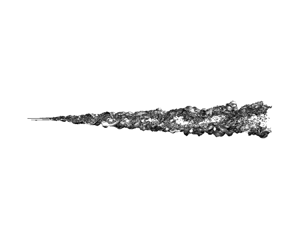
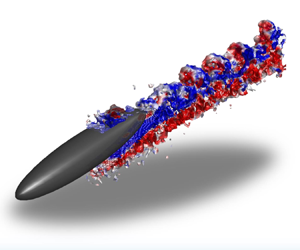
An experimental study has been conducted on the near wake of a 6 : 1 spheroid, in both uniform and stratified backgrounds. The pitch angle, $\theta$, was varied from $0^\circ \text { to }20^\circ$. When $\theta = 0^\circ$, stratification decreases the characteristic wake element spacing so a characteristic Strouhal number ($St$) increases from 0.32 to 0.4. However, a similar measure scaled on wake momentum thickness shows the wake spacing to converge on those measured for other bluff and streamlined bodies. There is an apparent effect of Reynolds number, which changes the location of separation lines and hence the initial wake thickness. When $\theta > 0^\circ$, the wake is a combination of the usual drag wake together with a collection of streamwise vortices that have separated from the body, and this wake geometry can evolve in ways that are measurably different from the zero incidence case. These differences may be limited to the near wake, as the later evolution appears to converge with previous bluff- and streamlined bodies, with normalised wake height, $L_V = 0.5$ and centreline velocity, $\bar {u}_0 = 0.3$ at $Nt = 10$, as the early wake enters the non-equilibrium regime with similar values to previously studied stratified wakes. In the presence of density stratification, the inclined wake itself generates large-scale internal wave undulations with time scale $2{\rm \pi} /N$, even when the background stratification is not strong and a body-based Froude number is $O(10)$. The geometry and strengths of the primary streamwise vortices are not symmetric, mirroring previous results from experiments and computations in the literature.
Nutrition labelling is mandatory on food products in retail stores, but compliance in the rapidly expanding online setting remains unclear. We assessed mandatory and voluntary labelling information across major U.S. online retailers.
Design:
Between January and August 2022, we evaluated a representative basket of sixty food and beverage items across eight product categories of ten major retailers. We evaluated online presence, accessibility and legibility of four mandatory elements – Nutrition Facts, ingredients, allergen statements and percent juice for fruit drinks – and presence of seven voluntary elements – nutrient content claims, health/qualified health claims, ingredient claims, structure–function claims, additive claims, front-of-package nutrient profiling symbols and other marketing claims.
Setting:
Major online food retailers in the USA.
Participants:
N/A.
Results:
On average, each mandatory element was present, accessible and legible for only 35·1 % of items, varying modestly by element (from 38·3 % for ingredients lists to 31·5 % for Nutrition Facts) but widely by retailer (6·6–86·3 %). Voluntary elements were present for 45·8 % of items, ranging from 83·7 % for marketing claims to 2·0 % for structure–function claims. Findings were generally consistent across the eight product categories. Voluntary elements were more frequently present than accessible and legible mandatory elements for six of ten retailers and seven of eight product categories.
Conclusions:
Mandatory nutrition label elements are not commonly present, accessible and legible in online retail settings and are less consistently present than marketing elements. Coordinated industry and regulatory actions may be needed to ensure consumers can access mandatory nutrition information to make healthy and safe food choices online.
Turbulent flow around curved tandem cylinders has been studied for the first time, by means of direct numerical simulation. The convex configuration was used, with a nominal gap ratio of $L/D = 3$ and a Reynolds number of 3900. Along the span, the flow regimes vary from alternating overshoot/reattachment to co-shedding. Three distinct Strouhal numbers coexist in the flow that are tied directly to different tandem cylinder flow regimes. This result differs substantially from convex curved tandem cylinders at a transitional Reynolds number, where only a single dominant frequency is found. All regimes exhibit some degree of instability, so that the flow can be considered multistable. A mode switch from alternating overshoot/reattachment to symmetric reattachment is found. Complex interactions are observed between the primary instability, the shear layer instability and the flow mode alterations. As opposed to previous investigations with single and tandem straight cylinders in the subcritical flow regime, our results indicate that there may be direct feedback from the primary instability to the shear layer instability. The downdraft region in the gap exhibits slow meandering, and may travel upstream and amplify the shear layer instability, causing early transition in the gap shear layer. This downdraft is governed by the slow modulations of the vortex formation region in the lower gap, meaning that the vortex dynamics of this region may indirectly influence the shear layer instability higher up in the gap.
Newly elevated to species rank, the Bahama Nuthatch Sitta insularis is or was a bark- and twig-gleaning insectivore only known in life from the pine forests of Grand Bahama in the Bahamas archipelago. It became increasingly difficult to find in the past 50 years, seemingly in part in response to multiple hurricanes in this century. In spring (June–April) 2018, when it was still known to be extant, we divided the island into seven sections and carried out point count transects with playback and measured habitat variables at 464 locations in pine forest across Grand Bahama. We made only six observations at six locations, all in the region of Lucayan North and each involving a single nuthatch (possibly all the same individual). Fourteen count points were within 500 m of the six locations, and tree size at these sites was greater in height and girth than at sites with no observations and indeed than at other sites within Lucayan North. Count points within 500 m of nuthatch records in 2004–2018 had larger trees and more snags than survey points over 500 m away from previous detections, while count points within 500 m of our 2018 nuthatch records tallied more snags than did those within 500 m of the 2004–2007 records. Declines in habitat quality, habitat extent, nesting substrate, and food availability (driven by logging, attritional island development, and the direct and indirect effects of hurricanes), plus speculated increases in populations of invasive predators/competitors and in major mortality events (hurricanes, increasing in force and frequency with climate change), are suspected to be the ultimate causes of the decline of the nuthatch, with Hurricanes Matthew and Dorian the proximate causes of its evident extinction in 2019.
Founded by Booker T. Washington in 1900, the National Negro Business League (NNBL) sought to unite Black business owners, promote entrepreneurship, and develop economic power. Despite its prominence in the early twentieth century, the group declined after Washington’s death in 1915. As a result, little is known about its organizational development. This study uses data on state and local Negro Business Leagues (NBLs), along with active and life members of the NNBL, to better understand the group’s first fifteen years. Analyses reveal that the NNBL’s development reflected closely the social and economic context of early twentieth century Black America. Generally speaking, the NNBL was stronger in states with larger urban Black populations and where the value of Black-owned farms was higher, consistent with the importance of agriculture to Black business during this era. These results both shed light on the NNBL’s early success and suggest avenues for future research on its decline.
Loss of skeletal muscle strength and mass (sarcopenia) is common in older adults and associated with an increased risk of disability, frailty and premature death. Finding cost-effective prevention and treatment strategies for sarcopenia for the growing ageing population is therefore of great public health interest. Although nutrition is considered an important factor in the aetiology of sarcopenia, its potential for sarcopenia prevention and/or treatment is still being evaluated. Nutrition research for sarcopenia utilises three main approaches to understand muscle-nutrition relationships, evaluating: single nutrients, whole foods and whole diet effects – both alone or combined with exercise. Applying these approaches, we summarise recent evidence from qualitative and quantitative syntheses of findings from observational and intervention studies of healthy older adults, and those with sarcopenia. We consider protein supplements, whole foods (fruits and vegetables) and the Mediterranean diet as exemplars. There is some evidence of beneficial effects of protein supplementation ≥ 0·8 g/kg body weight/d on muscle mass when combined with exercise training in intervention studies of healthy and sarcopenic older adults. In contrast, evidence for effects on muscle function (strength and physical performance) is inconclusive. There is reasonably consistent epidemiological evidence suggesting benefits of higher fruits and vegetables consumption for better physical performance. Similarly, higher adherence to the Mediterranean diet is associated with beneficial effects on muscle function in observational studies. However, intervention studies are lacking. This review discusses how current evidence may inform the development of preventive and intervention strategies for optimal muscle ageing and nutritional public policy aimed at combatting sarcopenia.
This study investigates the effects of accelerated high-frequency repetitive transcranial magnetic stimulation (aHF-rTMS), applied to the left dorsolateral prefrontal cortex (DLPFC), on locus coeruleus (LC) functional connectivity in the treatment of refractory medication-resistant major depression (MRD).
Methods
We studied 12 antidepressant-free refractory MRD patients, focusing on how aHF-rTMS affects the LC, a central component of the brain’s noradrenergic system and key to mood regulation and stress response.
Results
A stronger decrease in LC functional connectivity following aHF-rTMS treatment resulted in better clinical improvement. We observed such LC functional connectivity decreases with several brain regions, including the superior frontal gyrus, precentral gyrus, middle occipital gyrus, and cerebellum. Moreover, our exploratory analyses hint at a possible role for E-field modeling in forecasting clinical outcomes. Additional analyses suggest potential genetic and dopaminergic factors influencing changes in LC functional connectivity in relation to clinical response.
Conclusions
The findings of this study underscore the pivotal role of the LC in orchestrating higher cognitive functions through its extensive connections with the prefrontal cortices, facilitating decision-making, influencing attention, and addressing depressive rumination. Additionally, the observed enhancement in LC-(posterior) cerebellar connectivity not only highlights the cerebellum’s role in moderating clinical outcomes through noradrenergic system modulation but also suggests its potential as a predictive marker for aHF-rTMS efficacy. These results reveal new insights into the neural mechanisms of refractory depression and suggest therapeutic targets for enhancing noradrenergic activity, thereby addressing both cognitive and psychomotor symptoms associated with the disorder.
Despite the urgent need for plant-based dietary shifts, few studies have examined current diet trajectories using longitudinal data. This study analyzed dietary transitions of French adults over 8 years (2014-2022), assessing diet quality and the role of various socio-economic factors. Consumption data from 17 187 NutriNet-Santé cohort participants, weighted for the French Census, were collected via FFQ in 2014, 2018 and 2022. Adopting a gender-specific approach, consumption changes in twenty-three food groups were assessed over time. Diet quality was evaluated using the Comprehensive Diet Quality Index score, categorising foods into ‘healthy’ and ‘unhealthy’. Socio-economic analysis targeted four food groups (red meat (including fresh beef, pork, offal and lamb), processed meat (e.g. sausages, ham and bacon), legumes and whole-grain products), strongly linked to mortality risk and recognised as significant markers of the sustainable diet transition. All analyses were conducted using multi-adjusted mixed-effects models. Consumption of some healthy plant-based foods (nuts +59 %, legumes +22 %, whole-grain products +7 %) significantly increased over time, while consumption of some unhealthy foods (red meat −19 %, refined cereals −18 %, sweetened drinks −15 %) decreased. Conversely, consumption of prepared and mixed dishes (+16 %) and processed meat (+35 %) increased. These changes differed in magnitude between genders and translated into an improved diet quality score (Comprehensive Diet Quality Index). Occupational status was linked to longitudinal changes in food consumption, showing increased consumption of plant-based foods among students and higher socio-professional categories. Our findings provide accurate data on trends and factors for targeted initiatives, guiding strategic interventions for a sustainable dietary transition.