To save content items to your account,
please confirm that you agree to abide by our usage policies.
If this is the first time you use this feature, you will be asked to authorise Cambridge Core to connect with your account.
Find out more about saving content to .
To save content items to your Kindle, first ensure no-reply@cambridge.org
is added to your Approved Personal Document E-mail List under your Personal Document Settings
on the Manage Your Content and Devices page of your Amazon account. Then enter the ‘name’ part
of your Kindle email address below.
Find out more about saving to your Kindle.
Note you can select to save to either the @free.kindle.com or @kindle.com variations.
‘@free.kindle.com’ emails are free but can only be saved to your device when it is connected to wi-fi.
‘@kindle.com’ emails can be delivered even when you are not connected to wi-fi, but note that service fees apply.
This article explores creative processes in the many settings of the prosula BENEDICAMUS in laude ihesu, transmitted in a large number of European manuscripts during a period of at least three hundred years. The fourteen different polyphonic elaborations reveal a desire for multi-voiced performance shared across the whole period and geographical area under discussion. Moreover, while many of the compositional techniques are similarly widespread, the individual settings remain insistently discrete, suggesting that it was more common for a community to produce its own version of the chant than to absorb another community’s practices. This study includes a list of all known sources with polyphonic inscriptions of the prosula, highlighting the hitherto unrecognized prominence of BENEDICAMUS in laude ihesu in musical and liturgical traditions of the fourteenth to seventeenth centuries.
Let $\Omega _n$ be the ring of polynomial-valued holomorphic differential forms on complex n-space, referred to in physics as the superspace ring of rank n. The symmetric group ${\mathfrak {S}}_n$ acts diagonally on $\Omega _n$ by permuting commuting and anticommuting generators simultaneously. We let $SI_n \subseteq \Omega _n$ be the ideal generated by ${\mathfrak {S}}_n$-invariants with vanishing constant term and study the quotient $SR_n = \Omega _n / SI_n$ of superspace by this ideal. We calculate the doubly-graded Hilbert series of $SR_n$ and prove an ‘operator theorem’, which characterizes the harmonic space $SH_n \subseteq \Omega _n$ attached to $SR_n$ in terms of the Vandermonde determinant and certain differential operators. Our methods employ commutative algebra results that were used in the study of Hessenberg varieties. Our results prove conjectures of N. Bergeron, Colmenarejo, Li, Machacek, Sulzgruber, Swanson, Wallach and Zabrocki.

This chapter begins a new part, this focusing on structural considerations in the scope and exercise of the police power. Some of the critical issues involving the power involve who gets to exercise it, and upon what conditions. The separation of powers among departments of government is relevant here, and there have been concerns in courts when the state legislatures delegate the exercise of this power to governors and administrators. We discuss some of these controversies in this chapter. Moreover, we discuss the ways in which the police power has long been used by local governments to implement health, safety, and welfare objectives in their community. The relationship between state and local governments, often labelled “localism,” in order to capture the constitutional dimensions of this dynamic relationship, is a focal point of this chapter.
We investigated syntactic priming in German children to explore crosslinguistic evidence for implicit learning accounts of language production and acquisition. Adult descriptions confirmed that German speakers (N=27) preferred to spontaneously produce active versus passive transitive and DO versus PO dative forms. We tested whether German-speaking children (N=29, Mage=5.3, 15 girls/14 boys) could be primed to produce these dispreferred forms and whether such priming effects would persist across a target phase. Children first heard a block of priming sentences and then described a block of target pictures. They demonstrated significant priming effects for passive and PO dative structures, and these priming effects did not differ between the first and second halves of the block of target trials. These patterns of German child language production are consistent with implicit learning accounts of syntactic priming.
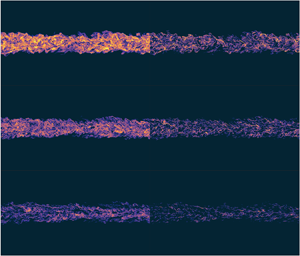
We analyze a dataset from a numerically simulated, temporally evolving turbulent wake (Zhou, Phys. Rev. Fluids, vol. 7, 2022, 104802) that exhibits spontaneous anisotropic layering under strong stratification, alongside significant spatiotemporal variability within the flow. This analysis focuses on the irreversible flux coefficient, $\varGamma$, defined as the ratio between turbulent potential and kinetic energy dissipation rates. We find that the volume-averaged $\varGamma$ initially rises, reaches a plateau between 0.45 and 0.49 when the layering dynamics become dominant, and then decreases as viscosity plays a larger role. These peak $\varGamma$ values are consistent with those from prior simulations under strongly stratified conditions. Such efficient mixing occurs when the Ozmidov to Thorpe length scale ratio is between 0.37 and 0.52, consistent with numerical and field data reported by Mashayek et al. (J. Fluid Mech., vol. 826, 2017, pp. 522–552). To account for the coexistence of dynamically distinct regions within the flow, we perform conditional sampling of $\varGamma$ against a locally defined gradient Richardson number, ${\textit {Ri}}$. This reveals a flux-gradient relation between $\varGamma$ and ${\textit {Ri}}$ that remains largely consistent over time. This relation features a large, approximately constant value of $\varGamma$ for ${\textit {Ri}}$ values greater than one, echoing the ‘constant-power’ scenario postulated by Balmforth et al. (J. Fluid Mech., vol. 355, 1998, pp. 329–358).
This study aims to assess the health worker absenteeism and factors associated with it in a high-focus district in Chhattisgarh, India.
Background:
Human resources for health are among the key foundations to build resilient healthcare systems. Chhattisgarh is a high-focus Indian state with a severe shortage of health care workers, and absenteeism further aggravates the shortage.
Methods:
This study was conducted as a mixed-methods study employing sequential explanatory design. Absenteeism was defined as the absence of health worker in the designated position without a formal leave or official reason in two different unannounced visits. A facility survey across all the public healthcare facilities in Jashpur district, Chhattisgarh, was conducted through random, unannounced visits employing a checklist developed based on Indian Public Health Standards. Twelve participants were purposively sampled and interviewed from healthcare facilities to explore factors associated with absenteeism. Survey data were analysed descriptively, and thematic analysis was employed to analyse qualitative interviews.
Findings:
Among all the positions filled at primary health centre level (n = 339), close to 8% (n = 27) were absent, whereas among the positions filled at community health centre level (n = 285), only 1.14% (n = 4) were absent. Absenteeism was not found in the district hospital. Qualitative interviews reveal that macro-level (geographical location and lack of connectivity), meso-level (lack of equipment and amenities, makeshift health facilities, doctor shortage, and poor patient turnover), and micro-level (unmet expectations) factors contribute to health worker absenteeism.
Conclusion:
Health worker absenteeism was more at PHC level. Systemic challenges, human resource shortages, and infrastructural shortcomings contributed to health worker absenteeism.
We investigated the influence of availability as well as type of organic substrate on the growth of the cyanolichen Peltigera membranacea. A total of 145 lichen lobes were grown in a plant growth chamber for 28 days. Of these, 73 were kept in permanent darkness and another 72 were exposed to a diurnal light-dark cycle. A third of the lobes from both treatments were grown on pulverized leaf litter, the second third on pulverized bryophytes, and the remainder were grown without an organic substrate to serve as a control group. Growth was quantified via relative growth rate, relative thallus area growth rate, and changes in specific thallus mass. The lobes kept in a diurnal light-dark cycle showed higher growth rates than those kept in darkness, as is expected for an organism that obtains its carbon from its photoautotrophic symbiosis partner. Furthermore, growth rates were higher in lobes growing on organic substrates. The results show that the availability of an organic substrate positively affects lichen growth in a growth cabinet. Leaf litter led to a higher biomass gain in lichen lobes, whereas area gain was unrelated to substrate type.
This scoping review aimed to identify the social prescription activities that exist for the elderly in a community context.
Background:
The increase in population ageing imposes the need to implement specific actions that guarantee elderly people the possibility of experiencing this phase with quality. The pandemic significantly exacerbated the needs of the elderly, leading to, regarding the loss of functional capacity, quality of life, well-being, mental health, and increased loneliness. Social prescription emerges as an innovative and non-clinical strategy, being a personalized approach that focuses on individual needs and objectives (Islam, 2020). By referring primary health care users to resources available in the community, obtaining non-medical support that can be used in conjunction with, or instead of, existing medical treatments (Chng et al., 2021).
Methods:
A scoping review was conducted based on preferred reporting items for systematic reviews and meta-analyses, extension for scoping reviews (PRISMA-ScR). Searches were performed in electronic databases for potential studies: Scopus, PubMed, Medline, and Psychology and Behavioral Sciences Collection. Studies were included if they: (1) addressed social prescription interventions; (2) were community based; and (3) included elderly participants. Data extraction followed predefined criteria.
Findings:
Of a total of 865 articles identified, nine were selected. The social prescription activities identified fall into eight main domains: arts, personal development, social interaction, physical activity, gardening, cultural activities, religious activities, and technological activities. The interventions resulted in improved well-being, enhanced quality of life, health promotion, and reduced isolation and loneliness. Social prescription, while innovative, is still an evolving intervention, which can respond to the needs of the elderly population, given the range of activities that may exist in the community. Primary care professionals must develop these interventions, establish a link between health and the community, respond to these needs, and promote healthy ageing.
Women are globally underrepresented as political leaders; as of January 2023, only 17 countries had a woman head of government. Included in this small group is Samoa, which elected Fiame Naomi Mata’afa as its first woman prime minister in 2021 after a fiercely contested election and subsequent protracted legal disputes centered around interpretations of Samoa’s 10% gender quota. Drawing on data from the Pacific Attitudes Survey, the first large-scale, nationally representative popular political attitudes survey conducted in the Pacific region, this article examines how the political environment in Samoa shapes opportunities for women’s political participation and leadership. Using the theoretical framework of cohabitation, it finds that although there is an enabling environment for women’s participation and leadership in formal politics, women’s access to decision-making spaces more broadly is still constrained by norms of traditional leadership. This speaks to traditional and nontraditional political norms and practices that coexist, at times uneasily, alongside one another.
This chapter looks at how the police power has evolved in judicial interpretations and legislative enactments to the present day. It begins by exploring how the shifting approaches to regulatory governance more generally and also various state constitutional developments in the past two centuries affected thinking about the overall structure and purpose of state regulatory authority. It then turns to a number of critical areas in which the police power was used as a tool of protecting health, safety, welfare, and the common good. It begins with morals, a linchpin of traditional police power regulation, and then proceeds to discuss urban blight, occupational licensing, and public health emergencies
Hemoglycin, a space polymer of glycine and iron, has been identified in the carbonaceous chondritic meteorites Allende, Acfer 086, Kaba, Sutter's Mill and Orgueil. Its core form has a mass of 1494 Da and is basically an antiparallel pair of polyglycine strands linked at each end by an iron atom. The polymer forms two- and three- dimensional lattices with an inter-vertex distance of 4.9 nm. Here the extraction technique for meteorites is applied to a 2.1 Gya fossil stromatolite to reveal the presence of hemoglycin by mass spectrometry. Intact ooids from a recent (3000 Ya) stromatolite exhibited the same visible hemoglycin fluorescence in response to x-rays as an intact crystal from the Orgueil meteorite. X-ray analysis confirmed the existence in ooids of an internal three-dimensional lattice of 4.9 nm inter-vertex spacing, matching the spacing of lattices in meteoritic crystals. FTIR measurements of acid-treated ooid and a Sutter's Mill meteoritic crystal both show the presence, via the splitting of the Amide I band, of an extended anti-parallel beta sheet structure. It seems probable that the copious in-fall of carbonaceous meteoritic material, from Archaean times onward, has left traces of hemoglycin in sedimentary carbonates and potentially has influenced ooid formation.
Although most people in sub-Saharan Africa are very religious, state support for religion (such as through policies legislating religious values and supporting religious institutions) is very low in the region. Why is this? This paper explores this phenomenon using data from Pew Research Centre and Religion and State Project. While population religiosity is ordinarily correlated with state support for religion elsewhere in the world, sub-Saharan Africa is indeed anomalous. Yet contrary to popular explanations, this is not explained by limited state capacity, weak democracies, religious and ethnic pluralism, or majority religion. Using case studies of Rwanda and Mozambique, the paper considers whether challenges to the moral authority of religious actors as leaders of “the nation” may help explain why state support for religion is so low in sub-Saharan Africa. Taken together, these findings challenge assumptions that high religiosity in sub-Saharan Africa is a threat to secular governance.
Pragmatic trials aim to speed translation to practice by integrating study procedures in routine care settings. This study evaluated implementation outcomes related to clinician and patient recruitment and participation in a trial of community paramedicine (CP) and presents successes and challenges of maintaining pragmatic study features.
Methods:
Adults in the pre-hospital setting, emergency department (ED), or hospital being considered for referral to the ED/hospital or continued hospitalization for intermediate-level care were randomized 1:1 to CP care or usual care. Referral and enrollment data were tracked administratively, and patient characteristics were abstracted from the electronic health record (EHR). Enrolled patients completed baseline surveys, and a subset of intervention patients were interviewed. All CPs and a sample of clinicians and administrators were invited to complete a survey and interview.
Results:
Between January 2022 and February 2023, 240 enrolled patients (42% rural) completed surveys, and 22 completed an interview; 63 staff completed surveys and 20 completed an interview. Ninety-three clinicians in 27 departments made at least one referral. Factors related to referrals included program awareness and understanding the CP practice scope. Most patients were enrolled in the hospital, but characteristics were similar to the primary care population and included older and medically complex patients. Challenges to achieving representativeness included limited EHR infrastructure, constraints related to patient consenting, and clinician concerns about patient randomization disrupting preferred care.
Conclusion:
Future pragmatic trials in busy clinical settings may benefit from regulatory policies and EHR capabilities that allow for real-world study conduct and representative participation. Trial registration: NCT05232799.
Psychiatric research applies statistical methods that can be divided in two frameworks: causal inference and prediction. Recent proposals suggest a down-prioritisation of causal inference and argue that prediction paves the road to ‘precision psychiatry’ (i.e., individualised treatment). In this perspective, we critically appraise these proposals.
Methods:
We outline strengths and weaknesses of causal inference and prediction frameworks and describe the link between clinical decision-making and counterfactual predictions (i.e., causality). We describe three key causal structures that, if not handled correctly, may cause erroneous interpretations, and three pitfalls in prediction research.
Results:
Prediction and causal inference are both needed in psychiatric research and their relative importance is context-dependent. When individualised treatment decisions are needed, causal inference is necessary.
Conclusion:
This perspective defends the importance of causal inference for precision psychiatry.
The question of whether extraterrestrials exist has driven both the search for extraterrestrial intelligence (SETI) and some attempts of messaging to extraterrestrial intelligence (METI). Nevertheless, no data-driven or theory-based behavioural policy has been suggested. Here we simulate a comprehensive set of human–extraterrestrial strategic interactions, modelled as two-by-two game-theoretic matrices. We examine a sample of possible outcomes by relying on the theory of subjective expected relative similarity (SERS), which takes into account both the expected payoffs and the extent of strategic similarity – the prospects of the opponent making identical choices. Simulation results suggest: focusing messaging efforts on signalling of complete strategic similarity, monitoring potential alien communications for similarity-indicating signals, and using risk-averse decision rules for policy planning and decision-making. The discussion puts forward three guidelines for METI initiatives and addresses the relevance of the findings to human conflict management.
Considered a landmark in feminist international politics, the Women, Peace and Security (WPS) agenda of the UN Security Council has been the object of many feminist explorations. Feminist legal scholars, however, have grappled with the ‘shadowy’ legality of the agenda, mostly analysing it as an ‘unsuccessful’ legal project: a partial or in progress legal norm, a defective legal form that attests (and furthers) the exile of inclusion of feminists in international law, or yet a formalistic discussion with lesser impact for feminist activists on the ground. Drawing from Avery Gordon’s considerations on taking shadows seriously in our production of knowledge, I propose, however, that reckoning with the shadows of the WPS’s legality enables a more comprehensive analysis of how the agenda has been a successful legal project in its own way. Offering a ‘shadow hauntology’ for the legal status of the WPS, I zoom in on the competing legality perceptions shared by relevant actors, the (gendered and colonially-continuous) shadows that have haunted those perceptions into formation, and how these competing visions have shaped the legality of the WPS as a shadow of its own. This study then offers an alternative way of studying legality both to feminist legal scholarship and studies on international legal sources more broadly. More concretely, it embraces the irresolvability of the legal status of a norm to take stock of the different legal projects and legality perceptions advanced by feminist actors and gender experts, in an effort to understand, in their own terms, the successes achieved.
Extracellular polymeric substances (EPS) are high molecular weight polymers that microorganisms secrete into their extracellular environment. EPS serves as the carrier of the structural integrity of microbial biofilms, determining the physicochemical properties and the functional complexity of biofilms. EPS creates an ideal environment for interfacial reactions and nutrient trapping around microbial cells, while also acting as a buffer zone against environmental stresses. EPS in soil can contribute to soil health through its own properties such as adhesion, hygroscopicity and complexing ability. Here, we first introduce the concept, components, properties and controlled factors of EPS in the soil environment, and outline current advances in extraction methods and characterization techniques for soil EPS. EPS form a dynamic biophysical-chemical interface between microbes and the soil matrix. We explore the role of EPS in the colonization and survival of microorganisms, aggregation and weathering of soil minerals, and cross-linking with soil organic matter. We then summarize the soil ecological functions of microbial EPS: 1) promoting aggregate formation and stabilization; 2) enhancing water retention and holding capacity; 3) mediating nutrient storage and trapping; and 4) regulating contaminant sequestration and transformation. Finally, we propose several future research interests for microbial EPS in soil, thereby calling for more attention and research on microbial EPS and its functions in soil ecosystems, and exploring their potential applications in the development of environment-friendly agriculture.
It is essential to increase the rates of early diagnosis in cancer control, and the diagnostic process needs to be improved to achieve this goal. Previous studies showed that in countries where there is a gatekeeping system, there might be a delay in cancer diagnosis. Our aim is to examine the process of cancer diagnosis in a healthcare system without gatekeeping.
Method:
A quantitative descriptive study has been conducted in various outpatient clinics of Pendik Training and Research Hospital, between 1 February and 31 May 2019, with individuals aged over 18 and diagnosed with cancer in the last six months. The data was collected through a questionnaire filled in by face-to-face interview method. Patient’s socio-economic characteristics, their symptoms at the time of the diagnosis and the diagnosis process were questioned.
Result:
The median diagnostic interval was 30 days (min–max 1–365), and the median patient interval was 60 (1–600) days. Patients pointed out that the diagnostic tests, especially the pathology reporting process, caused the diagnostic interval to be prolonged. Of the patients, 84% (n 135) stated that they did not consider their symptoms as a sign of serious illness. The patient interval was shortest with symptoms of haematuria and haematochezia and longest with dysuria and change in bladder habit.
Discussion:
The study examined the diagnosis process in our health system, where patients can apply for health services at any stage. The results showed that there were no superior outcomes to those observed in primary care-led health systems. Patients reported that waiting times for medical tests led to prolongation of the diagnosis time. Cancer awareness of patients should also be increased to shorten patient admission times.