To save content items to your account,
please confirm that you agree to abide by our usage policies.
If this is the first time you use this feature, you will be asked to authorise Cambridge Core to connect with your account.
Find out more about saving content to .
To save content items to your Kindle, first ensure no-reply@cambridge.org
is added to your Approved Personal Document E-mail List under your Personal Document Settings
on the Manage Your Content and Devices page of your Amazon account. Then enter the ‘name’ part
of your Kindle email address below.
Find out more about saving to your Kindle.
Note you can select to save to either the @free.kindle.com or @kindle.com variations.
‘@free.kindle.com’ emails are free but can only be saved to your device when it is connected to wi-fi.
‘@kindle.com’ emails can be delivered even when you are not connected to wi-fi, but note that service fees apply.
This paper presents the palaeoecological analysis of five latest Pleistocene (17,500–13,500 cal yr BP) Arctic ground squirrel (Urocitellus parryii) middens from three sites in the Klondike goldfields of central Yukon Territory. Plant and invertebrate macrofossil records were represented by 24 and 20 taxa, respectively, providing a record of the local environment and the earliest known occurrences in Yukon Territory for several taxa (e.g., the robber fly [Lasiopogon sp.] and marsh yellowcress [Rorippa cf. palustris]). The plant and invertebrate assemblages indicate the persistence of steppe-tundra to at least 13,680 cal yr BP by the preservation of taxa typically occupying dry sites, many of which remain components of grasslands and south-facing azonal steppe communities in present-day Yukon Territory. In the context of shrub expansion that is documented to have occurred by 14,000 cal yr BP in interior Alaska, we consider the taphonomic biases associated with Arctic ground squirrel middens that may lead to the lack of shrub macrofossils preserved at the sites. Our study provides an ecologically unique and chronologically constrained perspective on the local persistence of steppe-tundra in easternmost Beringia despite the regional expansion of shrubs.
Research indicates a lack of presence of lower socioeconomic status (SES) individuals in parliament, hindering their representation due to a lack of shared experiences between low SES citizens and representatives. Theorists argue that understanding low SES experiences depends not only on representatives’ own SES but also on those closest to them. However, little is known about whether elected representatives count lower SES citizens in their intimate network. Surveying 1,185 representatives across 13 Western countries, we examine the educational attainment and social class of their parents, partner, and two closest friends. In none of these countries do representatives’ ties mirror the share of lower SES citizens in the population. The results are only slightly better when we examine how many representatives have at least a single lower SES tie. We also find evidence for homophily. High SES representatives tend to associate with high SES individuals, and they tend to do that much more than high SES citizens associate with other high SES citizens. This shows that representatives who could benefit most from lower SES perspectives in their personal networks often lack them.
Germany’s 2023 Feminist Foreign Policy (FFP) Guidelines commit to a transformative, intersectional agenda across diplomacy, security, and climate policy, but omit migration. This article examines how and why migration was excluded, despite its centrality to foreign policy and the involvement of civil society in the drafting process. Drawing on practice theory, Black feminist and postcolonial scholarship, we analyze state–civil society consultations as a community of practice shaped by epistemic hierarchies based on race and coloniality. We show how the Foreign Office’s reliance on established, Germany-based policy actors with limited expertise in gendered mobility sidelined migration as a feminist concern. The consultation format constrained participation and reinforced boundaries around what counted as legitimate feminist knowledge. Bridging literature on migration and FFP, the article advances understandings of how institutional and epistemic power shape feminist policy-making. It calls for a more inclusive FFP attentive to the gendered and racialized dynamics of mobility.
During the Ordovician, the brachiopod order Atrypida originated and diversified. However, speciation patterns and evolutionary drivers within three atrypide Laurentian genera, Anazyga, Catazyga, and Zygospira, remain poorly known. Herein, we propose a Bayesian phylogenetic framework for these clades. Morphological character data, including 34 internal and external characters, were collected for 20 species, including seven species assigned to Zygospira, six species previously assigned to Anazyga, and seven species previously assigned to Catazyga. Morphological data were analyzed in BEAST2.5 via an Mk Model of morphological character evolution implementing the fossilized birth–death (FBD) model. In addition, FBD-based rates of extinction, origination, and fossil sampling were estimated across four Late Ordovician time intervals. Primary results include: (1) each genus was polyphyletic as traditionally established; (2) proposed transfer of all Anazyga and two Catazyga species to Zygospira based on reconstructed evolutionary relationships; (3) recognition of one new species, Zygospira idahoensis Vilela-Andrade n. sp., and the elevation of Z. multicostata Howe, 1965, originally a subspecies, to species status; and (4) updated understanding of clade origination and speciation. The origination age for the clade is calibrated to be 453 Ma (Sandbian 2). Recovered biodiversification rates indicate that the highest speciation and extinction rates occurred in the Katian 3 stage slice, when the number of species in the clade peaked. Subsequently, a decline in biodiversification led to an extinction episode in the Katian 4 for all lineages. Catazyga and Zygospira are interpreted as early Late Ordovician atrypids that experienced both rapid radiation and extinction during the Katian.
This chapter discusses the relation of global extractivisms to global deforestation, making novel claims about the role of forests in the international system. This is a global, world-ecological analysis of why forests seem to have not mattered in the interstate system and how they are still overlooked in favor of a free flow of commodity trade and interstate competition. The impacts of the world system on forests are explored over the past 5,000 years, focusing especially on the past 550 years. “Epochal moments,” for example, wars or events like the COVID-19 pandemic, are particularly detrimental to retaining the world’s old-growth forests. One should avoid overgeneralizations of how global capitalism or humanity (as the “Anthropocene”) drive deforestation. Thus, the chapter utilizes a long-term, world-system perspective, focusing on how the current structures of the world-system drive deforestation. The chapter uncovers how the nature of the interstate system affects the efforts by global environmental governance and other means to try to curb or control deforestation. This curbing is fundamentally restricted by the lobbying and political power of RDPEs.
Peru’s Amazon is the site of a violent and fast-moving gold-mining rush, which has caused divides within Indigenous communities and devastating environmental impacts from the mercury used in gold extractivism. There has been a massive increase in illegal or informal gold mining, especially in Peru’s Madre de Dios province. Tens of thousands of miners operate on rafts in the rivers or dig for gold by increasingly mechanized means. In Madre de Dios there is a gold-mining RDPE that explains the bulk of land and forest use. In addition to an exploration of the dynamics of gold extractivism, this chapter also assesses the conflicts and resistance at play in this context. Indigenous communities, especially in the Amazon, are currently facing huge extractivist pressures, which has started to polarize many communities and change their relationship with the extractivist phenomena. Some community members have started to extract gold illegally and destructively, while most resist these temptations, invoking nonmodernist cosmologies and understandings that place barriers to extractivist expansions.
Afrikaans is spoken by a wide range of ethnic groups in Namibia, both as an L1 and an L2. Stell (2021) showed that, in its phonetic variation, Namibian Afrikaans forms a continuum between Whites and Blacks with Coloureds1 located in between. This article aims to find out whether a continuum can likewise be observed in the grammatical patterns of Namibian Afrikaans varieties. The dataset is based on a translation task, administered to L1 Afrikaans-speaking Whites and Coloureds and to L2 Afrikaans-speaking Damaras and Ovambos, whose respective L1s are Khoekhoegowab and Oshiwambo. The article finds a contrast between L1 and L2 speakers as the Damara and Ovambo Afrikaans varieties show evidence of L1 transfers. However, it also finds evidence of a continuum linking the Whites, Coloureds, and Damaras in the form of commonly shared Orange River Afrikaans features. The fact that Ovambo Afrikaans does not quite fit into this continuum, the article argues, has to do with the historically late exposure of Oshiwambo speakers to L1 Afrikaans varieties. Finally, the article attempts to match evidence of Khoekhoegowab influence on Damara Afrikaans with Den Besten’s (2001) and Roberge’s (1994a) reflections on historical contact between Khoekhoe and Cape Dutch.
This study reconstructs the fluvial dynamics of the Bras de Fer distributary in the Rhône Delta (France) during the Little Ice Age (LIA) in response to short-term climatic forcing. A multiproxy approach combining historical cartography, sedimentology, geochemistry, magnetic susceptibility, and hydrological archives reveals accelerated meander migration and extensive overbank accretion between the late seventeenth and early eighteenth centuries CE. Increased flood frequency, coinciding with positive phases of the Atlantic Multidecadal Oscillation (AMO+), promoted rapid lateral channel shifts and the formation of crevasse splay complexes along the outside bank of the Grande Ponche meander. The results demonstrate that, despite stable relative sea levels, deltaic morphology remained highly sensitive to decadal-scale climatic variability, highlighting the dominant role of hydrological extremes in shaping fluvial-deltaic environments of Rhône delta during the late LIA.
How does racial inequality shape who dies in war? Focusing on the era of United States military segregation, we argue that discriminatory societal institutions and prejudicial attitudes combined to reduce commanders’ beliefs about Black soldiers’ combat effectiveness. These biased assessments decreased the likelihood that Black soldiers were assigned combat occupational specialties, and that Black combat units received key frontline assignments. However, commanders’ biases also created a desire to preserve white lives. Accordingly, we expect Black soldiers received worse support. These choices shaped soldiers’ risk of death. Analyzing the case of World War I (WWI), we leverage data on over 44,000 infantry fatalities and show that white units incurred four times as many combat fatalities as comparable Black units. However, holding fixed exposure to combat, Black units suffered higher levels of noncombat deaths. Commanders thus deemed Black soldiers insufficiently qualified to fight as equals, but sufficiently expendable to die in war’s least consequential conditions.
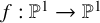
We give a new criterion which guarantees that a free group admits a bi-ordering that is invariant under a given automorphism. As an application, we show that the fundamental group of the “magic manifold” is bi-orderable, answering a question of Kin and Rolfsen.
The development of a sound change can be influenced by linguistic and social factors, both within the language community and from cases of language contact. The present study is an examination of the internally generated ongoing tonogenesis process in Afrikaans, specifically analyzing production and perception of word-initial plosives among different age and gender groups. Results show that female speakers are devoicing significantly more often than male speakers, and the perception of female voices is influenced more by f0 levels than the perception of male voices. This study finds that gender is a larger predictor overall of tonogenetic patterns than age.*
Using the Modified Rhyme Test in accordance with the National Institute for Occupational Safety and Health (NIOSH) protocol, we assessed the communication performance for both speech intelligibility and hearing acuity in bearded healthcare workers (HCWs) wearing a N95/P2 respirator with an under-mask elastic band beard cover.
Design and setting:
A prospective simulation study conducted at the respiratory fit test center of the Royal Melbourne Hospital.
Participants:
Bearded HCWs who required respiratory protection and could not shave for medical, cultural, or religious reasons.
Results:
The overall performance rating score was 91.3% and 99.8% for speech intelligibility and hearing acuity respectively. There was a reduction in the percentage of correct words perceived by a panel of trained listeners when bearded HCWs were speaking while wearing the N95/P2 respirator/elastic band combination compared to the uncovered beard condition (84.5% vs. 92.9%, p = 0.011). However, no significant difference was found in the perception of medical phrases between these two conditions. In the hearing assessment, there were no differences found in hearing correct single words or medical phrases between the two conditions.
Conclusions:
This study demonstrates that when bearded HCWs wore the N95/P2 respirator/elastic band combination, their speech intelligibility and hearing acuity greatly exceeded the NIOSH standard of 70% in the Modified Rhyme Test. This finding is crucial for ensuring effective communication among bearded HCWs, thereby supporting both respiratory protection and operational efficiency in healthcare settings.
Finnish clearcutting is driven by a historically consolidated political economy that includes the large paper and pulp companies, energywood users, and state and regional forestry expert organizations. The Finnish case highlights how boreal forest clearcutting is a key issue that receives less global attention than tropical forest deforestation. Historically, clearcutting was a story of economic growth, framed as a national success story of boosting national welfare in the aftermath of the Second World War (WWII). This approach to forestry management was a top-down model, which severed the traditional relations Finns had to forests. Since WWII, clearcutting has become an institution that is supported and protected by both industry and the Finnish state. This reflects the persistent hegemonic situation, although the role and importance of the forest industry has declined in society and economy. Even though the forestry industry is losing ground, it is still important in the cultural mindset of several forestholders. This chapter explains the crucial role played by a hegemonic and dominant system, which includes corporations, key state actors, and many private forestholders.
This study analyzes 1,000 meta-analyses drawn from 10 disciplines—including medicine, psychology, education, biology, and economics—to document and compare methodological practices across fields. We find large differences in the size of meta-analyses, the number of effect sizes per study, and the types of effect sizes used. Disciplines also vary in their use of unpublished studies, the frequency and type of tests for publication bias, and whether they attempt to correct for it. Notably, many meta-analyses include multiple effect sizes from the same study, yet fail to account for statistical dependence in their analyses. We document the limited use of advanced methods—such as multilevel models and cluster-adjusted standard errors—that can accommodate dependent data structures. Correlations are frequently used as effect sizes in some disciplines, yet researchers often fail to address the methodological issues this introduces, including biased weighting and misleading tests for publication bias. We also find that meta-regression is underutilized, even when sample sizes are large enough to support it. This work serves as a resource for researchers conducting their first meta-analyses, as a benchmark for researchers designing simulation experiments, and as a reference for applied meta-analysts aiming to improve their methodological practices.
This chapter is a novel intersectorial analysis of deforesting industries in Brazil linked to illegal land grabbing/land value speculation, including ranching, monoculture plantation expansion, logging, and infrastructure development. The driving and pulling causes of deforestation in the Amazon are explored through a deeper analysis of the ranching-grabbing regionally dominant political economy (RDPE). Ranching speculating is by far the most prominent key driver and dominant political-economic sector in explaining deforestation in the Brazilian Amazon. Counterintuitively, politically enabled illegal land grabbing/speculation have become more lucrative in many places than the actual ranching activities on the deforested land. Drawing on field research and expert interviews in the Brazilian Amazon, this chapter explains how ranching opens lands for other forms of extractivism, especially the expansion of monoculture plantations. The relations and distinct yet interlinked business logics within ranching and soybean plantation sectors yield an analysis of “modern” and “primitive” forms of agribusiness. The particularities of Amazonian cattle capitalisms are explored via regional comparisons.
This chapter explores how the ranching-grabbing RDPE is supported by moral economic changes, which in this context is veneration for the cowboy lifestyle and scorn of traditional/Indigenous livelihoods. The cowboy lifestyle is often seen in a positive light, despite the violence that accompanies forest removal. These changes in the moral economy help to explain how locals increasingly welcome ranching-land speculation, even inside multiple-use conservation areas. Another key factor in deforestation processes are the policies and infrastructure investment decisions made at the federal and state level, which render large areas available for appropriation. These problems are also international, as groups expanding deforestation are still often funded by international banks, creating investment lock-in, as investors are more interested in preserving returns on investments than curbing illegalities. Simultaneously, there is a wide variety of activists in local communities who are resisting these extractivist pushes. The chapter examines where and how Indigenous peoples/forest-dwellers successfully resist land grabbing and clearcutting on their lands.