Refine search
Actions for selected content:
79 results
Global inviscid limit of 2D, stationary Navier-Stokes and stability of Prandtl expansions
- Part of
-
- Journal:
- Forum of Mathematics, Pi / Volume 14 / 2026
- Published online by Cambridge University Press:
- 17 April 2026, e13
-
- Article
-
- You have access
- Open access
- HTML
- Export citation
-
In this work, we establish the convergence of 2D, stationary Navier-Stokes flows with viscosity $\varepsilon> 0$, $(u^\varepsilon , v^\varepsilon )$ to the classical Prandtl boundary layer, $(\bar {u}_p, \bar {v}_p)$, posed on the domain $(0, \infty ) \times (0, \infty )$:
  $$ \begin{align*} \| u^\varepsilon - \bar{u}_p \|_{L^\infty_y} \lesssim \sqrt{\varepsilon} \langle x \rangle^{- \frac 1 4 + \delta}, \qquad \| v^\varepsilon - \sqrt{\varepsilon} \bar{v}_p \|_{L^\infty_y} \lesssim \sqrt{\varepsilon} \langle x \rangle^{- \frac 1 2}. \end{align*} $$
This validates Prandtl’s boundary layer theory globally in the x-variable for a large class of boundary layers, including the entire one parameter family of the classical Blasius profiles, with sharp decay rates. The result demonstrates asymptotic stability in two senses simultaneously: (1) asymptotic as $\varepsilon \rightarrow 0$ and (2) asymptotic as $x \rightarrow \infty $. In particular, our result provides the first rigorous confirmation for the Navier-Stokes equations that the boundary layer cannot “separate” in these stable regimes, which is very important for physical and engineering applications.


Ill-posedness issue on the Oldroyd-B model in the critical Besov spaces
- Part of
-
- Journal:
- Proceedings of the Royal Society of Edinburgh. Section A: Mathematics , First View
- Published online by Cambridge University Press:
- 29 August 2025, pp. 1-20
-
- Article
- Export citation
-
It was proved in [11, J. Funct. Anal., 2020] that the Cauchy problem for some Oldroyd-B model is well-posed in $\dot{B}^{d/p-1}_{p,1}(\mathbb{R}^d) \times \dot{B}^{d/p}_{p,1}(\mathbb{R}^d)$ with $1\leq p \lt 2d$. In this paper, we prove that the Cauchy problem for the same Oldroyd-B model is ill-posed in $\dot{B}^{d/p-1}_{p,r}(\mathbb{R}^d) \times \dot{B}^{d/p}_{p,r}(\mathbb{R}^d)$ with $1\leq p\leq \infty$ and $1 \lt r\leq\infty$ due to the lack of continuous dependence of the solution.


3D Navier–Stokes–Voigt equations with damping and double delays on unbounded domains: Well-posedness, pullback attractors, and limit measures
- Part of
-
- Journal:
- Proceedings of the Royal Society of Edinburgh. Section A: Mathematics , First View
- Published online by Cambridge University Press:
- 18 March 2025, pp. 1-39
-
- Article
- Export citation
A DYNAMICAL STUDY OF SALINE PLUMES IN DESALINATION OUTFALLS
- Part of
-
- Journal:
- Bulletin of the Australian Mathematical Society / Volume 105 / Issue 3 / June 2022
- Published online by Cambridge University Press:
- 01 March 2022, pp. 523-524
- Print publication:
- June 2022
-
- Article
-
- You have access
- HTML
- Export citation
Decay properties for the incompressible Navier-Stokes flows in a half space
- Part of
-
- Journal:
- Proceedings of the Royal Society of Edinburgh. Section A: Mathematics / Volume 152 / Issue 6 / December 2022
- Published online by Cambridge University Press:
- 11 October 2021, pp. 1509-1532
- Print publication:
- December 2022
-
- Article
- Export citation
-
In this article, we give a comprehensive characterization of $L^1$-summability for the Navier-Stokes flows in the half space, which is a long-standing problem. The main difficulties are that $L^q-L^r$ estimates for the Stokes flow don't work in this end-point case: $q=r=1$; the projection operator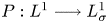 $P: L^1\longrightarrow L^1_\sigma$ is not bounded any more; useful information on the pressure function is missing, which arises in the net force exerted by the fluid on the noncompact boundary. In order to achieve our aims, by making full use of the special structure of the half space, we decompose the pressure function into two parts. Then the knotty problem of handling the pressure term can be transformed into establishing a crucial and new weighted $L^1$-estimate, which plays a fundamental role. In addition, we overcome the unboundedness of the projection $P$ by solving an elliptic problem with homogeneous Neumann boundary condition.


ADAPTIVE GRID REFINEMENT USING THE GENERALISED FINITE-DIFFERENCE METHOD
- Part of
-
- Journal:
- Bulletin of the Australian Mathematical Society / Volume 103 / Issue 2 / April 2021
- Published online by Cambridge University Press:
- 11 September 2020, p. 349
- Print publication:
- April 2021
-
- Article
-
- You have access
- Export citation
ON STABILITY OF PHYSICALLY REASONABLE SOLUTIONS TO THE TWO-DIMENSIONAL NAVIER–STOKES EQUATIONS
- Part of
-
- Journal:
- Journal of the Institute of Mathematics of Jussieu / Volume 20 / Issue 2 / March 2021
- Published online by Cambridge University Press:
- 16 May 2019, pp. 517-568
- Print publication:
- March 2021
-
- Article
- Export citation
Long-time asymptotic expansions for Navier-Stokes equations with power-decaying forces
- Part of
-
- Journal:
- Proceedings of the Royal Society of Edinburgh. Section A: Mathematics / Volume 150 / Issue 2 / April 2020
- Published online by Cambridge University Press:
- 22 January 2019, pp. 569-606
- Print publication:
- April 2020
-
- Article
- Export citation
STOCHASTIC NAVIER–STOKES EQUATIONS ON 2D ROTATING SPHERES WITH STABLE LÉVY NOISE
- Part of
-
- Journal:
- Bulletin of the Australian Mathematical Society / Volume 99 / Issue 2 / April 2019
- Published online by Cambridge University Press:
- 07 January 2019, pp. 344-345
- Print publication:
- April 2019
-
- Article
-
- You have access
- Export citation
Simulation of a Soap Film Möbius Strip Transformation
- Part of
-
- Journal:
- East Asian Journal on Applied Mathematics / Volume 7 / Issue 3 / August 2017
- Published online by Cambridge University Press:
- 07 September 2017, pp. 615-628
- Print publication:
- August 2017
-
- Article
- Export citation
A Moving-Least-Square Immersed Boundary Method for Rigid and Deformable Boundaries in Viscous Flow
- Part of
-
- Journal:
- Communications in Computational Physics / Volume 22 / Issue 4 / October 2017
- Published online by Cambridge University Press:
- 28 July 2017, pp. 913-934
- Print publication:
- October 2017
-
- Article
- Export citation
Exponential Time Differencing Gauge Method for Incompressible Viscous Flows
- Part of
-
- Journal:
- Communications in Computational Physics / Volume 22 / Issue 2 / August 2017
- Published online by Cambridge University Press:
- 21 June 2017, pp. 517-541
- Print publication:
- August 2017
-
- Article
- Export citation
Adaptive Stokes Preconditioning for Steady Incompressible Flows
- Part of
- Numerical problems in dynamical systems
- Equations of mathematical physics and other areas of application
- Approximation methods and numerical treatment of dynamical systems
- Applications - Dynamical systems and ergodic theory
- Numerical linear algebra
- Incompressible viscous fluids
- Hydrodynamic stability
-
- Journal:
- Communications in Computational Physics / Volume 22 / Issue 2 / August 2017
- Published online by Cambridge University Press:
- 21 June 2017, pp. 494-516
- Print publication:
- August 2017
-
- Article
- Export citation
-
This paper describes an adaptive preconditioner for numerical continuation of incompressible Navier–Stokes flows based on Stokes preconditioning [42] which has been used successfully in studies of pattern formation in convection. The preconditioner takes the form of the Helmholtz operator I–ΔtL which maps the identity (no preconditioner) for Δt≪1 to Laplacian preconditioning for Δt≫1. It is built on a first order Euler time-discretization scheme and is part of the family of matrix-free methods. The preconditioner is tested on two fluid configurations: three-dimensional doubly diffusive convection and a two-dimensional projection of a shear flow. In the former case, it is found that Stokes preconditioning is more efficient for
 , away from the values used in the literature. In the latter case, the simple use of the preconditioner is not sufficient and it is necessary to split the system of equations into two subsystems which are solved simultaneously using two different preconditioners, one of which is parameter dependent. Due to the nature of these applications and the flexibility of the approach described, this preconditioner is expected to help in a wide range of applications.
 , away from the values used in the literature. In the latter case, the simple use of the preconditioner is not sufficient and it is necessary to split the system of equations into two subsystems which are solved simultaneously using two different preconditioners, one of which is parameter dependent. Due to the nature of these applications and the flexibility of the approach described, this preconditioner is expected to help in a wide range of applications.
Lattice Boltzmann Simulation of Steady Flow in a Semi-Elliptical Cavity
- Part of
-
- Journal:
- Communications in Computational Physics / Volume 21 / Issue 3 / March 2017
- Published online by Cambridge University Press:
- 07 February 2017, pp. 692-717
- Print publication:
- March 2017
-
- Article
- Export citation
The Oseen Type Finite Element Iterative Method for the Stationary Incompressible Magnetohydrodynamics
- Part of
-
- Journal:
- Advances in Applied Mathematics and Mechanics / Volume 9 / Issue 4 / August 2017
- Published online by Cambridge University Press:
- 18 January 2017, pp. 775-794
- Print publication:
- August 2017
-
- Article
- Export citation
-
In this article, by applying the Stokes projection and an orthogonal projection with respect to curl and div operators, some new error estimates of finite element method (FEM) for the stationary incompressible magnetohydrodynamics (MHD) are obtained. To our knowledge, it is the first time to establish the error bounds which are explicitly dependent on the Reynolds numbers, coupling number and mesh size. On the other hand, The uniform stability and convergence of an Oseen type finite element iterative method for MHD with respect to high hydrodynamic Reynolds number Re and magnetic Reynolds number Rm , or small δ=1–σ with

(C 0, C 1 are constants depending only on Ω and F is related to the source terms of equations) are analyzed under the condition that
 . Finally, some numerical tests are presented to demonstrate the effectiveness of this algorithm.
 . Finally, some numerical tests are presented to demonstrate the effectiveness of this algorithm.
Finite Element Solution for MHD Flow of Nanofluids with Heat and Mass Transfer through a Porous Media with Thermal Radiation, Viscous Dissipation and Chemical Reaction Effects
- Part of
-
- Journal:
- Advances in Applied Mathematics and Mechanics / Volume 9 / Issue 4 / August 2017
- Published online by Cambridge University Press:
- 18 January 2017, pp. 904-923
- Print publication:
- August 2017
-
- Article
- Export citation
Application of the LS-STAG Immersed Boundary/Cut-Cell Method to Viscoelastic Flow Computations
- Part of
-
- Journal:
- Communications in Computational Physics / Volume 20 / Issue 4 / October 2016
- Published online by Cambridge University Press:
- 05 October 2016, pp. 870-901
- Print publication:
- October 2016
-
- Article
- Export citation
Estimation of Impacts of Removing Arbitrarily Constrained Domain Details to the Analysis of Incompressible Fluid Flows
- Part of
-
- Journal:
- Communications in Computational Physics / Volume 20 / Issue 4 / October 2016
- Published online by Cambridge University Press:
- 05 October 2016, pp. 944-968
- Print publication:
- October 2016
-
- Article
- Export citation
Finite Volume Lattice Boltzmann Method for Nearly Incompressible Flows on Arbitrary Unstructured Meshes
- Part of
-
- Journal:
- Communications in Computational Physics / Volume 20 / Issue 2 / August 2016
- Published online by Cambridge University Press:
- 21 July 2016, pp. 301-324
- Print publication:
- August 2016
-
- Article
- Export citation
On Fully Decoupled, Convergent Schemes for Diffuse Interface Models for Two-Phase Flow with General Mass Densities
- Part of
-
- Journal:
- Communications in Computational Physics / Volume 19 / Issue 5 / May 2016
- Published online by Cambridge University Press:
- 17 May 2016, pp. 1473-1502
- Print publication:
- May 2016
-
- Article
- Export citation
