Refine search
Actions for selected content:
56 results
Constructing equilibrium states for some partially hyperbolic attractors via densities
- Part of
-
- Journal:
- Ergodic Theory and Dynamical Systems , First View
- Published online by Cambridge University Press:
- 17 April 2026, pp. 1-16
-
- Article
-
- You have access
- Open access
- HTML
- Export citation
The two-boost problem and Lagrangian Rabinowitz Floer homology
- Part of
-
- Journal:
- Ergodic Theory and Dynamical Systems , First View
- Published online by Cambridge University Press:
- 10 April 2026, pp. 1-59
-
- Article
-
- You have access
- Open access
- HTML
- Export citation
Feldman–Katok pseudometric and the GIKN non-hyperbolic ergodic measures
- Part of
-
- Journal:
- Ergodic Theory and Dynamical Systems , First View
- Published online by Cambridge University Press:
- 07 April 2026, pp. 1-29
-
- Article
-
- You have access
- Open access
- HTML
- Export citation
-
We introduce Feldman–Katok convergence for invariant measures of a topological dynamical system. This can be seen as a counterpart to the convergence with respect to the $\bar {f}$-metric for finite-state stationary processes (shift-invariant measures on a symbolic space). Feldman–Katok convergence is based on a dynamically defined Feldman–Katok pseudometric. This convergence is stronger than weak $^*$ convergence. We prove that Feldman–Katok convergence preserves ergodicity and makes the Kolmogorov–Sinai entropy lower semicontinuous, thereby preserving zero entropy. We apply our findings to non-hyperbolic (having at least one vanishing Lyapunov exponent) ergodic measures constructed using the GIKN method as axiomatized by Bonatti, Díaz and Gorodetski [Nonlinearity, 23 (2010), 687–705]. The GIKN method, originally introduced by Gorodetski, Ilyashenko, Kleptsyn and Nalsky [Functional Analysis and its Applications, 39 (2005), 21–30], has been widely adapted to produce non-hyperbolic ergodic measures for diffeomorphisms of compact manifolds. We prove that an ergodic measure satisfying the conditions provided by the axiomatized GIKN method is the Feldman–Katok limit of a sequence of periodic measures, which implies that it is either a periodic measure or a loosely Kronecker measure (a measure Kakutani equivalent to an aperiodic ergodic rotation on a compact group) and has zero entropy. This classifies all these measures up to Kakutani equivalence and confirms that geometric constructions of non-hyperbolic measures via periodic approximations based on the axiomatized GIKN method presented in Bonatti et al. [op. cit.] systematically produce zero-entropy systems.


Correlation number for potentials with entropy gaps and cusped Hitchin representations
- Part of
-
- Journal:
- Ergodic Theory and Dynamical Systems , First View
- Published online by Cambridge University Press:
- 26 February 2026, pp. 1-45
-
- Article
- Export citation
Distortion elements in the group of diffeomorphisms of the 2-sphere
- Part of
-
- Journal:
- Ergodic Theory and Dynamical Systems / Volume 46 / Issue 5 / May 2026
- Published online by Cambridge University Press:
- 20 February 2026, pp. 1155-1165
- Print publication:
- May 2026
-
- Article
- Export citation
-
We characterize dynamics of every distortion element in the group of diffeomorphisms of the 2-sphere that has at least two fixed points and another recurrent point. The key result is that if f is such a diffeomorphism, then the homeomorphism $\check {f}_{\mathrm { ann}}$, which is a lift of the homeomorphism of the closed annulus $\overline {\mathcal {A}}$ obtained from $\mathbb {S}^2$ by blowing up two fixed points of f to the universal covering space of $\overline {\mathcal {A}}$, has a unique rotation number. Moreover, we find the differential of such a distortion element in the group of diffeomorphisms of the 2-sphere at each fixed point up to conjugacy.


Orbit separation dimension as complexity measure for primitive inflation tilings
- Part of
-
- Journal:
- Ergodic Theory and Dynamical Systems / Volume 45 / Issue 10 / October 2025
- Published online by Cambridge University Press:
- 13 May 2025, pp. 2992-3020
- Print publication:
- October 2025
-
- Article
- Export citation
-
Orbit separation dimension ( $\mathrm {OSD}$), previously introduced as amorphic complexity, is a powerful complexity measure for topological dynamical systems with pure-point spectrum. Here, we develop methods and tools for it that allow a systematic application to translation dynamical systems of tiling spaces that are generated by primitive inflation rules. These systems share many nice properties that permit the explicit computation of the $\mathrm {OSD}$, thus providing a rich class of examples with non-trivial $\mathrm {OSD}$.


On the algorithmic descriptive complexity of attractors in topological dynamics
- Part of
-
- Journal:
- Ergodic Theory and Dynamical Systems / Volume 45 / Issue 8 / August 2025
- Published online by Cambridge University Press:
- 10 March 2025, pp. 2533-2560
- Print publication:
- August 2025
-
- Article
-
- You have access
- Open access
- HTML
- Export citation
Existence of non-trivial embeddings of interval exchange transformations into piecewise isometries
- Part of
-
- Journal:
- Ergodic Theory and Dynamical Systems / Volume 45 / Issue 7 / July 2025
- Published online by Cambridge University Press:
- 24 February 2025, pp. 2194-2232
- Print publication:
- July 2025
-
- Article
- Export citation
-
We prove that almost every interval exchange transformation, with an associated translation surface of genus $g\geq 2$, can be non-trivially and isometrically embedded in a family of piecewise isometries. In particular, this proves the existence of invariant curves for piecewise isometries, reminiscent of Kolmogorov–Arnold–Moser (KAM) curves for area-preserving maps, which are not unions of circle arcs or line segments.

Construction of smooth isomorphic and finite-to-one extensions of irrational rotations which are not almost automorphic
- Part of
-
- Journal:
- Ergodic Theory and Dynamical Systems / Volume 45 / Issue 4 / April 2025
- Published online by Cambridge University Press:
- 04 October 2024, pp. 1224-1245
- Print publication:
- April 2025
-
- Article
-
- You have access
- Open access
- HTML
- Export citation
Homology and K-theory of dynamical systems IV. Further structural results on groupoid homology
- Part of
-
- Journal:
- Ergodic Theory and Dynamical Systems / Volume 45 / Issue 1 / January 2025
- Published online by Cambridge University Press:
- 15 May 2024, pp. 247-273
- Print publication:
- January 2025
-
- Article
-
- You have access
- Open access
- HTML
- Export citation
Multiplicity of topological systems
- Part of
-
- Journal:
- Ergodic Theory and Dynamical Systems / Volume 44 / Issue 10 / October 2024
- Published online by Cambridge University Press:
- 05 February 2024, pp. 2832-2858
- Print publication:
- October 2024
-
- Article
- Export citation
-
We define the topological multiplicity of an invertible topological system $(X,T)$ as the minimal number k of real continuous functions $f_1,\ldots , f_k$ such that the functions $f_i\circ T^n$, $n\in {\mathbb {Z}}$, $1\leq i\leq k,$ span a dense linear vector space in the space of real continuous functions on X endowed with the supremum norm. We study some properties of topological systems with finite multiplicity. After giving some examples, we investigate the multiplicity of subshifts with linear growth complexity.


Polynomial mean complexity and logarithmic Sarnak conjecture
- Part of
-
- Journal:
- Ergodic Theory and Dynamical Systems / Volume 44 / Issue 3 / March 2024
- Published online by Cambridge University Press:
- 27 April 2023, pp. 769-798
- Print publication:
- March 2024
-
- Article
- Export citation
-
In this paper, we reduce the logarithmic Sarnak conjecture to the $\{0,1\}$-symbolic systems with polynomial mean complexity. By showing that the logarithmic Sarnak conjecture holds for any topologically dynamical system with sublinear complexity, we provide a variant of the $1$-Fourier uniformity conjecture, where the frequencies are restricted to any subset of $[0,1]$ with packing dimension less than one.


Flows, growth rates, and the veering polynomial
- Part of
-
- Journal:
- Ergodic Theory and Dynamical Systems / Volume 43 / Issue 9 / September 2023
- Published online by Cambridge University Press:
- 04 October 2022, pp. 3026-3107
- Print publication:
- September 2023
-
- Article
- Export citation
-
For a pseudo-Anosov flow $\varphi $ without perfect fits on a closed $3$-manifold, Agol–Guéritaud produce a veering triangulation $\tau $ on the manifold M obtained by deleting the singular orbits of $\varphi $. We show that $\tau $ can be realized in M so that its 2-skeleton is positively transverse to $\varphi $, and that the combinatorially defined flow graph $\Phi $ embedded in M uniformly codes the orbits of $\varphi $ in a precise sense. Together with these facts, we use a modified version of the veering polynomial, previously introduced by the authors, to compute the growth rates of the closed orbits of $\varphi $ after cutting M along certain transverse surfaces, thereby generalizing the work of McMullen in the fibered setting. These results are new even in the case where the transverse surface represents a class in the boundary of a fibered cone of M. Our work can be used to study the flow $\varphi $ on the original closed manifold. Applications include counting growth rates of closed orbits after cutting along closed transverse surfaces, defining a continuous, convex entropy function on the ‘positive’ cone in $H^1$ of the cut-open manifold, and answering a question of Leininger about the closure of the set of all stretch factors arising as monodromies within a single fibered cone of a $3$-manifold. This last application connects to the study of endperiodic automorphisms of infinite-type surfaces and the growth rates of their periodic points.


Arbitrarily slow decay in the Möbius disjointness conjecture
- Part of
-
- Journal:
- Ergodic Theory and Dynamical Systems / Volume 43 / Issue 9 / September 2023
- Published online by Cambridge University Press:
- 09 September 2022, pp. 2863-2880
- Print publication:
- September 2023
-
- Article
-
- You have access
- Open access
- HTML
- Export citation
-
Sarnak’s Möbius disjointness conjecture asserts that for any zero entropy dynamical system $(X,T)$, $({1}/{N})\! \sum _{n=1}^{N}\! f(T^{n} x) \mu (n)= o(1)$ for every $f\in \mathcal {C}(X)$ and every $x\in X$. We construct examples showing that this $o(1)$ can go to zero arbitrarily slowly. In fact, our methods yield a more general result, where in lieu of $\mu (n)$, one can put any bounded sequence $a_{n}$ such that the Cesàro mean of the corresponding sequence of absolute values does not tend to zero. Moreover, in our construction, the choice of x depends on the sequence $a_{n}$ but $(X,T)$ does not.


Distal systems in topological dynamics and ergodic theory
- Part of
-
- Journal:
- Ergodic Theory and Dynamical Systems / Volume 43 / Issue 8 / August 2023
- Published online by Cambridge University Press:
- 01 August 2022, pp. 2651-2672
- Print publication:
- August 2023
-
- Article
- Export citation
Generic properties of homeomorphisms preserving a given dynamical simplex
- Part of
-
- Journal:
- Ergodic Theory and Dynamical Systems / Volume 43 / Issue 2 / February 2023
- Published online by Cambridge University Press:
- 25 October 2021, pp. 646-662
- Print publication:
- February 2023
-
- Article
- Export citation
-
Given a dynamical simplex K on a Cantor space X, we consider the set $G_K^*$ of all homeomorphisms of X which preserve all elements of K and have no non-trivial clopen invariant subset. Generalizing a theorem of Yingst, we prove that for a generic element g of $G_K^*$ the set of invariant measures of g is equal to K. We also investigate when there exists a generic conjugacy class in $G_K^*$ and prove that this happens exactly when K has only one element, which is the unique invariant measure associated to some odometer; and that in that case the conjugacy class of this odometer is generic in $G_K^*$.


Topologically mixing tiling of $\mathbb {R}^2$ generated by a generalized substitution
-
- Journal:
- Ergodic Theory and Dynamical Systems / Volume 42 / Issue 11 / November 2022
- Published online by Cambridge University Press:
- 30 September 2021, pp. 3526-3550
- Print publication:
- November 2022
-
- Article
- Export citation
-
This paper presents sufficient conditions for a substitution tiling dynamical system of $\mathbb {R}^2$, generated by a generalized substitution on three letters, to be topologically mixing. These conditions are shown to hold on a large class of tiling substitutions originally presented by Kenyon in 1996. This problem was suggested by Boris Solomyak, and many of the techniques that are used in this paper are based on the work by Kenyon, Sadun, and Solomyak [Topological mixing for substitutions on two letters. Ergod. Th. & Dynam. Sys. 25(6) (2005), 1919–1934]. They studied one-dimensional tiling dynamical systems generated by substitutions on two letters and provided similar conditions sufficient to ensure that one-dimensional substitution tiling dynamical systems are topologically mixing. If a tiling dynamical system of $\mathbb {R}^2$ satisfies our conditions (and thus is topologically mixing), we can construct additional topologically mixing tiling dynamical systems of $\mathbb {R}^2$. By considering the stepped surface constructed from a tiling $T_\sigma $, we can get a new tiling of $\mathbb {R}^2$ by projecting the surface orthogonally onto an irrational plane through the origin.


Reconstructing a minimal topological dynamical system from a set of return times
- Part of
-
- Journal:
- Ergodic Theory and Dynamical Systems / Volume 42 / Issue 9 / September 2022
- Published online by Cambridge University Press:
- 03 September 2021, pp. 2723-2739
- Print publication:
- September 2022
-
- Article
- Export citation
Geodesic planes in geometrically finite acylindrical $3$-manifolds
- Part of
-
- Journal:
- Ergodic Theory and Dynamical Systems / Volume 42 / Issue 2 / February 2022
- Published online by Cambridge University Press:
- 04 May 2021, pp. 514-553
- Print publication:
- February 2022
-
- Article
- Export citation
-
Let M be a geometrically finite acylindrical hyperbolic $3$-manifold and let $M^*$ denote the interior of the convex core of M. We show that any geodesic plane in $M^*$ is either closed or dense, and that there are only countably many closed geodesic planes in $M^*$. These results were obtained by McMullen, Mohammadi and Oh [Geodesic planes in hyperbolic 3-manifolds. Invent. Math. 209 (2017), 425–461; Geodesic planes in the convex core of an acylindrical 3-manifold. Duke Math. J., to appear, Preprint, 2018, arXiv:1802.03853] when M is convex cocompact. As a corollary, we obtain that when M covers an arithmetic hyperbolic $3$-manifold $M_0$, the topological behavior of a geodesic plane in $M^*$ is governed by that of the corresponding plane in $M_0$. We construct a counterexample of this phenomenon when $M_0$ is non-arithmetic.


Generic rotation sets
- Part of
-
- Journal:
- Ergodic Theory and Dynamical Systems / Volume 42 / Issue 1 / January 2022
- Published online by Cambridge University Press:
- 29 December 2020, pp. 250-262
- Print publication:
- January 2022
-
- Article
- Export citation
-
Let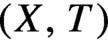 $(X,T)$ be a topological dynamical system. Given a continuous vector-valued function $F \in C(X, \mathbb {R}^{d})$ called a potential, we define its rotation set $R(F)$ as the set of integrals of F with respect to all T-invariant probability measures, which is a convex body of $\mathbb {R}^{d}$. In this paper we study the geometry of rotation sets. We prove that if T is a non-uniquely ergodic topological dynamical system with a dense set of periodic measures, then the map $R(\cdot )$ is open with respect to the uniform topologies. As a consequence, we obtain that the rotation set of a generic potential is strictly convex and has $C^{1}$ boundary. Furthermore, we prove that the map $R(\cdot )$ is surjective, extending a result of Kucherenko and Wolf.


