To save content items to your account,
please confirm that you agree to abide by our usage policies.
If this is the first time you use this feature, you will be asked to authorise Cambridge Core to connect with your account.
Find out more about saving content to .
To save content items to your Kindle, first ensure no-reply@cambridge.org
is added to your Approved Personal Document E-mail List under your Personal Document Settings
on the Manage Your Content and Devices page of your Amazon account. Then enter the ‘name’ part
of your Kindle email address below.
Find out more about saving to your Kindle.
Note you can select to save to either the @free.kindle.com or @kindle.com variations.
‘@free.kindle.com’ emails are free but can only be saved to your device when it is connected to wi-fi.
‘@kindle.com’ emails can be delivered even when you are not connected to wi-fi, but note that service fees apply.
For much of its history, archaeological research has relied on site-specific projects, regional comparisons, and theory building from case studies. However, recent research themes concerning the emergence of complex social-ecological systems and long-term land-use legacies require a new approach to archaeological data. Large-scale syntheses of archaeological data provide an effective way forward to address these new research themes. In more concise terms, “big questions” require “big data” to help answer them. The archaeological information collected by the USDA Forest Service is one such “big dataset” and represents an incalculable investment in time, resources, and expertise. This article explores this concept and presents an R package (ArchaeoSRP) designed to extract archaeological information from USDA Forest Service site record files. We demonstrate the functionality of this R package through a case study examining the archaeological data for the Cle Elum Ranger District, within Central Washington's Okanogan-Wenatchee National Forest. Our results reveal the efficiency of using automated methods to extract, organize, and synthesize district-level archaeological data, which, in turn, reveal patterns of precontact and historic land use that were otherwise not distinguishable.
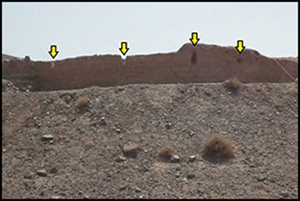
During a pioneering aerial survey of the Near East in the 1920s, Father Antoine Poidebard recorded hundreds of fortified military buildings that traced the eastern frontier of the Roman Empire. Based on their distribution, Poidebard proposed that these forts represented a line of defence against incursions from the east. Utilising declassified images from the CORONA and HEXAGON spy satellite programmes, the authors report on the identification of a further 396 forts widely distributed across the northern Fertile Crescent. The addition of these forts questions Poidebard's defensive frontier thesis and suggests instead that the structures played a role in facilitating the movement of people and goods across the Syrian steppe.
Past and present cultures perceive their natural landscape as an integral and vital component of their complex worlds, while particular landscape features and associated monuments built in selected locales become sacred and revered through stories, legends and rituals embedded in mundane and ceremonial events. The hyper-arid Har Tzuriaz area in the southern Negev, Israel, offers a case study of culture-geographic continuities over a chronologically cumulative archaeological sequence. The large set of well-preserved structures located adjacent to water sources, a massive escarpment and a major desert crossroads includes campsites, cult sites, rock-art sites, cairn fields and one desert kite (a large game trap). Cultural continuities and change can be traced from the sixth millennium bce through recent times, reflecting a dynamic system of meanings and interpretations of both the natural and the built landscape within one particular sacred area in the desert. These phenomena are exemplified in archaeological analyses of an open-air shrine, burial cairns, an isolated desert kite and a precise engraving of that kite dated 5000 years later, all in the general context of a dense concentration of surveyed sites.
The Poverty Point site, located in the Lower Mississippi Valley of the south-eastern United States, is commonly considered a centre of innovation that exported new material culture, practices and identity to presumably contemporaneous sites in the region. Recent radiocarbon data, however, show that Jaketown, previously interpreted as a peripheral expression of Poverty Point culture, is earlier than the type-site. Using the revised chronology at Jaketown as a case study, the authors argue that assuming a radial diffusion of cultural innovations biases our understanding of social change and obfuscates complex histories. Their study demonstrates how examining local sequences can challenge generalised models of regional cultural change.
Although first identified 120 years ago, knowledge of the Toalean technoculture of Middle Holocene Sulawesi, Indonesia, remains limited. Previous research has emphasised the exploitation of largely terrestrial resources by hunter-gatherers on the island. The recent recovery of two modified tiger shark teeth from the Maros-Pangkep karsts of South Sulawesi, however, offers new insights. The authors combine use-wear and residue analyses with ethnographic and experimental data to indicate the use of these artefacts as hafted blades within conflict and ritual contexts, revealing hitherto undocumented technological and social practices among Toalean hunter-gatherers. The results suggest these artefacts constitute some of the earliest archaeological evidence for the use of shark teeth in composite weapons.
Discussions of contacts between Britain and Ireland usually focus on monuments and on portable artefacts such as Grooved Ware, Beakers, and metalwork. New research on insular rock art suggests that it originated in the Middle to Late Neolithic period and continued to be used and re-used into the Early Bronze Age. This paper considers its relationship with decorated passage graves and other structures. It argues that the distribution of rock art sheds further light on connections between these islands. Estuaries, bays, and landing places were important, but the siting of pecked motifs indicates other links along three overland routes between the North Sea and the Irish Sea. Certain practices were shared between megalithic tombs and recently excavated rock carvings. It is possible that they expressed similar beliefs at a time when long distance travel was important.
The Egyptian Social Contract explores the intricacies of the relationship between the state and its citizens, from the establishment of the semi-independent Egyptian nation in 1922 until the 2011 Uprising. The book studies how and why a social contract that had been reformed in the aftermath of World War II became the core of state-citizen relations under President Nasser. It further explores the long and tortuous search for a new social contract in Egypt since the 1970s.
Relli Shechter looks at how this social contract channeled socioeconomic development over time, creating an Egyptian middle-class society. Shechter probes a political economy in which class vision and interests in development intertwined with the rise and entrenchment of authoritarianism. The perseverance of this social contract has mostly inhibited socioeconomic and political reforms, or the making of a new social contract, in Egypt. Such reforms would have challenged Egypt's ruling elite, and no less so its middle-class society.
It was a pleasure to review these two books by renowned authorities on the importance of bird remains, both for interpreting archaeological sites and for understanding how human interaction with wild birds has evolved in Western Europe. Wild birds are very important in helping to interpret many archaeological sites and, when I am directing excavations, I always keep to hand Alan Cohen and Dale Serjeantson's manual for identifying bird bones (Cohen & Serjeantson 1996) and I recommend it to the students who participate. For over 60 years Anne Eastham's tireless dedication to Quaternary avifauna and her assiduous preparation, by meticulously dissecting birds to build a comprehensive skeletal reference collection, have furthered the archaeological interpretation of many Western European Palaeolithic sites.
For 15 years, the University of Idaho has conducted chemical testing of excavated materials from historical sites throughout North America. The most common artifacts tested are sealed containers. Some come from current excavations, but most are from repository shelves. The immediate purpose of the archaeochemistry work is twofold: to identify the contents of the containers for researchers and to provide training for students in analytical chemistry. After testing more than 500 items, project personnel have recognized some unexpected outcomes that have implications for institutions housing the artifacts. Specifically, tested materials identified the small, yet consistent, presence of certain artifacts that can have health implications for personnel working with the items. The article concludes with general guidance on identifying and assessing those risks.
We examined stable isotopes (δ13C, δ15N, and δ34S) of camelid, cavid, and cervid remains from Upanca, an archaeological site located in the Southern Nasca Region on the south coast of Peru. Occupation at the site began in the Middle Archaic (around 3200–3000 BC) and continued through the Nasca period (AD 100–650). Remains predating 2500 BC show low δ13C and δ15N values, whereas remains after this time show increasing and especially more variable isotopic values. We interpret this pattern as marking both a process of agricultural intensification and camelid husbandry diversification. Agricultural intensification began first with C3 plants in fertilized fields, beginning around 2200 cal BC, followed by an increasing use of C4 plants (maize, kiwicha, or both), particularly after 800 cal BC. By the beginning of the first millennium, people were using a diverse range of strategies to raise llamas and alpacas, including feeding them wild or cultivated C3 plants, feeding them cultivated C4 plant foods, mixing C3 and C4 plant foods, foddering some in natural coastal environments, and acquiring still other camelids by hunting wild stocks (guanaco, vicuña). Data also suggest that cavids were consuming at least some C4 products after 1000 cal BC and that the use of C4 plants increased over time.
Confirming ephemeral human occupation is a crucial issue in cave archaeology. The project ‘Tracing human presence in caves of Polish Jura’ focuses on the application of molecular methods to decode the history of past human activities in cave sediments in the Kraków-Częstochowa Upland. The results will be compared with archaeological and palaeoecological proxies.
A quantitative analysis of 150 Mesolithic dwellings in Norway, dated to between 9500 and 4000 cal bc, forms the core of a chronological and regional study based on fifteen variables, including floor size and shape, floor modifications and wall features, internal hearths, numbers and distribution of artefacts, traces of maintenance or reuse, and the number of dwellings per site. The study identifies a distinct change in dwelling traditions between the Early and Middle Mesolithic, around 8000 cal bc. Tents are typical of the Early Mesolithic, whereas remains of pit houses dominate in all later phases of the Mesolithic. The study also sheds light on variability in dwelling traditions after 8000 cal bc, which appears to relate to changes in social structure, growing territoriality, and regional differences.
In this study, I use the type-variety-mode analysis to define the diagnostic ceramic material for the Ik'hubil Ceramic Complex dating to the Terminal Classic (ca. a.d. 780–930/1000). The percentages of shared ceramic content indicate that multiple sites in the mid-to-lower Sibun Valley are members of an Ik'hubil Ceramic Sphere. My preliminary analyses of sites in the lower Belize River valley suggest that the Ik'hubil Sphere may extend across a broader area of north-central Belize during the Terminal Classic, discrete from the Spanish Lookout Sphere in the upper Belize Valley. Northern Yucatec traits are identified in ceramics and architecture in the eastern Sibun and Belize Valleys, along with marked changes in foodways. The presence of trading diasporas and more intimate social relationships, such as intermarriage, may explain this mix of local and hybrid forms of material culture introduced by the ninth century in this part of the eastern Maya Lowlands.
This article revisits a long-neglected site in Northern Belize, the Classic Maya settlement of El Pozito, located in the Orange Walk District. Investigations led by Mary Neivens and Dennis Puleston explored the site between 1974 and 1976, documenting its architecture and recovering a substantial quantity of artifacts. Afterward, events conspired to bring these investigations to a close, leaving the site in a half-century scholarly limbo. The research here seeks to rectify this. Combining extant field notes with sporadic publications and recently conducted ceramic analysis, the authors reconstructed El Pozito's sequence of construction, occupation, and usage over 20 centuries. This new research revealed a settlement of surprising complexity, combining aspects of urban functionality amid a landscape of rural complexity. This article argues that the best way to understand such complexity is through the conceptual lens of a “town.” Neither a city nor a dispersed rural settlement, El Pozito functioned as a critical node that connected local, agrarian Maya with each other as well as the whole of the Classic Maya world. In this way, the research here seeks to rehabilitate this site, rescue it from its scholarly limbo, and restore its place in understanding the complex pre-Columbian landscapes of Northern Belize.
L'articolo indaga le immagini di famiglia sui monumenti funerari della Venetia, concentrate per lo più nel corso dell'età giulio-claudia, anche incrociando le informazioni epigrafiche e integrando l'analisi con elaborazioni quantitative. Si registra una certa codificazione del significato parentale, che emerge dallo schema iconografico e viene ribadito dai gesti, mentre abiti e oggetti aiutavano a caratterizzare il singolo ritratto. Non si riconosce una consistente alterazione del significato dell'immagine in base al contesto sociale o alla premorienza di alcuni membri della famiglia. L'analisi permette di comprendere quali fossero le tendenze trasversali su cui la committenza agiva per ritrarre il proprio nucleo domestico, dialogando con il contesto geografico e culturale di appartenenza e sintetizzando la realtà familiare del mondo dei vivi per creare un modello iconico per la comunità dei morti.