Refine search
Actions for selected content:
179478 results in Earth and Environmental Sciences
The clayey deposit from Bomkoul (Douala, Cameroon): a case study of the geotechnical appraisal and assessment of the characteristics of firing bricks
-
- Journal:
- Clay Minerals / Volume 60 / Issue 2 / June 2025
- Published online by Cambridge University Press:
- 07 July 2025, pp. 113-126
-
- Article
-
- You have access
- Open access
- HTML
- Export citation

Quantum implicit representation of vortex filaments in turbulence
-
- Journal:
- Journal of Fluid Mechanics / Volume 1014 / 10 July 2025
- Published online by Cambridge University Press:
- 07 July 2025, A31
-
- Article
- Export citation
Comparing GPR with ice thickness and thermal models: Insights from two polythermal glaciers in West Greenland
-
- Journal:
- Journal of Glaciology / Volume 71 / 2025
- Published online by Cambridge University Press:
- 07 July 2025, e97
-
- Article
-
- You have access
- Open access
- HTML
- Export citation
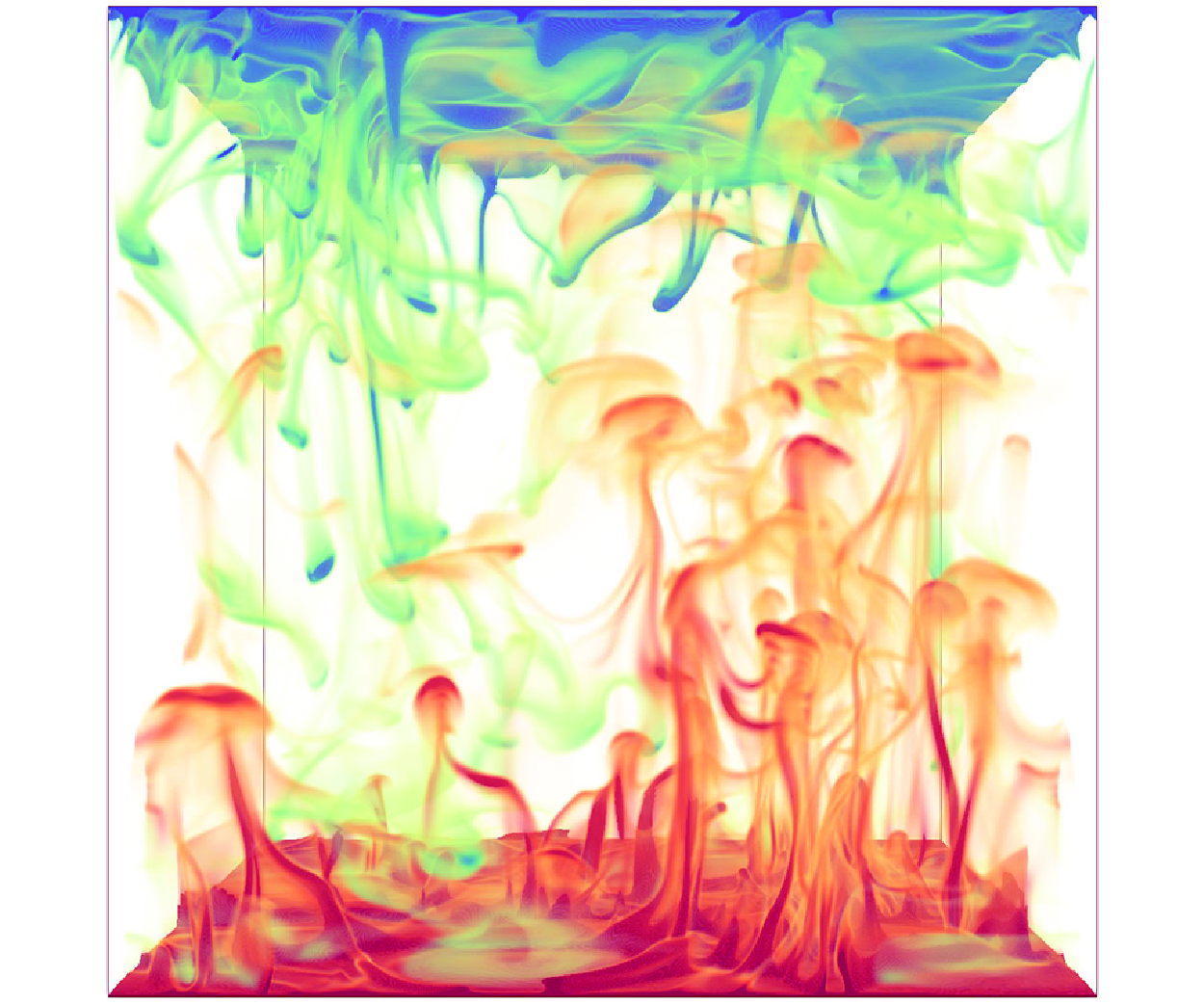
Direct numerical simulations of turbulent Rayleigh–Bénard convection with polymer additives
-
- Journal:
- Journal of Fluid Mechanics / Volume 1014 / 10 July 2025
- Published online by Cambridge University Press:
- 07 July 2025, A22
-
- Article
-
- You have access
- Open access
- HTML
- Export citation
-
We present results of three-dimensional direct numerical simulations of turbulent Rayleigh–Bénard convection of dilute polymeric solutions for Rayleigh number ( $Ra$) ranging from $10^6$ to $ 10^{10}$, and Prandtl number $Pr=4.3$. The viscoelastic flow is simulated by solving the incompressible Navier–Stokes equations under the Boussinesq approximation coupled with the finitely extensible nonlinear elastic Peterlin constitutive model. The Weissenberg number ( $Wi$) is either $Wi=5$ or $Wi=10$, with the maximum chain extensibility parameter $L=50$, corresponding to moderate fluid elasticity. Our results demonstrate that both heat transport and momentum transport are reduced by the presence of polymer additives in the studied parameter range. Remarkably, the specific parameters used in the current numerical study give similar heat transfer reduction values as observed in experiments. We demonstrate that polymers have different effects in different regions of the flow. The presence of polymers stabilises the boundary layer, which is found to be the primary cause of the overall heat transfer reduction. In the bulk region, the presence of polymers slows down the flow by increasing the effective viscosity, enhances the coherency of thermal plumes, and suppresses the small-scale turbulent fluctuations. For small $Ra$, the heat transfer reduction in the bulk region is associated with plume velocity reduction, while for larger $Ra$, it is caused by the competing effects of suppressed turbulent fluctuations and enhanced plume coherency.



Optimal rigid brush for fluid capture
-
- Journal:
- Journal of Fluid Mechanics / Volume 1014 / 10 July 2025
- Published online by Cambridge University Press:
- 07 July 2025, A29
-
- Article
- Export citation

Elliptic liquid jets in a supersonic cross-flow
-
- Journal:
- Journal of Fluid Mechanics / Volume 1014 / 10 July 2025
- Published online by Cambridge University Press:
- 07 July 2025, A34
-
- Article
-
- You have access
- Open access
- HTML
- Export citation
-
In the present work, we experimentally investigate the transverse injection of elliptic liquid jets into a supersonic cross-flow ( $M_\infty$ = 2.5). The primary focus is to understand the effect of injection orifice aspect ratio ( $\textit{AR}$ = spanwise/streamwise dimension), on the liquid jet breakup mechanism, the flow field around the liquid jet and the resulting droplet sizes formed downstream, for three $\textit{AR}$ cases ( $\textit{AR}$ = 0.3, 1, 3.3). We find that the $\textit{AR}$ = 0.3 case has large unsteadiness in the spray core due to relatively large wavelength Rayleigh–Taylor (RT) waves formed on the liquid jet surface. However, the primary jet breakup occurs through Kelvin–Helmholtz (KH) instabilities formed on the large lateral surfaces, as in coaxial liquid jet breakup. This leads to a higher Sauter mean diameter (SMD) of the droplets in the spray core with a wider range of droplet sizes compared with the circular case ( $\textit{AR}$ = 1.0). However, in the case of $\textit{AR}$ = 3.3, the RT waves are more intense and of smaller wavelength due to the large drag on the liquid jet, which results in a direct catastrophic breakup of the liquid jet by the RT waves. This results in a relatively steady liquid jet and shock structure with the formation of a fine spray and smaller droplets in the spray core than for the $\textit{AR}=1.0$ case. The study shows the importance of the orifice $\textit{AR}$ on the flow around, and the spray downstream of, the liquid jet injection into supersonic cross-flow.


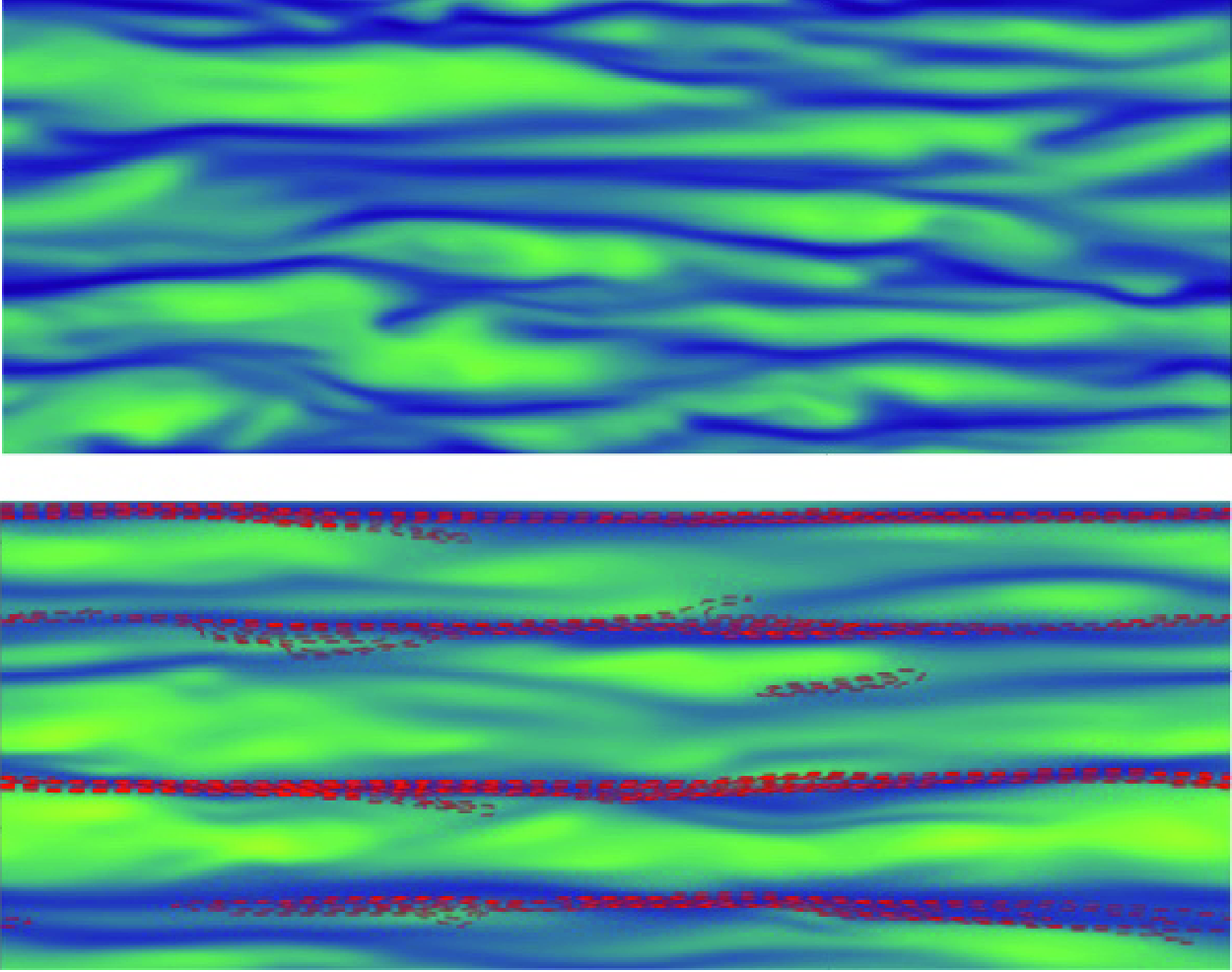
Direct numerical simulation of particle clustering and turbulence modulation: an Eulerian approach
-
- Journal:
- Journal of Fluid Mechanics / Volume 1014 / 10 July 2025
- Published online by Cambridge University Press:
- 07 July 2025, A37
-
- Article
-
- You have access
- Open access
- HTML
- Export citation
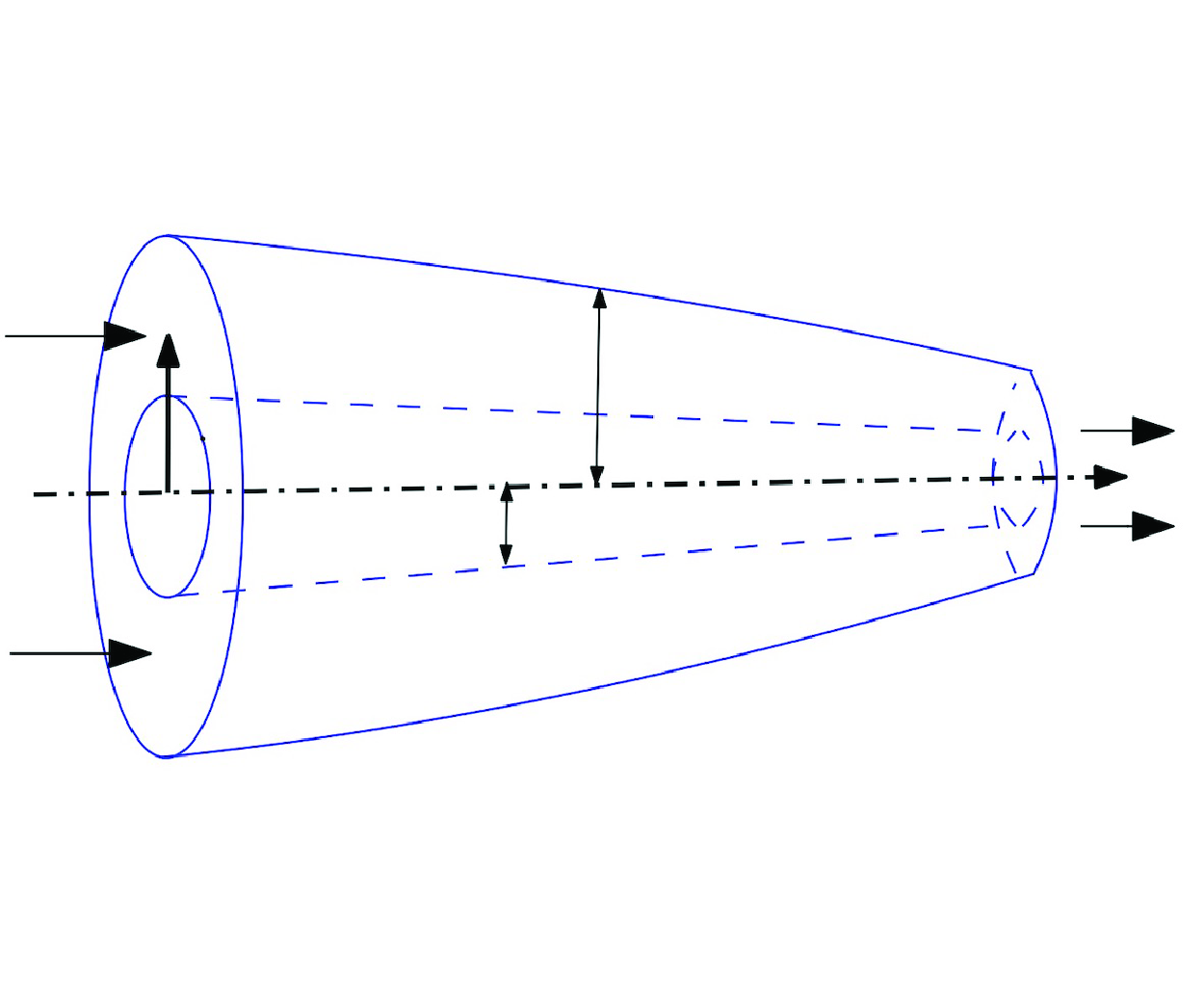
Drawing of weakly viscoelastic fluid tubes
-
- Journal:
- Journal of Fluid Mechanics / Volume 1014 / 10 July 2025
- Published online by Cambridge University Press:
- 07 July 2025, A27
-
- Article
-
- You have access
- Open access
- HTML
- Export citation
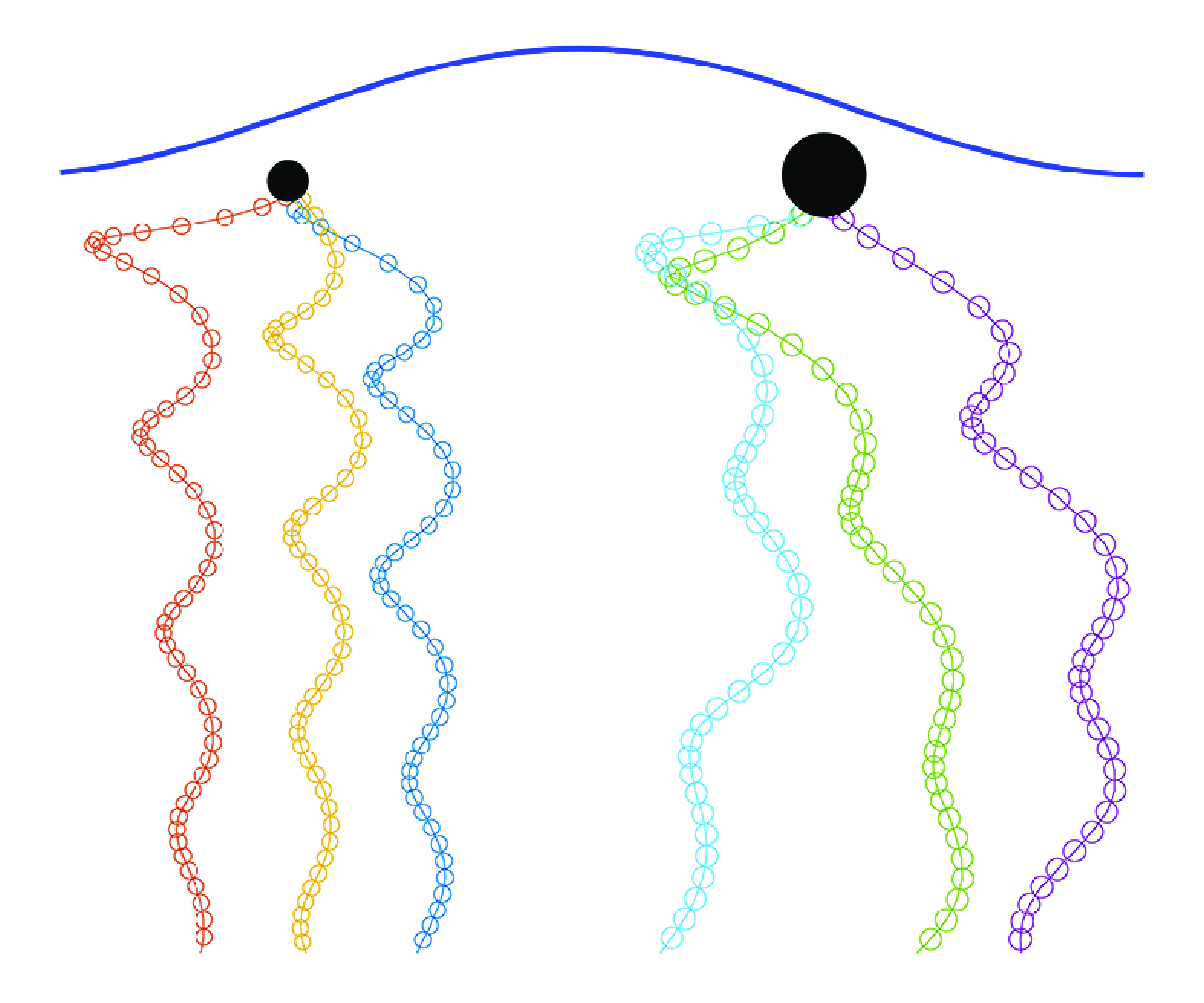
Experimental investigation of inertial spheres settling in surface gravity waves
-
- Journal:
- Journal of Fluid Mechanics / Volume 1014 / 10 July 2025
- Published online by Cambridge University Press:
- 04 July 2025, A33
-
- Article
-
- You have access
- Open access
- HTML
- Export citation
INC-5.2 presents a critical opportunity to protect the health of current and future generations
- Part of
-
- Journal:
- Cambridge Prisms: Plastics / Volume 3 / 2025
- Published online by Cambridge University Press:
- 04 July 2025, e34
-
- Article
-
- You have access
- Open access
- HTML
- Export citation
Insights into human transformation of landscapes from a comparison of historical and palaeoecological records from the Hunan–Jiangxi border region of China
-
- Journal:
- Quaternary Research / Volume 128 / November 2025
- Published online by Cambridge University Press:
- 04 July 2025, pp. 1-8
-
- Article
-
- You have access
- Open access
- HTML
- Export citation
Preface to the Annals of Glaciology Collection ‘Sea Ice Across Temporal and Spatial Scales’
- Part of
-
- Journal:
- Annals of Glaciology / Volume 66 / 2025
- Published online by Cambridge University Press:
- 04 July 2025, e18
-
- Article
-
- You have access
- Open access
- HTML
- Export citation
No hope for Pyrenean glaciers
- Part of
-
- Journal:
- Annals of Glaciology / Volume 66 / 2025
- Published online by Cambridge University Press:
- 04 July 2025, e17
-
- Article
-
- You have access
- Open access
- HTML
- Export citation
FLM volume 1013 Cover and Front matter
-
- Journal:
- Journal of Fluid Mechanics / Volume 1013 / 25 June 2025
- Published online by Cambridge University Press:
- 04 July 2025, p. f1
-
- Article
-
- You have access
- Export citation
MGM volume 89 issue 1 Cover
-
- Journal:
- Mineralogical Magazine / Volume 89 / Issue 1 / February 2025
- Published online by Cambridge University Press:
- 04 July 2025, p. f1
-
- Article
-
- You have access
- Export citation
Modeling the contribution of carbon sources using cellulose 14C concentrations in subannual tree ring increments over the 1963 bomb spike
-
- Journal:
- Radiocarbon / Volume 67 / Issue 4 / August 2025
- Published online by Cambridge University Press:
- 04 July 2025, pp. 831-841
- Print publication:
- August 2025
-
- Article
-
- You have access
- Open access
- HTML
- Export citation
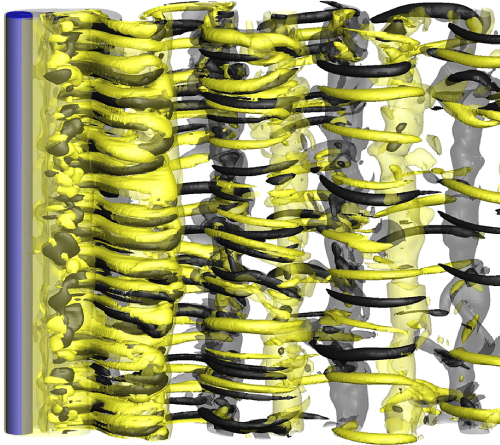
Two- and three-dimensional wake transitions of a circular cylinder with a rear-attached splitter plate
-
- Journal:
- Journal of Fluid Mechanics / Volume 1014 / 10 July 2025
- Published online by Cambridge University Press:
- 04 July 2025, A28
-
- Article
-
- You have access
- Open access
- HTML
- Export citation
The Earth4All scenarios: human wellbeing on a finite planet towards 2100
-
- Journal:
- Global Sustainability / Volume 8 / 2025
- Published online by Cambridge University Press:
- 04 July 2025, e22
-
- Article
-
- You have access
- Open access
- HTML
- Export citation
Criteria for inferring seafloor arrival position in teleosauroid carcasses (Crocodylomorpha: Thalattosuchia) and comparison with other marine vertebrates
-
- Journal:
- Geological Magazine / Volume 162 / 2025
- Published online by Cambridge University Press:
- 04 July 2025, e19
-
- Article
-
- You have access
- Open access
- HTML
- Export citation
Small-scale shear layers in isotropic turbulence of viscoelastic fluids – ERRATUM
-
- Journal:
- Journal of Fluid Mechanics / Volume 1014 / 10 July 2025
- Published online by Cambridge University Press:
- 04 July 2025, E1
-
- Article
-
- You have access
- HTML
- Export citation
