To save content items to your account,
please confirm that you agree to abide by our usage policies.
If this is the first time you use this feature, you will be asked to authorise Cambridge Core to connect with your account.
Find out more about saving content to .
To save content items to your Kindle, first ensure no-reply@cambridge.org
is added to your Approved Personal Document E-mail List under your Personal Document Settings
on the Manage Your Content and Devices page of your Amazon account. Then enter the ‘name’ part
of your Kindle email address below.
Find out more about saving to your Kindle.
Note you can select to save to either the @free.kindle.com or @kindle.com variations.
‘@free.kindle.com’ emails are free but can only be saved to your device when it is connected to wi-fi.
‘@kindle.com’ emails can be delivered even when you are not connected to wi-fi, but note that service fees apply.
In this paper, we develop an analytical model to investigate the generation of instability waves triggered by the upstream acoustic forcing near the nozzle lip of a supersonic jet. This represents an important stage, i.e. the jet receptivity, of the screech feedback loop. The upstream acoustic forcing, resulting from the shock-instability interaction (SII), reaches the nozzle lip and excites new shear-layer instability waves. To obtain the newly excited instability wave, we first determine the scattered sound field due to the upstream forcing using the Wiener–Hopf technique, with the kernel function factored using asymptotic expansions and overlapping approximations. Subsequently, the unsteady Kutta condition is imposed at the nozzle lip, enabling the derivation of the dispersion relation for the newly excited instability wave. A linear transfer function between the upstream forcing and the newly excited instability wave is obtained. We calculate the amplitude and phase delay in this receptivity process and examine their variations against the frequency. The analytically obtained phase delay enables us to evaluate the phase condition for jet screech and predict the screech frequency accordingly. The results show improved agreement with the experimental data compared with classical models. It is hoped that this model may help in developing a full screech model.
When an oblate droplet translates through a viscous fluid under linear shear, it experiences a lateral lift force whose direction and magnitude are influenced by the Reynolds number, the droplet’s viscosity and its aspect ratio. Using a recently developed sharp interface method, we perform three-dimensional direct numerical simulations to explore the evolution of lift forces on oblate droplets across a broad range of these parameters. Our findings reveal that in the low-but-finite Reynolds number regime, the Saffman mechanism consistently governs the lift force. The lift increases with the droplet’s viscosity, aligning with the analytical solution derived by Legendre & Magnaudet (Phys. Fluids, vol. 9, 1997, p. 3572), and also rises with the droplet’s aspect ratio. We propose a semi-analytical correlation to predict this lift force. In the moderate- to high-Reynolds-number regime, distinct behaviours emerge: the $L\hbox{-}$ and $S\hbox{-}$mechanisms, arising from the vorticity contained in the upstream shear flow and the vorticity produced at the droplet surface, dominate for weakly and highly viscous droplets, respectively. Both mechanisms generate counter-rotating streamwise vortices of opposite signs, leading to observed lift reversals with increasing droplet viscosity. Detailed force decomposition based on vorticity moments indicates that in the $L\hbox{-}$mechanism-dominated regime for weakly to moderately viscous droplets, the streamwise vorticity-induced lift approximates the total lift. Conversely, in the $S\hbox{-}$mechanism-dominated regime, for moderately to highly viscous droplets, the streamwise vorticity-induced lift constitutes only a portion of the total lift, with the asymmetric advection of azimuthal vorticity at the droplet interface contributing additional positive lift to counterbalance the $S\hbox{-}$mechanism’s effects. These insights bridge the understanding between inviscid bubbles and rigid particles, enhancing our comprehension of the lift force experienced by droplets in different flow regimes.
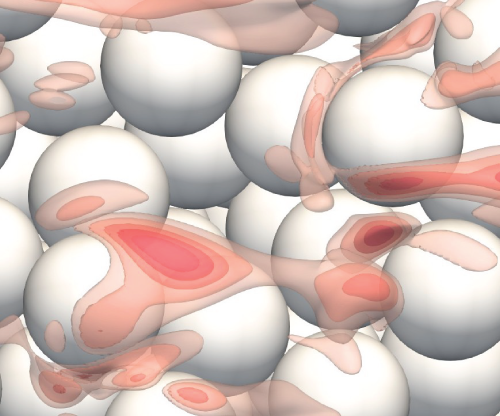
We investigate the fluid–solid interaction of suspensions of Kolmogorov-size spherical particles moving in homogeneous isotropic turbulence at a microscale Reynolds number of $Re_\lambda \approx 140$. Two volume fractions are considered, $10^{-5}$ and $10^{-3}$, and the solid-to-fluid density ratio is set to $5$ and $100$. We present a comparison between interface-resolved (PR-DNS) and one-way-coupled point-particle (PP-DNS) direct numerical simulations. We find that the modulated energy spectrum shows the classical $-5/3$ Kolmogorov scaling in the inertial range of scales and a $-4$ scaling at smaller scales, with the latter resulting from a balance between the energy injected by the particles and the viscous dissipation, in an otherwise smooth flow. An analysis of the small-scale flow topology shows that the particles mainly favour events with axial strain and vortex compression. The dynamics of the particles and their collective motion studied for PR-DNS are used to assess the validity of the PP-DNS. We find that the PP-DNS predicts fairly well both the Lagrangian and Eulerian statistics of the particle motion for the low-density case, while some discrepancies are observed for the high-density case. Also, the PP-DNS is found to underpredict the level of clustering of the suspension compared with the PR-DNS, with a larger difference for the high-density case.
Many problems in elastocapillary fluid mechanics involve the study of elastic structures interacting with thin fluid films in various configurations. In this work, we study the canonical problem of the steady-state configuration of a finite-length pinned and flexible elastic plate lying on the free surface of a thin film of viscous fluid. The film lies on a moving horizontal substrate that drives the flow. The competing effects of elasticity, viscosity, surface tension and fluid pressure are included in a mathematical model consisting of a third-order Landau–Levich equation for the height of the fluid film and a fifth-order Landau–Levich-like beam equation for the height of the plate coupled together by appropriate matching conditions at the downstream end of the plate. The properties of the model are explored numerically and asymptotically in appropriate limits. In particular, we demonstrate the occurrence of boundary-layer effects near the ends of the plate, which are expected to be a generic phenomenon for singularly perturbed elastocapillary problems.
Dysnoetoporidae is a family of cheilostome bryozoans including only the genus Dysnoetopora Canu and Bassler, 1926, with three recognized species from the Late Cretaceous of the United States, Crimea, and Germany. The aim of this study was to record for the first time the presence of a fossil dysnoetoporid bryozoan in South America by describing Chenquepora miocenica new genus new species. This taxon was found in Miocene deposits of the Chenque Formation (early Langhian, ~15.37 Ma), on the Atlantic coast of Argentine Patagonia. Chenquepora n. gen. differs from Dysnoetopora in its encrusting colony and, consequently, in the absence of an endozone with long zooids arranged parallel to growth direction. This new record extends its paleobiogeographic distribution to the Southern Hemisphere and its stratigraphic range from the Campanian (Late Cretaceous) to the Miocene, showing that this extinct family survived the Cretaceous-Paleogene (K-Pg) mass-extinction event.
The polycrisis, an inadvertent peril of our own making, poses an existential threat to the modern world. Given humanity's innate desire to live safely, and to prosper, what explains this self-inflicted danger? Root causes of the polycrisis are both material and ideational. This essay focuses on the latter, exploring the impact of an exaggerated sense of human exceptionalism which legitimizes profligate behavior and releases us from accountability to each other, to the planet, and to future generations.
Technical summary
The polycrisis presents an existential threat to modern civilization on Earth. Neither desirable nor purposeful, it is an inadvertent consequence of collective human agency, a dangerous phenomenon with the power to override prudent, morally sound behavior. Emerging from the totality of multiple global stresses interlinked by myriad causal pathways, the polycrisis is a coherent entity which can, and does, amplify and accelerate local crises (such as supply chain disruptions, political uprisings and war, or natural catastrophes) into a cascading storm of alarming scale and intensity. I argue that these material features of the polycrisis find their origin in and are authorized by an underlying ideational stratum – a belief system – which lends legitimacy and strong forward momentum to the creation of entangled component stresses. This stratum features an exaggerated sense of human exceptionalism, an anthropocentric zeitgeist, and a licentious conception of freedom, all of which have released us from accountability to each other, to ethical forbearance, to future generations, and to the planet.
Social media summary
Multiple entangled stresses threaten our world. This ‘polycrisis’ emerges from the pathology of human exceptionalism.
Long-term field experiments have shown that continuous potassium (K) removal depletes soil K levels and alters clay minerals, leading to significant fertility decline. This study aimed to replicate similar findings through a laboratory investigation. The objectives included examining K-release behavior in three soils under continuous K depletion, and analyzing changes in available and non-exchangeable K, K-fixation capacity, and clay minerals. Additionally, the study sought to identify the clay minerals involved in K release and assess the feasibility of simulating long-term cultivation effects through laboratory leaching. A red soil (Alfisol), a black soil (Vertisol), and an alluvial soil (Entisol) from three states of India were each leached 60 times with 1 M CaCl2. The K released after each step was measured. The NH4OAc-K, non-exchangeable K by nitric acid (NEK-HNO3), and sodium tetraphenyl borate (NEK-NaTPB) methods (5 min), clay mineralogy, and K-fixation capacity before and after the 60× leaching were assessed. Total K released over 60× leaching followed the order black > alluvial > red soil. The constant rate of K release was the same for all three soils. The NH4OAc-K showed a significant decrease in all soils, while NEK-HNO3 did not change significantly. The NEK-NaTPB decreased significantly, while the K-fixation capacity increased significantly in the red and the alluvial soils. The K depletion caused a noticeable decline in the relative abundance of 2:1 mixed-layer minerals in the red and the black soils and of illite in the alluvial soil. The trioctahedral illite became depleted in all three soils. The center of gravity of the X-ray diffraction peaks of the 2:1 clay minerals was reduced slightly due to K depletion, which contradicts current beliefs. Sixty leachings of soils with 1 M CaCl2 could only partially simulate the long-term, cultivation (without K fertilization)-induced changes in soil K fertility and clay minerals.
Achieving net-zero carbon emissions by 2050 necessitates the integration of substantial wind power capacity into national power grids. However, the inherent variability and uncertainty of wind energy present significant challenges for grid operators, particularly in maintaining system stability and balance. Accurate short-term forecasting of wind power is therefore essential. This article introduces an innovative framework for regional wind power forecasting over short-term horizons (1–6 h), employing a novel Automated Deep Learning regression framework called WindDragon. Specifically designed to process wind speed maps, WindDragon automatically creates Deep Learning models leveraging Numerical Weather Prediction (NWP) data to deliver state-of-the-art wind power forecasts. We conduct extensive evaluations on data from France for the year 2020, benchmarking WindDragon against a diverse set of baselines, including both deep learning and traditional methods. The results demonstrate that WindDragon achieves substantial improvements in forecast accuracy over the considered baselines, highlighting its potential for enhancing grid reliability in the face of increased wind power integration.
A combination of physics-based and data-driven post-processing techniques is proposed to extract acoustic-related shear-layer perturbation responses directly from spatio-temporally resolved schlieren video. The physics-based component uses momentum potential theory to extract the irrotational (acoustic and thermal) component from density gradients embedded in schlieren pixel intensities. For the unheated shear layer, the method filters acoustic structures and tones not evident in the raw data. The filtered data are then subjected to an efficient data-driven dynamic mode decomposition reduced-order model, which provides the forced acoustic perturbation response for broad parameter ranges. A shear layer comprising Mach 2.461 and 0.175 streams, corresponding to a convective Mach number 0.88 and containing shocks, is adopted for illustration. The overall perturbation response is first obtained using an impulse forcing in the wall-normal direction of the splitter plate, extending into subsonic and supersonic streams. Subsequently, impulse and harmonic forcings are independently applied in a pixel-by-pixel manner for a precise receptivity study. The acoustic response shows a convective wavepacket and acoustic burst from the splitter plate. The interaction with the shock and associated wave dispersion emits a second, slower, acoustic wave. Harmonic forcing indicates higher frequency-dependent sensitivity in the supersonic stream, with the most sensitive location near the outer boundary-layer region, which elicits an order of magnitude larger acoustic response compared with disturbances in the subsonic stream. Some receptive forcing regions do not generate significant acoustic waves, which may guide excitation with low noise impact.
Jurassic cyrtocrinids from Spain are first documented here as representing relatively diverse assemblages from the western Tethys. The species Ascidicrinus pentagonus, Eugeniacrinites cariophilites, Gammarocrinites compressus, Pilocrinus moussoni, Sclerocrinus cf. S. strambergensis, and Tetracrinus moniliformis are described from Oxfordian marl levels belonging to the Yátova Formation, around Tosos (Zaragoza, NE Spain). Although based on partially disarticulated material, these fossils preserve cups, stem columnals, attachment structures, and brachial plates. Based on the sedimentology and associated invertebrate fauna, cyrtocrinids from this area lived below storm wave action but eventually were affected by storms, as opposed to their modern counterparts that occupy deep water environments. Some specimens preserve traces of interactions with other organisms, such as predation marks or epibiontic colonization during life and post-mortem. Attachment structures suggest cyrtocrinids mostly attached on sponges. We note that diversity of cyrtocrinids changed in step with the abundance of sponge reefs in the Jurassic, suggesting that both groups probably had an important link in that period related with similar ecological requirements.
Cycads, an ancient lineage, face a higher threat of extinction than any other plant group. To address this urgent issue, a more comprehensive method for assessing extinction threat, the Conservation and Prioritization Index (CPI), is proposed and tested for cycads in the State of Veracruz, Mexico. The CPI is a multifaceted approach that incorporates techniques used in conservation status assessments by the IUCN and the Mexican NOM-059-SEMARNAT-2010 but incorporates other information, including georeferenced distribution data, endemism in Veracruz, number of locations, extent of occurrence, and distribution area. Using CPI, correlations were found between longitude and extinction risk for Ceratozamia species in Veracruz. Zamia vazquezii and Z. inermis were assessed to have the highest level of extinction risk. Overall, this study indicates that a more holistic approach, incorporating broader sources of environmental health, can be used to more effectively and proactively manage extinction threats to cycads in Veracruz. In this sense, Veracruz can serve as a model for conservation planning in different states in Mexico and worldwide. CPI is a tool that can be applied to other regions to manage another threatened biota. This method enhances objectivity and effectiveness in conservation efforts, promoting data-driven decision-making that can be used globally.
Insights into the paleoneurology and endocranial anatomy of ornithopod dinosaurs come largely from Northern Hemisphere taxa. The recently described non-hadrosaurid iguanodontian Fostoria dhimbangunmal from the Cenomanian of eastern Australia includes a partial skull that offers novel insights into its endocranial anatomy (i.e., the cavity housing the brain). Here, we describe the paleoneurology of F. dhimbangunmal based on a digital cranial endocast obtained from computed tomography. The endocast is mostly complete; however, it is diagenetically dorsoventrally compressed and its ventral limits are not preserved. The endocranial anatomy of F. dhimbangunmal is generally consistent with that of other non-hadrosaurid iguanodontians, including a well-developed olfactory apparatus, suggesting a good sense of smell. In contrast to hadrosaurids and some non-hadrosaurid iguanodontians, F. dhimbangunmal possesses the ancestral flexure condition, in which cranial and pontine flexure angles are subequal. The cerebrum makes up a significant portion of the endocast volume; however, the cerebral hemispheres are not as enlarged or bulbous as seen in hadrosaurids. The forebrain of F. dhimbangunmal did not fill the braincase to the same extent as in hadrosaurids. A distinct vacuity in the supraoccipital of F. dhimbangunmal may represent a new autapomorphy. This study provides the first insights into the neuroanatomy of an Australian iguanodontian dinosaur.
One of the challenges for bryozoans is to avoid refiltering water that has already had its plankton removed. Larger colonies develop colony-wide maculae-centered feeding currents to avoid refiltering water and generally have elevated maculae (monticules). We hypothesize that the height and density of spacing of monticules are inversely proportional to curvature of the colony surface. Larger, flatter colonies should have higher and more closely spaced monticules. We compare two Permian stenolaemate bryozoans whose colonies form branches with elliptical cross sections: the smaller and more elliptical cystoporate Evactinostella crucialis (Hudleston, 1883) from Western Australia (N = 17) and the larger and flatter trepostome Tabulipora sp. from eastern North Greenland (N = 15). Using calipers and digital elevation models, we measured curvature, monticule height, and number of monticules per area. Results indicate that Evactinostella branches are at least twice as curved as those of Tabulipora, their monticules are half the height of Tabulipora, and their monticules are 22% less densely spaced than those of Tabulipora. In Evactinostella colonies, surface curvature is inversely proportional to monticule height and spatial density, which is not true for Tabulipora. Therefore, we conclude that the smaller and more curved the colony surface, the less the colony needs robust colony-wide feeding currents created by tall, closely spaced monticules.
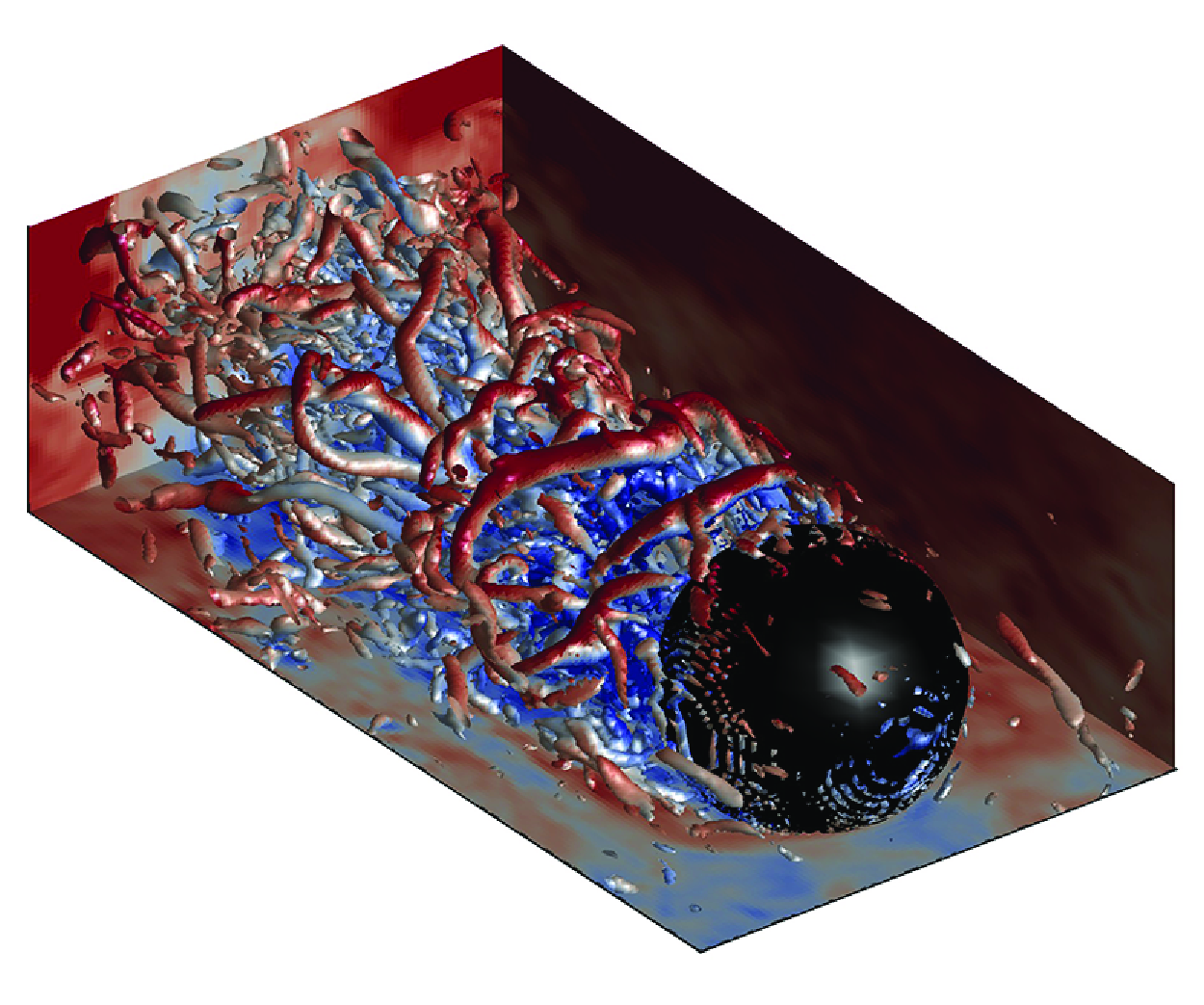
The acoustic field radiated by a system of contra-rotating propellers in wetted conditions (with no cavitation) is reconstructed by exploiting the Ffowcs Williams–Hawkings acoustic analogy and a database of instantaneous realizations of the flow. They were generated by high-fidelity computations using a large eddy simulation approach on a cylindrical grid of 4.6 billion points. Results are also compared against the cases of the front and rear propellers working alone. The analysis shows that the importance of the quadrupole component of sound, originating from wake turbulence and instability of the tip vortices, is reinforced, relative to the linear component radiated from the surface of the propeller blades. The sound from the contra-rotating propellers decays at a slower rate for increasing radial distances, compared with the cases of the isolated front and rear propellers, again due to the quadrupole component. The quadrupole sound is often neglected in the analysis of the acoustic signature of marine propellers, by considering the only linear component. In contrast, the results of this study point out that the quadrupole component becomes the leading one in the case of contra-rotating propulsion systems, due to the increased complexity of their wake. This is especially the result of the mutual inductance phenomena between the tip vortices shed by the front and rear propellers of the contra-rotating system.
The hydrodynamic behaviours of finite-size microorganisms in turbulent channel flows are investigated using a direct-forcing fictitious domain method. The classical ‘squirmer’ model, characterized by self-propulsion through tangential surface waves at its boundaries, is employed to mimic the swimming microorganisms. We adopt various simulation parameters, including a friction Reynolds number Reτ = 180, two squirmer volume fractions 𝜑0 = 12.7 % and 2.54 % and a blocking ratio (squirmer radius/half-channel width) κ = 0.125. Results show that pushers (propelled from the rear) induce a more pronounced decrease in the velocity profile than neutral squirmers and pullers (propelled from the front). This hindrance and the induced particle inner stress τpI positively correlate with the quantity of squirmers accumulated in the near-wall region. Notably, the increase in τpI primarily occurs at the expense of diminishing the fluid Reynolds stress τfR. Compared with passive spheres, a low volume fraction (𝜑0 = 2.54 %) of pullers results in a slightly enhanced velocity profile across the channel. In the near-wall region, the swimming direction of the squirmers shows no significant tendency with respect to the flow direction. In the bulk-flow region, pushers and neutral squirmers tend to align their axes more along the flow direction, whereas pullers exhibit a slight preference for alignment with the normal direction.
Within the frameworks of the amplitude method and the linear stability theory, a statistical model of the initial stage of laminar–turbulent transition caused by atmospheric particulates (aerosols) penetrating into the boundary layer is developed. The model accounts for the process of boundary layer receptivity to particulates, asymptotic behaviour of unstable wave packets propagating downstream from particle–wall collisions and the amplitude criterion for the transition onset. The resulting analytical relationships can be used for quick predictions of the transition onset on bodies of relatively simple shape, where the undisturbed boundary layer is quasi-two-dimensional. The model allows us to explore the transition onset at realistic distributions of the particle concentration selected based on an analysis of known empirical data. As an example, a 14° half-angle sharp wedge flying in atmosphere at 20 km altitude and Mach number 4 is considered. It is shown that the transition onset corresponds to an N-factor of 15.3 for a flight under normal atmospheric conditions and 12.2 for a flight in a cloud after volcanic eruption. In accordance with physical restrictions, these values are below the upper limit $N\approx 16.8$ predicted for transition due to thermal fluctuations (perfectly ‘clean’ case). Nevertheless, they are significantly greater than $N=10$ which is commonly recommended for estimates of the transition onset in flight.
We study the dynamic deflation of a hydraulic fracture subject to fluid withdrawal through a narrow conduit located at the centre of the fracture. Recent work revealed a self-similar dipole-flow regime, when the influence of material toughness is negligibly small. The focus of the current work is on the influence of material toughness, which leads to an additional self-similar regime of fracture deflation with fixed frontal locations in the toughness-dominated regime. The two limiting regimes can be distinguished by a dimensionless material toughness $\Pi _k$, defined based on a comparison with the influence of the viscous thin film flow within the fracture: $\Pi _k \to 0$ indicates the dipole-flow regime, while $\Pi _k \to \infty$ indicates the fixed-length regime. For intermediate $\Pi _k$, the fracture’s front continues to propagate during an initial period of deflation before it remains pinned at a fixed location thereafter. A regime diagram is then derived, with key scaling behaviours for the frontal dynamics, pressure and volume evolution summarised in a table for the self-similar stage. A comparison is also attempted between theoretical predictions and available experimental observations of viscous backflows from transparent solid gelatins.
We use direct numerical simulations to investigate the energy pathways between the velocity and the magnetic fields in a rotating plane layer dynamo driven by Rayleigh–Bénard convection. The kinetic and magnetic energies are divided into mean and turbulent components to study the production, transport and dissipation in large- and small-scale dynamos. This energy balance-based characterisation reveals distinct mechanisms for large- and small-scale magnetic field generation in dynamos, depending on the nature of the velocity field and the conditions imposed at the boundaries. The efficiency of a dynamo in converting the kinetic energy to magnetic energy, apart from the energy redistribution inside the domain, is found to depend on the kinematic and magnetic boundary conditions. In a small-scale dynamo with a turbulent velocity field, the turbulent kinetic energy converts to turbulent magnetic energy via small-scale magnetic field stretching. This term also represents the amplification of the turbulent magnetic energy due to work done by stretching the small-scale magnetic field lines owing to fluctuating velocity gradients. The stretching of the large-scale magnetic field plays a significant role in this energy conversion in a large-scale turbulent dynamo, leading to a broad range of energetic scales in the magnetic field compared with a small-scale dynamo. This large-scale magnetic field stretching becomes the dominant mechanism of magnetic energy generation in a weakly nonlinear dynamo. We also find that, in the weakly nonlinear dynamo, an upscale energy transfer from the small-scale magnetic field to the large-scale magnetic field occurs owing to the presence of a gradient of the mean magnetic field.
Cryoconite holes are supraglacial depressions containing water and microbe-mineral aggregates. Their autotrophic component plays a central role in reducing the albedo of glaciers and could contribute to sustaining the cryoconite food web. However, knowledge of its diversity is still limited, especially in Antarctica. Moreover, the study of cryoconite microalgae is challenging due to the limitations of molecular approaches, such as incomplete genetic databases and the semiquantitative nature of the data. Furthermore, it is equally difficult to examine the development of microalgae in sediment by using standard counting methods for water-living organisms. By using an adaptation of the high-speed density gradient centrifugation method, we provide a comprehensive description of the phenotypic characteristics, abundance and community structure of microalgae and Cyanobacteria in different cryoconite holes located in different glaciers of Northern Victoria Land, East Antarctica. We described 36 morphotypes belonging to Cyanobacteria, green algae and diatoms, revealing that cryoconite holes encompass a remarkably high diversity of photoautotrophs. The adapted protocol enabled the application of a standard microscopic approach, which provided crucial and comparable information on morphological characteristics, biovolume and community organization from a unique environment. The study poses the basis for the taxonomy of photoautotrophs as well as their diversity and distribution in cryoconite habitats.