To save content items to your account,
please confirm that you agree to abide by our usage policies.
If this is the first time you use this feature, you will be asked to authorise Cambridge Core to connect with your account.
Find out more about saving content to .
To save content items to your Kindle, first ensure no-reply@cambridge.org
is added to your Approved Personal Document E-mail List under your Personal Document Settings
on the Manage Your Content and Devices page of your Amazon account. Then enter the ‘name’ part
of your Kindle email address below.
Find out more about saving to your Kindle.
Note you can select to save to either the @free.kindle.com or @kindle.com variations.
‘@free.kindle.com’ emails are free but can only be saved to your device when it is connected to wi-fi.
‘@kindle.com’ emails can be delivered even when you are not connected to wi-fi, but note that service fees apply.
Iceberg calving at glacier termini results in mass loss from ice sheets, but the associated fracture mechanics is often poorly represented using simplistic (empirical or elementary mechanics-based) failure criteria. Here, we propose an advanced Mohr–Coulomb failure criterion that drives cracking based on the visco-elastic stress state in ice. This criterion is implemented in a phase field fracture framework, and finite element simulations are conducted to determine the critical conditions that can trigger ice cliff collapse. Results demonstrate that fast-moving glaciers with negligible basal friction are prone to tensile failure causing crevasse propagation far away from the ice front, while slow-moving glaciers with significant basal friction are likely to exhibit shear failure near the ice front. Results also indicate that seawater pressure plays a major role in modulating cliff failure. For land terminating glaciers, full thickness cliff failure is observed if the glacier exceeds a critical height, dependent on cohesive strength $\tau_\mathrm{c}$ ($H \approx 120\;\text{m}$ for $\tau_\mathrm{c}=0.5\;\text{MPa}$). For marine-terminating glaciers, ice cliff failure occurs if a critical glacier free-board ($H-h_\mathrm{w}$) is exceeded, with ice slumping only observed above the ocean-water height; for $\tau_\mathrm{c} = 0.5\;\text{MPa}$, the model-predicted critical free-board is $H-h_\mathrm{w} \approx 215\;\text{m}$, which is in good agreement with field observations. While the critical free-board height is larger than that predicted by some previous models, we cannot conclude that marine ice cliff instability is less likely because we do not include other failure processes such as hydrofracture of basal crevasses and plastic necking.
The dependence of the Richtmyer–Meshkov instability (RMI) on post-shock Atwood number ($A_1$) is experimentally investigated for a heavy–light single-mode interface. We create initial interfaces with density ratios of heavy to light gases ranging from 1.73 to 34.07, and achieve the highest $|A_1|$ value reported to date for gaseous-interface experiments (0.95). For the first time, spike acceleration is observed in experiments with a heavy–light configuration. The models for the start-up, linear and weakly nonlinear evolution stages are evaluated over a wide range of $A_1$ conditions. Specifically, the models proposed by Li et al. (Phys. Fluids, vol. 36, 2024, 056104) and Wouchuk & Nishihara (Phys. Plasmas, vol. 4, 1997, 1028–1038) effectively describe the start-up and linear stages, respectively, across all cases. None of the considered nonlinear models is valid under all $A_1$ conditions. Based on the dependence of spike and bubble evolutions on $A_1$ provided by the present work and previous study (Chen et al., J. Fluid Mech., vol. 975, 2023, A29), the SEA model (Sadot et al., Phys. Rev. Lett., vol. 80, 1998, pp. 1654–1657), whose expression has clear physical meanings, is modified by revising the coefficient that governs its prediction for early-time evolution. The modified model applies to prediction of the weakly nonlinear evolution of RMI with $A_1$ ranging from −0.95 to −0.35 and from 0.30 to 0.86. Based on this model, an approximation of the critical $A_1$ for the occurrence of spike acceleration is obtained.
Analcime is an important nanomaterial in: heterogeneous catalysis, selective adsorption, stomatology, sensing, and nanoelectronics. Given its occurrence in limited regions worldwide, achieving low-cost, high-purity synthesis of this zeolite is crucial. The objective of the present study was to synthesize pure analcime from an abundant, naturally occurring clay-rich illite material without the use of an organic template. Various pretreatment methods – NaOH pre-fusion, sonication, and reflux – using 1.5 M NaOH were explored to enhance the material’s reactivity at nanoscale. The resulting samples were annealed hydrothermally at 150°C for 36 h. The effect of the Si/Al mass ratio, ranging from 2 to 4, was examined by incorporating a fumed silica by-product into the optimally pre-treated sample. Characterization using X-ray diffraction (XRD), X-ray fluorescence (XRF), scanning electron microscopy-energy dispersive X-ray spectroscopy (SEM-EDX), Fourier-transform infrared spectroscopy (FT-IR), and Brunauer–Emmett–Teller (BET) surface area measurement confirmed that all pre-treatment routes converted illite (Si/Al≈2) effectively into analcime, demonstrating nanoscale control and synthesis precision. The analcime content achieved 77.8% through hydrothermal synthesis without pre-treatment, while it increased to 80.2%, 83.4%, and 91.7% with sonochemical, reflux, and NaOH pre-fusion pre-treatments, respectively. Notably, high-purity analcime with superior crystallinity was attained using the NaOH pre-fusion pre-treatment of a blend of clay and fumed silica with a Si/Al ratio of 3.71. The zeolite synthesized exhibited a surface area of 23.76 m2 g–1 and a significant cation exchange capacity of 510 meq 100 g–1. These results offer valuable insights into the synthesis of organic-template-free zeolites, emphasizing the importance of precise nanoscale methodology in enhancing clay-phase reactivity. Furthermore, this study distinguishes itself as one of the few in the literature to prepare pure analcime by innovatively combining low-cost precursor clay and fumed silica, contributing to the advancement of nanoscale material synthesis and its applications in technology.
Recent experiments and simulations have sparked growing interest in the study of Rayleigh–Bénard convection in very slender cells. One pivotal inquiry arising from this interest is the elucidation of the flow structure within these very slender cells. Here we employ tomographic particle image velocimetry, for the first time, to capture experimentally the full-field three-dimensional and three-component velocity field in a very slender cylindrical cell with aspect ratio $\Gamma =1/10$. The experiments cover a Rayleigh number range $5.0 \times 10^8 \leqslant Ra \leqslant 5.0 \times 10^9$ and Prandtl number 5.7. Our experiments reveal that the flow structure in the $\Gamma =1/10$ cell is neither in the multiple-roll form nor in the simple helical form; instead, the ascending and descending flows can intersect and cross each other, resulting in the crossing events. These crossing events separate the flow into segments; within each segment, the ascending and descending flows ascend or descend side by side vertically or in the twisting manner, and the twisting is not unidirectional, while the segments near the boundary can also be in the form of a donut like structure. By applying the mode decomposition analyses to the measured three-dimensional velocity fields, we identified the crossing events as well as the twisting events for each instantaneous flow field. Statistical analysis of the modes reveals that as $Ra$ increases, the average length of the segments becomes smaller, and the average number of segments increases from 2.5 to 3.9 in the $Ra$ range of our experiments.
Every organism interacts with a host of other organisms of the same and different species throughout its life. These biotic interactions have varying influences on the reproduction and dispersal of the organism, and hence also the population and species lineage to which the organism belongs. By extension, biotic interactions must contribute to the macroevolutionary patterns that we observe in the fossil record, but exactly how, when, and why are research questions we have been asking before the start of the journal Paleobiology. In this contribution for Paleobiology’s 50th anniversary, we present a brief overview of how paleobiologists have studied biotic interactions and their macroevolutionary consequences, recognizing paleontology’s unique position to contribute data and insights to the topic of interspecies interactions. We then explore, in a semi-free-form manner, what promising avenues might be open to those of us who use the fossil record to understand biotic interactions. In general, we emphasize the need for increased effort surrounding the understanding of ecological details, integration of different types of information, and model-based approaches.
The interaction between a turbulent flow and a porous boundary is analysed with focus on the sensitivity of the roughness function, $\Delta U^+$, to the upscaled coefficients characterizing the wall. The study is aimed at (i) demonstrating that imposing effective velocity boundary conditions at a virtual plane boundary, next to the physical one, can efficiently simplify the direct numerical simulations (DNS); and (ii) pursuing correlations to estimate $\Delta U^+$a priori, once the upscaled coefficients are calculated. The homogenization approach employed incorporates near-interface advection via an Oseen-like linearization, and the macroscopic coefficients thus depend on both the microstructural details of the wall and a slip-velocity-based Reynolds number, $Re_{slip}$. A set of homogenization-simplified DNS is run to study the channel flow over transversely isotropic porous beds, testing values of the grains’ pitch within $0\lt \ell ^+\lt 40$. Reduction of the skin-friction drag is attainable exclusively over streamwise-aligned inclusions for $\ell ^+$ values up to $20{-}30$. The drag increase over spanwise-aligned inclusions (or streamwise-aligned ones at large $\ell ^+$) is accompanied by enhanced turbulence levels, including intensified sweep and ejection events. The root-mean-square of the transpiration velocity fluctuations at the virtual plane, $\tilde V_{rms}$, is the key control parameter of $\Delta U^+$; our analysis shows that, provided $\tilde V_{rms} \lesssim 0.25$, then $\tilde V_{rms}$ is strongly correlated to a single macroscopic quantity, $\Psi$, which comprises the Navier-slip and interface/intrinsic permeability coefficients. Fitting relationships for $\Delta U^+$ are proposed, and their applicability is confirmed against reference results for the turbulent flow over impermeable walls roughened with three-dimensional protrusions or different geometries of riblets.
This study combines revolutionary theory with emerging polycrisis discourses to show how various international and national factors and events can become intertwined, creating polycrisis events that can lead to revolutionary moments. Revolutionary moments can further contribute to stresses that cause polycrisis or systemic dysfunction elsewhere, due to our entanglement of global systems. Through the help of two case studies, the Young Turk Revolution and the Arab Spring, this study highlights how revolutions emerge and how they can unfold in the future.
Technical summary
Revolutions – the overthrow or unseating of governmental forces through mass mobilization – have played a crucial role in major societal transformations throughout history (Lawson, 2019, Anatomies of revolution; Goldstone, 2014, Revolutions: A very short introduction). One component of revolutionary theory, past and present, are the ways different factors and forces interact to create revolutionary moments, specifically how international/transnational and internal societal events interconnect to generate revolutionary situations, trajectories, and outcomes. Revolutionary theorist George Lawson (2019) notes that global networks are intermeshed in that they can produce multiple, complex stressors and triggers that cause revolution in what he terms an ‘inter-social approach’. Building on these insights, we argue here through the case studies of the Young Turk Revolution and Arab Spring that the conceptualization of polycrisis as a causal entanglement of crises in multiple global systems provides a critical lens to understand revolutions.
Social media summary
In an age of polycrisis, risk of revolution increases. Explore how revolutions form and learn their future paths.
Clay minerals wettability is a key property for predicting water distribution and pollutant migration in natural or artificial materials. This study attempted to understand the difference in hydrophilicity due to the exchange of structural hydroxyl groups by fluorine atoms, observed in a number of clays. To this end, contact angles of water droplets on hydroxylated and fluorinated talcs were calculated from molecular simulations with two different force fields (one non-polarizable and one polarizable). In parallel, careful measurements of contact angles on a hydroxylated talc monocrystal were undertaken in order to assess the ability of the force fields to reproduce experiments. As expected, fluorinated talc was slightly more hydrophobic than hydroxylated talc for both force fields. Moreover, although the two force fields lead to fluid properties at the interface that were significantly different, the associated contact angles (and related works of adhesion) remained quite close to each other and to contact angles obtained on similar silica-type surfaces. These contact angles overestimated the experimental ones. This could be tentatively assigned to the presence of steps on monocrystal surfaces that could slightly increase the hydrophilicity of the surface, resulting in slightly lower contact angles. When analyzing more carefully the differences between both force fields, it appeared that the use of a polarizable force field resulted in a higher depletion of the fluid close to the surface. This could indicate less attraction between the fluid and the solid and a lesser constraint for the fluid. The combination of these two effects leads to a lower entropy loss and consequently to slightly higher work of adhesion.
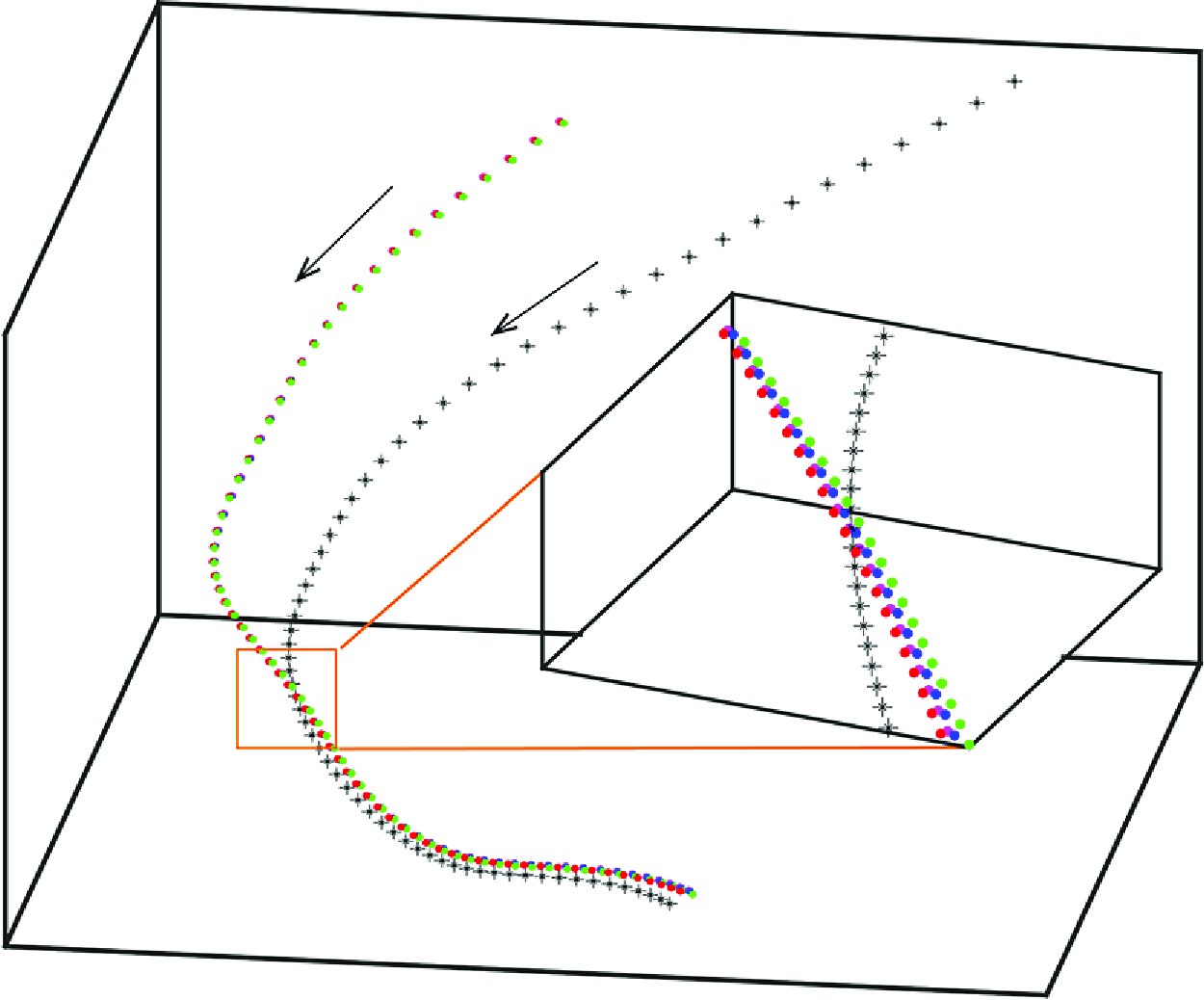
A new temporal vortex tracking algorithm allows the first long-term temporal observation of the lives of the intense vorticity structures (IVS). The algorithm is applied to direct numerical simulations of statistically stationary isotropic turbulence, with Taylor-based Reynolds numbers in the range $54 \leqslant Re_{\lambda } \leqslant 239$. In the highest Reynolds number case, the continuous time tracking of millions of ‘worms’ is achieved for more than seven integral time scales and close to 200 Kolmogorov time scales. Within an integral scale volume, more than 66 structures exist, and approximately 20 new structures are created per Kolmogorov time. More than $80\, \%$ of the structures live a solitary ‘life’ without any visible interaction with the other structures, while approximately $15\, \%$ break into new structures. Less than $2\, \%$ of the structures merge with others to form new vortices. A ‘population model’ is developed to estimate the numbers of existing vortices for very long simulated times, and it is observed that the birth rate density of these structures slowly increases with the Reynolds number. The survival functions of the IVS lives exhibit an exponential distribution, with some structures living for more than $35$ Kolmogorov time scales (more than four integral time scales). The mean lifetime of the IVS scales with the mean turnover time scale of the worms, defined by their radii and tangential velocity, attaining $\approx 6.5$ turnover time scales at high Reynolds numbers.
Liquid metal flows are important for many industrial processes, including liquid metal batteries (LMBs), whose efficiency and lifetime can be affected by fluid mixing. We experimentally investigate flows driven by electrical currents in an LMB model. In our cylindrical apparatus, we observe a poloidal flow that descends near the centreline for strong currents, and a poloidal flow that rises near the centreline for weak currents. The first case is consistent with electrovortex flow, which is an interaction between current and its own magnetic field, whereas the second case is consistent with an interaction between current and the external field, which drives Ekman pumping. Notably, we also observe an intermediate case where the two behaviours appear to compete. Comparing results with Frick et al. (2022 J. Fluid Mech.949, A20), we test prior estimates of the scaling of flow speed with current to predict the observed reversal. Based on these data, we propose two different ways to apply the Davidson et al. (1999 J. Fluid Mech.245, 669–699) poloidal suppression theory that explain both experimental results simultaneously: either taking the wire radius into account to scale the Lorentz force, or taking viscous dissipation into account to scale the swirl velocity, following Herreman et al. (2021 J. Fluid Mech.915, A17).
Self-similar fractal tree models are numerically investigated to elucidate the drag coefficient, non-equilibrium dissipation behaviour and various turbulence statistics of fractal trees. For the simulation, a technique based on the lattice Boltzmann method with a cumulant collision term is used. Self-similar fractal tree models for aerodynamic computations are constructed using parametric L-system rules. Computations across a range of tree-height-based Reynolds numbers $Re_H$, from 2500 to 120 000, are performed using multiple tree models. As per the findings, the drag coefficients ($C_D$) of these models match closely with those of the previous literature at high Reynolds numbers ($Re_H \geqslant 60\,000$). A normalization process that collapses the turbulence intensity across various tree models is formulated. For a single tree model, a consistent centreline turbulence intensity trend is maintained in the wake region beyond a Reynolds number of 60 000. The global and local isotropy analysis of the turbulence generated by fractal trees indicates that, at high Reynolds numbers ($Re_H \geqslant 60\,000$), the distant wake can be considered nearly locally isotropic. The numerical results confirm the non-equilibrium dissipation behaviour demonstrated in previous studies involving space-filling fractal square grids. The non-dimensional dissipation rate $C_\epsilon$ does not remain constant; instead, it becomes approximately inversely proportional to the local Taylor-microscale-based Reynolds number, $C_\epsilon \propto 1/Re_\lambda$. We find significant one-point inhomogeneity, production and transverse transport of turbulent kinetic energy within the non-equilibrium dissipation near wake region.
We present a linear analysis of a minimal model of moist convection under a variety of atmospheric conditions. The stationary solutions that we analyse include both fully saturated and partially unsaturated atmospheres in both unconditionally and conditionally unstable cases. We find that all of the solutions we consider are linearly unstable via exchange of stability when sufficiently driven. The critical Rayleigh numbers vary by over an order of magnitude between unconditionally unstable and conditionally unstable atmospheres. The unsaturated atmospheres are notable for the presence of linear gravity wave-like oscillations even in unstable conditions. We study their eigenfunction structure and find that the buoyancy and moisture perturbations are anticorrelated in $z$, such that regions of negative buoyancy have positive moisture content. We suggest that these features in unsaturated atmospheres may explain the phenomenon of gravity wave shedding by moist convective plumes.
The bi-stable dynamics of a one-degree-of-freedom disk pendulum swept by a flow and allowed to rotate in the cross-flow direction is investigated experimentally. For increasing flow velocity, a subcritical bifurcation is observed from a Pendulum state, characterised by an increasing time-averaged pendulum angle with large amplitude fluctuations, to a rotating state with a non-zero mean rotation velocity at a critical free stream velocity $U_{P2W}$. The rotating state, referred to as Windmill state, presents a strong hysteresis: once initiated, it is sustained down to velocities $U_{W2P}\lt U_{P2W}$ before bifurcating towards the Pendulum state. A thorough experimental characterisation of the dynamical features of each state is reported, with a particular focus on the influence of the static yaw angle of the disk $\beta _0$ and the free stream velocity. In the Pendulum state, the system behaves differently depending on whether $\beta _0$ lies below or above the stall angle of the disk, with more regular dynamics below. We demonstrate that the bifurcation between the Pendulum state and the Windmill state is triggered by aerodynamic fluctuations, while the bifurcation between the Windmill state and the Pendulum state is deterministic. A stochastic model faithfully reproduces the dynamical features of both states, as well as the characteristics of the bifurcations.
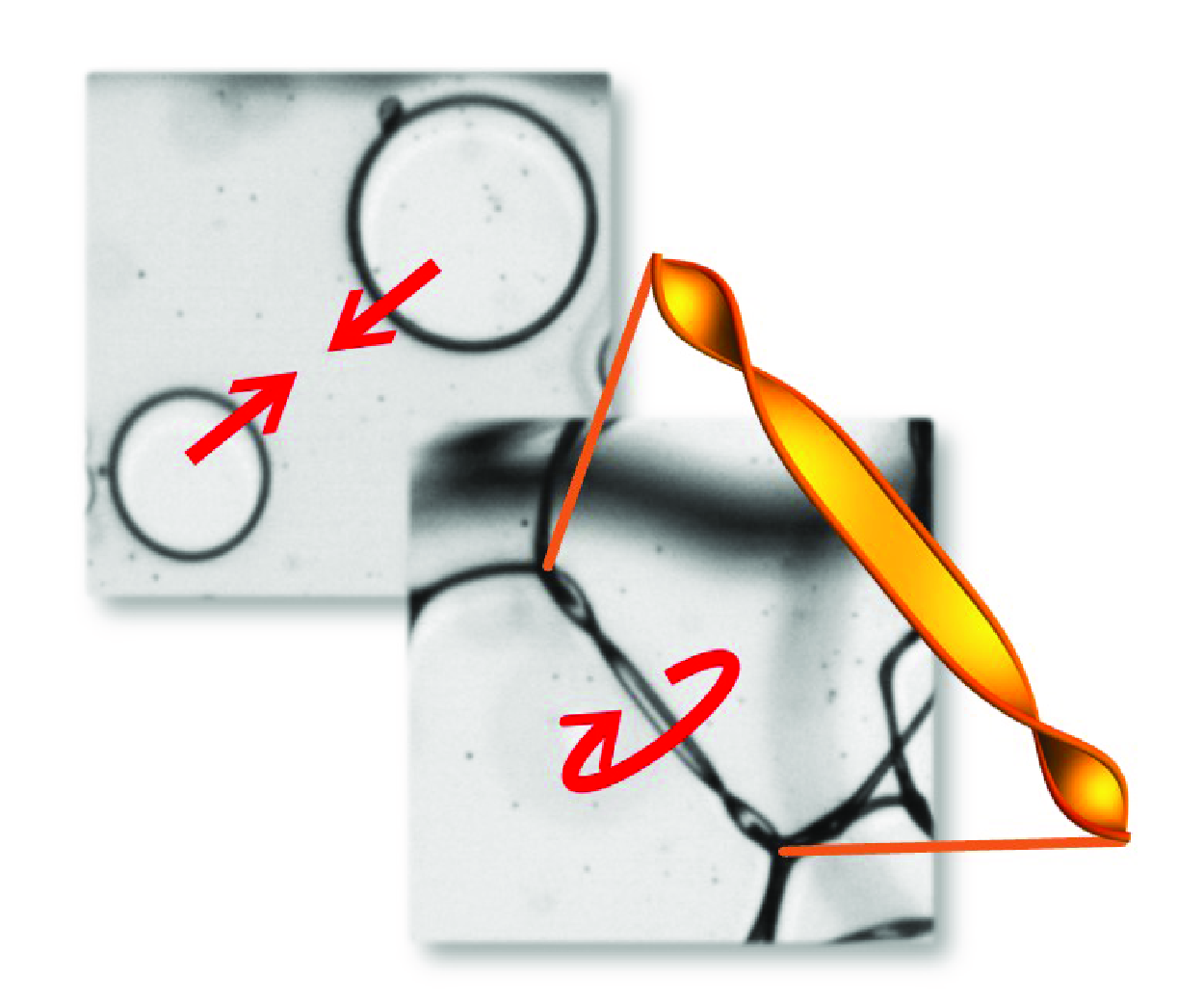
Microorganisms, such as spermatozoa, exhibit rich behaviours when in close proximity to each other. However, their locomotion is not fully understood when coupled mechanically and hydrodynamically. In this study, we develop hydrodynamic models to investigate the locomotion of paired spermatozoa, predicting the fine structure of their swimming. Experimentally, sperm pairs are observed to transition between different modes of flagellar synchronisation: in-phase, anti-phase and lagged synchronisation. Using our models, we assess their swimming performances in these synchronisation modes in terms of average swimming speed, average power consumption, and swimming efficiency. The swimming performances of paired spermatozoa are shown to depend on their flagellar phase lag, flagellar waveforms, and the mechanical coupling between their heads.
In this study, we conducted interface-capturing high-resolution simulations of a bubbly upflow in a vertical channel to investigate the bubble distribution and its interaction with surrounding turbulence, focusing on the effects of the density ratio. A bulk Reynolds number $Re_b=2300$ was used for all simulations. The influence of density ratio on vortex structures and turbulence statistics differed between the near-wall and core regions of the channel. Adding 5.43 $\%$ gas caused an increase in wall friction. By applying a generalised FIK identity to analyse wall friction, it was determined that the drag rise in the bubbly channel was mostly due to the near-wall region. Visualisation of the bubble and vortex structures showed that small bubbles near the wall induced larger magnitude of Reynolds shear stress and increased wall friction. Bubble behaviour near the wall region was similar for density ratios above 30, leading to wall friction saturation. In the core region, large deformable bubbles created wake vortices due to slip velocity between liquid and gas phases. Wake vortices help large bubbles absorb smaller bubbles and maintain their sizes. As the density ratio increased, the slip velocity increased owing to greater difference in the gravitational acceleration between liquid and gas phases, resulting in corresponding increase in wake intensity and velocity fluctuations. However, quadrant analysis showed that Q1 and Q3 events increased together with Q2 and Q4 events in the core region, cancelling out any net effect of wake vortices on Reynolds shear stress or wall friction.
Highly resolved simulations reveal the fundamental influence of a carrier fluid’s flow dynamics on triboelectric powder charging. We found that particles transported through a square-shaped duct charge faster than in a channel flow caused by secondary flows that led to more severe particle–wall collisions. Specifically, particles with a Stokes number of 4.69 achieve 85 % of their equilibrium charge approximately 1.5 times faster in duct flow than in channel flow. Also, charge distribution is more uniform in a duct cross-section compared with a channel cross-section. In channel flow, particles are trapped near the walls and collide frequently due to limited movement in the wall-normal direction, causing localized charge buildup. In contrast, duct flow promotes better mixing through secondary flows, reducing repeating collisions and providing uniform charge distribution across the cross-section. Upon charging, electrostatic forces significantly reshape particle behaviour and distribution. Once the powder achieves half of its equilibrium charge, particles increasingly accumulate at the wall, leading to a reduced concentration in the central region. These changes in particle distribution have a noticeable impact on the surrounding fluid phase and alter the overall flow dynamics. These findings open the possibility for a new measure to control powder charging by imposing a specific pattern.
Real-time wave forecasting (RTWF) consists in predicting ocean wave motion or forces, from seconds to minutes in advance, using real-time measurements. For the successful development of RTWF, understanding wave predictability is essential. Usually, a deterministic ‘predictable zone’ (DPZ) is geometrically constructed from the wave group velocities and directions present in the spectrum. DPZs have little experimental evidence, and suffer ambiguities regarding the choice of cutoff frequencies and directions – since actual ocean waves are not band-limited. The present study addresses those shortcomings, by defining probabilistic predictable zones (PPZs) with respect to chosen uncertainty thresholds, using a rigorous statistical framework restricted to near-Gaussian sea states (precisely those where RTWF would be employed). PPZs are examined in idealised spectra and in a stereo dataset of a real wave field. It is shown that the PPZ geometry is quantitatively related to the sea state characteristics, through three physical parameters: two limiting group velocities (similar to the deterministic theory), and a directional spreading effect, which also limits the PPZ extent. While the lower group velocity depends on the chosen uncertainty threshold, the upper group velocity is better approximated by that of the spectrum peak frequency, which is a novel finding. The empirical data support the validity of the present PPZ theory. In contrast, both theoretical and empirical results contradict the fan-shaped predictable zones, constructed in the three-dimensional deterministic theory, thus highlighting the importance of considering stochasticity to understand the predictability of actual ocean waves.
We report laboratory experiments of long-crested irregular water surface waves propagating over a shoal, with attention to the region over the down-slope behind the shoal. We measure the surface elevation field, the horizontal velocity field in the water, and the resulting forces on a horizontal submerged cylinder placed over the down-slope of the shoal. In addition, we calculate the horizontal acceleration field. From this, we find that the presence of the shoal can modify the wave field such that the resulting forces on the submerged cylinder can be enhanced with thicker extreme tails and increased values of skewness and kurtosis depending on the location of the cylinder. The spatial dependence of the statistics of forces is different from the spatial dependence of the statistics of horizontal velocity, horizontal acceleration and surface elevation.
Since the 1950s, the United Nations (UN) has designated days (e.g., World Wetland Day), years (e.g., Year of the Gorilla) and decades (e.g., Decade on Biodiversity) with a commonly stated goal to raise awareness and funding for conservation-oriented initiatives, and these Days, Years and Decades of ‘…’ (hereafter ‘DYDOs’) continue. However, the effectiveness of these initiatives to achieve their stated objectives and to contribute to positive conservation outcomes is unclear. Here we used a binary analysis change model to evaluate the effectiveness of UN conservation-oriented DYDOs observed between 1974 and 2020. We also examined four case studies to understand the different strategies employed to meet specified conservation goals. We found that DYDOs apparently contributed to positive conservation outcomes when they were tied to social media campaigns and/or when they were strategically situated in current events or global discourse. Although the outcomes of DYDOs were varied, those with longer timescales and those that engaged local communities were more likely to be successful. We suggest that DYDO organizers should identify all possible paths of action through the lens of the change model outlined in this paper to strengthen the value and effectiveness of these initiatives in the future. Using this approach could help ensure that resources are used efficiently and effectively, and that initiatives yield positive conservation outcomes that benefit people and nature.