Refine search
Actions for selected content:
212919 results in Engineering
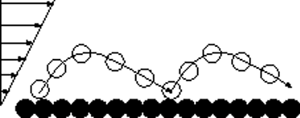
Collisionless kinetic theory for saltation over a rigid, bumpy bed
-
- Journal:
- Journal of Fluid Mechanics / Volume 991 / 25 July 2024
- Published online by Cambridge University Press:
- 22 August 2024, A15
-
- Article
- Export citation
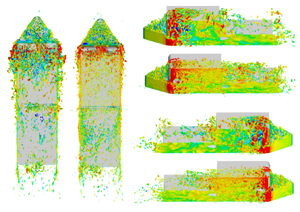
Numerical study of a generic ship's airwake for understanding bi‐stability mechanism
-
- Journal:
- Journal of Fluid Mechanics / Volume 991 / 25 July 2024
- Published online by Cambridge University Press:
- 20 August 2024, A6
-
- Article
-
- You have access
- Open access
- HTML
- Export citation
-
A distinguishing feature of the bi-stable wake is that the wake persists in either of two preferred states for a sufficiently long time. Aiming to understand the persistence mechanism, this paper numerically investigates the airwake characteristics of the Chalmers ship model (CSM) using large eddy simulation with a wall-adapting local-eddy viscosity model and is complemented by experimental testings for validations. There are two cases of interest: (i) the baseline CSM with a sharp-edged superstructure front that induces massive boundary layer separation; (ii) the front-rounded (FR) CSM with suppressed flow separation. During a characteristic time ( $t^*$) of 1142 (26.5 s), the baseline case has a frequently switching wake, whereas the FR wake maintains a stable asymmetric structure with only one switch attempt. To understand the different wake behaviours, the study starts by analysing wake flow structures, vortex cores and the wake dynamics, followed by investigating the instantaneous flow physics. Results suggest that the baseline wake has a weak bi-stable pattern, whereas the FR wake behaves similarly to a reflectional symmetry breaking state of a potential bi-stable wake. The wake switching is found to be driven by the tilting of (vertical-oriented) $z$-vorticity sheets from either side of the base toward the centre. This tilting behaviour is subjected to the high-magnitude vorticity that sheds from the upstream flow separation at the front sharp edges. With the sharp edges rounded in the FR case, the upstream vorticity is mitigated and the tilting effect is significantly reduced, leading to a more stable wake structure. The reasoning provided in the paper potentially explains the persistence mechanism of the bi-stable wake.


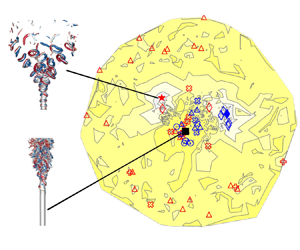
Jet mixing enhancement with Bayesian optimization, deep learning and persistent data topology
-
- Journal:
- Journal of Fluid Mechanics / Volume 991 / 25 July 2024
- Published online by Cambridge University Press:
- 20 August 2024, A5
-
- Article
- Export citation
-
We optimize jet mixing using large eddy simulations (LES) at a Reynolds number of $3000$. Key methodological enablers consist of Bayesian optimization, a surrogate model enhanced by deep learning and persistent data topology for physical interpretation. The mixing performance is characterized by an equivalent jet radius ( $R_{eq}$) derived from the streamwise velocity in a plane located $8$ diameters downstream. The optimization is performed in a 22-dimensional actuation space that comprises most known excitations. This search space parameterizes the distributed actuation imposed on the bulk flow and at the periphery of the nozzle in the streamwise and radial directions. The momentum flux measures the energy input of the actuation. The optimization quadruples the jet radius $R_{eq}$ with a $7$-armed blooming jet after around $570$ evaluations. The control input requires $2\,\%$ momentum flux of the main flow, which is one order of magnitude lower than an ad hoc dual-mode excitation. Intriguingly, a pronounced suboptimum in the search space is associated with a double-helix jet, a new flow pattern. This jet pattern results in a mixing improvement comparable to the blooming jet. A state-of-the-art Bayesian optimization converges towards this double-helix solution. The learning is accelerated and converges to another better optimum by including a deep-learning-enhanced surrogate model trained along the optimization. Persistent data topology extracts the global and many local minima in the actuation space. These minima can be identified with flow patterns beneficial to the mixing.


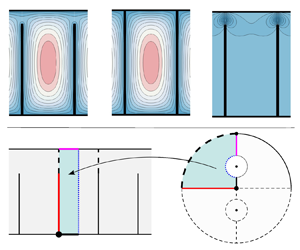
Fully developed flow through shrouded-fin arrays: exact and asymptotic solutions
-
- Journal:
- Journal of Fluid Mechanics / Volume 991 / 25 July 2024
- Published online by Cambridge University Press:
- 20 August 2024, A2
-
- Article
-
- You have access
- Open access
- HTML
- Export citation
-
The flow resistance, i.e. friction factor times Reynolds number ( $\,f\,{Re}$), of longitudinal-fin heat sinks with or without clearance between a shroud and the tips of the fins is an important parameter in thermal design. This is because it dictates the caloric resistance of the heat sink, i.e. change in bulk temperature of the fluid flowing through it. When there is no clearance and the common and oft-valid assumption of negligible fin thickness is invoked, $f\,{Re}$ corresponds to simply that of a rectangular duct. However, with clearance, only numerical results are available as per the well-known study by Sparrow, Baliga and Patankar (ASME J. Heat Transfer, vol. 100, 1978). We develop analytical formulae for $f\,{Re}$ for fully developed flow with clearance. The exact solution is provided by an integral formula derived via conformal mappings. Additionally, simple formulae are derived via asymptotic expansions in three cases: (1) the fin spacing is small compared to the fin height and clearance; (2) the clearance is small compared to the fin spacing, which is small compared to the fin height; (3) the same as case (2) but valid for larger clearances. The different asymptotic formulae are compared to the exact formula, and together cover almost the entire relevant parameter range (for fin spacing and clearance) with errors of less than 15 %. A formula for the limiting case of no clearance is shown to be more accurate, for any fin spacing, than a widely used correlation from the literature.


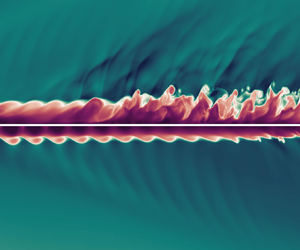
Transition delay in a Mach 6 boundary layer using steady blowing and suction strips
-
- Journal:
- Journal of Fluid Mechanics / Volume 991 / 25 July 2024
- Published online by Cambridge University Press:
- 20 August 2024, R3
-
- Article
-
- You have access
- Open access
- HTML
- Export citation
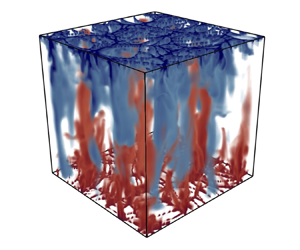
Transport scaling in porous media convection
-
- Journal:
- Journal of Fluid Mechanics / Volume 991 / 25 July 2024
- Published online by Cambridge University Press:
- 20 August 2024, A4
-
- Article
-
- You have access
- Open access
- HTML
- Export citation
-
We present a theory to describe the Nusselt number, $\operatorname {\mathit {Nu}}$, corresponding to the heat or mass flux, as a function of the Rayleigh–Darcy number, $\operatorname {\mathit {Ra}}$, the ratio of buoyant driving force over diffusive dissipation, in convective porous media flows. First, we derive exact relationships within the system for the kinetic energy and the thermal dissipation rate. Second, by segregating the thermal dissipation rate into contributions from the boundary layer and the bulk, which is inspired by the ideas of the Grossmann and Lohse theory (J. Fluid Mech., vol. 407, 2000; Phys. Rev. Lett., vol. 86, 2001), we derive the scaling relation for $\operatorname {\mathit {Nu}}$ as a function of $\operatorname {\mathit {Ra}}$ and provide a robust theoretical explanation for the empirical relations proposed in previous studies. Specifically, by incorporating the length scale of the flow structure into the theory, we demonstrate why heat or mass transport differs between two-dimensional and three-dimensional porous media convection. Our model is in excellent agreement with the data obtained from numerical simulations, affirming its validity and predictive capabilities.


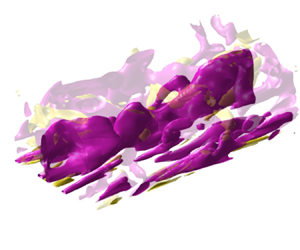
Three-dimensional generative adversarial networks for turbulent flow estimation from wall measurements
-
- Journal:
- Journal of Fluid Mechanics / Volume 991 / 25 July 2024
- Published online by Cambridge University Press:
- 20 August 2024, A1
-
- Article
-
- You have access
- Open access
- HTML
- Export citation
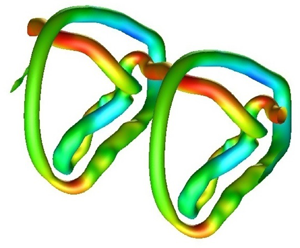
Effect of pitch on nonlinear dynamics of helical vortex disturbed by long-wave instability
-
- Journal:
- Journal of Fluid Mechanics / Volume 991 / 25 July 2024
- Published online by Cambridge University Press:
- 20 August 2024, R2
-
- Article
- Export citation
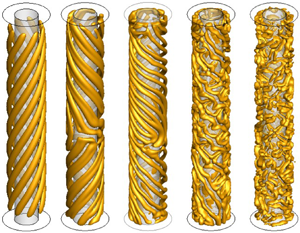
Thermoelectrohydrodynamic convection in a finite cylindrical annulus under microgravity
-
- Journal:
- Journal of Fluid Mechanics / Volume 991 / 25 July 2024
- Published online by Cambridge University Press:
- 20 August 2024, A7
-
- Article
-
- You have access
- Open access
- HTML
- Export citation
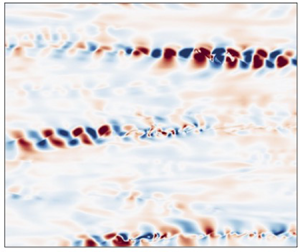
Numerical validation of scaling laws for stratified turbulence
-
- Journal:
- Journal of Fluid Mechanics / Volume 991 / 25 July 2024
- Published online by Cambridge University Press:
- 20 August 2024, R1
-
- Article
-
- You have access
- Open access
- HTML
- Export citation
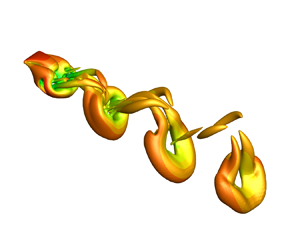
Dynamics of weighted flexible ribbons in a uniform flow
-
- Journal:
- Journal of Fluid Mechanics / Volume 990 / 10 July 2024
- Published online by Cambridge University Press:
- 14 August 2024, A11
-
- Article
- Export citation
-
This study explores the dynamics of flexible ribbons with an added weight $G$ at the tail in uniform flow, considering key parameters like inflow Reynolds number ( $Re_u$), mass ratio ( $M_t$) and aspect ratio ( ${A{\kern-4pt}R}$). For two-dimensional ribbons, a simplified theoretical model accurately predicts equilibrium configurations and forces. Inspired by Barois & De Langre (J. Fluid Mech., vol. 735, 2013, R2), we introduce an important control parameter ( $C_G$) that effectively collapses normalized forces and angle data. Vortex-induced vibration is observed, and Strouhal number ( $St$) scaling laws with $C_G$ are identified. In three-dimensional scenarios, the model effectively predicts lift, but its accuracy in predicting drag is limited to situations with small $Re_u$ values. The flow along the side edges mitigates pressure differences, thereby suppressing vibration and uplift, particularly noticeable in the case of narrow ribbons. This study offers new insights into the dynamics of flexible bodies in uniform flow.


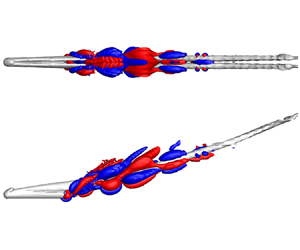
Mechanism of vortex oscillation around a hemisphere–cylinder body
-
- Journal:
- Journal of Fluid Mechanics / Volume 990 / 10 July 2024
- Published online by Cambridge University Press:
- 14 August 2024, A20
-
- Article
- Export citation

Experimental study on the settling motion of coral grains in still water
-
- Journal:
- Journal of Fluid Mechanics / Volume 990 / 10 July 2024
- Published online by Cambridge University Press:
- 14 August 2024, A15
-
- Article
-
- You have access
- Open access
- HTML
- Export citation
-
Understanding settling motion of coral grains is important in terms of protection of coral reef systems and resotoration of the associated ecosystems. In this paper, a series of laboratory experiments was conducted to investigate the settling motion, using optical microscopy to measure shape parameters of coral grains and the particle-filtering-based object tracking to reconstruct the three-dimensional trajectory. Three characteristic descent regimes, namely, tumbling, chaotic and fluttering, are classified based on the three-dimensional trajectory, the spiral radius variation and the velocity spectrum. It is demonstrated that if one randomly picks up one coral grain, then the probabilities of occurrence of the three regimes are approximately $26\,\%$, $42\,\%$ and $32\,\%$, respectively. We have shown that first, the dimensionless settling velocity generally increases with the non-dimensional diameter and Corey shape factor and second, the drag coefficient generally decreases with the Reynolds number and Corey shape factor. Based on this, the applicability of existing models on predicting settling velocity and drag coefficient for coral grains is demonstrated further. Finally, we have proposed extended models for predicting the settling velocity. This study contributes to better understanding of settling motion and improves our predictive capacity of settling velocity for coral grains with complex geometry.



Flow film boiling on a sphere in the mixed and forced convection regimes
-
- Journal:
- Journal of Fluid Mechanics / Volume 990 / 10 July 2024
- Published online by Cambridge University Press:
- 14 August 2024, A19
-
- Article
-
- You have access
- Open access
- HTML
- Export citation
-
Saturated flow film boiling on a sphere has been numerically studied in this work for both vertical and horizontal flow configurations. The simulations were performed using a numerical methodology developed by the authors for boiling flows on three-dimensional unstructured meshes. For interface capturing, the coupled level set and volume of fluid method is used. The interface evolution, vapour wake dynamics and heat transfer have been thoroughly investigated by varying the saturated liquid flow velocity, sphere diameter and wall superheat. The relative importance of both the buoyancy and the inertial forces is described in terms of the Froude number $(Fr)$. The vapour bubble evolves periodically at low $Fr$ values, while a stable vapour column develops at high $Fr$ values. The interface evolution pattern obtained in the present work is in good agreement with the results of experimental studies available in the literature. For all the values of $Fr$, a stable vapour column develops for a large-diameter sphere and releases vapour bubbles of varying sizes. Furthermore, for a large-diameter sphere, surface capillary waves are observed at the interface, similar to the observations of some of the experimental studies available in the literature. The flow in the liquid and vapour wakes appears to be strongly coupled. The heat transfer in the present work is estimated using the spatially and temporally averaged Nusselt numbers. Finally, an fast Fourier transform analysis of the space-averaged Nusselt number reveals a strong interaction among the different forces.


Cracking of submerged beds
-
- Journal:
- Journal of Fluid Mechanics / Volume 990 / 10 July 2024
- Published online by Cambridge University Press:
- 14 August 2024, A16
-
- Article
- Export citation
Inertial particle focusing in fluid flow through spiral ducts: dynamics, tipping phenomena and particle separation
-
- Journal:
- Journal of Fluid Mechanics / Volume 990 / 10 July 2024
- Published online by Cambridge University Press:
- 14 August 2024, A13
-
- Article
-
- You have access
- Open access
- HTML
- Export citation
Shear-induced depinning of thin droplets on rough substrates
-
- Journal:
- Journal of Fluid Mechanics / Volume 990 / 10 July 2024
- Published online by Cambridge University Press:
- 14 August 2024, A14
-
- Article
-
- You have access
- Open access
- HTML
- Export citation
Effects of wall temperature on hypersonic shock wave/turbulent boundary layer interactions
-
- Journal:
- Journal of Fluid Mechanics / Volume 990 / 10 July 2024
- Published online by Cambridge University Press:
- 14 August 2024, A21
-
- Article
- Export citation
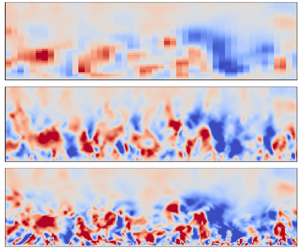
High-flexibility reconstruction of small-scale motions in wall turbulence using a generalized zero-shot learning
-
- Journal:
- Journal of Fluid Mechanics / Volume 990 / 10 July 2024
- Published online by Cambridge University Press:
- 14 August 2024, R1
-
- Article
- Export citation
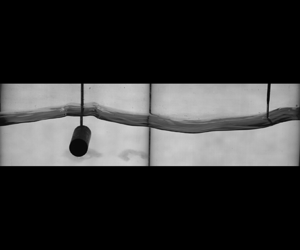
Resonant standing surface waves excited by an oscillating cylinder in a narrow rectangular cavity
-
- Journal:
- Journal of Fluid Mechanics / Volume 990 / 10 July 2024
- Published online by Cambridge University Press:
- 14 August 2024, A12
-
- Article
-
- You have access
- Open access
- HTML
- Export citation
