Refine search
Actions for selected content:
212971 results in Engineering

Experimental study on Richtmyer–Meshkov instability at a light–heavy interface over a wide range of Atwood numbers
-
- Journal:
- Journal of Fluid Mechanics / Volume 975 / 25 November 2023
- Published online by Cambridge University Press:
- 22 November 2023, A29
-
- Article
- Export citation
-
Richtmyer–Meshkov instability (RMI) at a light–heavy single-mode interface over a wide range of post-shock Atwood numbers $A_1$ is studied systematically through elaborate experiments. The interface generation and $A_1$ variation are achieved by the soap-film technology and gas-layer scheme, respectively. Qualitatively, the nonlinear interface evolution features, including spike, bubble and roll-up structures, are more significant in RMI with higher $A_1$. Quantitatively, both the impulsive model and an analytical linear model perform well in predicting the linear growth rate under a wide range of $A_1$ conditions. For the weakly nonlinear stage, the significant spike acceleration occurring when $A_1$ is high, which is observed experimentally for the first time, results in the evolution law of RMI with high $A_1$ being different from the counterpart with low or intermediate $A_1$. None of the considered nonlinear models is found to be applicable for RMI under all $A_1$ conditions, and the predictive capabilities of these models are analysed and summarized. Based on the present experimental results, an empirical nonlinear model is proposed for RMI over a wide range of $A_1$. Further, modal analysis shows that in RMI with high (low or intermediate) $A_1$, high-order harmonics evolve rapidly (slowly) and cannot (can) be ignored. Accordingly, for RMI with high (low or intermediate) $A_1$, the modal model proposed by Zhang & Sohn (Phys. Fluids, vol. 9, 1997, pp. 1106–1124) is less (more) accurate than the one proposed by Vandenboomgaerde et al. (Phys. Fluids, vol. 14, 2002, pp. 1111–1122), since the former ignores perturbation solutions higher than fourth order (the latter retains only terms with the highest power in time).


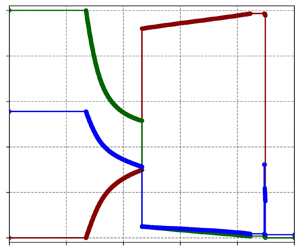
Exact Riemann solver for non-convex relativistic hydrodynamics
-
- Journal:
- Journal of Fluid Mechanics / Volume 975 / 25 November 2023
- Published online by Cambridge University Press:
- 22 November 2023, A48
-
- Article
-
- You have access
- Open access
- HTML
- Export citation
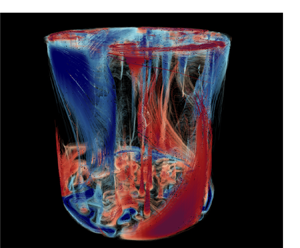
Heat transport and flow morphology of geostrophic rotating Rayleigh–Bénard convection in the presence of boundary flow
-
- Journal:
- Journal of Fluid Mechanics / Volume 975 / 25 November 2023
- Published online by Cambridge University Press:
- 22 November 2023, A46
-
- Article
- Export citation
-
Using direct numerical simulations, we investigate the heat transport in bulk and boundary flows separately in rotating Rayleigh–Bénard convection in cylindrical cells. In the bulk we observe a steep scaling relationship between the Nusselt number ( $Nu$) and the Rayleigh number ( $Ra$), which is consistent with the results from simulations using periodic boundary conditions. For the boundary flow, we observe a power law $Nu_{BF}\sim (Ra/Ra_w)^1$ at the leading order, where $Nu_{BF}$ is the local Nusselt number of the boundary flow and $Ra_w$ is the onset Rayleigh number of the wall mode. We develop a model using the boundary layer marginal stability theory to explain this power law, and further show that a more precise description of the data can be obtained if a higher-order correction is introduced. A striking finding of our study is the observation of a sharp transition in flow state, manifested by a sudden drop in $Nu_{BF}$ with a corresponding collapse of the boundary flow coherency. After the transition, the boundary flow breaks into vortices, leading to a reduction in flow coherency and heat transport efficiency. As the physical properties of the vortices should not depend on the aspect ratio, $Nu_{BF}$ for all aspect ratios collapse together after the transition. Moreover, the centrifugal force helps trigger the breakdown of the coherent boundary flow state. For this reason, $Nu_{BF}$ for the cases with non-zero centrifugal force collapse together. We further develop a method that enables us to separate the contributions from the bulk and boundary flows in the global Nusselt number using only the global $Nu$ and it does not require the centrifugal force to be absent.


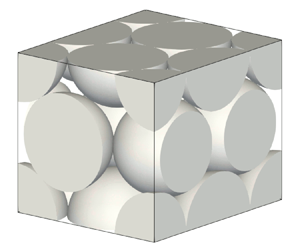
A model for the dissipation rate in linear unsteady flow through porous media
-
- Journal:
- Journal of Fluid Mechanics / Volume 975 / 25 November 2023
- Published online by Cambridge University Press:
- 22 November 2023, A42
-
- Article
-
- You have access
- Open access
- HTML
- Export citation
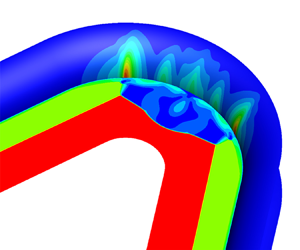
Mach reflection of three-dimensional curved shock waves on V-shaped blunt leading edges
-
- Journal:
- Journal of Fluid Mechanics / Volume 975 / 25 November 2023
- Published online by Cambridge University Press:
- 22 November 2023, A45
-
- Article
- Export citation
-
Theoretical investigation of the primary Mach reflection (MR) configuration on V-shaped blunt leading edges (VBLEs) forms the focus of this study. By ignoring the secondary interactions, a theoretical method based on a simplified form of the continuity relation is developed to predict the shock configurations, including the detached shock, the Mach stem, the transmitted shock and the triple point. The comparison of the theoretical results with both numerical and previous experimental results shows the reliability of the theoretical approach in predicting shock structures across a wide range of free stream and geometric parameters. The theoretical model provides a detailed comprehension of the occurrence mechanism of inverse MRs on VBLEs and the influence of the free stream and geometric parameters on primary MR configurations. Along with the primary MR configuration, the curved shock or compression waves generated by the crotch are solved and offer insight into the transition from the MR to the regular reflection from the same family (sRR). The increase of the ratio $R/r$ and the free stream Mach number $M_0$ appears to facilitate the transition, while the effect of the half-span angle $\beta$ is non-monotonic. The predicted shock positions allow for the identification of the transition boundary between the primary MR and sRR. It is found that $R/r$ below a threshold (for a set $M_0$ value) produces MR, irrespective of $\beta$. If this threshold is exceeded, the configuration can transition from the primary MR to sRR and then back to the primary MR as $\beta$ increases.


Effects of reverberating waves and interface coupling on a divergent Richtmyer–Meshkov instability
-
- Journal:
- Journal of Fluid Mechanics / Volume 975 / 25 November 2023
- Published online by Cambridge University Press:
- 22 November 2023, A44
-
- Article
- Export citation
-
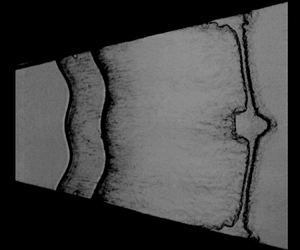
Shock-tube experiments on Richtmyer–Meshkov (RM) instability at a perturbed SF $_6$ layer surrounded by air, induced by a cylindrical divergent shock, are reported. To explore the effects of reverberating waves and interface coupling on instability growth, gas layers with various shapes are created: unperturbed inner interface and sinusoidal outer interface (case US); sinusoidal inner and outer interfaces that have identical phase (case IP); sinusoidal inner and outer interfaces that have opposite phase (case AP). For each case, three thicknesses are considered. Results show that reverberating waves inside the layer dominate the early-stage instability growth, while interface coupling dominates the late-stage growth. The influences of waves on divergent RM instability are more pronounced than the planar and convergent counterparts, which are estimated accurately based on gas dynamics theory. Both the wave influence and interface coupling depend heavily on the layer shape, leading to diverse growth rates: the quickest growth for case AP, medium growth for case US, the slowest growth for case IP. In particular, for the IP case, there exists a critical thickness below which the instability growth is suppressed by both the reverberating waves and interface coupling. This provides an efficient way to modulate the growth of divergent RM instability. It is found that divergent RM instability involves weak nonlinearity and strong interface coupling such that the linear theory of Mikaelian (Phys. Fluids, vol. 17, 2005, 094105) can well reproduce the instability growth at late stages for all cases. This constitutes the first experimental confirmation of the Mikaelian theory.

Effects of phase boundary and shear on diffusive instability – CORRIGENDUM
-
- Journal:
- Journal of Fluid Mechanics / Volume 975 / 25 November 2023
- Published online by Cambridge University Press:
- 21 November 2023, E2
-
- Article
-
- You have access
- HTML
- Export citation
Mismatch analysis of all-fiber coherent beam combiners based on the self-imaging effect
-
- Journal:
- High Power Laser Science and Engineering / Volume 12 / 2024
- Published online by Cambridge University Press:
- 21 November 2023, e13
-
- Article
-
- You have access
- Open access
- HTML
- Export citation
Interaction between a rough bed and an adjacent smooth bed in open-channel flow – ERRATUM
-
- Journal:
- Journal of Fluid Mechanics / Volume 975 / 25 November 2023
- Published online by Cambridge University Press:
- 21 November 2023, E1
-
- Article
-
- You have access
- Open access
- HTML
- Export citation
Rayleigh–Bénard instability in the presence of phase boundary and shear – CORRIGENDUM
-
- Journal:
- Journal of Fluid Mechanics / Volume 975 / 25 November 2023
- Published online by Cambridge University Press:
- 21 November 2023, E3
-
- Article
-
- You have access
- HTML
- Export citation
Simultaneous measurements of kinetic and scalar energy spectrum time evolution in the Richtmyer–Meshkov instability upon reshock
-
- Journal:
- Journal of Fluid Mechanics / Volume 975 / 25 November 2023
- Published online by Cambridge University Press:
- 21 November 2023, A39
-
- Article
-
- You have access
- Open access
- HTML
- Export citation
-
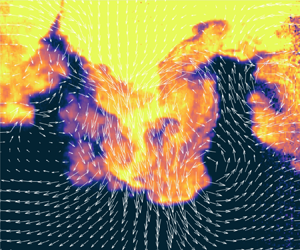
The Richtmyer–Meshkov instability (Richtmyer, Commun. Pure Appl. Maths, vol. 13, issue 2, 1960, pp. 297–319; Meshkov, Fluid Dyn., vol. 4, issue 5, 1972, pp. 101–104) of a twice-shocked gas interface is studied using both high spatial resolution single-shot (SS) and lower spatial resolution, time-resolved, high-speed (HS) simultaneous planar laser-induced fluorescence and particle image velocimetry in the Wisconsin Shock Tube Laboratory's vertical shock tube. The initial condition (IC) is a shear layer with broadband diffuse perturbations at the interface between a helium–acetone mixture and argon. This IC is accelerated by a shock of nominal strength Mach number $M = 1.75$, and then accelerated again by the transmitted shock that reflects off the end wall of the tube. An ensemble of experiments is analysed after reshock while the interface mixing width grows linearly with time. The kinetic and scalar energy spectra and the terms of their evolution equation are calculated and compared between SS and HS experiments. The inertial range scaling of the scalar power spectrum is found to follow Gibson's relation (Gibson, Phys. Fluids, vol. 11, issue 11, 1968, pp. 2316–2327) as a function of Schmidt number when the effective turbulent Schmidt number is used in place of the material Schmidt number that controls equilibrium scaling. Further, the spatially integrated scalar flux follows similar behaviour observed for the kinetic energy in large eddy simulation studies by Zeng et al. (Phys. Fluids, vol. 30, issue 6, 2018, 064106) while the spatially varying scalar flux exhibits back scatter along the centre of the mixing layer and forward energy transfer in the spike and bubble regions.

Global stability of supersonic flow over a hollow cylinder/flare
-
- Journal:
- Journal of Fluid Mechanics / Volume 975 / 25 November 2023
- Published online by Cambridge University Press:
- 21 November 2023, A40
-
- Article
-
- You have access
- Open access
- HTML
- Export citation
120 GHz microstrip power amplifier MMICs in a commercial GaAs process
-
- Journal:
- International Journal of Microwave and Wireless Technologies / Volume 16 / Issue 5 / June 2024
- Published online by Cambridge University Press:
- 21 November 2023, pp. 730-737
-
- Article
-
- You have access
- Open access
- HTML
- Export citation

The role of the in-plane solidity on canopy flows
-
- Journal:
- Journal of Fluid Mechanics / Volume 975 / 25 November 2023
- Published online by Cambridge University Press:
- 21 November 2023, A37
-
- Article
-
- You have access
- Open access
- HTML
- Export citation
-
Turbulent open channel flows developing above submerged canopies made of slender cylinders mounted perpendicular to the channel bed are known to be largely governed by the solidity parameter $\lambda =dh/\Delta S^2$ ( $d$ and $h$ being the diameter and height of the filament, and $\Delta S$ the average spacing between filaments). When the filaments are sufficiently slender, the ratio between the height of the stems and the spacing sets the hydrodynamic regime developing inside and outside the canopy. This ratio also establishes the conditions leading to the transition from a dense to a sparse canopy flow regime (Nepf, Annu. Rev. Fluid Mech., vol. 44, 2012, pp. 123–142). In a previous, companion numerical investigation, Monti et al. (J. Fluid Mech., vol. 891, 2020, A9) used large eddy simulation (LES) to study the influence of the canopy height on the onset of the different regimes without modifying the average spacing $\Delta S$ between the stems. In that LES study, we were looking at the complementary situation in which the height of the stems is constant while the filaments’ number density of the canopy is changed. It was found that for low values of $\lambda$ (i.e. sparse or moderately dense canopies: $\lambda \lessapprox 0.26$), the flows sharing the value of the solidity obtained by either varying $h$ or $\Delta S$ are very similar. Differently, for higher values of $\lambda$ (i.e. in denser canopies), the effects of $h$ and $\Delta S$ start to diverge although sharing the same nominal value of $\lambda$. In this paper, we analyse the different physical mechanisms that come into play for dense configurations obtained by varying either $\Delta S$ or $h$. In particular, we focus on the most relevant length scales and carry out a detailed analysis of the flows using a triple decomposition approach. We show that the inner region of dense canopy flows, characterised by tall stems, is dominated by wall-normal sweeps delivering high momentum in the wall vicinity. Here, the impenetrability condition of the bed redistributes the available momentum in the wall-parallel directions re-energising an otherwise stagnating flow. Differently, in densely packed canopies, the penetration of the outer jet and the momentum transfer from the external flow are limited by the decreasing value of the wall-parallel permeabilities leading to different behaviours, including a reduction of the total drag offered by the canopy.


Data-driven spectral turbulence modelling for Rayleigh–Bénard convection
-
- Journal:
- Journal of Fluid Mechanics / Volume 975 / 25 November 2023
- Published online by Cambridge University Press:
- 21 November 2023, A35
-
- Article
-
- You have access
- Open access
- HTML
- Export citation
-
A data-driven turbulence model for coarse-grained numerical simulations of two-dimensional Rayleigh–Bénard convection is proposed. The model starts from high-fidelity data and is based on adjusting the Fourier coefficients of the numerical solution, with the aim of accurately reproducing the kinetic energy spectra as seen in the high-fidelity reference findings. No assumptions about the underlying partial differential equation or numerical discretization are used in the formulation of the model. We also develop a constraint on the heat flux to guarantee accurate Nusselt number estimates on coarse computational grids and high Rayleigh numbers. Model performance is assessed in coarse numerical simulations at $Ra=10^{10}$. We focus on key features including kinetic energy spectra, wall-normal flow statistics and global flow statistics. The method of data-driven modelling of flow dynamics is found to reproduce the reference kinetic energy spectra well across all scales and yields good results for flow statistics and average heat transfer, leading to computationally cheap surrogate models. Large-scale forcing extracted from the high-fidelity simulation leads to accurate Nusselt number predictions across two decades of Rayleigh numbers, centred around the targeted reference at $Ra=10^{10}$.


The influence of surface roughness on postcritical flow over circular cylinders revisited
-
- Journal:
- Journal of Fluid Mechanics / Volume 975 / 25 November 2023
- Published online by Cambridge University Press:
- 21 November 2023, A36
-
- Article
-
- You have access
- Open access
- HTML
- Export citation
-
This work investigates the effect of surface roughness on cylinder flows in the postcritical regime and reexamines whether the roughness Reynolds number ( $Re_{k_s}$) primarily governs the aerodynamic behaviour. It has been motivated by limitations of many previous investigations, containing occasionally contradictory findings. In particular, many past studies were conducted with relatively high blockage ratios and low cylinder aspect ratios. Both of these factors appear to have non-negligible effects on flow behaviour, and particularly fluctuating quantities such as the standard deviation of the lift coefficient. This study employs a 5 % blockage ratio and a span-to-diameter ratio of 10. Cylinders of different relative surface roughness ratios ( $k_s/D$), ranging from $1.1\times 10^{-3}$ to $3\times 10^{-3}$, were investigated at Reynolds numbers up to $6.8 \times 10^5$ and $Re_{k_s}$ up to 2200. It is found that the base pressure coefficient, drag coefficient, Strouhal number, spanwise correlation length of lift and the standard deviation of the lift coefficient are well described by $Re_{k_s}$ in postcritical flows. However, roughness does have an effect on the minimum surface pressure coefficient (near separation) that does not collapse with $Re_{k_s}$. The universal Strouhal number proposed by Bearman (Annu. Rev. Fluid Mech., vol. 16, 1984, pp. 195–222) appears to be nearly constant over the range of $Re_{k_s}$ studied, spanning the subcritical through postcritical regimes. Frequencies in the separating shear layers are found to be an order of magnitude lower than the power law predictions for separating shear layers of smooth cylinders.


Single-molecule tracking of myelin basic protein during oligodendrocyte differentiation
-
- Journal:
- Biological Imaging / Volume 3 / 2023
- Published online by Cambridge University Press:
- 20 November 2023, e24
-
- Article
-
- You have access
- Open access
- HTML
- Export citation
Continuous gradient fusion class activation mapping: segmentation of laser-induced damage on large-aperture optics in dark-field images
-
- Journal:
- High Power Laser Science and Engineering / Volume 12 / 2024
- Published online by Cambridge University Press:
- 20 November 2023, e4
-
- Article
-
- You have access
- Open access
- HTML
- Export citation
Coupled lattice Boltzmann method–discrete element method model for gas–liquid–solid interaction problems
-
- Journal:
- Journal of Fluid Mechanics / Volume 975 / 25 November 2023
- Published online by Cambridge University Press:
- 20 November 2023, A20
-
- Article
- Export citation

Principles of Turbomachinery in Air-Breathing Engines
-
- Published online:
- 18 November 2023
- Print publication:
- 19 October 2023
-
- Textbook
- Export citation
