Refine search
Actions for selected content:
212971 results in Engineering
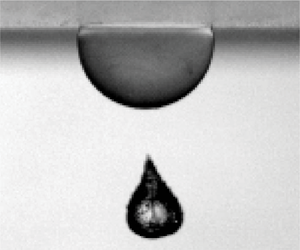
Interactions of a collapsing laser-induced cavitation bubble with a hemispherical droplet attached to a rigid boundary
-
- Journal:
- Journal of Fluid Mechanics / Volume 976 / 10 December 2023
- Published online by Cambridge University Press:
- 28 November 2023, A11
-
- Article
- Export citation
Effect of two-way coupling on clustering and settling of heavy particles in homogeneous turbulence
-
- Journal:
- Journal of Fluid Mechanics / Volume 976 / 10 December 2023
- Published online by Cambridge University Press:
- 28 November 2023, A12
-
- Article
-
- You have access
- Open access
- HTML
- Export citation
-
When inertial particles are dispersed in a turbulent flow at sufficiently high concentrations, the continuous and dispersed phases are two-way coupled. Here, we show via laboratory measurements how, as the suspended particles modify the turbulence, their behaviour is also profoundly changed. In particular, we investigate the spatial distribution and motion of sub-Kolmogorov particles falling in homogeneous air turbulence. We focus on the regime considered in Hassaini & Coletti (J. Fluid Mech., vol. 949, 2022, A30), where the turbulent kinetic energy and dissipation rate were found to increase as the particle volume fraction increases from $10^{-6}$ to $5\times 10^{-5}$. This leads to strong intensification of the clustering, encompassing a larger fraction of the particles and over a wider range of scales. The settling rate is approximately doubled over the considered range of concentrations, with particles in large clusters falling even faster. The settling enhancement is due in comparable measure to the predominantly downward fluid velocity at the particle location (attributed to the collective drag effect) and to the larger slip velocity between the particles and the fluid. With increasing loading, the particles become less able to respond to the fluid fluctuations, and the random uncorrelated component of their motion grows. Taken together, the results indicate that the concentrated particles possess an effectively higher Stokes number, which is a consequence of the amplified dissipation induced by two-way coupling. The larger relative velocities and accelerations due to the increased fall speed may have far-reaching consequences for the inter-particle collision probability.


MRF volume 15 issue 9 Cover and Back matter
-
- Journal:
- International Journal of Microwave and Wireless Technologies / Volume 15 / Issue 9 / November 2023
- Published online by Cambridge University Press:
- 28 November 2023, p. b1
-
- Article
-
- You have access
- Export citation
The interplay between bulk flow and boundary conditions on the distribution of microswimmers in channel flow
-
- Journal:
- Journal of Fluid Mechanics / Volume 976 / 10 December 2023
- Published online by Cambridge University Press:
- 28 November 2023, A13
-
- Article
-
- You have access
- Open access
- HTML
- Export citation
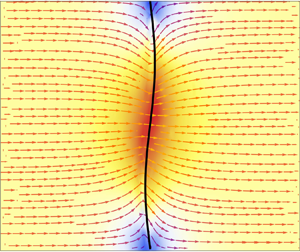
Fluttering-induced flow in a closed chamber
-
- Journal:
- Journal of Fluid Mechanics / Volume 976 / 10 December 2023
- Published online by Cambridge University Press:
- 28 November 2023, A15
-
- Article
-
- You have access
- Open access
- HTML
- Export citation
-
We study the emergence of fluid flow in a closed chamber that is driven by dynamical deformations of an elastic sheet. The sheet is compressed between the sidewalls of the chamber and partitions it into two separate parts, each of which is initially filled with an inviscid fluid. When fluid exchange is allowed between the two compartments of the chamber, the sheet becomes unstable, and its motion displaces the fluid from rest. We derive an analytical model that accounts for the coupled, two-way, fluid–sheet interaction. We show that the system depends on four dimensionless parameters: the normalized excess length of the sheet compared with the lateral dimension of the chamber, $\varDelta$; the normalized vertical dimension of the chamber; the normalized initial volume difference between the two parts of the chamber, $v_{du}(0)$; and the structure-to-fluid mass ratio, $\lambda$. We investigate the dynamics at the early times of the system's evolution and then at moderate times. We obtain the growth rates and the frequency of vibrations around the second and the first buckling modes, respectively. Analytical solutions are derived for these linear stability characteristics within the limit of the small-amplitude approximation. At moderate times, we investigate how the sheet escapes from the second mode. Given the chamber's dimensions, we show that the initial energy of the sheet is mostly converted into hydrodynamic energy of the fluid if $\lambda \ll 1$ and into kinetic energy of the sheet if $\lambda \gg 1$. In both cases, most of the initial potential energy is released at time $t_{p}\simeq \ln [c \varDelta ^{1/2}/v_{du}(0)]/\sigma$, where $\sigma$ is the growth rate and $c$ is a constant.


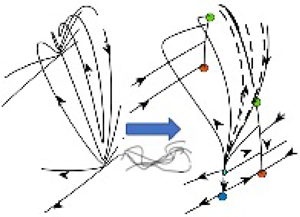
Rotation of a fibre in simple shear flow of a dilute polymer solution
-
- Journal:
- Journal of Fluid Mechanics / Volume 976 / 10 December 2023
- Published online by Cambridge University Press:
- 28 November 2023, A9
-
- Article
-
- You have access
- Open access
- HTML
- Export citation
-
The motion of a freely rotating prolate spheroid in a simple shear flow of a dilute polymeric solution is examined in the limit of large particle aspect ratio, $\kappa$. A regular perturbation expansion in the polymer concentration, $c$, a generalized reciprocal theorem, and slender body theory to represent the velocity field of a Newtonian fluid around the spheroid are used to obtain the $O(c)$ correction to the particle's orientational dynamics. The resulting dynamical system predicts a range of orientational behaviours qualitatively dependent upon $c\, De$ ( $De$ is the imposed shear rate times the polymer relaxation time) and $\kappa$ and quantitatively on $c$. At a small but finite $c\, De$, the particle spirals towards a limit cycle near the vorticity axis for all initial conditions. Upon increasing $\kappa$, the limit cycle becomes smaller. Thus, ultimately the particle undergoes a periodic motion around and at a small angle from the vorticity axis. At moderate $c\, De$, a particle starting near the flow–gradient plane departs it monotonically instead of spirally, as this plane (a limit cycle at smaller $c\, De$) obtains a saddle and an unstable node. The former is close to the flow direction. Upon further increasing $c\, De$, the saddle node changes to a stable node. Therefore, depending upon the initial condition, a particle may either approach a periodic orbit near the vorticity axis or obtain a stable orientation near the flow direction. Upon further increasing $c\, De$, the limit cycle near the vorticity axis vanishes, and the particle aligns with the flow direction for all starting orientations.


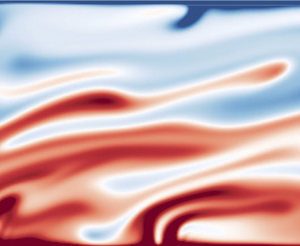
Lifetimes of metastable windy states in two-dimensional Rayleigh–Bénard convection with stress-free boundaries
-
- Journal:
- Journal of Fluid Mechanics / Volume 976 / 10 December 2023
- Published online by Cambridge University Press:
- 28 November 2023, R2
-
- Article
-
- You have access
- Open access
- HTML
- Export citation
-
Two-dimensional horizontally periodic Rayleigh–Bénard convection between stress-free boundaries displays two distinct types of states, depending on the initial conditions. Roll states are composed of pairs of counter-rotating convection rolls. Windy states are dominated by strong horizontal wind (also called zonal flow) that is vertically sheared, precludes convection rolls and suppresses heat transport. Windy states occur only when the Rayleigh number $Ra$ is sufficiently above the onset of convection. At intermediate $Ra$ values, windy states can be induced by suitable initial conditions, but they undergo a transition to roll states after finite lifetimes. At larger $Ra$ values, where windy states have been observed for the full duration of simulations, it is unknown whether they represent chaotic attractors or only metastable states that would eventually undergo a transition to roll states. We study this question using direct numerical simulations of a fluid with a Prandtl number of 10 in a layer whose horizontal period is eight times its height. At each of seven $Ra$ values between $9\times 10^6$ and $2.25\times 10^7$ we have carried out 200 or more simulations, all from initial conditions leading to windy convection with finite lifetimes. The lifetime statistics at each $Ra$ indicate a memoryless process with survival probability decreasing exponentially in time. The mean lifetimes grow with $Ra$ approximately as $Ra^4$. This analysis provides no $Ra$ value at which windy convection becomes stable; it might remain metastable at larger $Ra$ with extremely long lifetimes.


FLM volume 975 Cover and Front matter
-
- Journal:
- Journal of Fluid Mechanics / Volume 975 / 25 November 2023
- Published online by Cambridge University Press:
- 28 November 2023, p. f1
-
- Article
-
- You have access
- Export citation
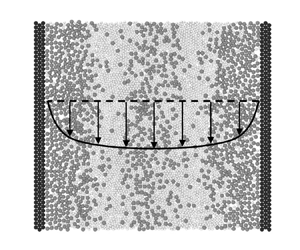
Coupled continuum modelling of size segregation driven by shear-strain-rate gradients and flow in dense, bidisperse granular media
-
- Journal:
- Journal of Fluid Mechanics / Volume 976 / 10 December 2023
- Published online by Cambridge University Press:
- 28 November 2023, A16
-
- Article
-
- You have access
- Open access
- HTML
- Export citation

Introduction to Intelligent Systems, Control, and Machine Learning using MATLAB
-
- Published online:
- 27 November 2023
- Print publication:
- 16 November 2023
-
- Textbook
- Export citation
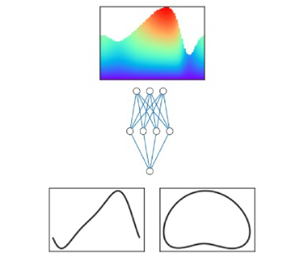
Physics-agnostic and physics-infused machine learning for thin films flows: modelling, and predictions from small data
-
- Journal:
- Journal of Fluid Mechanics / Volume 975 / 25 November 2023
- Published online by Cambridge University Press:
- 27 November 2023, A41
-
- Article
-
- You have access
- Open access
- HTML
- Export citation
Investigating electromagnetic scattering characteristics based on a nonlinear sea surface
-
- Journal:
- International Journal of Microwave and Wireless Technologies / Volume 16 / Issue 4 / May 2024
- Published online by Cambridge University Press:
- 24 November 2023, pp. 651-659
-
- Article
- Export citation
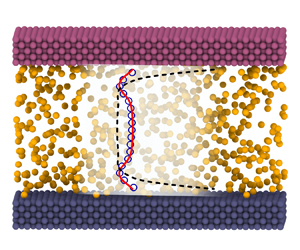
Molecular kinetic modelling of non-equilibrium transport of confined van der Waals fluids
-
- Journal:
- Journal of Fluid Mechanics / Volume 976 / 10 December 2023
- Published online by Cambridge University Press:
- 24 November 2023, A7
-
- Article
- Export citation
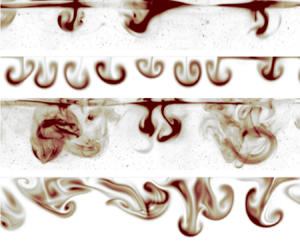
Transition to turbulence in wind-drift layers
-
- Journal:
- Journal of Fluid Mechanics / Volume 976 / 10 December 2023
- Published online by Cambridge University Press:
- 24 November 2023, A8
-
- Article
- Export citation
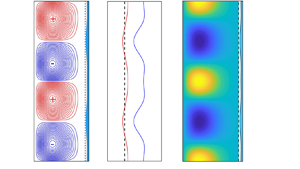
Taylor vortices in yield stress fluids with static wall layers on the outer cylinder
-
- Journal:
- Journal of Fluid Mechanics / Volume 976 / 10 December 2023
- Published online by Cambridge University Press:
- 24 November 2023, A3
-
- Article
- Export citation
-
A linear stability analysis of circular Couette flow of a Bingham fluid subjected to axisymmetric perturbations was presented by Peng & Zhu (J. Fluid Mech., vol. 512, 2004, pp. 21–45) and Landry et al. (J. Fluid Mech., vol. 560, 2006, pp. 321–353). Here, we consider the stability of this flow with respect to a finite amplitude perturbation. We focus particularly on the case where the basic flow has an unyielded fluid layer on outer cylinder. A weakly nonlinear stability analysis is developed for a wide gap and a narrow gap. A third-order Ginzburg–Landau equation is derived, and the influence of the different nonlinearities on bifurcation features is investigated in detail. The results indicate that: (i) the nonlinear inertial terms act in favour of pitchfork supercritical bifurcation and the nonlinear yield stress terms promote a subcritical bifurcation; (ii) for a range of Bingham numbers $B$, the extent of which depends on the radius ratio and outer Reynolds number, the nonlinear yield stress terms are dominant and the primary bifurcation is subcritical. The amplitude analysis indicates that in the supercritical bifurcation regime, near the threshold, when the nonlinear inertial terms are dominant, the amplitude decreases slightly with increasing $B$. Once the nonlinear yield stress terms start to become significant, the equilibrium amplitude increases substantially with increasing $B$. Similar trends are observed for Taylor vortex strength. Finally, the erosion of the static layer is analysed. It is shown that the nonlinear yield stress terms play a significant role.


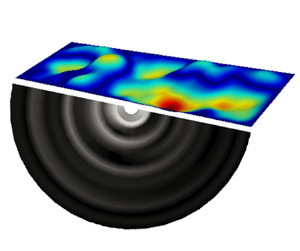
Direct numerical simulation-based vibroacoustic response of plates excited by turbulent wall-pressure fluctuations
-
- Journal:
- Journal of Fluid Mechanics / Volume 976 / 10 December 2023
- Published online by Cambridge University Press:
- 24 November 2023, A2
-
- Article
-
- You have access
- Open access
- HTML
- Export citation
-
We use direct numerical simulation to study the vibroacoustic response of an elastic plate in a turbulent channel at $Re_\tau$ of 180 and 400 for three plate boundary conditions and two materials – synthetic rubber and stainless steel. The fluid–structure–acoustic coupling is assumed to be one-way coupled, i.e. the fluid affects the solid and not vice versa, and the solid affects the acoustic medium and not vice versa. The wall pressure consists of intermittent large-amplitude fluctuations associated with the near-wall, burst-sweep cycle of events. For stainless steel plates, displacement has similar large-amplitude peak events due to comparable time scales of plate vibration and near-wall eddies. For synthetic rubber plates, large-amplitude displacement fluctuations are observed only near clamped or simply supported boundaries. Away from boundaries, plate displacement resembles an amplitude-modulated wave, and no large-amplitude events are observed. We discuss displacement and acoustic pressure spectra over different frequency ranges. For frequencies much smaller than the first natural frequency, the product of plate-averaged displacement spectrum and bending stiffness squared collapses with Reynolds number and plate material in outer units. At high frequencies, displacement and acoustic pressure spectra scale better in inner units, and the scaling depends on the type of damping. For synthetic rubber plates, the spectra display an overlap region that collapses in both outer and inner units. Soft plate deformation displays a range of length scales. However, stiff plate deformation does not exhibit a similar range of scales and resembles plate mode shapes. The soft plate has two distinct deformation structures. Low-speed, large deformation structures with slow formation/break-up time scales are found away from boundaries. High-speed, small deformation structures with fast formation/break-up time scales formed due to boundary reflections exist near the boundaries.

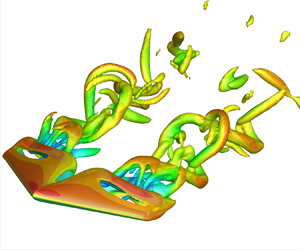
Laminar post-stall wakes of tapered swept wings
-
- Journal:
- Journal of Fluid Mechanics / Volume 976 / 10 December 2023
- Published online by Cambridge University Press:
- 24 November 2023, A6
-
- Article
- Export citation
-
While tapered swept wings are widely used, the influence of taper on their post-stall wake characteristics remains largely unexplored. To address this issue, we conduct an extensive study using direct numerical simulations to characterize the wing taper and sweep effects on laminar separated wakes. We analyse flows behind NACA 0015 cross-sectional profile wings at post-stall angles of attack $\alpha =14^\circ$– $22^\circ$ with taper ratios $\lambda =0.27$– $1$, leading-edge sweep angles $0^\circ$– $50^\circ$ and semi aspect ratios $sAR =1$ and $2$ at a mean-chord-based Reynolds number of $600$. Tapered wings have smaller tip chord length, which generates a weaker tip vortex, and attenuates inboard downwash. This results in the development of unsteadiness over a large portion of the wingspan at high angles of attack. For tapered wings with backward-swept leading edges, unsteadiness emerges near the wing tip. On the other hand, wings with forward-swept trailing edges are shown to concentrate wake-shedding structures near the wing root. For highly swept untapered wings, the wake is steady, while unsteady shedding vortices appear near the tip for tapered wings with high leading-edge sweep angles. For such wings, larger wake oscillations emerge near the root as the taper ratio decreases. While the combination of taper and sweep increases flow unsteadiness, we find that tapered swept wings have more enhanced aerodynamic performance than untapered and unswept wings, exhibiting higher time-averaged lift and lift-to-drag ratio. The current findings shed light on the fundamental aspects of flow separation over tapered wings in the absence of turbulent flow effects.


A two-phase pure slurry model for planetary cores: one-dimensional solutions and implications for Earth's F-layer
-
- Journal:
- Journal of Fluid Mechanics / Volume 976 / 10 December 2023
- Published online by Cambridge University Press:
- 24 November 2023, A5
-
- Article
-
- You have access
- Open access
- HTML
- Export citation
-
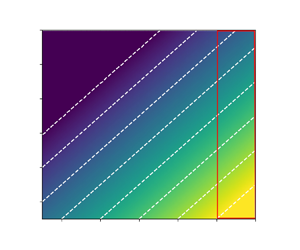
We develop and analyse a continuum model of two-phase slurry dynamics for planetary cores. Mixed solid–liquid slurry regions may be ubiquitous in the upper cores of small terrestrial bodies and have also been invoked to explain anomalous seismic structure in the F-layer at the base of Earth's liquid iron core. These layers are expected to influence the dynamics and evolution of planetary cores, including their capacity to generate global magnetic fields; however, to date, models of two-phase regions in planetary cores have largely ignored the complex fluid dynamics that arises from interactions between phases. As an initial application of our model, and to focus on fundamental fluid dynamical processes, we consider a non-rotating and non-magnetic slurry comprised of a single chemical component with a temperature that is tied to the liquidus. We study one-dimensional solutions in a configuration set up to mimic Earth's F-layer, varying gravitational strength $R$, the solid/liquid viscosity ratio $\lambda _{\mu }$ and the interaction parameter $K$, which measures friction between the phases. We develop scalings describing behaviour in the limit $R \gg 1$ and $\lambda _{\mu } \gg 1$, which are in excellent agreement with our numerical results. Application to Earth's core, where $R \sim 10^{28}$ and $\lambda _{\mu } \sim 10^{22}$, suggests that a pure iron slurry F-layer would contain a mean solid fraction of at most 5 %.


Optimal waveform for fast synchronization of airfoil wakes
-
- Journal:
- Journal of Fluid Mechanics / Volume 976 / 10 December 2023
- Published online by Cambridge University Press:
- 24 November 2023, R1
-
- Article
-
- You have access
- Open access
- HTML
- Export citation
-
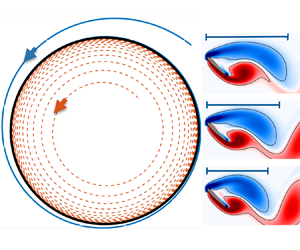
We obtain an optimal actuation waveform for fast synchronization of periodic airfoil wakes through the phase reduction approach. Using the phase reduction approach for periodic wake flows, the spatial sensitivity fields with respect to the phase of the vortex shedding are obtained. The phase sensitivity fields can uncover the synchronization properties in the presence of periodic actuation. This study seeks a periodic actuation waveform using phase-based analysis to minimize the time for synchronization to modify the wake shedding frequency of NACA0012 airfoil wakes. This fast synchronization waveform is obtained theoretically from the phase sensitivity function by casting an optimization problem. The obtained optimal actuation waveform becomes increasingly non-sinusoidal for higher angles of attack. Actuation based on the obtained waveform achieves rapid synchronization within as low as two vortex shedding cycles irrespective of the forcing frequency, whereas traditional sinusoidal actuation requires ${O}(10)$ shedding cycles. Further, we analyse the influence of actuation frequency on the vortex shedding and the aerodynamic coefficients using force-element analysis. The present analysis provides an efficient way to modify the vortex lock-on properties in a transient manner with applications to fluid–structure interactions and unsteady flow control.

4 - Shaping the future: a world after firepower
-
- Book:
- Pyromania
- Published by:
- Agenda Publishing
- Published online:
- 19 December 2024
- Print publication:
- 23 November 2023, pp 83-120
-
- Chapter
- Export citation
