To save content items to your account,
please confirm that you agree to abide by our usage policies.
If this is the first time you use this feature, you will be asked to authorise Cambridge Core to connect with your account.
Find out more about saving content to .
To save content items to your Kindle, first ensure no-reply@cambridge.org
is added to your Approved Personal Document E-mail List under your Personal Document Settings
on the Manage Your Content and Devices page of your Amazon account. Then enter the ‘name’ part
of your Kindle email address below.
Find out more about saving to your Kindle.
Note you can select to save to either the @free.kindle.com or @kindle.com variations.
‘@free.kindle.com’ emails are free but can only be saved to your device when it is connected to wi-fi.
‘@kindle.com’ emails can be delivered even when you are not connected to wi-fi, but note that service fees apply.
Understanding particle motion in narrow channels can guide progress in numerous applications, from filtration to vascular transport. Thermal or active fluctuations of fluid-filled channel walls can slow down or increase the dispersion of tracer particles via entropic trapping in the wall bulges or hydrodynamic flows induced by wall fluctuations, respectively. Previous studies concentrated primarily on the case of a single Brownian tracer. Here, we address what happens when there is a large ensemble of interacting Brownian tracers – a common situation in applications. Introducing repulsive interactions between tracer particles, while ignoring the presence of a background fluid, leads to an effective flow field. This flow field enhances tracer dispersion, a phenomenon reminiscent of that seen for single tracers in incompressible background fluid. We characterise the dispersion by the long-time diffusion coefficient of tracers numerically and analytically with a mean-field density functional analysis. We find a surprising effect where an increased particle density enhances the diffusion coefficient, challenging the notion that crowding effects tend to reduce diffusion. Here, inter-particle interactions push particles closer to the fluctuating channel walls. Interactions between the fluctuating wall and the now-nearby particles then drive particle mixing. Our mechanism is sufficiently general that we expect it to apply to various systems. In addition, our perturbation theory quantifies dispersion in generic advection–diffusion systems.
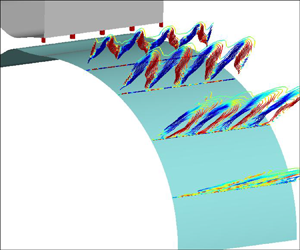
A highly compressive effect would suppress the mixing of the shear layer in a convex wall jet. The spanwise distributed protrusions at the nozzle lip are employed to achieve mixing enhancement in this study. The mixing characteristics and enhancement mechanisms are numerically investigated by the delayed detached-eddy simulation method based on the two-equation shear-stress transport model. A widely applicable flow spatiotemporal analysis method, called proper orthogonal decomposition (POD), is used to gain further insight into the dynamical behaviours of the flow instability mode. The results reveal that the centrifugal effect maintains and amplifies the initial perturbations induced by the spanwise distributed heterogeneities, resulting in forced streamwise vortices. The instabilities induced by the streamwise vortices significantly increase the growth rate of the jet half-width and the shear layer vorticity thickness. The spanwise wavelength of the streamwise vortices is consistent with the spanwise distributed forced excitation. In addition, the spanwise meandering motion of the streamwise vortices is observed, which is usually associated with the streamwise travelling wave. This is further confirmed by the POD analysis of the spanwise velocity fluctuation in both stream-radial and stream-span sections. Also, the spatial distributions of the POD modes with the highest energy provide information on the secondary instability modes. Both sinuous and varicose types of disturbances are observed in the unforced jet, whereas the forced jet seems to be dominated by the sinuous type instability, which is more easily excited than the varicose type instability. Moreover, the turbulence intensity in the forced jet is also significantly enhanced as expected due to the earlier and stronger streamwise vortices and associated instabilities. The enhanced turbulent characteristics of the highly compressible condition tend to be isotropic, whereas in the unforced jet, it is anisotropic due to the strong compressibility suppressing the spanwise turbulent fluctuations.
The distinct operational characteristics of military aircraft, relative to civil aircraft, have impeded the standardisation of airworthiness management practice across Europe. Standardisation has been further deterred by the intertwined certification and qualification activities specific to military aircraft. The management of airworthiness in European military aviation has undergone significant changes over the past 15 years, with the progress made attributed to the harmonisation efforts driven by the European Defence Agency (EDA). The creation of a Military Airworthiness Authorities Forum and the development of the European Military Airworthiness Requirements (EMAR) have been instrumental in creating a more homogenous regulatory landscape. The examples of five main players of the European aerospace sector, namely France, Italy, Germany, Spain and the United Kingdom, are examined from the point of view of adoption and implementation of an EMARs-based system. Their regulatory structures have revealed similarities and primary differences. The EMAR’s framework has enabled a gradual build-up of technical knowhow within the European countries who embraced this, civil-based, framework. All five countries have adopted EMARs, though through a variety of regulatory constructs. Their regulatory structures exhibit diverse practices, especially in how initial and continuing airworthiness is managed. Some countries have also elected to have more than one authority overseeing/been responsible for airworthiness. Closer collaboration between national Military Aviation Authorities (MAAs) can be achieved through standardisation at regulatory structure level. The establishment of a joint MAAs may be the next logical step in the harmonisation process, in line with EDA objective’ for a EU-wide authority with greater powers.
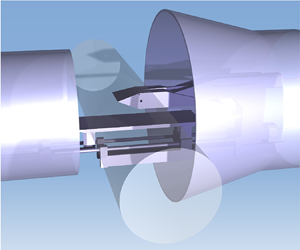
Separation induced by impinging shock is a fundamental feature in supersonic and hypersonic flows; however, it is difficult to predict the pressure plateau due to a limited theoretical understanding of the effect of impinging shock strength. In this study, the evolution of the separation configuration and pressure distribution with changes in impinging shock angle is examined, and a theoretical equation for predicting the pressure plateau based on minimum entropy production is proposed. For validation, an experimental device that can measure wall pressure in the separation region at high spatiotemporal resolution is developed, and schlieren visualization is employed to capture the flow structure. Accordingly, the fine characteristics of pressure distributions along the centreline of the separation region as well as the reattachment region induced by shock impingement at various angles ($8.5^\circ$ to $30.5^\circ$) are obtained in a flow of Mach number 5 and Reynolds number ${\approx }1.4\times 10^7\ {\rm m}^{-1}$. The experimental results agree well with the theoretical results; both indicate that the pressure distribution is strongly related to the impinging shock strength and that there is a critical flow deflection angle $\alpha ^\ast$ (${\approx }20.8^\circ$ for Mach 5). The pressure in the separation region grows nearly linearly with increasing impinging shock strength when the flow deflection angle of the impinging shock is less than $\alpha ^\ast$; the pressure stops growing and resides in a small range when the flow deflection angle is larger than $\alpha ^\ast$. Therefore, the impinging shock strength should be considered a main factor when predicting the pressure plateau.

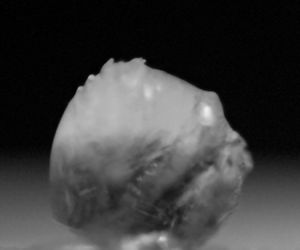
The present study uses Galinstan as a test fluid to investigate the shock-induced atomisation of a liquid metal droplet in a high-Weber-number regime $(We \sim 400\unicode{x2013}8000)$. Atomisation dynamics is examined for three test environments: oxidizing (Galinstan–air), inert (Galinstan–nitrogen) and conventional fluids (deionised water–air). Due to the readily oxidizing nature of liquid metals, their atomisation in an industrial scale system is generally carried out in inert atmosphere conditions. However, no previous study has considered gas-induced secondary atomisation of liquid metals in inert conditions. Due to experimental challenges associated with molten metals, laboratory scale models are generally tested for conventional fluids like deionised water, liquid fuels, etc. The translation of results obtained from conventional fluid to liquid metal atomisation is rarely explored. Here a direct multiscale spatial and temporal comparison is provided between the atomisation dynamics of conventional fluid and liquid metals under oxidizing and inert conditions. The liquid metal droplet undergoes breakup through the shear-induced entrainment mode for the studied range of Weber number values. The prevailing mechanism is explained based on the relative dominance of droplet deformation and Kelvin–Helmholtz wave formation. The study provides quantitative and qualitative similarities for the three test cases and explains the differences in morphology of fragmenting secondary droplets in the oxidizing test case (Galinstan–air) due to rapid oxidation of the fragmenting ligaments. A phenomenological framework is postulated for predicting the morphology of secondary droplets. The formation of flake-like secondary droplets in the Galinstan air test case is based on the oxidation rate of liquid metals and the properties of the oxide layer formed on the atomizing ligament surface.

A fully automatic fail-safe beam shaping system based on a liquid crystal on a silicon spatial light modulator has been implemented in the high-energy kilowatt-average-power nanosecond laser system Bivoj. The shaping system corrects for gain nonuniformity and wavefront aberrations of the front-end of the system. The beam intensity profile and the wavefront at the output of the front-end were successfully improved by shaping. The beam homogeneity defined by the beam quality parameters was improved two to three times. The root-mean-square value of the wavefront was improved more than 10 times. Consequently, the shaped beam from the second preamplifier led to improvement of the beam profile at the output of the first main cryo-amplifier. The shaping system is also capable of creating nonordinary beam shapes, imprinting cross-references into the beam, or masking certain parts of the beam.
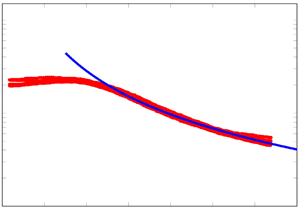
We present theoretical results related to the experimental findings of Matsubara & Alfredsson (J. Fluid Mech., vol. 430, 2001, pp. 149–168) on the scaling of the energy spectra of the Klebanoff modes, i.e. streamwise-elongated vortical disturbances generated by free-stream turbulence in a flat-plate transitional boundary layer. The scaling is explained by a model that describes the streamwise evolution of the streamwise and spanwise energy spectra. The theoretical framework is based on the quasi-steady asymptotic solution of the boundary-region equations, on an axial-symmetric model of the free-stream spectrum, and on the spectral response of the boundary layer to the external perturbations.
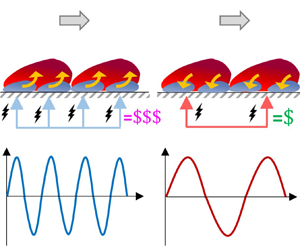
We investigate the role of inter-scale interactions in the high-Reynolds-number skin-friction drag reduction strategy reported by Marusic et al. (Nat. Commun., vol. 12, 2021). The strategy involves imposing relatively low-frequency streamwise travelling waves of spanwise velocity at the wall to actuate the drag generating outer scales. This approach has proven to be more energy efficient than the conventional method of directly targeting the drag producing inner scales, which typically requires actuation at higher frequencies. Notably, it is observed that actuating the outer scales at low frequencies leads to a substantial attenuation of the major drag producing inner scales, suggesting that the actuations affect the nonlinear inner–outer coupling inherently existing in wall-bounded flows. In the present study, we find that increased drag reduction, through imposition of spanwise wall oscillations, is always associated with an increased coupling between the inner and outer scales. This enhanced coupling emerges through manipulation of the phase relationships between these triadically linked scales, with the actuation forcing the entire range of energy-containing scales, from the inner (viscous) to the outer (inertial) scales, to be more in phase. We also find that a similar enhancement of this nonlinear coupling, via manipulation of the inter-scale phase relationships, occurs with increasing Reynolds number for canonical turbulent boundary layers. This indicates improved efficacy of the energy-efficient drag reduction strategy at very high Reynolds numbers, where the energised outer scales are known to more strongly superimpose and modulate the inner scales. Leveraging the inter-scale interactions, therefore, offers a plausible mechanism for achieving energy-efficient drag reduction at high Reynolds numbers.
The production of broadband, terawatt terahertz (THz) pulses has been demonstrated by irradiating relativistic lasers on solid targets. However, the generation of extremely powerful, narrow-band and frequency-tunable THz pulses remains a challenge. Here, we present a novel approach for such THz pulses, in which a plasma wiggler is elaborated by a table-top laser and a near-critical density plasma. In such a wiggler, the laser-accelerated electrons emit THz radiations with a period closely related to the plasma thickness. The theoretical model and numerical simulations predict that a THz pulse with a laser–THz energy conversion of over 2.0%, an ultra-strong field exceeding 80 GV/m, a divergence angle of approximately 20° and a center frequency tunable from 4.4 to 1.5 THz can be generated from a laser of 430 mJ. Furthermore, we demonstrate that this method can work across a wide range of laser and plasma parameters, offering potential for future applications with extremely powerful THz pulses.
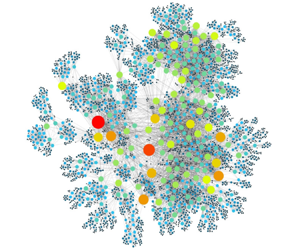
We present experimental evidence of multifractality and scale-free network topology in a noise-perturbed laminar jet operated in a globally stable regime, prior to the critical point of a supercritical Hopf bifurcation and prior to the saddle-node point of a subcritical Hopf bifurcation. For both types of bifurcation, we find that (i) the degree of multifractality peaks at intermediate noise intensities, (ii) the conditions for peak multifractality produce a complex network whose node degree distribution obeys an inverse power-law scaling with an exponent of $2 < \gamma < 3$, indicating scale-free topology and (iii) the Hurst exponent and the global clustering coefficient can serve as early warning indicators of global instability under specific operating and forcing conditions. By characterising the noise-induced dynamics of a canonical shear flow, we demonstrate that the multifractal and scale-free network dynamics commonly observed in turbulent flows can also be observed in laminar flows under certain stochastic forcing conditions.
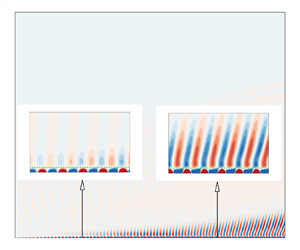
The detailed energy sources that sustain the eigenmodal exponential growth in boundary layers are currently unclear. In the present study, the phase of each term in the linear stability equation is examined to identify the significant physical sources for a wide range of Mach numbers and wall temperature ratios. The Tollmien–Schlichting mode for incompressible flows, the oblique first mode for supersonic flows and the Mack second mode and supersonic mode for hypersonic flows share some similar features. The unique appearance of obliqueness for the most unstable first mode is accompanied by the enhancement of Reynolds shear stress. By contrast, the weakened Reynolds thermal stress prevents the oblique second mode from being the most unstable state. Wall cooling stabilises the oblique first mode by rendering Reynolds thermal stress and dilatation fluctuations out of phase with the internal energy fluctuation. It destabilises the second mode by a newly generated pronounced region of wall-normal internal energy transport beneath the second generalised inflection point. In comparison, the porous coating destabilises the oblique first mode by significantly enhancing the mean-shear production while it stabilises the second mode similarly to wall heating. Finally, the relatively weak supersonic mode has the feature that the phase destruction of wall-normal transport near the critical layer results in a low contribution to the internal energy growth. Connections and consistencies are also highlighted with the previous inviscid thermoacoustic interpretation for the second mode (Kuehl, AIAA J., vol. 56, 2018, pp. 3585–3592) and for the supersonic mode. The pronounced sources along the critical layer and near-wall regions provide a unified understanding of the local energy amplification mechanisms of the inviscid modes in hypersonic boundary layers.
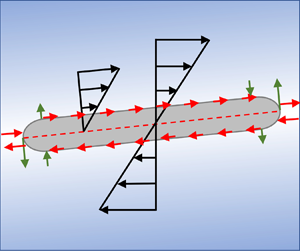
Through boundary integral simulations and asymptotic analysis, we investigate the effect of a finite Navier slip length on the rheological proprieties of a dilute two-dimensional suspension of plate-like particles in the creeping flow limit. Specifically, we study the effects of Navier slip, particle thickness and Péclet number on the effective shear viscosity and average normal stress difference of an isolated two-dimensional plate-like particle in an unbounded shear flow field. We find that Navier slip induces a significant reduction in the effective viscosity and increases the average normal stress difference. The effect of slip becomes more enhanced as the thickness of the particle decreases and as the Péclet number increases. Remarkably, the analysis suggests that it is theoretically possible for a dilute suspension of slip plate-like particles at high Péclet numbers to have a shear viscosity smaller than that of the suspending fluid.
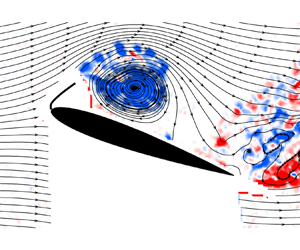
Self-excited oscillations of flags attached at the leading edge of aerofoils have been investigated at post-stall angles of attack at a chord Reynolds number of 100 000. Significant increases in the time-averaged lift coefficient and stall angle have been observed for three aerofoils: one symmetric, one cambered and one with a sharp leading edge. The aerodynamic improvement is due to the periodic formation of vortices caused by the flag oscillations. When the flag is near the aerofoil surface, it is lifted upwards by the induced velocity of the growing vortex. As the flag moves up, the vortex grows in strength and reaches maximum circulation when the flag is furthest from the aerofoil surface and subsequently sheds. Flags with large stiffness exhibit better spatial and temporal coherence of flag oscillations than the compliant flags, resulting in a larger maximum lift coefficient and higher stall angle. For all aerofoils tested, the best lift enhancement with respect to the clean aerofoils is found when the angle of attack is 6° to 10° above the stall angle of the clean aerofoil. High lift is observed when the flags are locked in with the wake instability in a narrow frequency band, depending on the flag mass ratio and length.
Multilayer dielectric gratings (MLDGs) are crucial for pulse compression in picosecond–petawatt laser systems. Bulged nodular defects, embedded in coating stacks during multilayer deposition, influence the lithographic process and performance of the final MLDG products. In this study, the integration of nanosecond laser conditioning (NLC) into different manufacturing stages of MLDGs was proposed for the first time on multilayer dielectric films (MLDFs) and final grating products to improve laser-induced damage performance. The results suggest that the remaining nodular ejection pits introduced by the two protocols exhibit a high nanosecond laser damage resistance, which remains stable when the irradiated laser fluence is more than twice the nanosecond-laser-induced damage threshold (nanosecond-LIDT) of the unconditioned MLDGs. Furthermore, the picosecond-LIDT of the nodular ejection pit conditioned on the MLDFs was approximately 40% higher than that of the nodular defects, and the loss of the grating structure surrounding the nodular defects was avoided. Therefore, NLC is an effective strategy for improving the laser damage resistance of MLDGs.
The ground delay program (GDP) is a commonly used tool in air traffic management. Developing a departure flight delay prediction model based on GDP can aid airlines and control authorities in better flight planning and adjusting air traffic control strategies. A model that combines the improved sparrow search algorithm (ISSA) and Multilayer Perceptron (MLP) has been proposed to minimise prediction errors. The ISSA uses tent chaotic mapping, dynamic adaptive weights, and Levy flight strategy to enhance the algorithm’s accuracy for the sparrow search algorithm (SSA). The MLP model’s hyperparameters are optimised using the ISSA to improve the model’s prediction accuracy and generalisation performance. Experiments were performed using actual GDP-generated departure flight delay data and compared with other machine learning techniques and optimisation algorithms. The results of the experiments show that the mean absolute error (MAE) and root mean square error (RMSE) of the ISSA-MLP model are 16.8 and 24.2, respectively. These values are 5.61%, 6.3% and 1.8% higher in MAE and 4.4%, 5.1% and 2.5% higher in RMSE compared to SSA, particle swarm optimisation (PSO) and grey wolf optimisation (GWO). The ISSA-MLP model has been verified to have good predictive and practical value.
This paper proposes a triple-band fractal slot antenna with enhanced gain operating at frequencies of 2.7, 3.5, and 4.8 GHz for microwave wireless power transmission. The antenna achieved more than 3 dB gain by preserving the symmetrical defected reflector structure behind it at a length of 0.54λ/4, where λ is the wavelength in free space at 2.7 GHz. A 50 Ω micro-strip line coupled at 66 mm length helps feed the triple band slot antenna. The purpose of a triple-band rectifier circuit with an impedance network is to convert the radio frequency (RF) signal into direct current. The measurements reveal that the antenna’s enhanced gain is 8.8 dB, and the rectifier’s highest RF signal to direct current conversion efficiency is 74.3%. For the combined configuration unit of measure, the antenna is assimilated into the rectifier via back-to-back 50 Ω Sub Miniature Version A (SMA) connectors. The highest recorded efficiency of 49.67% was obtained for the rectenna at optimum values of 1 kΩ resistive load and −5 dBm power input. It has been revealed that the rectifier-integrated antenna presented is effective for low-input RF energy capture and power transmission.
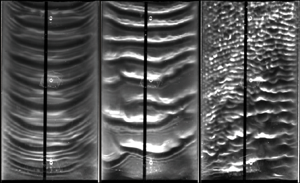
We study the effect of a confined turbulent counter-current gas flow on the waviness of a weakly inclined falling liquid film. Our study is centred on experiments in a channel of 13 mm height, using water and air, where we have successively increased the counter-current gas flow rate until flooding. Computations with a new low-dimensional model and linear stability calculations are used to elucidate the linear and nonlinear wave dynamics. We find that the gas pressure gradient plays an important role in countering the stabilizing effect of the tangential gas shear stress at the liquid–gas interface. At very low inclination angles, the latter effect dominates and can suppress the long-wave Kapitza instability unconditionally. By contrast, for non-negligible inclination, the gas effect is linearly destabilizing, amplifies the height of nonlinear Kapitza waves, and exacerbates coalescence-induced formation of large-amplitude tsunami waves. Kapitza waves do not undergo any catastrophic transformation when the counter-current gas flow rate is increased beyond the absolute instability (AI) limit. On the contrary, we find that AI is an effective linear wave selection mechanism in a noise-driven wave evolution scenario, leading to highly regular downward-travelling nonlinear wave trains, which preclude coalescence events. In our experiments, where Kapitza waves develop in a protected region before coming into contact with the gas, flooding is eventually caused far beyond the AI limit by upward-travelling short-wave ripples. Based on our linear stability calculations for arbitrary wavenumbers, we have uncovered a new short-wave interfacial instability mode with negative linear wave speed, causing these ripples.
An experimental study on the aerobreakup of a wall-attached droplet induced by a shock wave is carried out in this work. The shock wave and the post-wave air stream are generated by a shock tube facility, and the dynamics of droplet breakup are captured through high-speed imaging from the side, the oblique front and the back views, respectively. The wall-attached droplets with different wettabilities are considered, including the hydrophobic, hemispherical and hydrophilic ones. For the convenience of analysis, droplets with different wettabilities are unified with the same equivalent radius and, thus, the same Weber number and Reynolds number. Different from the evolution of a free spherical droplet, it is observed that the hydrophobic droplet can develop ‘peak’ structures on the windward and leeward sides, respectively; while the hemispherical and hydrophilic droplets leave a liquid film on the wall. The occurrence of ‘peak’ structures is caused by the local standing vortex on the droplet windward and leeward sides, and the residual of a liquid film on a solid wall is related to the boundary layer near the wall. Through comparing the height, width and advancing distance of droplet deformation between the spherical droplet and the wall-attached droplets with different wettabilities, it is found that the wall will inhibit the deformation and fragmentation of droplets on the flow direction. The ‘peak’ and film structures are responsible for the deviation of the dimensionless width between spherical and wall-attached droplets. The ‘lip’ structure is related to the recirculation flow at the rear of the droplet, which causes the reverse of velocity on the surface. The radius of the ‘lip’ decreases with the decrease of contact angle. The Rayleigh–Taylor (R–T) and Kelvin–Helmholtz (K–H) instabilities of wall-attached and spherical droplets are also studied by experiments and theoretical analysis. With the decrease of contact angle, the development of the K–H instability hardly changes, while the R–T instability results in a smaller wavelength of perturbation on the windward side. This study is expected to give some guidance for regulating the aerodynamic fragmentation of droplets in engineering applications.
Sandwich composites are widely used in aerospace materials thanks to their low weight and high strength properties. The purpose of this study is to observe the effects of polyurethane foam filling on honeycomb core structures produced by additive manufacturing in terms of mechanical strength and moisture absorption properties. Within the scope of the study, honeycomb structures were produced by a 3D printer using polylactic acid (PLA) filament. Then, the honeycomb core was filled with polyurethane foam, which is supplied in liquid form. After the core material was given its final form, it was combined with an epoxy and carbon fibre facesheet material using the vacuum infusion technique. After the sandwich composite production was completed, in-plane compression, three-point bending, shear, and moisture absorption tests were applied. The polyurethane foam filling greatly increased the mechanical strength, but slightly more moisture absorption occurred in this structure compared to a hollow honeycomb structure.
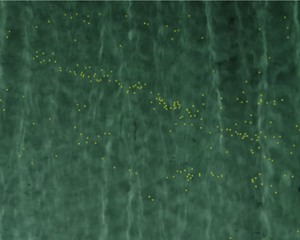
Correct prediction of particle transport by surface waves is crucial in many practical applications such as search and rescue or salvage operations and pollution tracking and clean-up efforts. Recent results by Deike et al. (J. Fluid Mech., vol. 829, 2017, pp. 364–391) and Pizzo et al. (J. Phys. Oceanogr., vol. 49, no. 4, 2019, pp. 983–992) have indicated transport by deep-water breaking waves is enhanced compared with non-breaking waves. To model particle transport in irregular waves, some of which break, we develop a stochastic differential equation describing both mean particle transport and its uncertainty. The equation combines a Brownian motion, which captures non-breaking drift-diffusion effects, and a compound Poisson process, which captures jumps in particle positions due to breaking. From the corresponding Fokker–Planck equation for the evolution of the probability density function for particle position, we obtain closed-form expressions for its first three moments. We corroborate these predictions with new experiments, in which we track large numbers of particles in irregular breaking waves. For breaking and non-breaking wave fields, our experiments confirm that the variance of the particle position grows linearly with time, in accordance with Taylor's single-particle dispersion theory. For wave fields that include breaking, the compound Poisson process increases the linear growth rate of the mean and variance and introduces a finite skewness of the particle position distribution.