Refine search
Actions for selected content:
213092 results in Engineering
Taylor's frozen hypothesis of the pressure fluctuations in turbulent channel flow at high Reynolds numbers
-
- Journal:
- Journal of Fluid Mechanics / Volume 972 / 10 October 2023
- Published online by Cambridge University Press:
- 29 September 2023, A15
-
- Article
- Export citation
-
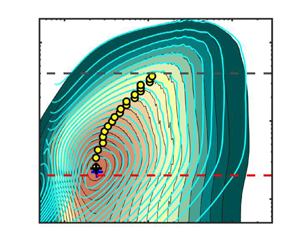
We study the application of Taylor's frozen hypothesis to the pressure fluctuations in turbulent channels by means of spatio-temporal data from direct numerical simulations with large computational domains up to the friction Reynolds number $R{e_\tau } = 2000$. The applicability of the hypothesis is quantitatively verified by comparing the wavenumber and Taylor (frequency) premultiplied spectra of the pressure fluctuations at each distance y from the wall. Using the local mean velocity $U(y)$ for the hypothesis leads to a large difference between both spectra with a value of $O(50\,{\%})$ for its maximum from the wall to $y/h \approx 0.2$, where h is the channel half-depth. Alternatively, the convection velocity of the pressure fluctuations ${C_p}(y)$, originally defined by Del Álamo & Jiménez (J. Fluid Mech., vol. 640, 2009, pp. 5–26) as a function of y, is investigated and adopted for the hypothesis. It is nearly equal to $U(y)$ from ${y^ + } = 20$ to the channel centre, where ${y^ + } = y{u_\tau }/\nu $, in which ${u_\tau }$ and $\nu $ represent the friction velocity and kinematic viscosity, respectively. For ${y^ + } \le 20$, ${C_p}(y)$ is almost constant with a value of around $12{u_\tau }$. Applying ${C_p}(y)$ for the hypothesis decreases the difference between both spectra down to a value of $O(10\,{\%})$ for its maximum from the wall to $y/h \approx 0.2$. Finally, the difference between the pressure wavenumber and frequency premultiplied spectra near the wall is reduced further via applying a wavenumber-dependent convection velocity. This wavenumber-dependent convection velocity is the linear combination of the convection velocities of the turbulent structures associated with the pressure field weighted by their relative contributions to the pressure variance.


Three-dimensional wake transitions of steady flow past two side-by-side cylinders
-
- Journal:
- Journal of Fluid Mechanics / Volume 972 / 10 October 2023
- Published online by Cambridge University Press:
- 29 September 2023, A17
-
- Article
-
- You have access
- Open access
- HTML
- Export citation
-
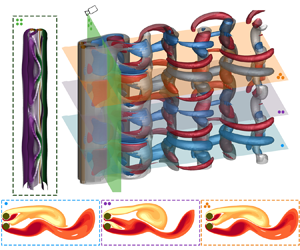
Three-dimensional (3-D) wake transitions of a steady flow past two side-by-side circular cylinders are investigated through Floquet analysis and direct numerical simulations (DNS) over the gap-to-diameter ratio $g^*$ up to 3.5 and Reynolds number ${\textit {Re}}$ up to 400. When the flows behind two cylinders form in-phase and anti-phase wakes at large $g^*$, the wake transition is similar to the isolated cylinder counterpart, with the critical ${\textit {Re}}$ for the onset of 3-D transition ( ${\textit {Re}}_{cr-1}$) happens at around 180. At small $g^*$, 3-D transition becomes interestingly complex due to the distinct characteristics formed in base flows. The ${\textit {Re}}_{cr-1}$ suddenly drops to around 60–100 and forms distinct variation trends with $g^*$. Precisely, the ${\textit {Re}}_{cr-1}$ of the single symmetric wake (SS, $g^*\lessapprox 0.25$) is more than half of the isolated cylinder counterpart due to the large length scale of the SS wake. Only mode A is detected in SS. In the asymmetric single wake (ASS, $g^* \approx 0.25\unicode{x2013}0.6$) and flip-flop wake (FF, $g^* \approx 0.6\unicode{x2013}1.8$), the 3-D transition develops at ${\textit {Re}} \approx 103\unicode{x2013}60$ and 75–60, respectively. The decrease in ${\textit {Re}}_{cr-1}$ with increasing $g^*$ is because of the increased level of wake asymmetry in ASS and irregular vortex shedding in FF. Floquet analysis predicts two new unstable modes, namely mode A $'$ and subharmonic mode C $'$, of ASS. Both modes are transient features in 3-D DNS and the flow eventually saturates into a new 3-D mode, mode ASS. The gap flow of mode ASS is distinctly characterised by its time-independent spanwise waviness structure that is deflected towards different transverse directions with a long wavelength of about $14$ cylinder diameters. The 3-D mode of the FF is irregular both temporally and spatially. Variations of ${\textit {Re}}_{cr-1}$ with $g^*$, the characteristics and the physical mechanisms of each 3-D mode are discussed in this study.


Multiscale dynamics in streamwise-rotating channel turbulence
-
- Journal:
- Journal of Fluid Mechanics / Volume 972 / 10 October 2023
- Published online by Cambridge University Press:
- 29 September 2023, A14
-
- Article
- Export citation
Scaling law of structure function of Richtmyer–Meshkov turbulence
-
- Journal:
- Journal of Fluid Mechanics / Volume 972 / 10 October 2023
- Published online by Cambridge University Press:
- 29 September 2023, A18
-
- Article
- Export citation
-
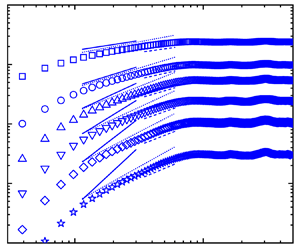
The scaling law of the structure function of Richtmyer–Meshkov (RM) turbulence is investigated both numerically and theoretically. High-fidelity simulations with a minimum-dispersion, adaptive-dissipation scheme are first performed. Results show that the mixing width experiences an exponential growth and the turbulent kinetic energy has a visible $-3/2$ spectrum. The scalar field exhibits a greater degree of intermittency than the velocity field, and also the small-scale statistics suffer a larger influence of large scales. Visible differences in the scaling law of the structure function among the RM turbulence and other types of turbulence are observed, which reveal the unique characteristic of RM turbulence. A phenomenological theory, which gives the spatial and temporal scaling laws of the structure functions of velocity and scalar of RM turbulence, is developed for the first time by introducing an external agent. The spatial scaling exponents of structure functions from simulation deviate from the Kolmogorov exponents, but are quite close to the RM-modified anomalous exponents. This demonstrates the validity of the present phenomenological theory. The temporal scaling exponents of structure functions first meet the RM-modified anomalous exponents, and then approach the Kolmogorov–Obukhov–Corrsin non-intermittent ones.

Influence of initial plume shape on miscible porous media flows under density and viscosity contrasts
-
- Journal:
- Journal of Fluid Mechanics / Volume 972 / 10 October 2023
- Published online by Cambridge University Press:
- 29 September 2023, A19
-
- Article
-
- You have access
- Open access
- HTML
- Export citation
-
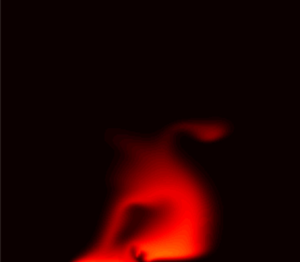
The effect of the initial condition upon the transport dynamics of miscible flowing fluids in a porous medium is investigated under viscosity and density contrasts. Such flows have attracted significant attention due to their importance in many fields of science and engineering, such as $\mathrm {CO}_2$ sequestration and aquifer remediation. Using high-resolution two-dimensional numerical simulations, we illustrate the impact of viscosity and density contrasts on the temporal evolution of the spreading and mixing quantities. We show that such impact depends on the initial shape of the source distribution where the solute is injected and on the intensity of the horizontal background flux. We find that rates of mixing are dependent on whether the solute is more or less viscous than the ambient fluid, a result usually not taken into consideration in studies on gravity fingering. At higher background flux, the effects due to horizontal viscous fingering dominate over gravitational fingering. Our computational analysis also suggests a non-trivial relationship between mixing and the length of the plume's interface under fingering instabilities. Finally, we show how a stratified permeability field can interact with these sources of instabilities and affect the transport behaviour of the plume.

Scattering characteristics of a perfect electromagnetic conducting cylindrical object covered with a general Bi-isotropic layer
-
- Journal:
- International Journal of Microwave and Wireless Technologies / Volume 16 / Issue 4 / May 2024
- Published online by Cambridge University Press:
- 29 September 2023, pp. 660-669
-
- Article
- Export citation
The influence of directional spreading on rogue waves triggered by abrupt depth transitions
-
- Journal:
- Journal of Fluid Mechanics / Volume 972 / 10 October 2023
- Published online by Cambridge University Press:
- 29 September 2023, R2
-
- Article
-
- You have access
- Open access
- HTML
- Export citation
-
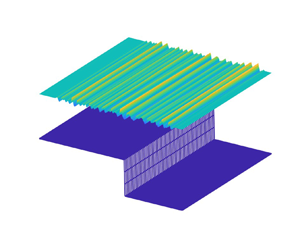
An increased number of rogue waves, relative to standard distributions, can be induced by unidirectional waves passing over abrupt decreases in water depth. We investigate this phenomenon in a more general setting of multidirectional waves. We examine the influence of the directionality on the occurrence probability of rogue waves using laboratory experiments and fully nonlinear potential flow simulations. Based on the analysis of the statistics of random waves, we find that directional spreading reduces the formation probability of rogue waves relative to unidirectional seas. Nevertheless, for typical values of directional spreading in the ocean ( $15^{\circ }\unicode{x2013}30^{\circ }$), our numerical results suggest that there is still a significant enhancement to the number of rogue waves just beyond the top of a depth discontinuity.

Dynamics of acoustically coupled single- and multi-port jet diffusion flames
-
- Journal:
- Journal of Fluid Mechanics / Volume 972 / 10 October 2023
- Published online by Cambridge University Press:
- 29 September 2023, A21
-
- Article
-
- You have access
- Open access
- HTML
- Export citation
Accelerating turbulence in heated micron tubes at supercritical pressure
-
- Journal:
- Journal of Fluid Mechanics / Volume 972 / 10 October 2023
- Published online by Cambridge University Press:
- 29 September 2023, A13
-
- Article
- Export citation
-
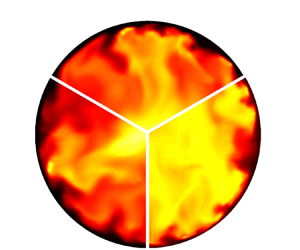
The purpose of this research was to provide further understanding of turbulent dynamics and heat transfer mechanisms in accelerating flows with thermophysical variations and pressure drops in micron tubes. Direct numerical simulations were conducted to investigate the turbulence to supercritical pressure ${\rm CO}_2$ in heated micron tubes with inner diameter $99.2~\mathrm {\mu }$m. In general, the turbulent heat transfer enhancement/deterioration at supercritical pressure is dominated by variations in thermophysical properties, buoyancy and thermal acceleration; however, the mechanism differs in micron tubes ( $d^* < 100\ \mathrm {\mu }$m). The results showed that the pressure drop and scale effect made significant contributions to the development of turbulence flows heated at supercritical pressure in micron tubes, leading to the prominent property change and flow acceleration in the inlet fully developed turbulent flow. The deviation on temperature distribution because of pressure changes was non-negligible. The primary contribution of the acceleration was the decay of a boundary layer, which significantly suppressed the production of turbulence and decreased heat transfer. The acceleration had stabilizing effects on the ejection and sweep motions of the turbulent flow. The high-speed fluid contributed to a new disturbance scenario of the flow with a larger spanwise wavenumber superimposed on existing perturbations. The high-speed streak width in the quasilaminar region was approximately $150$– $160\nu /u_\tau$ in accelerating flow. In the micron tubes, the Reynolds stress events of quadrant Q4 contributed 60 % of the Reynolds stress, greater than those of quadrant Q2.


Controlled inertial nano-cavitation above 100 MHz
-
- Journal:
- Journal of Fluid Mechanics / Volume 972 / 10 October 2023
- Published online by Cambridge University Press:
- 29 September 2023, A16
-
- Article
-
- You have access
- Open access
- HTML
- Export citation
72nd Annual Denver X-ray Conference Report
-
- Journal:
- Powder Diffraction / Volume 38 / Issue 4 / December 2023
- Published online by Cambridge University Press:
- 28 September 2023, pp. 261-267
-
- Article
- Export citation
Future for inertial-fusion energy in Europe: a roadmap
- Part of
-
- Journal:
- High Power Laser Science and Engineering / Volume 11 / 2023
- Published online by Cambridge University Press:
- 28 September 2023, e83
-
- Article
-
- You have access
- Open access
- HTML
- Export citation
On the interaction of Taylor length-scale size droplets and homogeneous shear turbulence
-
- Journal:
- Journal of Fluid Mechanics / Volume 972 / 10 October 2023
- Published online by Cambridge University Press:
- 28 September 2023, A9
-
- Article
-
- You have access
- Open access
- HTML
- Export citation
-
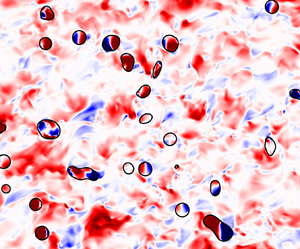
The main objective of the present work is to explain the physical mechanisms occurring in droplet-laden homogeneous shear turbulence (HST) with a focus on the modulation of turbulence kinetic energy (TKE) caused by the droplets. To achieve such an objective, first, we performed direct numerical simulations (DNS) of HST laden with droplets of initial diameter approximately equal to twice the Taylor length scale of turbulence, droplet-to-fluid density and viscosity ratios equal to ten and a 5 % droplet volume fraction. We investigated the effects of shear number and Weber number on the modulation of TKE for $Sh \approx 2$ and $4$, and $0.02 \le {{We_{rms}}} \le 0.5$. Then, we derived the TKE equations for the two-fluid, carrier-fluid and droplet-fluid flow in HST and the relationship between the power of surface tension and the rate of change of total droplet surface area, providing the pathways of TKE for two-fluid incompressible HST. Our DNS results show that, for ${{We_{rms}}} = 0.02$, the rate of change of TKE is increased with respect to the single-phase cases, for ${{We_{rms}}} = 0.1$, the rate of change of TKE oscillates near the value for the single-phase cases and, for ${{We_{rms}}} = 0.5$, the rate of change of TKE is decreased with respect to the single-phase cases. Such modulation is explained from the analysis of production, dissipation and power of surface tension in the carrier-fluid and droplet-fluid flows. Finally, we explain the effects of droplets on the production and dissipation rate of TKE through the droplet ‘catching-up’ mechanism, and on the power of the surface tension through the droplet ‘shearing’ mechanism.


Synthesis and crystal structure of layered molybdate NH4Co2OH(MoO4)2⋅H2O
-
- Journal:
- Powder Diffraction / Volume 38 / Issue 4 / December 2023
- Published online by Cambridge University Press:
- 28 September 2023, pp. 240-243
-
- Article
- Export citation
Demonstration of a diode-pumped dual-wavelength metastable krypton laser
-
- Journal:
- High Power Laser Science and Engineering / Volume 11 / 2023
- Published online by Cambridge University Press:
- 27 September 2023, e87
-
- Article
-
- You have access
- Open access
- HTML
- Export citation
Role of viscosity in turbulent drop break-up
-
- Journal:
- Journal of Fluid Mechanics / Volume 972 / 10 October 2023
- Published online by Cambridge University Press:
- 27 September 2023, A11
-
- Article
-
- You have access
- Open access
- HTML
- Export citation
-
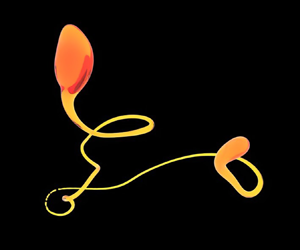
We investigate drop break-up morphology, occurrence, time and size distribution, through large ensembles of high-fidelity direct-numerical simulations of drops in homogeneous isotropic turbulence, spanning a wide range of parameters in terms of the Weber number $We$, viscosity ratio between the drop and the carrier flow $\mu _r=\mu _d/\mu _l$, where d is the drop diameter, and Reynolds ( $Re$) number. For $\mu _r \leq 20$, we find a nearly constant critical $We$, while it increases with $\mu _r$ (and $Re$) when $\mu _r > 20$, and the transition can be described in terms of a drop Reynolds number. The break-up time is delayed when $\mu _r$ increases and is a function of distance to criticality. The first break-up child-size distributions for $\mu _r \leq 20$ transition from M to U shape when the distance to criticality is increased. At high $\mu _r$, the shape of the distribution is modified. The first break-up child-size distribution gives only limited information on the fragmentation dynamics, as the subsequent break-up sequence is controlled by the drop geometry and viscosity. At high $We$, a $d^{-3/2}$ size distribution is observed for $\mu _r \leq 20$, which can be explained by capillary-driven processes, while for $\mu _r > 20$, almost all drops formed by the fragmentation process are at the smallest scale, controlled by the diameter of the very extended filament, which exhibits a snake-like shape prior to break-up.


How vortex dynamics affects the structural load in step cylinder flow
-
- Journal:
- Journal of Fluid Mechanics / Volume 972 / 10 October 2023
- Published online by Cambridge University Press:
- 27 September 2023, A10
-
- Article
-
- You have access
- Open access
- HTML
- Export citation
-
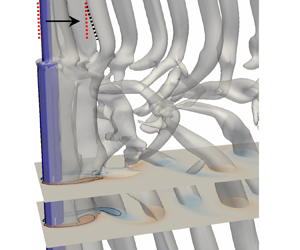
The vortex dynamics and the structural load in a step cylinder (consisting of a small, d, and a large, D, cylinder) flow are investigated numerically at Reynolds number ( $Re_D$) 150 for diameter ratios $D/d=2.0, 2.4$ and 2.8. First, the formation mechanism of a non-uniform oblique vortex shedding (the vortex shedding frequency remains unchanged as the oblique shedding angle varies) behind the small cylinder is explained: an increase in the production rate of the vortex strength and a farther downstream movement of the vortex formation position occur simultaneously as the vicinity of the step is approached along the small cylinder. Second, the structural load (the drag and lift) along the step cylinder is investigated, where four local extremes (two local minima and two local maxima) are observed. An in-depth investigation of the vortex dislocation effects on the structural load is provided, showing that the decreased circulation in the near wake and the weakened staggered Kármán vortex shedding pattern cause a major reduction (90 %) of the sectional lift amplitude and a relatively modest reduction (5.7 %) of the sectional drag amplitude, compared with the corresponding sectional force when no vortex dislocation occurs. This new knowledge combined with the three-dimensional effect of the step cylinder wake (caused by the blending of the small and larger cylinder wakes around the step) explain the formation of the four local extremes and the distribution of the structural load between them. Finally, it is found that the increasing $D/d$ amplifies the structural load variation along the step cylinder.


Mitigation of stimulated Raman scattering in a high-power fiber master oscillator power amplifier laser based on a dual-structure fiber grating
-
- Journal:
- High Power Laser Science and Engineering / Volume 11 / 2023
- Published online by Cambridge University Press:
- 27 September 2023, e92
-
- Article
-
- You have access
- Open access
- HTML
- Export citation
Experimental investigation of the stimulated Raman scattering effect in high-power nanosecond superfluorescent fiber source
-
- Journal:
- High Power Laser Science and Engineering / Volume 11 / 2023
- Published online by Cambridge University Press:
- 27 September 2023, e88
-
- Article
-
- You have access
- Open access
- HTML
- Export citation
Pattern synthesis of distorted phased array antenna with unsteady surface deformation considering dynamic range ratio
-
- Journal:
- International Journal of Microwave and Wireless Technologies / Volume 16 / Issue 3 / April 2024
- Published online by Cambridge University Press:
- 27 September 2023, pp. 498-504
-
- Article
- Export citation
