To save content items to your account,
please confirm that you agree to abide by our usage policies.
If this is the first time you use this feature, you will be asked to authorise Cambridge Core to connect with your account.
Find out more about saving content to .
To save content items to your Kindle, first ensure no-reply@cambridge.org
is added to your Approved Personal Document E-mail List under your Personal Document Settings
on the Manage Your Content and Devices page of your Amazon account. Then enter the ‘name’ part
of your Kindle email address below.
Find out more about saving to your Kindle.
Note you can select to save to either the @free.kindle.com or @kindle.com variations.
‘@free.kindle.com’ emails are free but can only be saved to your device when it is connected to wi-fi.
‘@kindle.com’ emails can be delivered even when you are not connected to wi-fi, but note that service fees apply.
Easy Language (EL) presents information in a simplified way and benefits people who have difficulty understanding standard language. The present study evaluates the effects of visual support inclusion, as it is a recurring recommendation in EL guidelines. We examined 52 adults (23 men and 29 women; mean age of 39.9; 26 with intellectual disabilities [ID], 26 neurotypical) in a mixed design study. They read EL texts that presented either no visual support, photographs or illustrations. Their eye movements were recorded, and they answered comprehension, text difficulty and style preference questions. The inclusion of visual support had no effect on comprehension, nor did the type of visual support (photographs/illustrations). The group (ID/neurotypical) and the type of visual support also showed no effects on the perceived difficulty of the text. Neurotypical participants showed a preference for illustrations. Photographs may be more difficult to interpret than illustrations due to longer fixations and shorter saccades in both groups. The group with an ID showed more and longer fixations, especially on text and whitespace, while the neurotypical group tended to explore the image more. Results prompt a discussion on the potential improvements of EL guidelines and highlight the need for similar empirical studies in the area.
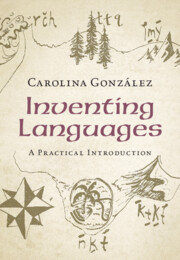
How are invented languages created? Artificially constructed languages ('conlangs') shed light on how we can apply the universal principles of language to produce whole new languages. Grounded on world building and linguistic typology, this engaging book provides a step-by-step guide to language invention, introducing the basic blocks of language building (such as sounds, morphemes and sentence structure) and demonstrating their use in both natural languages from English to Swahili, and invented languages from Esperanto to Klingon. An original conlang is developed throughout the book to bring the theory to life, accompanied with scaffolded, creative exercises that allow the reader to explore different linguistic options before incorporating them in their own conlang. Making conlanging accessible to readers with little or no background in linguistics, this guide is ideal for linguistics students, creative writers, and readers interested in language and language invention.
Small linguistic tricks can have big footprints. This book examines how India's current Hindu nationalist government uses language as a weapon against its Muslim citizens. Each chapter provides a discursive history of matters that have been a source of conflict between Hindus and Muslims in India, highlighting the potent relationship between language and politics. The book explores four issues, Ramajanmbhoomi temple, Muslim Personal Law as it pertains to Indian Muslim women, Kashmir and revocation of Article 370, and Citizenship (Amendment) Act/National Registry of Citizens, whose histories in courts and legislative bodies are written in linguistic trickery. Offering novel ways of understanding why the Hindu right has claimed victories on these legislative and judicial matters that impact the lives of minority citizens, it is essential reading for key insights for academic researchers and students in sociolinguistics, as well as South Asia studies, gender studies and Indian politics and culture.
Learners’ confidence in using a second language (L2 self-efficacy) and their L2 grit are key psychological factors in developing intercultural competence (ICC). As English as a foreign language (EFL) students increasingly encounter diverse cultures though informal digital learning of English (IDLE), this study examines whether IDLE serves as a pathway connecting these psychological traits to ICC. Grounded in the broaden-and-build theory, this explanatory mixed-methods research investigates how L2 self-efficacy and grit contribute to ICC through IDLE among 416 Chinese EFL students. Structural equation modeling revealed that higher L2 self-efficacy fosters greater L2 grit, which in turn promotes more frequent engagement in both receptive IDLE activities (e.g. watching English media) and productive ones (e.g. participating in online conversations). This increased engagement was positively linked to higher levels of ICC. Qualitative findings further illuminated the mechanisms behind this process, illustrating how psychological strengths support meaningful digital encounters across cultures. The findings offer pedagogical insights: by cultivating students’ self-efficacy and grit, educators can encourage deeper engagement in IDLE, thereby equipping learners with effective and culturally sensitive communication in an increasingly interconnected digital world.
This article takes a usage-based Construction Morphology perspective to examine the polysemy of the locative prefixoid up in complex words such as upstairs, upland, upheaval and uproot. Drawing on a relational structure model of morphosemantics, it is argued that the prefixoid systematically approximates the functions of different syntactic categories in different complex words: up functions like a preposition (upstairs), adjective (upland), adverb (upheaval) and verb (uproot). These constructions consequently require bases of specific syntactic categories and differ in the ways in which the prefixoid semantically relates to the second element. These subschemas are investigated in detail using corpus data from the BNC, collostructional analysis and various productivity measures to analyze the selectional restrictions of the open slot of the constructions as well as the semantics of the complex words. This approach elegantly solves the question of category change and the difficulties in identifying the syntactic category of the base in complex words with locative prefixoids, providing an alternative to the righthand head rule.
Sentences written in Chinese are composed of continuous sequences of characters, without spaces or other visual cues to mark word boundaries. While skilled L1 readers can efficiently segment this naturally unspaced text into words, little is known about the word segmentation capabilities of L2 readers, including whether they employ the same strategies to process temporary segmental ambiguities. Accordingly, we report two eye movement experiments that investigated the processing of sentences containing temporarily ambiguous “incremental” three-character words (e.g., “体育馆,” meaning “stadium”) whose first two characters could also form a word (“体育,” meaning “sport”), comparing the performance of 48 skilled L1 Chinese readers and 48 high-proficiency L2 Chinese readers in each experiment. Our findings reveal that both groups can process this ambiguity efficiently, employing similar word segmentations strategies. We discuss our findings in relation to models of eye movement control and word recognition in Chinese reading.
Bilingual speakers have been found to outperform monolingual speakers in tasks which involve taking others’ perspectives. This research examined whether bilingualism improves young adults’ performance on visuospatial perspective-taking (VPT) tasks, independently of culture and executive function (EF). Sixty-three East Asian and 61 European bilingual adults, as well as 60 English monolingual adults took part in level-1 VPT tasks (judging what others can see), level-2 VPT tasks (judging how others can see something) and EF tasks. They also filled in questionnaires about their social and language background, cultural orientation and acculturation. Groups did not differ in terms of VPT, suggesting that adult VPT is not affected by bilingualism or cultural orientation. Hierarchical regression revealed that VPT performance was predicted by EF skills, but not by individual differences in bilingualism or culture.
Research has demonstrated that emotion modulates specificity in recollection of personally experienced events and the words individuals use during recollection reflect their psychological states. Here, we investigated the linguistic features of autobiographical memory (AM) of different specificity for different emotional events to address how emotion would modulate the psychological mechanisms underlying AM of different specificity. We analyzed 122 participants’ narratives of AM categorized as specific and general under happy, sad, angry, fearful and neutral cues. The use of three groups (emotional process, cognitive process and thinking style) of words was, respectively, compared between specific and general AM in each emotion condition. In retrieval of sad, angry and fearful events, general relative to specific AM contained more affective process words, notably negative words. General AM featured more cognitive process words than specific AM, regardless of emotion type (except neutral). When recalling happy events, general AM featured more analytic thinking words than specific AM, while in recollection of fearful events, general AM featured fewer such words than specific AM. General relative to specific AM about happy experiences contained more narrative thinking words. These findings suggest that the psychological mechanisms underlying top-down and bottom-up retrieval differ between particular types of emotion engaged in AM.
This study investigated L2 learners’ interpretation of quantifier scope, focusing on the influence of individual differences, including L2 proficiency, working memory (WM) and inhibitory control (IC). A picture selection task using the covered-box paradigm (CBP) was conducted with 70 Chinese-speaking learners of English and a control group of 40 native English speakers. The results revealed that inverse scope (IS) posed particular challenges for L2 learners, leading to reduced, non-target-like access. We attribute this difficulty to factors such as negative L1 transfer, limited L2 input and increased processing demands associated with IS compared to surface scope (SS). More importantly, WM and IC significantly influenced L2 learners’ interpretation patterns, with their effects mediated by L2 proficiency. We also observed individual variation in scope interpretations among native speakers, particularly with negatively quantified (NQ) sentences. This variation provides valuable evidence of individual differences in native speakers’ grammatical knowledge and was partly driven by cognitive factors. Altogether, the findings contribute novel evidence for both domain-general and domain-specific mechanisms underlying quantifier scope interpretation in L2 learners as well as in native speakers.
Processing sentences is modulated by the grammatical aspect of the predicate. Previous studies have indicated that the English progressive and Farsi imperfective are associated with a stronger mental activation of the components or circumstances of the situation, such as instruments or locations. This study deals with the processing of sentences in Russian, a language with a perfective vs. imperfective aspectual distinction. In a self-paced reading experiment with 48 respondents, sentences were presented with (mostly) atelic verbs in either imperfective or perfective aspects and locative adverbials that were typical or atypical for the situation. We expected atypical locatives to slow down reaction times and that this effect would be the strongest in imperfective contexts because of greater mental activation of the situation. Contrary to our expectations, the perfective aspect was associated with longer reaction times for atypical locative adverbials. We interpret this as an effect of the higher functional complexity of the Russian perfective, especially in the case of the perfectives of the (mostly) atelic verbs used in our experiment.
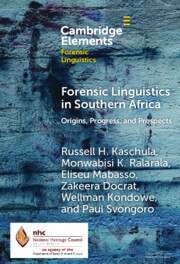
This Element introduces the study of forensic linguistics, particularly in southern Africa, but also in Africa more generally. In the past six decades, there has been clear evidence that the discipline of forensic linguistics is, or was, unknown to general linguists, legal linguists, and applied linguists on the African continent. Now, however, the situation is rapidly changing, with forensic linguistics studies gaining momentum in various parts of Africa. In this Element the authors introduce the topic, define the discipline, address the language of record issue in southern Africa, as well as critically debate the state of court interpreting and translation of documentation into African languages, address police interviewing techniques, while also looking at possible future developments in the discipline of forensic linguistics. This title is also available as Open Access on Cambridge Core.
Previous research has mainly explored the relationship between bilingual language control and domain-general cognitive control through behavioral correlations, often revealing epiphenomenal links rather than causality. This study utilizes transcranial magnetic stimulation (TMS) to investigate the causal roles of the left inferior frontal gyrus (LIFG) and left middle temporal gyrus (LMTG) in 33 unbalanced Chinese-English bilinguals. Continuous theta burst stimulation was applied in separate sessions to decrease cortical excitability, with vertex stimulation as a control. LIFG stimulation significantly increased switching costs in nonverbal switching tasks, highlighting its role in domain-general cognitive control. LMTG stimulation did not affect switching or mixing costs in language or nonverbal switching tasks, suggesting no causal involvement, but it reduced reaction times (RTs) during language switching tasks, underscoring its specialization in language processing. These findings highlight distinctions between the neural mechanisms of bilingual language control and domain-general cognitive control, particularly in the LIFG.
Despite abundant studies on motion events and mental simulation in first languages (L1s), research on how cross-linguistic dis/similarity – whether an L1 shares constructions with a second language (L2) – affects mental simulation during incremental L2 processing remains limited. This study used a novel self-paced reading task with video verification to investigate L1 influence on mental imagery of the dual (directional/locational) interpretation of locative prepositions. Participants included native English speakers and advanced L2 English learners whose L1s were either similar (Dutch) or dissimilar (Japanese) to English. Results revealed an L1 dis/similarity effect on the reaction times for the directional interpretation, but not for the locational interpretation, which was readily accessible across all L1 groups. Factors such as L2 proficiency and onset age of L2 acquisition were found to be constrained by L1, suggesting that L1–L2 constructional correspondence limits the influence of learner factors. These findings support the simulation-based model of L2 sentence processing.
Authenticity has been a central concept in sociolinguistics and in the study of literary representations of dialect. This article examines the ideology of dialect authenticity in the context of literary fiction from the point of view of language users. Two Finnish reading groups comprising members with different dialect backgrounds read one Finnish novel, in which the Far Northern dialects of Finnish are represented in a partly unconventional manner. Thematic analysis was applied to two video-recorded reading group discussions to investigate how the groups discuss the novel’s dialect representation and its (in)authenticity. The analysis revealed that instead of adhering to a static and essentialist ideal of authenticity, the readers overlooked the unconventional representation of literary dialect and viewed authenticity as a dynamic process. The study contributes to theoretical discussions on dialect authenticity and employs an experimental approach to exploring language ideologies through reading groups.
This study examines the elicited production of Spanish infinitives versus gerunds among Spanish/English bilingual children and adolescents in the United States. We focus on three contexts: infinitives in subject position, infinitives with the phrasal verb parar de (“to stop doing something”), and infinitives with the prepositional verb parar a (“to stop to do something”). Results showed that children and adolescents produced fewer infinitives than their Spanish-dominant parents in subject position and with parar de, often overextending the gerund. By contrast, all groups performed more accurately with parar a, where English and Spanish align structurally. Language dominance and Spanish experience significantly predicted more target-like infinitive use, while chronological age and English dominance were associated with increased gerund overextension. These findings support the Bilingual Alignment Hypothesis, showing that heritage Spanish morphosyntactic development is gradual and context-sensitive, with greater accuracy in areas of crosslinguistic convergence.
In this article, we aim to reconcile the interrelated role of social and spatial influences on colloquial German by conducting an apparent-time analysis of 15 lexical, morphological, and phonetic variables from the Atlas of Colloquial German (AdA). Specifically, we introduce a “change in variation intensity” (CVI) measure meant to gauge the degree of change in colloquial speech between younger and older cohorts. Using this measure, we investigate (a) whether the CVI within and across variables is prone to spatial patterns and (b) the extent to which the CVI differs systematically between variable types. Results from visual–spatial analyses indicate clear spatial patterns, though the geographical distributions are largely item-specific, and a linear mixed-effects model revealed no effect of variable type. More broadly, the CVI measure represents an important advancement in how we address language variation and change from a methodological-statistical perspective, specifically when dealing with heterogeneous, crowdsourced data.
This Element addresses the challenges and opportunities that arise in the study of sound systems of understudied languages within the context of language documentation, an expanding field that seeks to develop records of the world's languages and their patterns of use in their broader cultural and social context. The topics covered in this Element focus on different elements of language documentation and their relationship to phonological analysis, including lexicography, documentary corpora, music and the verbal arts, as well as grammar writing. For each of these areas, the authors examine methodological and theoretical implications for phonology. With growing concern in the field of language documentation and linguistics more generally for the distribution and implementation of the products of research and its impact for Indigenous language communities, this Element also discusses how phonological documentation may contribute to the development of resources for language communities.
Content and Language Integrated Learning (CLIL) is an educational approach that combines the teaching of subject content with language learning. Originally developed in Europe, CLIL has since been adopted across diverse educational and geographical contexts. This Element offers a comprehensive overview of CLIL, tracing its origins and global development. It examines the theoretical foundations of the approach, as well as key implementation strategies and their impact on language acquisition, content understanding, learner motivation, and attitudes. Special attention is given to how CLIL addresses diversity in the classroom. The text also explores innovative pedagogical practices, such as translanguaging and multimodality, that promote deeper learning and student engagement. It concludes with a discussion on assessment and teacher education within CLIL contexts and outlines the steps needed for its continued growth. This title is also available as Open Access on Cambridge Core.