To save content items to your account,
please confirm that you agree to abide by our usage policies.
If this is the first time you use this feature, you will be asked to authorise Cambridge Core to connect with your account.
Find out more about saving content to .
To save content items to your Kindle, first ensure no-reply@cambridge.org
is added to your Approved Personal Document E-mail List under your Personal Document Settings
on the Manage Your Content and Devices page of your Amazon account. Then enter the ‘name’ part
of your Kindle email address below.
Find out more about saving to your Kindle.
Note you can select to save to either the @free.kindle.com or @kindle.com variations.
‘@free.kindle.com’ emails are free but can only be saved to your device when it is connected to wi-fi.
‘@kindle.com’ emails can be delivered even when you are not connected to wi-fi, but note that service fees apply.
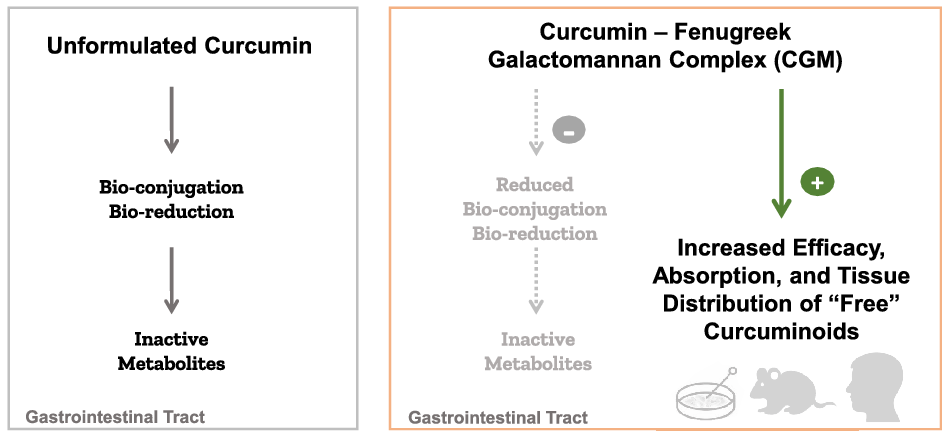
The golden spice turmeric with its main bioactive component curcumin is one of the most popular and extensively studied nutraceuticals. Despite numerous pre-clinical studies reporting positive pharmacodynamics of turmeric extracts and curcumin, the main issues in translating the pharmacological effects to clinical efficacy have been to overcome its poor pharmacokinetics and to deliver significant amounts of the biologically relevant forms of the actives to various tissues. This review is aimed at providing a first critical evaluation of the current published literature with the novel curcumagalactomannoside (CGM) formulation of curcumin using fenugreek galactomannan dietary fibre, specifically designed to address curcumin poor pharmacokinetics. We describe CGM and its technology as a food-grade formulation to deliver ‘free’ unconjugated curcuminoids with enhanced bioavailability and improved pharmacokinetic properties. The therapeutic relevance of improving bioavailability of ‘free’ curcuminoids and some of the technical challenges in the measurement of the ‘free’ form of curcuminoids in plasma and tissues are also discussed. A total of twenty-six manuscripts are reviewed here, including fourteen pre-clinical and twelve clinical studies that have investigated CGM pharmacokinetics, safety and efficacy in various animal models and human conditions. Overall current scientific evidence suggests CGM formulation has improved bioavailability and tissue distribution of the biologically relevant unconjugated forms of turmeric actives called ‘free’ curcuminoids that may be responsible for the superior clinical outcomes reported with CGM treatments in comparison with unformulated standard curcumin across multiple studies.
School-based CalFresh Healthy Living (CFHL) (California’s SNAP-Ed) interventions adapted to new learning environments necessitated by COVID-19. We examined the impact of these interventions on student diet and physical activity (PA) outcomes.
Design:
Quasi-experimental, two-group, pre-post.
Setting:
California public schools with ≥50 % of students Free and Reduced Price Meal-eligible (nintervention = 47; ncomparison = 17).
Participants:
Fourth- and fifth-grade students who completed the online Eating and Activity Tool for Students at pre and post (nintervention = 1087; ncomparison = 846 students).
Results:
Intervention students reported a significantly greater increase in consumption frequency of total fruit (by 0·16 times/d; P = 0·032), driven primarily by a greater increase in 100 % fruit juice (by 0·11 times/d; P = 0·007). Intervention students reported a significantly greater increase in total vegetable consumption frequency (by 0·45 times/d; P < 0·001) than comparison students. Specifically, intervention students reported increased, whereas comparison students reported decreased, consumption frequencies for starchy vegetables (0·05 v. −0·10 times/d, P < 0·001), salad/green vegetables (0·01 v. −0·11 times/d, P = 0·005) and beans (0·04 v. −0·03 times/d, P = 0·025). Consumption frequency of other vegetables decreased in both groups (−0·01 v. −0·09 times/d) but decreased more among comparison students (P = 0·048). No differences in pre-post change in PA outcomes were detected.
Conclusions:
Findings suggest that despite COVID-19-related challenges necessitating programme modifications, CFHL interventions played a role in protecting student consumption of fruit and vegetables during the 2020–2021 school year. Therefore, it appears that school-based CFHL interventions can be a viable means of safeguarding student nutrition at a time when access to nutritious food and PA opportunities are hindered.
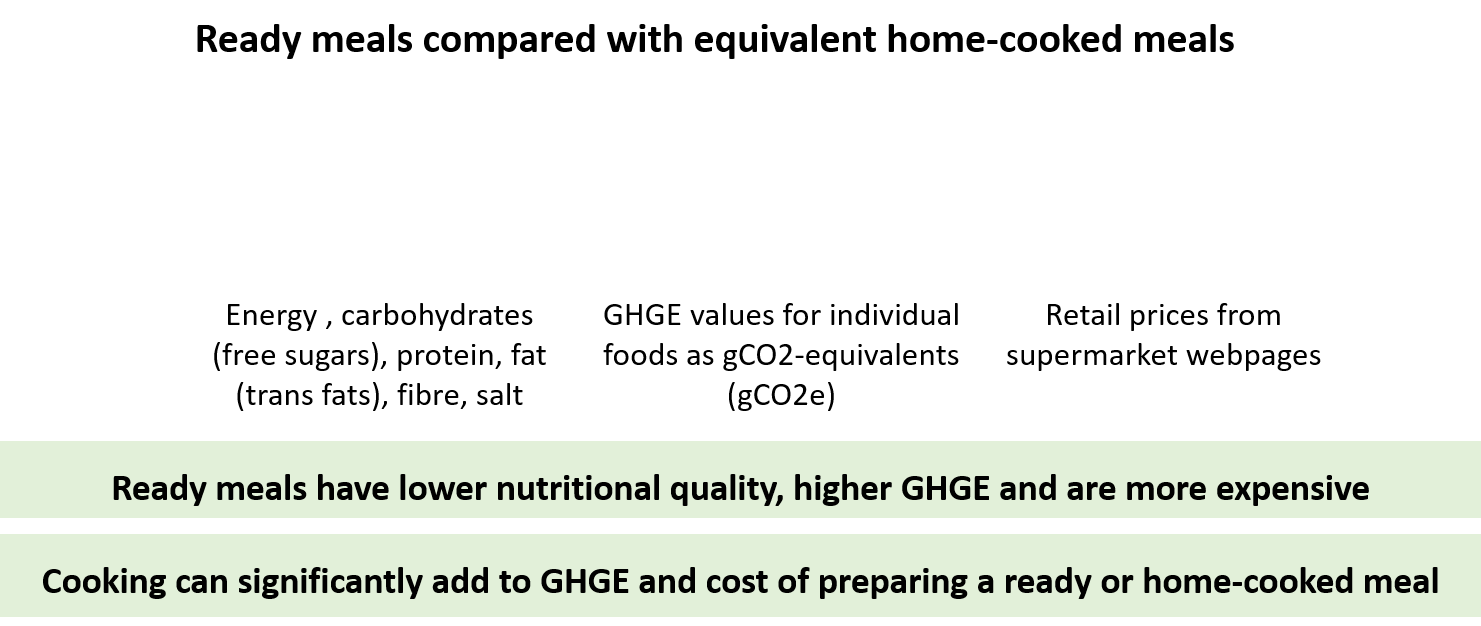
To examine whether ready meals and equivalent home-cooked meals differ in nutritional quality indicators, greenhouse gas emissions (GHGE) and cost.
Design:
We performed a cross-sectional analysis of meal data from the National Diet and Nutrition Survey (NDNS) nutrient databank (2018/19). Additional data on nutrient composition, cost and cooking-related GHGE were calculated and compared between fifty-four ready meals and equivalent home-cooked meals.
Setting:
The UK.
Participants:
Not applicable.
Results:
Ready meals, overall and those that were animal-based, had significantly higher levels of free sugar compared with equivalent home-cooked meals (P < 0·0001 and P < 0·0004, respectively). Animal-based ready meals had significantly higher levels of GHGE (P < 0·001), whereas the cost of ready meals, overall, was significantly higher (P < 0·001), compared with equivalent home-cooked meals. Animal-based meals, whether ready meals or equivalent homemade meals, had significantly higher levels of protein (P < 0·0001), contained significantly more kilocalories (P = 0·001), had significantly higher levels of GHGE (P < 0·0001) and were significantly more expensive (P < 0·0001), compared with plant-based meals. Overall, plant-based meals home-cooked on the gas or electric stove had the lowest GHGE and cost, whereas animal-based oven-cooked ready meals had the highest levels of GHGE and were most expensive.
Conclusions:
Ready meals have lower nutritional quality and higher GHGE and are more expensive than equivalent home-cooked meals, especially those meals that are animal-based and prepared in an oven.
This study examined relationships between dimensions of social capital (SC) (social trust, network diversity, social reciprocity and civic engagement) and fruit, vegetable, and sugar-sweetened beverage (SSB) consumption among rural adults. Potential moderators (neighbourhood rurality, food security, gender and race/ethnicity) were explored to develop a more nuanced understanding of the SC–healthy eating relationship.
Design:
Data were from a 2019 mailed population-based survey evaluating an eleven-county initiative to address health equity. Participants self-reported health behaviours, access to health-promoting resources and demographics. Logistic regression models were used to analyse relationships between predictors, outcomes and moderators.
Setting:
Five rural counties, Georgia, USA.
Participants:
1120 participants.
Results:
Among participants who lived in the country (as opposed to in town), greater network diversity was associated with consuming ≥ 3 servings of fruit (OR = 1·08; 95 % CI 1·01, 1·17, P = 0·029), yet among participants who lived in town, greater civic engagement was associated with consuming ≥ three servings of fruit (OR = 1·36; 95 % CI 1·11, 1·65, P = 0·003). Both food-secure and food-insecure participants with greater social reciprocity had lower odds of consuming 0 SSB (OR = 0·92; 95 % CI 0·86, 0·98, P = 0·014, OR = 0·92; 95 % CI 0·86, 0·99, P = 0·037, respectively). Men with greater social trust were more likely to consume 0 SSB (OR = 1·09; 95 % CI 1·01, 1·18, P = 0·038), and Whites with greater network diversity were more likely to meet daily vegetable recommendations (OR = 1·10; 95 % CI 1·01, 1·19, P = 0·028).
Conclusions:
Findings provide a basis for future qualitative research on potential mechanisms through which SC and related social factors influence healthy eating in rural communities.
To assess viewer engagement of a food advertising campaign on the live streaming platform Twitch.tv, a social media platform that allows creators to live stream content and communicate with their audience in real time.
Design:
Observational analysis of chat comments across the Twitch platform containing the word ‘Wendy’s’ or ‘Wendys’ during a 5-day ad campaign compared with two 5-day non-campaign time periods. Comments were categorised as positive, negative or neutral in how their sentiment pertained to the brand Wendy’s.
Setting:
Twitch chatrooms.
Participants:
None.
Results:
There were significantly more chatroom messages related to the Wendy’s brand during the campaign period. When considering all messages, the proportion of messages was statistically different (x2 = 1417·41, P < 0·001) across time periods, with a higher proportion of neutral and positive messages and a lower proportion of negative messages during the campaign compared with the comparison periods. Additionally, the proportion of negative messages following the campaign was lower than before the campaign. When considering only positive and negative messages, the proportion of messages was statistically different (x2 = 366·38, P < 0·001) across each time period with a higher proportion of positive messages and a lower proportion of negative messages during the campaign when compared with the other time periods. Additionally, there was a higher proportion of positive messages and a lower portion of negative messages following the campaign when compared with before the campaign.
Conclusions:
This study demonstrates the impact and sustained impact of a fast-food brand ad campaign on brand engagement on the live streaming platform Twitch.
Plums are abundant in bioactive compounds which have been associated with numerous health benefits. In the present study, we aimed at examining the impact of plum supplementation on lipid profile of individuals. Electronic bibliographical databases were searched for relevant randomised clinical trials. Articles meeting our eligibility criteria were included for data extraction and final analysis. Weighted mean difference (WMD) was estimated using a random-effect model. Of the total articles retrieved in the initial search, nine articles were found to be eligible to be included in the analysis. Our results show that plum supplementation significantly improves total cholesterols levels in the unhealthy individuals. Moreover, plum supplementation reduces the LDL-c levels in the pooled sample (WMD = −11⋅52 mg/dl; 95 % CI −21⋅93, −1⋅11, P = 0⋅03, I2 = 98⋅7 %) and also in some of the subgroups of individuals (dried plum, unhealthy subjects, duration more than 8 weeks). Moreover, it had a significant reducing effect on TC levels just in unhealthy subjects. Although plum supplementation did not have any significant impact on serum levels of TG nor HDL-c. Our results show that supplementation with plums is potentially effective in reducing serum total cholesterol and LDL-c.
While there is an increasing prevalence of dieting in the overall population, weight loss (WL) practices could be a risk factor for weight gain (WG) in normal-weight (NW) individuals. The aim of the present work was to systematically review all the studies implicating diet restriction and body weight (BW) evolution in NW people. The literature search was registered in PROSPERO (CRD42021281442) and was performed in three databases from April 2021 to June 2022 for articles involving healthy NW adults. From a total of 1487 records initially identified, eighteen were selected in the systematic review. Of the eight dieting interventional studies, only one found a higher BW after weight recovery, but 75 % of them highlighted metabolic adaptations in response to WL favouring weight regain and persisting during/after BW recovery. Eight of the ten observational studies showed a relationship between dieting and major later WG, while the meta-analysis of observational studies results indicated that ‘dieters’ have a higher BW than ‘non-dieters’. However, considering the high methodological heterogeneity and the publication bias of the studies, this result should be taken with caution. Moreover, the term ‘diet’ was poorly described, and we observed a large heterogeneity of the methods used to assess dieting status. Present results suggest that dieting could be a major risk factor for WG in the long term in NW individuals. There is, however, a real need for prospective randomised controlled studies, specifically assessing the relationship between WL induced by diet and subsequent weight in this population.
‘Dietary variety’ has been identified as a factor associated with food intake. Whilst this relationship may have longer-term benefits for body weight management when eating low-energy, nutrient-dense foods, it may increase the risk of overconsumption (and body adiposity) when foods are high energy density. This study sought to further explore pathways underpinning the relationship between dietary variety and body weight, by considering energy density as a moderating factor and portion size as a mediating factor in this relationship. Using prospective data from the UK Biobank, dietary variety scores (DVS), cumulative portion size and energy density were derived from 24-h dietary recall questionnaires at baseline and follow-up. BMI, whole-body fat percentage and fat-free mass were included as outcomes. Contrary to predictions, linear multiple regression models found some evidence of a negative, direct association between DVS and body weight outcomes at baseline (b = –0·13). Though dietary variety was significantly associated with larger portions across time points (b = 41·86–82·64), a moderated mediation effect was not supported at baseline or follow-up (Index ≤ 0·035). Taken together, these findings provide population-level evidence to support a positive association between variety and food intake, which in turn has potential implications for body weight management, both in terms of moderating food intake and benefitting diet quality.
To describe national disparities in retail food environments by neighbourhood composition (race/ethnicity and socio-economic status) across time and space.
Design:
We examined built food environments (retail outlets) between 1990 and 2014 for census tracts in the contiguous USA (n 71 547). We measured retail food environment as counts of all food stores, all unhealthy food sources (including fast food, convenience stores, bakeries and ice cream) and healthy food stores (including supermarkets, fruit and vegetable markets) from National Establishment Time Series business data. Changes in food environment were mapped to display spatial patterns. Multi-level Poisson models, clustered by tract, estimated time trends in counts of food stores with a land area offset and independent variables population density, racial composition (categorised as predominantly one race/ethnicity (>60 %) or mixed), and inflation-adjusted income tertile.
Setting:
The contiguous USA between 1990 and 2014.
Participants:
All census tracts (n 71 547).
Results:
All food stores and unhealthy food sources increased, while the subcategory healthy food remained relatively stable. In models adjusting for population density, predominantly non-Hispanic Black, Hispanic, Asian and mixed tracts had significantly more destinations of all food categories than predominantly non-Hispanic White tracts. This disparity increased over time, predominantly driven by larger increases in unhealthy food sources for tracts which were not predominantly non-Hispanic White. Income and food store access were inversely related, although disparities narrowed over time.
Conclusions:
Our findings illustrate a national food landscape with both persistent and shifting spatial patterns in the availability of establishments across neighbourhoods with different racial/ethnic and socio-economic compositions.
Background: Cancer has become a significant public health issue around the world and an increasingly important contributor to disease burdens. In countries like Ethiopia with high nutrient demands, people with chronic diseases like cancer are at a high risk of macro and micronutrient deficiencies. Therefore, the present study attempted to assess dietary diversity and associated factors among adult cancer patients attending treatment at Black Lion Specialized Hospital, Addis Ababa, Ethiopia. Method and Materials: Hospital-based cross-sectional study was conducted from 22 April 2021 to 22 May 2021 on 416 adult cancer patients at Black Lion Specialized Hospital (BLSH). A systematic random sampling technique was applied to select study subjects. Quantitative data were collected using a structured, pretested and interviewer-administered questionnaire. The questionnaire comprised the standard dietary diversity measurement tool, which was adopted from the Food and Technical Assistance (FANTA) then data were entered into EPI INFO software and analysed using Statistical Package for the Social Sciences (SPSS) version 25. Frequency, mean and standard deviation were used to describe variables. A binary logistic regression model was fitted to elicit factors associated with the dietary diversity of cancer patients and a P-value of less than 0⋅2 was used as a cut-off for further analysis. Logistic regression analysis with a 95 % confidence interval (CI) was estimated to measure the strength of association at P < 0⋅05. Results: The present study revealed that 61⋅5 % of patients had low dietary diversity. Being from a family size of five and more (AOR = 1⋅48, 95 % CI 1⋅28, 1⋅83), having no permanent income (AOR = 1⋅31, 95 % CI 1⋅15, 1⋅67), alcohol consumption (AOR = 3⋅97, 95 % CI 1⋅20, 13⋅1), not doing regular physical exercise (AOR = 1⋅83, 95 % CI 1⋅07, 3⋅12), lack of nutritional information (AOR = 2⋅23, 95 % CI 1⋅30, 3⋅82), poor nutritional knowledge (AOR = 1⋅84, 95 % CI 1⋅05, 3⋅25) and minimum meal frequency (AOR = 10⋅7, 95 % CI 5⋅04, 22⋅7) were factors associated with inadequate dietary diversity. Conclusion: The present study showed that the majority of cancer patients had low dietary diversity, suggesting that they are highly vulnerable to micronutrient deficiencies. Therefore, efforts should be strengthened to improve patients’ income level, access to nutrition information and nutritional knowledge.
A 5-week feeding trial was conducted in the cleaner fish Ballan wrasse (Labrus bergylta) for a better understanding of the basic biology of the intestinal functions and health in this stomach less species. During the trial, Ballan wrasse was fed either a reference diet, the reference diet supplemented with (i) a commercial prebiotic (Aquate™ SG, 0·4 %) expected to have beneficial effects, (ii) soya saponins (0·7 %) expected to induce inflammation or (iii) a combination of the prebiotics and the soya saponins to find a remedy for gut inflammation. Blood, intestinal tissue and gut content from four consecutive intestinal segments (IN1 – IN4) were collected. No significant differences in fish growth were observed between the four dietary groups. Saponin supplementation, both alone and in combination with prebiotics, increased weight index of IN2 and IN3 and decreased blood plasma glucose, cholesterol and total protein. Dry matter of intestinal content and activity of digestive enzymes were not affected by diet. Histomorphological analyses revealed a progressing inflammation with increased infiltration by immune cells particularly into the distal parts of the intestine in fish fed diets with saponins, both alone and in combination with prebiotics. Gene expression profiles obtained by RNA sequencing and quantitative PCR mirrored the histological and biochemical changes induced by the saponin load. The study demonstrated that Ballan wrasse gut health and digestive function may be markedly affected by feed ingredients containing antinutrients.
Automated visual anthropometrics produced by mobile applications are accessible and cost effective with the potential to assess clinically relevant anthropometrics without a trained technician present. Thus, the aim of this study was to evaluate the precision and agreement of smartphone-based automated anthropometrics against reference tape measurements. Waist and hip circumference (WC; HC), waist:hip ratio (WHR) and waist:height ratio (W:HT) were collected from 115 participants (69 F) using a tape measure and two smartphone applications (MeThreeSixty®, myBVI®) across multiple smartphone types. Precision metrics were used to assess test-retest precision of the automated measures. Agreement between the circumferences produced by each mobile application and the reference were assessed using equivalence testing and other validity metrics. All mobile applications across smartphone types produced reliable estimates for each variable with intraclass correlation coefficients ≥ 0·93 (all P < 0·001) and root mean square coefficient of variation between 0·5 and 2·5 %. Precision error for WC and HC was between 0·5 and 1·9 cm. WC, HC, and W:HT estimates produced by each mobile application demonstrated equivalence with the reference tape measurements using 5 % equivalence regions. Mean differences via paired t-tests were significant for all variables across each mobile application (all P < 0·050) showing slight underestimation for WC and slight overestimation for HC which resulted in a lack of equivalence for WHR compared with the reference tape measure. Overall, the results of our study support the use of WC and HC estimates produced from automated mobile applications, but also demonstrates the importance of accurate automation for WC and HC estimates given their influence on other anthropometric assessments and clinical health markers.
The consumption of locally nutrient-rich edible plants in rural areas can be used to satisfy the dietary diversity of pregnant women. Date palm is one of the wild edible plants in different parts of the world. Studies on wild edible plants in Ethiopia cover only about 5 % of the country's districts. Furthermore, the nutrient composition of the palm heart of Phoenix reclinata is not yet investigated as it is commonly consumed by indigenous people in western Ethiopia. The utilization of such plants requires strong policy support based on scientific evidence to maintain the nutrition security of pregnant women. Homogeneous samples of 1000 grams (g) of palm hearts were collected randomly. The macronutrient contents were determined using standard methods of the Association of Official Analytical Chemists (AOAC, 2000). The flame Photometric method was used for potassium and sodium determination. The carbohydrate concentration (g/100 g) was 78⋅2. It covers approximately 78⋅5 % of the total daily Recommended Dietary Allowance (RDA). In line with this, the concentrations of minerals such as potassium (K+) and sodium (Na+), per milligram (mg/100 g) of the sample were 1962⋅3 and 7⋅9, respectively. The palm heart of Phoenix reclinata has many nutritional values and is important for pregnant women. Its nutrient composition is comparable with different staple foods of the country and can contribute to household food security in rural communities.
It is unknown if fibre intake differs across diabetes status in USA adults and is associated with glycaemic outcomes. This cross-sectional analysis utilised National Health and Nutrition Examination Survey cycles 2013–2018 data to estimate usual total dietary fibre intake in USA adults and across diabetes status (no diabetes, prediabetes and type II diabetes (T2D)). Associations among dietary fibre intake and glycaemic outcomes were also reported across groups. Adults (≥ 19 years) with at least one dietary recall were included. Diabetes status was determined from self-report data and measured HbA1c. Independent samples t tests were used to compare mean (se) intake across sub-populations. 14 640 adults (51·3 % female) with 26·4 % and 17·4 % classified as having prediabetes and T2D, respectively. Adults with T2D reported greater mean (se) dietary fibre intake compared with no T2D for females (9·5 (0·13) v. 8·7 (0·11) g/1000 kcal/d and males (8·5 (0·12) v. 7·7 (0·11) g/1000 kcal/d; P < 0·01)). However, only 4·2 (0·50)% and 8·1 (0·90)% of males and females with T2D, respectively, met the adequate intake for fibre. Fibre intake was associated with lower insulin (β = −0·80, P < 0·01), serum glucose (β = −1·35, P < 0·01) and Homeostatic Model Assessment for Insulin Resistance (β = −0·22, P < 0·01) in adults without diabetes, and no relationships in adults with prediabetes or T2D were found. Although dietary fibre intake was highest among adults with T2D, intake was suboptimal across all groups. In adults without diabetes, dietary fibre intake was associated with improved glycaemic outcomes and insulin resistance; however, these associations were attenuated by anthropometric and lifestyle covariates.
Different factors, such as inflammation, oxidative stress, extracellular matrix degradation and apoptosis, affect the pathophysiology of chronic obstructive pulmonary disease (COPD), as a progressive disease characterised by permanent airflow limitation. Herbal supplements with anti-inflammatory and antioxidant properties can help treat certain chronic diseases. The current study aimed at investigating the preventive effects of crocin supplementation on the serum concentrations of IL-6, TNF-α, exercise capacity and pulmonary function tests (PFT) in patients with COPD. The present prospective randomised clinical trial equally divided fifty-seven patients with COPD into a placebo and an intervention group, who respectively received a placebo and crocin (15 mg twice day for 12 weeks) as a supplement. ELISA was used to measure serum levels of IL-6 and TNF-α, also PFT and exercise capacity based on 6-min walking distance test (6MWD), which was performed at the beginning and end of the study. Crocin improved the results of PFT (P < 0·05) and 6-MWD (P < 0·001) and exerted preventive effects by increasing the serum levels of IL-6 in patients with COPD compared with those in the placebo group (P < 0·05). Intervention with crocin significantly lowered serum levels of TNF-α at the end of the study (P < 0·01). The present findings suggest crocin supplementation improves exercise capacity and PFT in patients with COPD by reducing serum levels of inflammatory factors.
Methionine (MET) supplementation is a current strategy to achieve shrimp requirement. Notwithstanding, the efficiency of the precisely formulated feeds can be diminished since shrimps are slow eaters and masticate feed externally that results in nutrient leaching. In this regard, a methionine dipeptide (DL-methionyl DL-methionine) benefits the feed industry by reducing MET water solubility while increasing its bioavailability. Therefore, the effects of feeding whiteleg shrimp (Penaeus vannamei) with increasing levels of methionine dipeptide were evaluated on zootechnical performance and methionine-, immune- and antioxidant-related pathways. A 74 d growth trial was conducted by feeding a control diet and four diets supplemented with AQUAVI® Met-Met at 0·08, 0·12, 0·24 and 0·32% of DM. Diet digestibility, body amino acids (AA) composition and nitrogen metabolites, metabolic enzymes, oxidative status and gene expression were evaluated. It can be concluded that graded dietary increase of methionine dipeptide up to 0·24 % for 74 d translated in significant gains on the growth performance, feed efficiency, nutrient and nitrogen gain and shrimp survival. Moreover, it was showed that Met-Met dietary spare leads to an improvement of free-AA pool and nitrogen metabolites concentration and reduces the signs of oxidative stress. Finally, in a closer look to the MET-related pathways passive to be altered by Met-Met spare, a clear modulation of the described antioxidant and cell proliferation routes was detected.
We aimed to assess the dietary Fe intake and the prevalence of inadequate Fe intake over two post-fortification periods in Brazil. The intake was analysed according to sex, life stage, geographic region and stratum of family income per capita. Excluding pregnant and lactating women, this population-based study included 32 749 and 44 744 participants aged ≥ 10 years from the National Dietary Survey-Brazilian Household Budget Surveys 2008–2009 and 2017–2018, respectively. The National Cancer Institute method was used to predict usual dietary Fe intakes. The prevalence of Fe intake inadequacy was estimated following a probabilistic approach for women of childbearing age or with the Estimated Average Requirement cut-off point method. Over an interval of 10 years, the mean Fe intake remained almost unchanged for most sex-age groups, except for women of childbearing age. In this specific group, the prevalence of Fe intake inadequacy was > 20 % in 2008–2009 and have increased to > 25 % in 2017–2018, with the highest reductions in mean Fe intake found in the highest income strata and richest Brazilian regions. Meanwhile, the highest prevalence of Fe intake inadequacy (> 40 %) occurred among the poorest women aged 31–50 years from the lowest family income stratum, irrespective of the study period. Beans were the main Fe source, while fortified breads, pastas, pizzas, cakes and cookies contributed approximately 40 % of the Fe intake. The results provide important insights into the long-standing dietary impacts of food fortification, which can guide future (re)formulation of effective public health strategies to combat Fe deficiency.
In the 1970s, Southern Africa became the major locale for African filmmaking with an increasing use of the Kalahari Desert, Okavango Delta and Kruger Park area. This study examines the relationship between filmmaking in Southern Africa and international broadcasters and audiences and argues that previous accounts have neglected the importance of innovations from Southern Africa.