Refine search
Actions for selected content:
26077 results in Abstract analysis
Estimates for sums and gaps of eigenvalues of Laplacians on measure spaces
- Part of
-
- Journal:
- Proceedings of the Royal Society of Edinburgh. Section A: Mathematics / Volume 151 / Issue 2 / April 2021
- Published online by Cambridge University Press:
- 02 June 2020, pp. 842-861
- Print publication:
- April 2021
-
- Article
- Export citation
An n-dimensional chemotaxis system with signal-dependent motility and generalized logistic source: global existence and asymptotic stabilization
- Part of
-
- Journal:
- Proceedings of the Royal Society of Edinburgh. Section A: Mathematics / Volume 151 / Issue 2 / April 2021
- Published online by Cambridge University Press:
- 29 May 2020, pp. 821-841
- Print publication:
- April 2021
-
- Article
- Export citation
-
This paper deals with the global existence for a class of Keller–Segel model with signal-dependent motility and general logistic term under homogeneous Neumann boundary conditions in a higher-dimensional smoothly bounded domain, which can be written as
It is shown that whenever ρ ∈ ℝ, μ > 0 and $$\eqalign{& u_t = \Delta (\gamma (v)u) + \rho u-\mu u^l,\quad x\in \Omega ,\;t > 0, \cr & v_t = \Delta v-v + u,\quad x\in \Omega ,\;t > 0.} $$then the considered system possesses a global classical solution for all sufficiently smooth initial data. Furthermore, the solution converges to the equilibrium
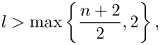 $$l > \max \left\{ {\displaystyle{{n + 2} \over 2},2} \right\},$$as t → ∞ under some extra hypotheses, where ρ+ = max{ρ, 0}.
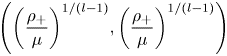 $$\left( {{\left( {\displaystyle{{\rho _ + } \over \mu }} \right)}^{1/(l-1)},{\left( {\displaystyle{{\rho _ + } \over \mu }} \right)}^{1/(l-1)}} \right)$$
Limit theorems for additive functionals of continuous time random walks
- Part of
-
- Journal:
- Proceedings of the Royal Society of Edinburgh. Section A: Mathematics / Volume 151 / Issue 2 / April 2021
- Published online by Cambridge University Press:
- 28 May 2020, pp. 799-820
- Print publication:
- April 2021
-
- Article
- Export citation
-
For a continuous-time random walk X = {Xt, t ⩾ 0} (in general non-Markov), we study the asymptotic behaviour, as t → ∞, of the normalized additive functional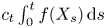 $c_t\int _0^{t} f(X_s)\,{\rm d}s$, t⩾ 0. Similarly to the Markov situation, assuming that the distribution of jumps of X belongs to the domain of attraction to α-stable law with α > 1, we establish the convergence to the local time at zero of an α-stable Lévy motion. We further study a situation where X is delayed by a random environment given by the Poisson shot-noise potential: $\Lambda (x,\gamma )= {\rm e}^{-\sum _{y\in \gamma } \phi (x-y)},$ where $\phi \colon \mathbb R\to [0,\infty )$ is a bounded function decaying sufficiently fast, and γ is a homogeneous Poisson point process, independent of X. We find that in this case the weak limit has both ‘quenched’ component depending on Λ, and a component, where Λ is ‘averaged’.
A dynamic thermo-mechanical actuator system with contact and Barber's heat exchange boundary conditions
- Part of
-
- Journal:
- Proceedings of the Royal Society of Edinburgh. Section A: Mathematics / Volume 151 / Issue 2 / April 2021
- Published online by Cambridge University Press:
- 27 May 2020, pp. 734-760
- Print publication:
- April 2021
-
- Article
- Export citation
PATCHING AND THE COMPLETED HOMOLOGY OF LOCALLY SYMMETRIC SPACES
- Part of
-
- Journal:
- Journal of the Institute of Mathematics of Jussieu / Volume 21 / Issue 2 / March 2022
- Published online by Cambridge University Press:
- 27 May 2020, pp. 395-458
- Print publication:
- March 2022
-
- Article
- Export citation
-
Under an assumption on the existence of $p$-adic Galois representations, we carry out Taylor–Wiles patching (in the derived category) for the completed homology of the locally symmetric spaces associated with $\operatorname{GL}_{n}$ over a number field. We use our construction, and some new results in non-commutative algebra, to show that standard conjectures on completed homology imply ‘big $R=\text{big}~\mathbb{T}$’ theorems in situations where one cannot hope to appeal to the Zariski density of classical points (in contrast to all previous results of this kind). In the case where $n=2$ and $p$ splits completely in the number field, we relate our construction to the $p$-adic local Langlands correspondence for $\operatorname{GL}_{2}(\mathbb{Q}_{p})$.


Semi-classical solutions for Kirchhoff type problem with a critical frequency
- Part of
-
- Journal:
- Proceedings of the Royal Society of Edinburgh. Section A: Mathematics / Volume 151 / Issue 2 / April 2021
- Published online by Cambridge University Press:
- 27 May 2020, pp. 761-798
- Print publication:
- April 2021
-
- Article
- Export citation
-
In the present paper, we consider the following Kirchhoff type problem
where b > 0, p ∈ (4, 6), the potential $$ -\Big(\varepsilon^2+\varepsilon b \int_{\mathbb R^3} | \nabla v|^2\Big) \Delta v+V(x)v=|v|^{p-2}v \quad {\rm in}\ \mathbb{R}^3, $$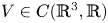 $V\in C(\mathbb R^3,\mathbb R)$ and ɛ is a positive parameter. The existence and multiplicity of semi-classical state solutions are obtained by variational method for this problem with several classes of critical frequency potentials, i.e., $\inf _{\mathbb R^N} V=0$. As to Kirchhoff type problem, little has been done for the critical frequency cases in the literature, especially the potential may vanish at infinity.

On the birth and death of algebraic limit cycles in quadratic differential systems
- Part of
-
- Journal:
- European Journal of Applied Mathematics / Volume 32 / Issue 2 / April 2021
- Published online by Cambridge University Press:
- 26 May 2020, pp. 317-336
-
- Article
- Export citation
Local minimizers in absence of ground states for the critical NLS energy on metric graphs
- Part of
-
- Journal:
- Proceedings of the Royal Society of Edinburgh. Section A: Mathematics / Volume 151 / Issue 2 / April 2021
- Published online by Cambridge University Press:
- 22 May 2020, pp. 705-733
- Print publication:
- April 2021
-
- Article
- Export citation
DETECTING STEINER AND LINEAR ISOMETRIES OPERADS
- Part of
-
- Journal:
- Glasgow Mathematical Journal / Volume 63 / Issue 2 / May 2021
- Published online by Cambridge University Press:
- 19 May 2020, pp. 307-342
-
- Article
-
- You have access
- Open access
- Export citation
Graph limits of random unlabelled k-trees
- Part of
-
- Journal:
- Combinatorics, Probability and Computing / Volume 29 / Issue 5 / September 2020
- Published online by Cambridge University Press:
- 18 May 2020, pp. 722-746
-
- Article
-
- You have access
- Open access
- Export citation
The size of the primes obstructing the existence of rational points
- Part of
-
- Journal:
- Proceedings of the Royal Society of Edinburgh. Section A: Mathematics / Volume 151 / Issue 2 / April 2021
- Published online by Cambridge University Press:
- 15 May 2020, pp. 652-704
- Print publication:
- April 2021
-
- Article
- Export citation
MULTIPLICITY ONE AT FULL CONGRUENCE LEVEL
- Part of
-
- Journal:
- Journal of the Institute of Mathematics of Jussieu / Volume 21 / Issue 2 / March 2022
- Published online by Cambridge University Press:
- 15 May 2020, pp. 637-658
- Print publication:
- March 2022
-
- Article
- Export citation
-
Let $F$ be a totally real field in which $p$ is unramified. Let $\overline{r}:G_{F}\rightarrow \text{GL}_{2}(\overline{\mathbf{F}}_{p})$ be a modular Galois representation that satisfies the Taylor–Wiles hypotheses and is tamely ramified and generic at a place $v$ above $p$. Let $\mathfrak{m}$ be the corresponding Hecke eigensystem. We describe the $\mathfrak{m}$-torsion in the $\text{mod}\,p$ cohomology of Shimura curves with full congruence level at $v$ as a $\text{GL}_{2}(k_{v})$-representation. In particular, it only depends on $\overline{r}|_{I_{F_{v}}}$ and its Jordan–Hölder factors appear with multiplicity one. The main ingredients are a description of the submodule structure for generic $\text{GL}_{2}(\mathbf{F}_{q})$-projective envelopes and the multiplicity one results of Emerton, Gee and Savitt [Lattices in the cohomology of Shimura curves, Invent. Math. 200(1) (2015), 1–96].


ISOTOPY AND HOMEOMORPHISM OF CLOSED SURFACE BRAIDS
- Part of
-
- Journal:
- Glasgow Mathematical Journal / Volume 63 / Issue 2 / May 2021
- Published online by Cambridge University Press:
- 15 May 2020, pp. 297-306
-
- Article
-
- You have access
- Export citation
A NOTE ON CHAINS AND BOUNDING PAIRS OF DEHN TWISTS
- Part of
-
- Journal:
- Glasgow Mathematical Journal / Volume 63 / Issue 1 / January 2021
- Published online by Cambridge University Press:
- 15 May 2020, pp. 133-138
-
- Article
-
- You have access
- Export citation
-
Let $N_g^k$ be a nonorientable surface of genus g with k punctures. In the first part of this note, after introducing preliminary materials, we will give criteria for a chain of Dehn twists to bound a disc. Then, we will show that automorphisms of the mapping class groups map disc bounding chains of Dehn twists to such chains. In the second part of the note, we will introduce bounding pairs of Dehn twists and give an algebraic characterization for such pairs.

Pointer chasing via triangular discrimination
- Part of
-
- Journal:
- Combinatorics, Probability and Computing / Volume 29 / Issue 4 / July 2020
- Published online by Cambridge University Press:
- 15 May 2020, pp. 485-494
-
- Article
-
- You have access
- Open access
- Export citation
-
We prove an essentially sharp $\tilde \Omega (n/k)$ lower bound on the k-round distributional complexity of the k-step pointer chasing problem under the uniform distribution, when Bob speaks first. This is an improvement over Nisan and Wigderson’s $\tilde \Omega (n/{k^2})$ lower bound, and essentially matches the randomized lower bound proved by Klauck. The proof is information-theoretic, and a key part of it is using asymmetric triangular discrimination instead of total variation distance; this idea may be useful elsewhere.


Finding independent transversals efficiently
- Part of
-
- Journal:
- Combinatorics, Probability and Computing / Volume 29 / Issue 5 / September 2020
- Published online by Cambridge University Press:
- 14 May 2020, pp. 780-806
-
- Article
- Export citation
-
We give an efficient algorithm that, given a graph G and a partition V1,…,Vm of its vertex set, finds either an independent transversal (an independent set {v1,…,vm} in G such that ${v_i} \in {V_i}$ for each i), or a subset ${\cal B}$ of vertex classes such that the subgraph of G induced by $\bigcup\nolimits_{\cal B}$ has a small dominating set. A non-algorithmic proof of this result has been known for a number of years and has been used to solve many other problems. Thus we are able to give algorithmic versions of many of these applications, a few of which we describe explicitly here.


EXTENSIONS OF VECTOR BUNDLES ON THE FARGUES-FONTAINE CURVE
- Part of
-
- Journal:
- Journal of the Institute of Mathematics of Jussieu / Volume 21 / Issue 2 / March 2022
- Published online by Cambridge University Press:
- 14 May 2020, pp. 487-532
- Print publication:
- March 2022
-
- Article
- Export citation
AN EXTENSION OF A RESULT OF ERDŐS AND ZAREMBA
- Part of
-
- Journal:
- Glasgow Mathematical Journal / Volume 63 / Issue 1 / January 2021
- Published online by Cambridge University Press:
- 13 May 2020, pp. 193-222
-
- Article
-
- You have access
- Export citation
-
Erdös and Zaremba showed that $ \limsup_{n\to \infty} \frac{\Phi(n)}{(\log\log n)^2}=e^\gamma$, γ being Euler’s constant, where $\Phi(n)=\sum_{d|n} \frac{\log d}{d}$.
We extend this result to the function $\Psi(n)= \sum_{d|n} \frac{(\log d )(\log\log d)}{d}$ and some other functions. We show that $ \limsup_{n\to \infty}\, \frac{\Psi(n)}{(\log\log n)^2(\log\log\log n)}\,=\, e^\gamma$. The proof requires a new approach. As an application, we prove that for any $\eta>1$, any finite sequence of reals $\{c_k, k\in K\}$, $\sum_{k,\ell\in K} c_kc_\ell \, \frac{\gcd(k,\ell)^{2}}{k\ell} \le C(\eta) \sum_{\nu\in K} c_\nu^2(\log\log\log \nu)^\eta \Psi(\nu)$, where C(η) depends on η only. This improves a recent result obtained by the author.


Conditional symmetries and exact solutions of a nonlinear three-component reaction-diffusion model
- Part of
-
- Journal:
- European Journal of Applied Mathematics / Volume 32 / Issue 2 / April 2021
- Published online by Cambridge University Press:
- 11 May 2020, pp. 280-300
-
- Article
- Export citation $\mathbb{A}_{\text{inf}}$ IS INFINITE DIMENSIONAL
- Part of
-
- Journal:
- Journal of the Institute of Mathematics of Jussieu / Volume 20 / Issue 6 / November 2021
- Published online by Cambridge University Press:
- 11 May 2020, pp. 1983-1989
- Print publication:
- November 2021
-
- Article
-
- You have access
- Open access
- Export citation
-
Given a perfect valuation ring $R$ of characteristic $p$ that is complete with respect to a rank-1 nondiscrete valuation, we show that the ring $\mathbb{A}_{\inf }$ of Witt vectors of $R$ has infinite Krull dimension.


