Refine search
Actions for selected content:
26063 results in Abstract analysis
Stability of Couette flow for the 2D magnetohydrodynamic equations with vertical dissipation
- Part of
-
- Journal:
- Proceedings of the Royal Society of Edinburgh. Section A: Mathematics , First View
- Published online by Cambridge University Press:
- 15 July 2026, pp. 1-29
-
- Article
- Export citation
-
This paper examines the stability of Couette flow in the two-dimensional incompressible magnetohydrodynamics system with only vertical dissipation. Our analysis departs from previous works by avoiding coordinate transformations and instead exploiting the special structure of the magnetic stream function. A key point is that the equation for the magnetic stream function $\phi$ avoids unfavourable linear terms present in the magnetic field formulation, which allows us to uncover new stability mechanisms specific to the anisotropically dissipative regime. Making use of this special structure, we establish global uniform regularity of solutions near background magnetic fields and provide a rigorous resolution of the associated stability problem.

$\mathbb {A}^1$
 -CONNECTIVITY OF MOTIVIC SPACES
- Part of
-
- Journal:
- Journal of the Institute of Mathematics of Jussieu , First View
- Published online by Cambridge University Press:
- 15 July 2026, pp. 1-11
-
- Article
- Export citation
-
We prove a version of Morel’s unstable $\mathbb {A}^1$
 -connectivity theorem over arbitrary base schemes. In the stable setting, this recovers (and simplifies the proof of) the known connectivity bounds due to Morel, Schmidt–Strunk, Deshmukh–Hogadi–Kulkarni–Yadav, and Druzhinin, and extends them to possibly non-noetherian schemes. Using the recent work of Bachmann–Elmanto–Morrow, this also implies that the slice filtration on homotopy K-theory is convergent for qcqs schemes of finite valuative dimension.


SUBCONVEX $L^p$
 -SETS, WEYL’S INEQUALITY AND EQUIDISTRIBUTION
- Part of
-
- Journal:
- Journal of the Institute of Mathematics of Jussieu , First View
- Published online by Cambridge University Press:
- 15 July 2026, pp. 1-41
-
- Article
-
- You have access
- Open access
- HTML
- Export citation
-
We examine sets $\mathscr A$
 of natural numbers having the property that for some real number $p\in (0,2)$
 , one has the subconvex bound $$\begin{align*}\int_0^1 \Big| \sum_{n\in \mathscr A\cap [1,N]}e(n\alpha)\Big|^p{\,\mathrm{d}} \alpha \ll N^{-1}|\mathscr A\cap [1,N]|^p. \end{align*}$$
We show that exponential sums over such sets satisfy inequalities analogous to Weyl’s inequality, and in many circumstances of the same strength as classical versions of Weyl’s bound. We also examine equidistribution of polynomials modulo $1$
 in which the summands are restricted to these subconvex $L^p$
 -sets. In addition, we describe applications to problems involving character sums and averages of arithmetic functions.


The effect of local ventilation on a spatiotemporal model of airborne disease transmission in indoor spaces
- Part of
-
- Journal:
- European Journal of Applied Mathematics , First View
- Published online by Cambridge University Press:
- 15 July 2026, pp. 1-18
-
- Article
-
- You have access
- Open access
- HTML
- Export citation
-
We incorporate local ventilation effects into a spatially dependent generalisation of the Wells–Riley model for airborne disease transmission and consider a room in which an air purifier supplements the ventilation provided by a poorly functioning air-conditioning (AC) unit. Aerosol production and removal through ventilation, biological deactivation and gravitational settling as well as transport around a recirculating AC flow and global turbulent mixing are modelled using an advection–diffusion–reaction equation. This local ventilation model is compared with a global ventilation model, where all ventilation is treated as a global sink. We undertake this comparison for a weak purifier (clean air delivery rate of 140 m $^3$h
$^3$h $^{-1}$) and a strong purifier (clean air delivery rate of 1,000 m $^3$h
$^3$h $^{-1}$). For each purifier, we determine a total effective air exchange rate and compare against the global model with equivalent ventilation. We find that, as expected, the purifier removes fewer aerosols when the distance between the infectious person and the purifier is increased, resulting in a greater average aerosol concentration in the room. Moreover, the concentration is generally lowest when the infectious person is upstream of the purifier, located in regions where the airflow streamlines are directed into the purifier. For these infectious source locations, the global ventilation model significantly overestimates the concentration throughout the room. For infectious sources outside of these regions, there is generally good agreement between the models, particularly for the weak purifier. We also studied, for a fixed distance from the purifier, how the infection risk to a susceptible person varies as the infectious person changes location. A susceptible person faces the highest infection risk when they are directly downstream of the infectious person, where the aerosol concentration is the highest. There is better agreement between local and global ventilation models for the weak purifier than for the strong purifier since the weak purifier has less impact on the airflow in the room.


Existence and stability of standing wave solutions for fourth-order Schrödinger equation with second-order nonlinear derivative term
- Part of
-
- Journal:
- European Journal of Applied Mathematics , First View
- Published online by Cambridge University Press:
- 14 July 2026, pp. 1-26
-
- Article
-
- You have access
- Open access
- HTML
- Export citation
-
Considered herein is the Cauchy problem for a class of fourth-order Schrödinger equation with second-order nonlinear derivative term $iu_{t}-\Delta ^2u+u\Delta |u|^2+|u|^{p-1}u=0$. We first construct its variational framework and then prove the existence of standing wave solutions in the context of differing power exponent $p$ and spatial dimension. In addition, we establish the stability of standing wave solutions through the effective combination of concentration-compactness lemmas and some variational techniques and methods.

Prescribed number of solutions for a multiple potential well quasilinear Schrödinger equation
- Part of
-
- Journal:
- Glasgow Mathematical Journal , First View
- Published online by Cambridge University Press:
- 10 July 2026, pp. 1-14
-
- Article
- Export citation
-
We show that the quasilinear Schrödinger equation $-\epsilon ^{2}\Delta u + Q(x)u -\Delta (u^{2})u= h(u)$ in $\mathbb{R}^{N}$ has $\wp$ solutions related to the $\wp$ global minima of the potential $Q$. We work with the Nehari manifold associated with the energy functional. We evaluate the energy of the solutions to distinguish them from each other.


HOLONOMIC ÉTALE SHEAVES ARE CONSTRUCTIBLE
- Part of
-
- Journal:
- Journal of the Institute of Mathematics of Jussieu , First View
- Published online by Cambridge University Press:
- 10 July 2026, pp. 1-22
-
- Article
-
- You have access
- Open access
- HTML
- Export citation
-
Building on Beilinson’s work, ‘constructible sheaves are holonomic’, we introduce the notion of holonomicity for étale sheaves, without assuming a priori constructibility. We establish the converse of Beilinson’s result, showing that holonomic sheaves are indeed constructible. This can be seen as an étale analogue of Kashiwara’s theorem on holonomic ${\mathcal D}_X$
 -modules.

PSEUDODIFFERENTIAL OPERATORS AND THE CONNES-KASPAROV ISOMORPHISM
- Part of
-
- Journal:
- Journal of the Institute of Mathematics of Jussieu , First View
- Published online by Cambridge University Press:
- 08 July 2026, pp. 1-51
-
- Article
-
- You have access
- Open access
- HTML
- Export citation
-
We compute the $K$-theory of the ${C}^{*}$-category generated by order zero, equivariant, properly supported, classical pseudodifferential operators acting on sections of homogeneous bundles over the symmetric space of a real reductive Lie group $G$. Our result uses the Connes-Kasparov isomorphism for $G$, and in fact it is equivalent to the Connes-Kasparov isomorphism. We relate our computation to David Vogan’s well-known parametrization of the tempered irreducible representations of $G$ with real infinitesimal character. When the reductive group $G$ has real rank one, we formulate and prove a Fourier isomorphism theorem for equivariant order zero pseudodifferential operators on the symmetric space, and use it to prove a $K$-theoretic version of Vogan’s theorem.


The $RO({\mathcal{K}})$-graded homotopy of Klein-four normed Mackey functors
- Part of
-
- Journal:
- Glasgow Mathematical Journal , First View
- Published online by Cambridge University Press:
- 07 July 2026, pp. 1-31
-
- Article
-
- You have access
- Open access
- HTML
- Export citation
-
We compute the $RO({\mathcal{K}})$-graded coefficients of the equivariant Eilenberg–Mac Lane spectrum associated with various Hill–Hopkins–Ravenel norms of the constant- $\mathbb{F}_2$ Mackey functor, where $\mathcal{K}$ is the Klein-four group. Further, we analyse the multiplicative structure of these ${\textrm {RO}}({\mathcal{K}})$-graded Tambara functors.


Integrability of the Fourier transform via Riesz derivative – CORRIGENDUM
-
- Journal:
- Glasgow Mathematical Journal , First View
- Published online by Cambridge University Press:
- 07 July 2026, p. 1
-
- Article
-
- You have access
- HTML
- Export citation
Spanning clique subdivisions in pseudorandom graphs
- Part of
-
- Journal:
- Combinatorics, Probability and Computing , First View
- Published online by Cambridge University Press:
- 06 July 2026, pp. 1-15
-
- Article
-
- You have access
- Open access
- HTML
- Export citation
-
In this paper, we study the appearance of a spanning subdivision of a clique in graphs satisfying certain pseudorandom conditions. Specifically, we show the following results.
(i) There are constants $C\gt 0$ and $c\in (0,1]$ such that, whenever $d/\lambda \ge C$, every $(n,d,\lambda )$-graph contains a spanning subdivision of $K_t$ for all $2\le t \le \min \{cd,c\sqrt {\frac {n}{\log n}}\}$.
(ii) There are constants $C\gt 0$ and $c\in (0,1]$ such that, whenever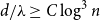 $d/\lambda \ge C\log ^3n$, every $(n,d,\lambda )$-graph contains a spanning nearly balanced subdivision of $K_t$ for all $2\le t \le \min \{cd,c\sqrt {\frac {n}{\log ^3n}}\}$.
(iii) For every $\mu \gt 0$, there are constants $c,\varepsilon \in (0,1]$ and $n_0\in \mathbb N$ such that, whenever $n\ge n_0$, every $n$-vertex graph with minimum degree at least $\mu n$ and no bipartite holes of size $\varepsilon n$ contains a spanning nearly balanced subdivision of $K_t$ for all $2\le t \le c\sqrt {n}$.


On the local convergence of integer-valued Lipschitz functions on regular trees
-
- Journal:
- Combinatorics, Probability and Computing , First View
- Published online by Cambridge University Press:
- 06 July 2026, pp. 1-33
-
- Article
-
- You have access
- Open access
- HTML
- Export citation
-
We study random integer-valued Lipschitz functions on regular trees. It was shown by Peled, Samotij, and Yehudayoff [22] that such functions are localized; however, finer questions about the structure of Gibbs measures remain unanswered. Our main result is that the weak limit of a uniformly chosen 1-Lipschitz function with 0 boundary condition on a $d$-ary tree of height $n$ exists as $n \to \infty$ if $2 \le d \le 7$, but not if $d \ge 8$, thereby partially answering a question posed by Peled, Samotij and Yehudayoff. For large $d$, the value at the root alternates between being almost entirely concentrated on 0 for even $n$ and being roughly uniform on $\{-1,0,1\}$ for odd $n$, leading to different limits as $n$ approaches infinity along evens or odds. For $d \ge 8$, the essence of this phenomenon is preserved, which obstructs the convergence. For $d \le 7$, this phenomenon ceases to exist, and the law of the value at the root loses its connection with the parity of $n$. Along the way, we also obtain an alternative proof of localization. The key idea is a fixed point convergence result for a related operator on $\ell ^\infty$ and a procedure to show that the iterations get into a ‘basin of attraction’ of the fixed point. We also prove some accompanying analogous ‘even-odd phenomenon’ type results about $M$-Lipschitz functions on general non-amenable graphs with high enough expansion (this includes for example the large $d$ case for regular trees). We also prove a convergence result for 1-Lipschitz functions with $\{0,1\}$ boundary condition. This last result relies on an absolute value FKG for uniform 1-Lipschitz functions when shifted by $1/2$.


Dilation and Model Theory for Pairs of Commuting Contraction Operators
-
- Published online:
- 26 June 2026
- Print publication:
- 23 July 2026
A RIEMANN-ROCH FORMULA FOR SINGULAR REDUCTIONS BY CIRCLE ACTIONS
- Part of
-
- Journal:
- Journal of the Institute of Mathematics of Jussieu , First View
- Published online by Cambridge University Press:
- 25 June 2026, pp. 1-53
-
- Article
-
- You have access
- Open access
- HTML
- Export citation
-
We compute a Hirzebruch-Riemann-Roch type formula for the invariant Riemann-Roch number of a quantizable Hamiltonian $S^1$
 -manifold $(M,\omega ,{ \mathcal J})$
 , allowing $0$
 to be a singular value of the moment map ${ \mathcal J}:M\to {\mathbb R}$
 . Our formula represents an instance of the Guillemin-Sternberg principle, which states that quantization should commute with reduction. The conceptual novelty of our result is that the involved reduced system only depends on the symplectic data of M. To establish this, we derive a complete singular stationary phase expansion of the Witten integral without appealing to any kind of desingularization. As a consequence, our formula expresses the invariant Riemann-Roch number purely in terms of symplectic invariants of the singular symplectic quotient. In particular, it involves a new explicit symplectic invariant of the singularities.


A large hole in pseudo-random graphs
- Part of
-
- Journal:
- Combinatorics, Probability and Computing , First View
- Published online by Cambridge University Press:
- 25 June 2026, pp. 1-11
-
- Article
-
- You have access
- Open access
- HTML
- Export citation
-
We show that there exist constants $\delta _1,\delta _2\gt 0$ such that if $G$ is an $(n,d,\lambda )$-graph with $\lambda /d\le \delta _1$, then $G$ contains an induced cycle of length at least $\delta _2n/d$. We further demonstrate that, up to a constant factor, this is best possible. Utilising our techniques, we derive that the number of non-isomorphic induced subgraphs of such $G$ is at least exponential in $n\log d/d$, and further demonstrate that this is tight up to a constant factor in the exponent.


Conjugacy problem in T-RAAGs
- Part of
-
- Journal:
- Glasgow Mathematical Journal , First View
- Published online by Cambridge University Press:
- 24 June 2026, pp. 1-15
-
- Article
-
- You have access
- Open access
- HTML
- Export citation
THE MOTIVIC FUNDAMENTAL GROUPOID AT TANGENTIAL BASEPOINTS
- Part of
-
- Journal:
- Journal of the Institute of Mathematics of Jussieu , First View
- Published online by Cambridge University Press:
- 24 June 2026, pp. 1-68
-
- Article
- Export citation
-
We give a general construction of the motivic path space based at tangential basepoints, extending previous works of P. Deligne, A. B. Goncharov and M. Levine, which were limited to ordinary basepoints or to specific varieties. Given a smooth variety over a field endowed with a simple normal crossings divisor, we encode its tangential basepoints using the language of logarithmic geometry. Building on the recent construction by F. Binda, D. Park and P. A. Østvær of a stable $\infty $
 -category of $\mathbb {A}^1$
 -invariant logarithmic motives and its comparison with the usual category of motives, we define in a functorial manner the associated motivic pointed path spaces. In the presence of a motivic t-structure, truncating yields the motivic fundamental groupoid. In general, we construct Betti and de Rham realization functors for logarithmic motives (linearizing the construction of F. Binda, D. Park and P. A. Østvær for the Betti case) and we show that the periods of the motivic fundamental groupoid are given by regularized iterated integration of logarithmic differential $1$
 -forms, thus yielding a general version of Chen’s theorem with tangential basepoints.


SPECTRAL MOMENT FORMULAE FOR ${GL}(3)\times {GL}(2)\ {L}$
 -FUNCTIONS II: THE EISENSTEIN CASE
- Part of
-
- Journal:
- Journal of the Institute of Mathematics of Jussieu , First View
- Published online by Cambridge University Press:
- 23 June 2026, pp. 1-48
-
- Article
-
- You have access
- Open access
- HTML
- Export citation
-
This work is the second in a series, following Part I [Kwa24] (Algebra Number Theory 18.10 (2024)) and preceding Part III [Kwa25] (Math. Ann. 391.1 (2025)). We continue our investigation of spectral moments of $\text {GL}(3)\times \text {GL}(2)\ L$
 -functions from the perspective of period integrals. Using an identity between two distinct periods for the $\text {GL}(3)$
 Eisenstein series, we establish an exact Motohashi-type identity linking the shifted cubic moment of $\text {GL}(2)\ L$
 -functions to the shifted fourth moment of $\text {GL}(1) L$
 -functions. In addition, we offer a novel, intrinsic and automorphic account for the sources and symmetries of the full set of main terms for both moments, in agreement with the CFKRS Moment Conjectures (Proc. Lond. Math. Soc. (3) 91 (2005)).


ON THE MAP INDUCED ON HOCHSCHILD HOMOLOGY OF MATRIX FACTORIZATION CATEGORIES BY THE INCLUSION OF A DIVISOR
- Part of
-
- Journal:
- Journal of the Institute of Mathematics of Jussieu , First View
- Published online by Cambridge University Press:
- 19 June 2026, pp. 1-34
-
- Article
-
- You have access
- Open access
- HTML
- Export citation
-
Given a smooth variety X over $\mathbb {C}$
 , a smooth divisor $i:Y\hookrightarrow X$
 and a global function f on X which vanishes on Y and on its critical locus, we compute the map induced on Hochschild homology by the pushforward functor $i_{\ast }:D^b(Y)\to D^{abs}(MF(X,f))$
 in terms of the Hochschild-Kostant-Rosenberg isomorphisms.


Weighted Sobolev trace embeddings and their applications
- Part of
-
- Journal:
- Proceedings of the Edinburgh Mathematical Society , First View
- Published online by Cambridge University Press:
- 19 June 2026, pp. 1-42
-
- Article
- Export citation
