Refine search
Actions for selected content:
26063 results in Abstract analysis

Spectra of Discrete Structures
-
- Published online:
- 21 May 2026
- Print publication:
- 14 May 2026
-
- Book
-
- You have access
- Open access
- Export citation
Generalized Hilbert matrix operators acting on weighted sequence spaces
- Part of
-
- Journal:
- Proceedings of the Edinburgh Mathematical Society , First View
- Published online by Cambridge University Press:
- 21 May 2026, pp. 1-20
-
- Article
-
- You have access
- HTML
- Export citation
-
In this paper, we introduce and study a new kind of generalized Hilbert matrix operators, induced by a positive finite Borel measure on $(0,1)$, acting on weighted sequence spaces. We establish a sufficient and necessary condition for the boundedness of these operators. These results extend some related ones obtained recently in [Bull. Lond. Math. Soc. 55(6) (2023), 2598–2610].

On entropy of pure mixing maps on dendrites
- Part of
-
- Journal:
- Proceedings of the Royal Society of Edinburgh. Section A: Mathematics , First View
- Published online by Cambridge University Press:
- 21 May 2026, pp. 1-18
-
- Article
-
- You have access
- Open access
- HTML
- Export citation
-
For every $0 \lt \alpha\le\infty$ we construct a continuous pure mixing map (topologically mixing, but not exact) on the Gehman dendrite with topological entropy $\alpha$. It has been previously shown by Špitalský that there are exact maps on the Gehman dendrite with arbitrarily low positive topological entropy. Together, these results show that the entropy of maps on the Gehman dendrite does not exhibit the paradoxical behaviour reported for graph maps, where the infimum of the topological entropy of exact maps is strictly smaller than the infimum of the entropy of pure mixing maps. The latter result, stated in terms of popular notions of chaos, says that for maps on graphs, lower entropy implies stronger Devaney chaos. The conclusion of this paper says that lower entropy does not force stronger chaos for maps of the Gehman dendrite.

Nishida–Smoller type large solutions and exponential growth for the compressible Navier–Stokes equations with slip boundary conditions in 3D bounded domain
- Part of
-
- Journal:
- European Journal of Applied Mathematics , First View
- Published online by Cambridge University Press:
- 19 May 2026, pp. 1-36
-
- Article
-
- You have access
- Open access
- HTML
- Export citation
-
This paper concerns the isentropic compressible Navier–Stokes equations in a three-dimensional (3D) bounded domain with slip boundary conditions and vacuum. It is shown that the classical solutions to the initial-boundary-value problem of this system with large initial energy and vacuum exist globally in time and have an exponential decay rate, which is decreasing with respect to the adiabatic exponent $\gamma \gt 1$ provided that the fluid is nearly isothermal (namely, the adiabatic exponent is close enough to 1). This constitutes an extension of the celebrated result for the one-dimensional Cauchy problem of the isentropic Euler equations that has been established in 1973 by Nishida and Smoller (Comm. Pure Appl. Math. 26 (1973), 183–200). In addition, it is also shown that the gradient of the density will grow unboundedly with an exponential rate when the initial vacuum appears (even at a point). In contrast to previous related works, where either small initial energy is required or boundary effects are absent, this establishes the first result on the global existence and exponential growth of large-energy solutions with vacuum to the 3D isentropic compressible Navier–Stokes equations with slip boundary conditions.

Critical lack of equilibrium in stochastic kinetic proofreading
- Part of
-
- Journal:
- European Journal of Applied Mathematics , First View
- Published online by Cambridge University Press:
- 19 May 2026, pp. 1-47
-
- Article
-
- You have access
- Open access
- HTML
- Export citation
-
In this paper, we study the relation between the property of detailed balance and the ability of discriminating between different ligands for a class of stochastic models of kinetic proofreading. We prove the existence of a critical amount of lack of detailed balance that the kinetic proofreading models must have in order to have strong specificity for a value of the binding energy $\sigma$. We also prove that the fact that a kinetic proofreading model has a lack of detailed balance that is larger than the critical one does not necessarily yield strong discrimination properties. Indeed, there exist different sets of chemical rates, leading to the same amount of lack of detailed balance, that have strong discrimination property in some cases and not in others.

The fluctuations of the mod p rank of triangular matrices
- Part of
-
- Journal:
- Proceedings of the Royal Society of Edinburgh. Section A: Mathematics , First View
- Published online by Cambridge University Press:
- 19 May 2026, pp. 1-19
-
- Article
-
- You have access
- Open access
- HTML
- Export citation
-
We consider random lower triangular matrices such that the entries on and below the diagonal are i.i.d. copies of some $\mathbb{Z}$-valued random variable. We prove that the Sylow $p$-subgroups of the cokernels of these matrices have the same constant order fluctuations as those of the matrix products studied by Nguyen and Van Peski. Unlike for matrix products, for triangular matrices, the law of the limiting fluctuations depends slightly on the distribution of the entries. As a special case, we can describe the limiting fluctuations of the rank of lower triangular matrices over $\mathbb{F}_p$ with i.i.d. random entries on and below the diagonal.


COUNTING AND EQUIDISTRIBUTION OF STRONGLY REVERSIBLE CLOSED GEODESICS IN NEGATIVE CURVATURE
- Part of
-
- Journal:
- Journal of the Institute of Mathematics of Jussieu , First View
- Published online by Cambridge University Press:
- 19 May 2026, pp. 1-39
-
- Article
-
- You have access
- Open access
- HTML
- Export citation
-
Let M be a pinched negatively curved Riemannian orbifold, whose fundamental group has torsion of order $2$. Generalising results of Sarnak and Erlandsson-Souto for constant curvature oriented surfaces, and with very different techniques, we give an asymptotic counting result on the number of strongly reversible periodic orbits of the geodesic flow in $T^1M$, and prove their equidistribution towards the Bowen-Margulis measure. The result holds in the more general setting with weights coming from thermodynamic formalism, and also in the analogous setting of graphs of groups with $2$-torsion. We give new examples in real hyperbolic Coxeter groups, complex hyperbolic orbifolds and graphs of groups.


Simultaneous rotation of infinitely many parallel line segments
- Part of
-
- Journal:
- Proceedings of the Royal Society of Edinburgh. Section A: Mathematics , First View
- Published online by Cambridge University Press:
- 18 May 2026, pp. 1-12
-
- Article
-
- You have access
- Open access
- HTML
- Export citation
-
In 1971, Davies proved that finitely many parallel line segments can be simultaneously fully rotated in an arbitrarily small area. In this paper, we show that an even stronger statement holds: The unit square can be fully rotated in such a way that each initially vertical line segment sweeps a set of small area.
A set in ${\mathbb{R}}^n$ is said to have the strong Kakeya property if for any two of its positions, the set can be continuously moved between these two positions in an arbitrarily small volume. We use the above result to show that a wide family of sets in ${\mathbb{R}}^3$, for instance, the lateral surface of a cylinder, have the strong Kakeya property.


Strict log-concavity of k-coloured partitions
- Part of
-
- Journal:
- Proceedings of the Royal Society of Edinburgh. Section A: Mathematics , First View
- Published online by Cambridge University Press:
- 18 May 2026, pp. 1-15
-
- Article
-
- You have access
- Open access
- HTML
- Export citation
-
In recent years, there has been extensive work on inequalities among partition functions. In particular, Nicolas, and independently DeSalvo–Pak, proved that the partition function $p(n)$ is eventually log-concave. Inspired by this and other results, Chern–Fu–Tang first conjectured the log-concavity of $k$-coloured partitions. Three of the authors and Tripp later proved this conjecture by introducing recursive sequences and a strict inequality for fractional partition functions, giving explicit errors. In this paper, we show that the log-concavity is, in fact, strict for $k\geq 2$. We shed further light on this phenomenon by utilizing Hardy–Littlewood–Pólya’s notion of majorizing. We prove that for partitions $\boldsymbol{a},\boldsymbol{b}$ of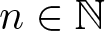 $n\in{\mathbb N}$, if $\boldsymbol b$ majorizes $\boldsymbol a$, then $p_k(\boldsymbol{a}) \gt p_k(\boldsymbol{b})$. Numerical calculations indicate that our result is sharp.


A Primer, and Beyond, on Composition Operators on the Unit Disk
-
- Published online:
- 15 May 2026
- Print publication:
- 11 June 2026
Part II - Eigenvalues and Eigenfunctions on Simplicial Complexes and Hypergraphs
-
- Book:
- Spectra of Discrete Structures
- Published online:
- 21 May 2026
- Print publication:
- 14 May 2026, pp 179-180
-
- Chapter
-
- You have access
- Open access
- Export citation
12 - The Nonbacktracking Laplacian
- from Part III - Additional Topics: Interlacing, Tensors, Nonbacktracking Laplacians, and Applications
-
- Book:
- Spectra of Discrete Structures
- Published online:
- 21 May 2026
- Print publication:
- 14 May 2026, pp 351-372
-
- Chapter
-
- You have access
- Open access
- Export citation
Part III - Additional Topics: Interlacing, Tensors, Nonbacktracking Laplacians, and Applications
-
- Book:
- Spectra of Discrete Structures
- Published online:
- 21 May 2026
- Print publication:
- 14 May 2026, pp 295-296
-
- Chapter
-
- You have access
- Open access
- Export citation
1 - Introduction
- from Part I - Basics: Foundational Material, Elementary Aspects, and Examples
-
- Book:
- Spectra of Discrete Structures
- Published online:
- 21 May 2026
- Print publication:
- 14 May 2026, pp 3-13
-
- Chapter
-
- You have access
- Open access
- Export citation
10 - Interlacing and Spectral Classes
- from Part III - Additional Topics: Interlacing, Tensors, Nonbacktracking Laplacians, and Applications
-
- Book:
- Spectra of Discrete Structures
- Published online:
- 21 May 2026
- Print publication:
- 14 May 2026, pp 297-326
-
- Chapter
-
- You have access
- Open access
- Export citation
9 - Nodal Domains
- from Part II - Eigenvalues and Eigenfunctions on Simplicial Complexes and Hypergraphs
-
- Book:
- Spectra of Discrete Structures
- Published online:
- 21 May 2026
- Print publication:
- 14 May 2026, pp 269-294
-
- Chapter
-
- You have access
- Open access
- Export citation
Frontmatter
-
- Book:
- Spectra of Discrete Structures
- Published online:
- 21 May 2026
- Print publication:
- 14 May 2026, pp i-iv
-
- Chapter
-
- You have access
- Open access
- Export citation
6 - Lovász Extensions
- from Part II - Eigenvalues and Eigenfunctions on Simplicial Complexes and Hypergraphs
-
- Book:
- Spectra of Discrete Structures
- Published online:
- 21 May 2026
- Print publication:
- 14 May 2026, pp 181-204
-
- Chapter
-
- You have access
- Open access
- Export citation
2 - The Abstract Setting
- from Part I - Basics: Foundational Material, Elementary Aspects, and Examples
-
- Book:
- Spectra of Discrete Structures
- Published online:
- 21 May 2026
- Print publication:
- 14 May 2026, pp 14-49
-
- Chapter
-
- You have access
- Open access
- Export citation
5 - Eigenvalues and Eigenfunctions of the Laplace Operator via Floer Theory
- from Part I - Basics: Foundational Material, Elementary Aspects, and Examples
-
- Book:
- Spectra of Discrete Structures
- Published online:
- 21 May 2026
- Print publication:
- 14 May 2026, pp 172-178
-
- Chapter
-
- You have access
- Open access
- Export citation
