Refine search
Actions for selected content:
26063 results in Abstract analysis
Computing the probability of intersection
- Part of
-
- Journal:
- Combinatorics, Probability and Computing , First View
- Published online by Cambridge University Press:
- 19 June 2026, pp. 1-20
-
- Article
-
- You have access
- Open access
- HTML
- Export citation
-
Let $\Omega _1, \ldots , \Omega _m$ be probability spaces, let ${\mathbf \Omega }=\Omega _1 \times \cdots \times \Omega _m$ be their product and let $A_1, \ldots , A_n \subset {\mathbf \Omega }$ be events. Suppose that each event $A_i$ depends on $r_i$ coordinates of a point $x \in {\mathbf \Omega }$, $x=\left (\xi _1, \ldots , \xi _m\right )$, and that for each event $A_i$ there are $\Delta _i$ other events $A_j$ that depend on some of the coordinates that $A_i$ depends on. Let $\Delta =\max \{5,\ \Delta _i\,:\, i=1, \ldots , n\}$ and let $\mu _i=\min \{r_i,\ \Delta _i+1\}$ for $i=1, \ldots , n$. We prove that if ${\mathbb P}(A_i) \lt (3\Delta )^{-3\mu _i}$ for all $i$, then for any $0 \lt \epsilon \lt 1$, the probability ${\mathbb P}\left ( \bigcap _{i=1}^n \overline {A}_i\right )$ of the intersection of the complements of all $A_i$ can be computed within relative error $\epsilon$ in polynomial time from the probabilities ${\mathbb P}\left (A_{i_1} \cap \ldots \cap A_{i_k}\right )$ of $k$-wise intersections of the events $A_i$ for $k = e^{O(\Delta )} \ln (n/\epsilon )$.


A degenerate cognitive model for a single species under toxicity
- Part of
-
- Journal:
- European Journal of Applied Mathematics , First View
- Published online by Cambridge University Press:
- 18 June 2026, pp. 1-24
-
- Article
-
- You have access
- Open access
- HTML
- Export citation
-
This paper studies a class of degenerate parabolic partial differential equation models that describe the dynamics of single-species populations with cognitive functions in toxic environments. The core innovation lies in introducing cognitive functions to simulate the ability of species to perceive toxins and adaptively adjust their behaviours, which in turn affects population density. This mechanism is characterized by a nonlinear degenerate Pratial Differential Equation. The degradation of the model is mainly manifested in the diffusion coefficient and response term approaching zero when the population density is zero or the cognitive state reaches the boundary. For this model, we have achieved the following theoretical breakthroughs: First, by using regularization techniques, we constructed a non-degenerate approximate system. Combining prior energy estimates with the fixed point theorem, we proved the existence of local classical solutions for this regularized system; subsequently, we constructed an appropriate Lyapunov function. Based on strict energy dissipation analysis and uniform prior estimates, we proved that under conditions such as bounded toxins and regular initial values, the classical solutions of the regularized system exist globally and remain bounded on the interval $[0, \infty )$ ultimately, based on this, through compactness theory and limit processes, the existence of the global weak solution for the original degenerate system is further derived. Numerical simulations verify the rationality of the theoretical results and visually demonstrate the dynamic regulatory effect of cognitive function on population tolerance.

ADDITIVITY AXIOM FOR THE TORSION FORMS AND HIGHER CHEEGER-MÜLLER/BISMUT-ZHANG THEOREM
- Part of
-
- Journal:
- Journal of the Institute of Mathematics of Jussieu , First View
- Published online by Cambridge University Press:
- 17 June 2026, pp. 1-88
-
- Article
-
- You have access
- HTML
- Export citation
Algebraic independence of values of Weierstrass elliptic and zeta functions
- Part of
-
- Journal:
- Proceedings of the Edinburgh Mathematical Society , First View
- Published online by Cambridge University Press:
- 17 June 2026, pp. 1-33
-
- Article
-
- You have access
- Open access
- HTML
- Export citation
-
Let $\Omega$ be a lattice in $\mathbb C$ with invariants $g_2,g_3$ and let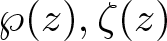 $\wp(z), \zeta(z)$ be the associated Weierstrass elliptic and zeta functions, respectively. In this paper, we prove that if $\omega$ is any non-zero period of $\wp(z)$ and $u_1,u_2$ complex numbers such that $u_1,u_2, \omega$ are $\mathbb{Q}$-linearly independent with $({\mathbb{Z}} u_1+{\mathbb{Z}} u_2)\cap\Omega=(0),$ then at least two of the numbersare algebraically independent over
 \begin{equation*}g_2,g_3,\omega, \eta,u_1,u_2,\wp(u_i),\zeta(u_i)~~(1\leq i\leq 2)\end{equation*} $\mathbb{Q},$ where $\eta$ is the quasi-period of $\zeta(z)$ associated with $\omega.$


Small differences between cubic and rational numbers
- Part of
-
- Journal:
- Glasgow Mathematical Journal , First View
- Published online by Cambridge University Press:
- 17 June 2026, pp. 1-8
-
- Article
-
- You have access
- Open access
- HTML
- Export citation
-
In this paper, we show that for each sufficiently large integer $H$, there is a real cubic number $\alpha$ and a rational number $r$, both of height smaller than $H$, such that $0\lt \alpha -r\lt 272/H^4$. The exponent $4$ of $H$ in this inequality is best possible. The numbers $\alpha$ and $r$ are both constructed explicitly. We also show that a necessary and sufficient condition on $(u,v)$ under which there is a positive constant $c_1=c_1(d,u,v)$ such that the inequality $|\alpha -\beta | \geq c_1 H(\alpha )^{-u} H(\beta )^{-v}$ holds for all real algebraic numbers $\alpha$ of degree $d \geq 2$ and all real algebraic numbers $\beta$ of degree $d-1$ is $u \geq d-1$ and $v \geq d$.


STABLE RATIONAL HOMOLOGY OF THE IA-AUTOMORPHISM GROUPS OF FREE GROUPS
- Part of
-
- Journal:
- Journal of the Institute of Mathematics of Jussieu , First View
- Published online by Cambridge University Press:
- 16 June 2026, pp. 1-78
-
- Article
-
- You have access
- Open access
- HTML
- Export citation
-
The rational homology of the IA-automorphism group $\operatorname {IA}_n$
 of the free group $F_n$
 is still mysterious. We study the quotient of the rational homology of $\operatorname {IA}_n$
 that is obtained as the image of the map induced by the abelianization map, which we call the Albanese homology of $\operatorname {IA}_n$
 . We obtain a representation-stable $\operatorname {GL}(n,\mathbb {Q})$
 -subquotient of the Albanese homology of $\operatorname {IA}_n$
 , which conjecturally coincides with the entire Albanese homology of $\operatorname {IA}_n$
 . In particular, we obtain a lower bound of the dimension of the Albanese homology of $\operatorname {IA}_n$
 for each homological degree in a stable range. Moreover, we determine the entire third Albanese homology of $\operatorname {IA}_n$
 for $n\ge 9$
 . We also study the Albanese homology of an analogue of $\operatorname {IA}_n$
 for the outer automorphism group of $F_n$
 and the Albanese homology of the Torelli groups of surfaces. Moreover, we study the relation between the Albanese homology of $\operatorname {IA}_n$
 and the cohomology of $\operatorname {Aut}(F_n)$
 with twisted coefficients.


Stationary solutions and asymptotic behaviour for a nonlinear free-boundary tumour model with three layers
- Part of
-
- Journal:
- European Journal of Applied Mathematics , First View
- Published online by Cambridge University Press:
- 15 June 2026, pp. 1-19
-
- Article
-
- You have access
- Open access
- HTML
- Export citation
Some rigidity results on non-gradient $m$-quasi-Einstein condition
- Part of
-
- Journal:
- Glasgow Mathematical Journal , First View
- Published online by Cambridge University Press:
- 15 June 2026, pp. 1-12
-
- Article
- Export citation
-
The goal of this article is to find some geometric characterizations of Kenmotsu and almost Kenmotsu manifolds that admit a non-gradient $m$-quasi-Einstein structure. First, we prove that a Kenmotsu manifold admits a closed $m$-quasi-Einstein structure is an Einstein manifold. Next, we prove that if a three-dimensional Kenmotsu manifold admits a non-trivial $m$-quasi-Einstein structure $(g, V,m,\lambda )$ with $V$ as a conformal vector field, then it is of constant sectional curvature $-1$. Finally, we prove that if a non-Kenmotsu almost Kenmotsu $(k,\mu )^{\prime}$-manifold admits a closed $m$-quasi-Einstein structure $(g, V,m,\lambda )$ with $m\ne 1$, then it is locally isometric to the product space $\mathbb{H}^{n+1}(-4)\times \mathbb{R}^{n}$.


Foreword
-
- Book:
- A Primer, and Beyond, on Composition Operators on the Unit Disk
- Published online:
- 15 May 2026
- Print publication:
- 11 June 2026, pp xii-xiv
-
- Chapter
- Export citation
Dimensionality of tropical Chow groups
- Part of
-
- Journal:
- Proceedings of the Royal Society of Edinburgh. Section A: Mathematics , First View
- Published online by Cambridge University Press:
- 11 June 2026, pp. 1-24
-
- Article
-
- You have access
- Open access
- HTML
- Export citation
Appendix J - A Small List of Open Problems
-
- Book:
- A Primer, and Beyond, on Composition Operators on the Unit Disk
- Published online:
- 15 May 2026
- Print publication:
- 11 June 2026, pp 567-568
-
- Chapter
- Export citation
2 - Boundedness of Composition Operators
-
- Book:
- A Primer, and Beyond, on Composition Operators on the Unit Disk
- Published online:
- 15 May 2026
- Print publication:
- 11 June 2026, pp 104-130
-
- Chapter
- Export citation
Appendix A - Schur Test Lemma
-
- Book:
- A Primer, and Beyond, on Composition Operators on the Unit Disk
- Published online:
- 15 May 2026
- Print publication:
- 11 June 2026, pp 507-508
-
- Chapter
- Export citation
Appendix C - Toeplitz Operators
-
- Book:
- A Primer, and Beyond, on Composition Operators on the Unit Disk
- Published online:
- 15 May 2026
- Print publication:
- 11 June 2026, pp 511-512
-
- Chapter
- Export citation
Appendix E - Several Variables
-
- Book:
- A Primer, and Beyond, on Composition Operators on the Unit Disk
- Published online:
- 15 May 2026
- Print publication:
- 11 June 2026, pp 516-522
-
- Chapter
- Export citation
7 - Carleson versus Nevanlinna
-
- Book:
- A Primer, and Beyond, on Composition Operators on the Unit Disk
- Published online:
- 15 May 2026
- Print publication:
- 11 June 2026, pp 235-256
-
- Chapter
- Export citation
A CELLULAR ABSOLUTE MOTIVIC RING SPECTRUM REPRESENTING HERMITIAN K-THEORY
- Part of
-
- Journal:
- Journal of the Institute of Mathematics of Jussieu , First View
- Published online by Cambridge University Press:
- 11 June 2026, pp. 1-9
-
- Article
-
- You have access
- Open access
- HTML
- Export citation
Appendix D - Van der Corput and the Stationary Phase
-
- Book:
- A Primer, and Beyond, on Composition Operators on the Unit Disk
- Published online:
- 15 May 2026
- Print publication:
- 11 June 2026, pp 513-515
-
- Chapter
- Export citation
9 - Schatten Classes for Composition Operators
-
- Book:
- A Primer, and Beyond, on Composition Operators on the Unit Disk
- Published online:
- 15 May 2026
- Print publication:
- 11 June 2026, pp 279-359
-
- Chapter
- Export citation
6 - Compactness via Nevanlinna Counting Functions and Essential Norms
-
- Book:
- A Primer, and Beyond, on Composition Operators on the Unit Disk
- Published online:
- 15 May 2026
- Print publication:
- 11 June 2026, pp 214-234
-
- Chapter
- Export citation
