Refine search
Actions for selected content:
26063 results in Abstract analysis
Shifted convolution sum for the coefficients of symmetric square L-function
- Part of
-
- Journal:
- Proceedings of the Royal Society of Edinburgh. Section A: Mathematics , First View
- Published online by Cambridge University Press:
- 06 May 2026, pp. 1-13
-
- Article
- Export citation
-
Let $f$ be a normalized primitive holomorphic cusp form of even integral weight for the full modular group $\Gamma=SL(2,\mathbb{Z})$. Denote by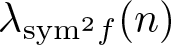 $\lambda_{\text{sym}^{2}f}(n)$ the $n$th normalized coefficient of the Dirichlet series expansion of the symmetric square $L$-function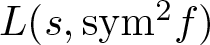 $L(s,\text{sym}^{2}f)$. In this paper, we are interested in the shifted convolution sum
 \begin{equation*}\sum_{h\leq H}\sum_{N \lt n\leq 2N}\lambda_{\textrm{sym}^{2}f}(n)\lambda_{\textrm{sym}^{2}f}(n+h).\end{equation*}
We establish a non-trivial bound for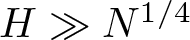 $H\gg N^{1/4}$.


A note on duality and the Atiyah–Hirzebruch spectral sequence
- Part of
-
- Journal:
- Glasgow Mathematical Journal , First View
- Published online by Cambridge University Press:
- 05 May 2026, pp. 1-16
-
- Article
-
- You have access
- Open access
- HTML
- Export citation
-
We show that, for a finite spectrum $X$, Spanier–Whitehead duality induces an isomorphism between the cohomological and homological Atiyah–Hirzebruch spectral sequences. As an application, it follows that Poincaré duality for a Poincaré duality complex that is oriented over a ring spectrum $\mathcal{R}$ induces an isomorphism between the two spectral sequences.


JMJ volume 25 issue 3 Cover and Front matter
-
- Journal:
- Journal of the Institute of Mathematics of Jussieu / Volume 25 / Issue 3 / May 2026
- Published online by Cambridge University Press:
- 05 June 2026, pp. f1-f2
- Print publication:
- May 2026
-
- Article
-
- You have access
- Export citation
JMJ volume 25 issue 3 Cover and Back matter
-
- Journal:
- Journal of the Institute of Mathematics of Jussieu / Volume 25 / Issue 3 / May 2026
- Published online by Cambridge University Press:
- 05 June 2026, pp. b1-b2
- Print publication:
- May 2026
-
- Article
-
- You have access
- Export citation
TORIC EXOFLOPS AND CATEGORICAL RESOLUTIONS
- Part of
-
- Journal:
- Journal of the Institute of Mathematics of Jussieu / Volume 25 / Issue 3 / May 2026
- Published online by Cambridge University Press:
- 05 June 2026, pp. 1725-1757
- Print publication:
- May 2026
-
- Article
-
- You have access
- Open access
- HTML
- Export citation
THE INTEGRAL IDENTITY CONJECTURE IN MOTIVIC HOMOTOPY THEORY
- Part of
-
- Journal:
- Journal of the Institute of Mathematics of Jussieu / Volume 25 / Issue 3 / May 2026
- Published online by Cambridge University Press:
- 05 June 2026, pp. 1675-1724
- Print publication:
- May 2026
-
- Article
-
- You have access
- Open access
- HTML
- Export citation
-
The integral identity conjecture of Kontsevich and Soibelman plays an important role in proving the existence of motivic Donaldson-Thomas invariants for three-dimensional noncommutative Calabi-Yau manifolds. There are a number of different formulations of this conjecture in different contexts, and accordingly, there are corresponding solutions to them. The methods devoted to solving this conjecture are diverse, ranging from $\ell $-adic cohomology of rigid analytic varieties to Hrushovski-Kazhdan motivic integration and motivic Fubini theorem for tropicalization maps,... In [Ivo24], Ivorra deduces a functorial version of the integral identity in the motivic stable homotopy categories of schemes, from the Braden hyperbolic localization theorem. This functorial version concerns Ayoub’s nearby cycles functor associated with a $\mathbb {G}_m$-equivariant function $f \colon \mathbb {V}(\mathcal {E}) \longrightarrow \mathbb {A}^1$ on a vector bundle $\mathbb {V}(\mathcal {E})$ over a field of characteristic zero. In the present work, we follow the functorial approach from [Ivo24] and extend the scope of the original conjecture by Kontsevich and Soibelman by studying more generally the case of $\mathbb {G}_m$-equivariant functions on algebraic S-spaces with a $\tau $-locally linearizable action of $\mathbb {G}_m$ over a noetherian base scheme S.


Braid positive surgery diagrams
- Part of
-
- Journal:
- Glasgow Mathematical Journal , First View
- Published online by Cambridge University Press:
- 30 April 2026, pp. 1-6
-
- Article
- Export citation
A homotopy rigidity theorem for Ƶ0-stable C*-algebras
- Part of
-
- Journal:
- Proceedings of the Royal Society of Edinburgh. Section A: Mathematics , First View
- Published online by Cambridge University Press:
- 29 April 2026, pp. 1-15
-
- Article
-
- You have access
- Open access
- HTML
- Export citation
-
We show that two simple, separable, nuclear, and ${\mathcal{Z}_0}$-stable $\mathrm{C}^{*}$-algebras are isomorphic if they are trace-preservingly homotopy equivalent. This result does not assume the Universal Coefficient Theorem and can be viewed as a tracial stably projectionless analogue of the homotopy rigidity theorem for Kirchberg algebras.


Zero Lyapunov exponents in transitive skew products of iterated function systems
- Part of
-
- Journal:
- Proceedings of the Royal Society of Edinburgh. Section A: Mathematics , First View
- Published online by Cambridge University Press:
- 28 April 2026, pp. 1-16
-
- Article
- Export citation
-
We study the class of transitive skew products associated with iterated function systems of circle diffeomorphisms. We approximate any of those skew products by maps in this class with a robustly zero Lyapunov exponent. In particular, we prove the existence of non-hyperbolic ergodic measures for an open and dense subset of transitive skew products. Moreover, these measures have full support and are the weak $^*$ limit of periodicmeasures.

On a degenerate diffusive free boundary model for rabies in fox populations
- Part of
-
- Journal:
- Proceedings of the Royal Society of Edinburgh. Section A: Mathematics , First View
- Published online by Cambridge University Press:
- 28 April 2026, pp. 1-41
-
- Article
-
- You have access
- Open access
- HTML
- Export citation
-
In this paper, we use a degenerate reaction-diffusion system with free boundaries to model the spatial spread of rabies among foxes, whose population is divided into three sub-populations: susceptible ( $S$), infected ( $E$), and rabid ( $I$). Based on established biological observations, susceptible and infected foxes are assumed to be territorial (random diffusion is ignored for $E$ and $S$ in the model), whereas rabid foxes disperse randomly (random diffusion is assumed for $I$), causing the spread of the disease. While $S$ evolves over the entire real line $\mathbb{R}$, $E$ and $I$ are found only in the infected region represented by an interval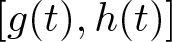 $[g(t), h(t)]$, which expands with moving fronts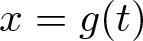 $x = g(t)$ and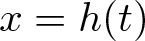 $x = h(t)$ as time $t$ increases. We show that this system admits a unique global solution and then analyse its dynamics and establish a spreading-vanishing dichotomy in certain natural parameter regimes. Moreover, we supply some simple sufficient conditions for the vanishing and spreading of the rabies, respectively. For example, we show that if the corresponding ODE system has basic reproduction number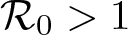 $\mathcal{R}_0 \gt 1$, then a spreading-vanishing dichotomy holds, and the outcome depends on the initial size of the infected region, while if a certain quantity $\mathcal R_0^* \in (\mathcal R_0,\infty)$ is no bigger than 1, then the rabies will always vanish. The degenerate nature of the model, combined with the evolving infected region, causes considerable difficulties in the mathematical treatment, both in proving the well-posedness and in understanding the long-time dynamics. This paper appears to be the first to treat a free boundary model where one reaction-diffusion equation is coupled with two ordinary differential equations.


Persistence properties of solutions of dynamical systems in Banach spaces
- Part of
-
- Journal:
- Proceedings of the Royal Society of Edinburgh. Section A: Mathematics , First View
- Published online by Cambridge University Press:
- 28 April 2026, pp. 1-19
-
- Article
- Export citation
NILPOTENT INVARIANTS FOR GENERIC DISCRETE SERIES OF REAL GROUPS
- Part of
-
- Journal:
- Journal of the Institute of Mathematics of Jussieu / Volume 25 / Issue 3 / May 2026
- Published online by Cambridge University Press:
- 24 April 2026, pp. 1651-1673
- Print publication:
- May 2026
-
- Article
- Export citation
-
Let $G(\mathbb {R})$ be a real reductive group. Suppose $\pi $ is an irreducible representation of $G(\mathbb {R})$ having a Whittaker model, and consider three invariants of $\pi $ related to nilpotent elements of the Lie algebra of G (or its dual): the associated variety, the wave-front set, and the set of Whittaker data for which $\pi $ has a Whittaker model. If $\pi $ is a discrete series representation, these invariants are known to determine each other. We provide a self-contained account of this and related matters. Many of the results were known: we give simplified proofs for several of them, for instance a simple proof (for generic discrete series) that the associated variety and the wave-front set are related by the Kostant–Sekiguchi correspondence.


Frobenius algebra objects in Temperley–Lieb categories at roots of unity
- Part of
-
- Journal:
- Glasgow Mathematical Journal , First View
- Published online by Cambridge University Press:
- 24 April 2026, pp. 1-20
-
- Article
-
- You have access
- Open access
- HTML
- Export citation
The optimal weight of vibrating string equations with the first two eigenvalues based on critical equations
- Part of
-
- Journal:
- Proceedings of the Royal Society of Edinburgh. Section A: Mathematics , First View
- Published online by Cambridge University Press:
- 24 April 2026, pp. 1-23
-
- Article
- Export citation
-
The present paper is concerned with the optimal weight of vibrating string equations with the first two eigenvalues $\lambda_1$ and $\lambda_2$ being given. Applying the method of critical equations in $L^p[0,1]$ for $p \gt 1$ and the inverse spectral theory of Sturm–Liouville problems with measure coefficients, we find that the optimal weight can be uniquely determined if and only if $\lambda_2 \ge 2\lambda_1$ provided that the weight is non-negative and symmetrical. As an application, we provide an estimation of the extremum for partial trace of the first two eigenvalues on a sphere in $L^1[0,1]$.


Identifiability of SDEs for reaction networks
- Part of
-
- Journal:
- European Journal of Applied Mathematics , First View
- Published online by Cambridge University Press:
- 23 April 2026, pp. 1-19
-
- Article
-
- You have access
- Open access
- HTML
- Export citation
Global Hopf bifurcation and connected components in a delayed predator–prey model
- Part of
-
- Journal:
- European Journal of Applied Mathematics , First View
- Published online by Cambridge University Press:
- 22 April 2026, pp. 1-22
-
- Article
-
- You have access
- Open access
- HTML
- Export citation
Equivariant and invariant parametrized topological complexity
- Part of
-
- Journal:
- Proceedings of the Royal Society of Edinburgh. Section A: Mathematics , First View
- Published online by Cambridge University Press:
- 20 April 2026, pp. 1-44
-
- Article
- Export citation
-
For a $G$-equivariant fibration $p \colon E\to B$, we introduce and study the invariant analogue of Cohen, Farber, and Weinberger’s parametrized topological complexity, called the invariant parametrized topological complexity. This notion generalizes the invariant topological complexity introduced by Lubawski and Marzantowicz. When $G$ is a compact Lie group acting freely on $E$, we show that the invariant parametrized topological complexity of the $G$-fibration $p \colon E\to B$ coincides with the parametrized topological complexity of the induced fibration $\overline{p} \colon \overline{E} \to \overline{B}$ between the orbit spaces. Furthermore, we compute the invariant parametrized topological complexity of equivariant Fadell–Neuwirth fibrations, which measures the complexity of motion planning in the presence of obstacles with unknown positions, where the order of their placement is irrelevant. In addition, we study the equivariant sectional category and the equivariant parametrized topological complexity, which serve as essential tools for obtaining several results in this paper.


WAS ULAM RIGHT? III: INDECOMPOSABLE IDEALS
- Part of
-
- Journal:
- Journal of the Institute of Mathematics of Jussieu / Volume 25 / Issue 3 / May 2026
- Published online by Cambridge University Press:
- 20 April 2026, pp. 1617-1649
- Print publication:
- May 2026
-
- Article
-
- You have access
- Open access
- HTML
- Export citation
-
We continue our study of Ulam’s measure problem. In contrast to our previous works, we shift our focus from measures stratified by their additivity, to measures stratified by their indecomposability. The breakthrough here is obtained by replacing the classical ‘least’ function associated with ideals by a two-dimensional ‘last’ function associated with walks on ordinals. Consequently, we obtain conditions under which a measure admits not just infinite pairwise disjoint families of positive sets, but in fact families of maximum possible size. As an application we solve a problem left open in Shelah’s Cardinal Arithmetic book, proving that for every weakly inaccessible cardinal $\kappa $, if there exists a stationary subset of $\kappa $ that does not reflect at regulars, then the strong Ramsey relation $\kappa \nrightarrow [\kappa ]^2_\kappa $ holds.


ON THE RATIONALITY OF SOME REAL THREEFOLDS
- Part of
-
- Journal:
- Journal of the Institute of Mathematics of Jussieu / Volume 25 / Issue 3 / May 2026
- Published online by Cambridge University Press:
- 20 April 2026, pp. 1555-1577
- Print publication:
- May 2026
-
- Article
-
- You have access
- Open access
- HTML
- Export citation
Log canonical thresholds of high multiplicity reduced plane curves
- Part of
-
- Journal:
- Glasgow Mathematical Journal , First View
- Published online by Cambridge University Press:
- 17 April 2026, pp. 1-13
-
- Article
-
- You have access
- Open access
- HTML
- Export citation
-
We compute log canonical thresholds of reduced plane curves of degree $d$ at points of multiplicity $d-1$. As a consequence, we describe all possible values of log canonical threshold that are less than $2/(d-1)$ for reduced plane curves of degree $d$. In addition, we compute log canonical thresholds for all reduced plane curves of degree less than 6.


