Refine listing
Actions for selected content:
52 results in BMC-BAMC 2025 Article Collection
DUALITY FOR CLANS: AN EXTENSION OF GABRIEL–ULMER DUALITY
- Part of
-
- Journal:
- The Journal of Symbolic Logic , First View
- Published online by Cambridge University Press:
- 15 May 2025, pp. 1-38
-
- Article
- Export citation

Taylor dispersion for coupled electroosmotic and pressure-driven flows in all time regimes
-
- Journal:
- Journal of Fluid Mechanics / Volume 1011 / 25 May 2025
- Published online by Cambridge University Press:
- 14 May 2025, A36
-
- Article
-
- You have access
- Open access
- HTML
- Export citation
Determination of cavitation zone for cavitating waterjet machining using numerical simulation
-
- Journal:
- Flow: Applications of Fluid Mechanics / Volume 5 / 2025
- Published online by Cambridge University Press:
- 14 May 2025, E13
-
- Article
-
- You have access
- Open access
- HTML
- Export citation
Mean field lattice Boltzmann model for reactive mixtures in porous media
-
- Journal:
- Journal of Fluid Mechanics / Volume 1011 / 25 May 2025
- Published online by Cambridge University Press:
- 14 May 2025, A9
-
- Article
-
- You have access
- Open access
- HTML
- Export citation
Cartesian closed varieties II: links to algebra and self-similarity
- Part of
-
- Journal:
- Proceedings of the Royal Society of Edinburgh. Section A: Mathematics , First View
- Published online by Cambridge University Press:
- 14 May 2025, pp. 1-45
-
- Article
- Export citation
-
This article is the second in a series investigating cartesian closed varieties. In first of these, we showed that every non-degenerate finitary cartesian variety is a variety of sets equipped with an action by a Boolean algebra B and a monoid M which interact to form what we call a matched pair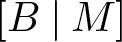 ${\left[\smash{{B} \mathbin{\mid}{M} }\right]}$. In this article, we show that such pairs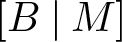 ${\left[\smash{{B} \mathbin{\mid}{M} }\right]}$ are equivalent to Boolean restriction monoids and also to ample source-étale topological categories; these are generalizations of the Boolean inverse monoids and ample étale topological groupoids used to encode self-similar structures such as Cuntz and Cuntz–Krieger $C^\ast$-algebras, Leavitt path algebras, and the $C^\ast$-algebras associated with self-similar group actions. We explain and illustrate these links and begin the programme of understanding how topological and algebraic properties of such groupoids can be understood from the logical perspective of the associated varieties.


Stationary measures of continuous-time Markov chains with applications to stochastic reaction networks
- Part of
-
- Journal:
- Advances in Applied Probability / Volume 57 / Issue 3 / September 2025
- Published online by Cambridge University Press:
- 14 May 2025, pp. 1031-1067
- Print publication:
- September 2025
-
- Article
- Export citation
-
We study continuous-time Markov chains on the nonnegative integers under mild regularity conditions (in particular, the set of jump vectors is finite and both forward and backward jumps are possible). Based on the so-called flux balance equation, we derive an iterative formula for calculating stationary measures. Specifically, a stationary measure $\pi(x)$ evaluated at $x\in\mathbb{N}_0$ is represented as a linear combination of a few generating terms, similarly to the characterization of a stationary measure of a birth–death process, where there is only one generating term, $\pi(0)$. The coefficients of the linear combination are recursively determined in terms of the transition rates of the Markov chain. For the class of Markov chains we consider, there is always at least one stationary measure (up to a scaling constant). We give various results pertaining to uniqueness and nonuniqueness of stationary measures, and show that the dimension of the linear space of signed invariant measures is at most the number of generating terms. A minimization problem is constructed in order to compute stationary measures numerically. Moreover, a heuristic linear approximation scheme is suggested for the same purpose by first approximating the generating terms. The correctness of the linear approximation scheme is justified in some special cases. Furthermore, a decomposition of the state space into different types of states (open and closed irreducible classes, and trapping, escaping and neutral states) is presented. Applications to stochastic reaction networks are well illustrated.


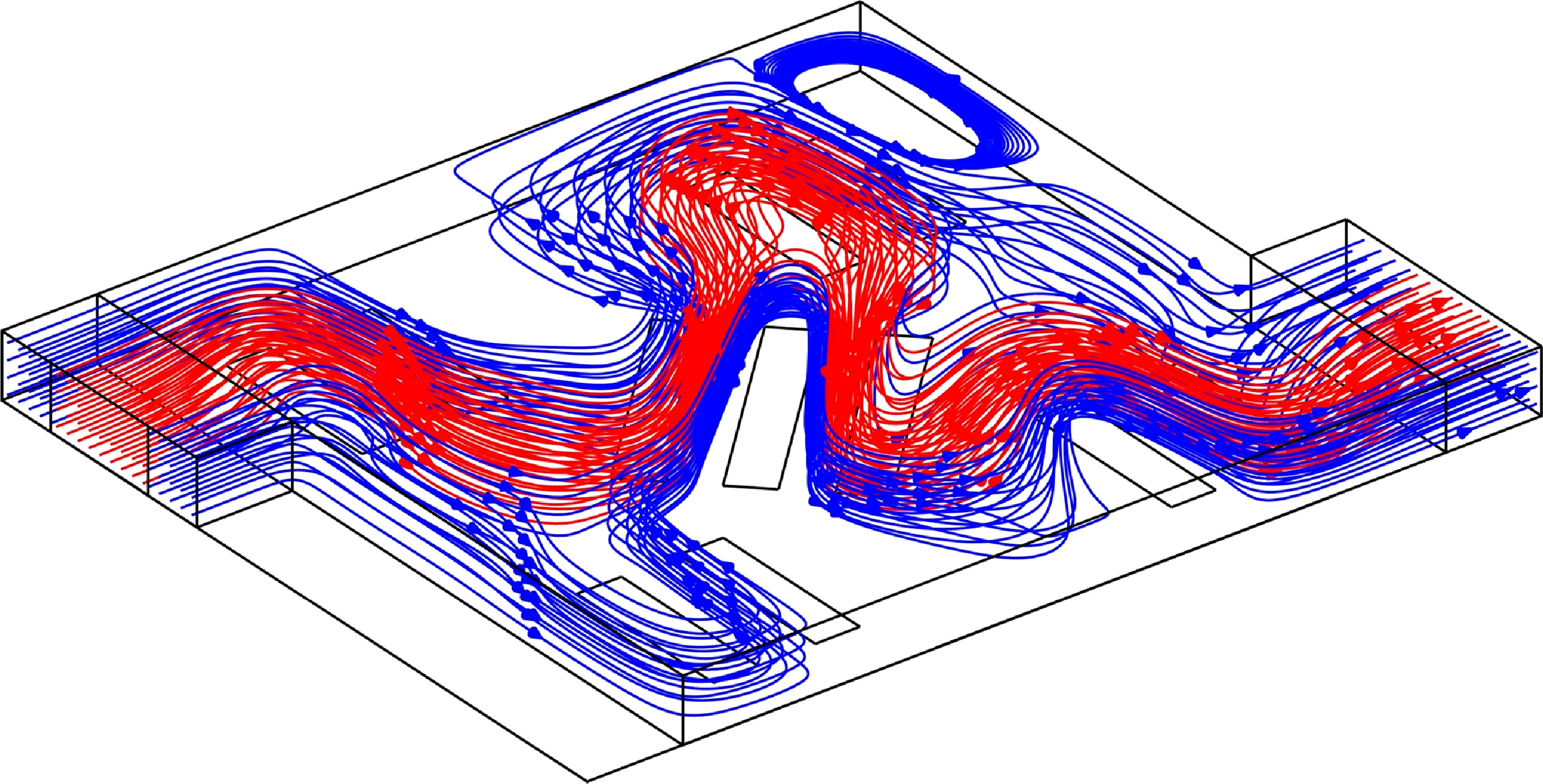
Mixing intensification in Carreau–Yasuda fluid promoted by magnetohydrodynamic flow manipulation - a numerical study
-
- Journal:
- Flow: Applications of Fluid Mechanics / Volume 5 / 2025
- Published online by Cambridge University Press:
- 14 May 2025, E11
-
- Article
-
- You have access
- Open access
- HTML
- Export citation
Squarefree values of polynomial discriminants II
- Part of
-
- Journal:
- Forum of Mathematics, Pi / Volume 13 / 2025
- Published online by Cambridge University Press:
- 13 May 2025, e17
-
- Article
-
- You have access
- Open access
- HTML
- Export citation
-
We determine the density of integral binary forms of given degree that have squarefree discriminant, proving for the first time that the lower density is positive. Furthermore, we determine the density of integral binary forms that cut out maximal orders in number fields. The latter proves, in particular, an ‘arithmetic Bertini theorem’ conjectured by Poonen for ${\mathbb {P}}^1_{\mathbb {Z}}$.
Our methods also allow us to prove that there are $\gg X^{1/2+1/(n-1)}$ number fields of degree n having associated Galois group $S_n$ and absolute discriminant less than X, improving the best previously known lower bound of $\gg X^{1/2+1/n}$.
Finally, our methods correct an error in and thus resurrect earlier (retracted) results of Nakagawa on lower bounds for the number of totally unramified $A_n$-extensions of quadratic number fields of bounded discriminant.


DELAYED HOPF BIFURCATIONS IN REACTION–DIFFUSION SYSTEMS IN TWO SPACE DIMENSIONS
- Part of
-
- Journal:
- The ANZIAM Journal / Volume 67 / 2025
- Published online by Cambridge University Press:
- 13 May 2025, e19
-
- Article
-
- You have access
- Open access
- HTML
- Export citation
Automorphism groups and signatures of smooth septic curves
- Part of
-
- Journal:
- Glasgow Mathematical Journal / Volume 68 / Issue 1 / January 2026
- Published online by Cambridge University Press:
- 13 May 2025, pp. 64-85
-
- Article
- Export citation
-
We determine the list of automorphism groups for smooth plane septic curves over an algebraically closed field $K$ of characteristic $0$, as well as their signatures. For each group, we also provide a geometrically complete family over $K$, which consists of a generic defining polynomial equation describing each locus up to $K$-projective equivalence. Notably, we present two distinct examples of what we refer to as final strata of smooth plane curves.


On inhomogeneous Poissonian pair correlations
- Part of
-
- Journal:
- Mathematical Proceedings of the Cambridge Philosophical Society / Volume 179 / Issue 1 / July 2025
- Published online by Cambridge University Press:
- 13 May 2025, pp. 17-27
- Print publication:
- July 2025
-
- Article
-
- You have access
- Open access
- HTML
- Export citation
The global Gan-Gross-Prasad conjecture for unitary groups. II. From Eisenstein series to Bessel periods
- Part of
-
- Journal:
- Forum of Mathematics, Pi / Volume 13 / 2025
- Published online by Cambridge University Press:
- 13 May 2025, e16
-
- Article
-
- You have access
- Open access
- HTML
- Export citation
-
We state and prove an extension of the global Gan-Gross-Prasad conjecture and the Ichino-Ikeda conjecture to the case of some Eisenstein series on unitary groups $U_n\times U_{n+1}$. Our theorems are based on a comparison of the Jacquet-Rallis trace formulas. A new point is the expression of some interesting spectral contributions in these formulas in terms of integrals of relative characters. As an application of our main theorems, we prove the global Gan-Gross-Prasad and the Ichino-Ikeda conjecture for Bessel periods of unitary groups.

Large cuts in hypergraphs via energy
- Part of
-
- Journal:
- Mathematical Proceedings of the Cambridge Philosophical Society / Volume 179 / Issue 1 / July 2025
- Published online by Cambridge University Press:
- 13 May 2025, pp. 45-61
- Print publication:
- July 2025
-
- Article
- Export citation
-
A simple probabilistic argument shows that every r-uniform hypergraph with m edges contains an r-partite subhypergraph with at least $({r!}/{r^r})m$ edges. The celebrated result of Edwards states that in the case of graphs, that is $r=2$, the resulting bound $m/2$ can be improved to $m/2+\Omega(m^{1/2})$, and this is sharp. We prove that if $r\geq 3$, then there is an r-partite subhypergraph with at least $({r!}/{r^r}) m+m^{3/5-o(1)}$ edges. Moreover, if the hypergraph is linear, this can be improved to $({r!}/{r^r}) m+m^{3/4-o(1)}$, which is tight up to the o(1) term. These improve results of Conlon, Fox, Kwan and Sudakov. Our proof is based on a combination of probabilistic, combinatorial, and linear algebraic techniques, and semidefinite programming.
A key part of our argument is relating the energy $\mathcal{E}(G)$ of a graph G (i.e. the sum of absolute values of eigenvalues of the adjacency matrix) to its maximum cut. We prove that every m edge multigraph G has a cut of size at least $m/2+\Omega({\mathcal{E}(G)}/{\log m})$, which might be of independent interest.


 $M_{p}$-GROUPS AND BRAUER CHARACTER DEGREES
- Part of
-
- Journal:
- Bulletin of the Australian Mathematical Society / Volume 113 / Issue 1 / February 2026
- Published online by Cambridge University Press:
- 09 May 2025, pp. 98-102
- Print publication:
- February 2026
-
- Article
-
- You have access
- Open access
- HTML
- Export citation
-
Let G be a finite group and p be a prime. We prove that if G has three codegrees, then G is an M-group. We prove for some prime p that if the degree of every nonlinear irreducible Brauer character of G is a prime, then for every normal subgroup N of G, either $G/N$ or N is an $M_p$-group.


FONCTIONS ADDITIVES EN BASE DE CANTOR LE LONG DES NOMBRES PREMIERS
- Part of
-
- Journal:
- Journal of the Institute of Mathematics of Jussieu / Volume 24 / Issue 5 / September 2025
- Published online by Cambridge University Press:
- 06 May 2025, pp. 1807-1865
- Print publication:
- September 2025
-
- Article
- Export citation
-
Étant donnée une suite $A = (a_n)_{n\geqslant 0}$ d’entiers naturels tous au moins égaux à 2, on pose $q_0 = 1$ et, pour tout entier naturel n, $q_{n+1} = a_n q_n$. Tout nombre entier naturel $n\geqslant 1$ admet une unique représentation dans la base A, dite de Cantor, de la forme Dans cet article, nous évaluons la somme
 $$ \begin{align*} m = \sum_{j\geqslant 0}\varepsilon_j(m)q_j\quad \text{avec} \quad 0\leqslant \varepsilon_j(m) < a_j = \frac{q_{j+1}}{q_j}. \end{align*} $$où
 $$ \begin{align*} S = \sum_{n \leqslant x}\Lambda(n) f(n) \end{align*} $$ $\Lambda $ est la fonction de von Mangoldt et f une fonction fortement multiplicative en base A. L’estimation des sommes de type I et II associées repose sur le bon contrôle de transformées de Fourier discrètes de fonctions construites à partir de f par décalage dans la numération en base A. Cette approche pouvant échouer si la suite $(a_n)_{n\geqslant 0}$ est trop irrégulière, nous introduisons la notion de base de Cantor tempérée et obtenons dans ce cadre une majoration générale de la somme S.
Nous étudions plusieurs exemples dans la base $A = (j+2)_{j\geqslant 0}$, dite factorielle. En particulier, si $s_A$ désigne la fonction somme de chiffres dans cette base et p parcourt la suite des nombres premiers, nous montrons que la suite $(s_A(p))_{p\in \mathcal {P}}$ est bien répartie dans les progressions arithmétiques, et que la suite $(\alpha s_A(p))_{p\in \mathcal {P}}$ est équirépartie modulo $1$ pour tout nombre irrationnel $\alpha $.


Maximal real varieties from moduli constructions
- Part of
-
- Article
-
- You have access
- Open access
- HTML
- Export citation
-
A real variety whose real locus achieves the Smith–Thom equality is called maximal. This paper introduces new constructions of maximal real varieties, by using moduli spaces of geometric objects. We establish the maximality of the following real varieties:
– moduli spaces of stable vector bundles of coprime rank and degree over a maximal real curve (recovering Brugallé–Schaffhauser’s theorem with a short new proof), which extends to moduli spaces of parabolic vector bundles;
– moduli spaces of stable Higgs bundles of coprime rank and degree over a maximal real curve, providing maximal hyper-Kähler manifolds in every even dimension;
– if a real variety has maximal Hilbert square, then the variety and its Hilbert cube are maximal, which happens for all maximal real cubic 3-folds, but never for maximal real cubic 4-folds;
– punctual Hilbert schemes on a maximal real surface with vanishing first $\mathbb {F}_2$-Betti number and connected real locus, such as $\mathbb {R}$-rational maximal real surfaces and some generalized Dolgachev surfaces;
– moduli spaces of stable sheaves on an $\mathbb {R}$-rational maximal Poisson surface (e.g. the real projective plane).


Interacting urns on directed networks with node-dependent sampling and reinforcement – CORRIGENDUM
-
- Journal:
- Journal of Applied Probability , First View
- Published online by Cambridge University Press:
- 05 May 2025, p. 1
-
- Article
-
- You have access
- Open access
- HTML
- Export citation
Upper bounds on the genus of hyperelliptic Albanese fibrations
- Part of
-
- Journal:
- Forum of Mathematics, Sigma / Volume 13 / 2025
- Published online by Cambridge University Press:
- 02 May 2025, e84
-
- Article
-
- You have access
- Open access
- HTML
- Export citation
-
Let S be a minimal irregular surface of general type, whose Albanese map induces a hyperelliptic fibration $f:\,S \to B$ of genus g. We prove a quadratic upper bound on the genus g (i.e.,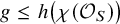 $g\leq h\big (\chi (\mathcal {O}_S)\big )$, where h is a quadratic function). We also construct examples showing that the quadratic upper bounds cannot be improved to linear ones. In the special case when $p_g(S)=q(S)=1$, we show that $g\leq 14$.


Asymptotic second moment of Dirichlet L-functions along a thin coset
- Part of
-
- Journal:
- Forum of Mathematics, Sigma / Volume 13 / 2025
- Published online by Cambridge University Press:
- 02 May 2025, e83
-
- Article
-
- You have access
- Open access
- HTML
- Export citation
-
We prove an asymptotic formula for the second moment of central values of Dirichlet L-functions restricted to a coset. More specifically, consider a coset of the subgroup of characters modulo d inside the full group of characters modulo q. Suppose that $\nu _p(d) \geq \nu _p(q)/2$ for all primes p dividing q. In this range, we obtain an asymptotic formula with a power-saving error term; curiously, there is a secondary main term of rough size $q^{1/2}$ here which is not predicted by the integral moments conjecture of Conrey, Farmer, Keating, Rubinstein, and Snaith. The lower-order main term does not appear in the second moment of the Riemann zeta function, so this feature is not anticipated from the analogous archimedean moment problem.
We also obtain an asymptotic result for smaller d, with $\nu _p(q)/3 \leq \nu _p(d) \leq \nu _p(q)/2$, with a power-saving error term for d larger than $q^{2/5}$. In this more difficult range, the secondary main term somewhat changes its form and may have size roughly d, which is only slightly smaller than the diagonal main term.


Weak convergence of adaptive Markov chain Monte Carlo
- Part of
-
- Journal:
- Journal of Applied Probability / Volume 62 / Issue 4 / December 2025
- Published online by Cambridge University Press:
- 30 April 2025, pp. 1318-1339
- Print publication:
- December 2025
-
- Article
-
- You have access
- Open access
- HTML
- Export citation
