Refine listing
Actions for selected content:
220 results in 14Exx
Geometric consistency of Manin's conjecture
- Part of
-
- Journal:
- Compositio Mathematica / Volume 158 / Issue 6 / June 2022
- Published online by Cambridge University Press:
- 22 August 2022, pp. 1375-1427
- Print publication:
- June 2022
-
- Article
-
- You have access
- Open access
- HTML
- Export citation
Newton non-degenerate $\mu$-constant deformations admit simultaneous embedded resolutions
- Part of
-
- Journal:
- Compositio Mathematica / Volume 158 / Issue 6 / June 2022
- Published online by Cambridge University Press:
- 11 August 2022, pp. 1268-1297
- Print publication:
- June 2022
-
- Article
- Export citation
-
Let $ {\mathbb {C}}^{n+1}_o$ denote the germ of $ {\mathbb {C}}^{n+1}$ at the origin. Let $V$ be a hypersurface germ in $ {\mathbb {C}}^{n+1}_o$ and $W$ a deformation of $V$ over $ {\mathbb {C}}_{o}^{m}$. Under the hypothesis that $W$ is a Newton non-degenerate deformation, in this article we prove that $W$ is a $\mu$-constant deformation if and only if $W$ admits a simultaneous embedded resolution. This result gives a lot of information about $W$, for example, the topological triviality of the family $W$ and the fact that the natural morphism $(\operatorname {W( {\mathbb {C}}_{o})}_{m})_{{\rm red}}\rightarrow {\mathbb {C}}_{o}$ is flat, where $\operatorname {W( {\mathbb {C}}_{o})}_{m}$ is the relative space of $m$-jets. On the way to the proof of our main result, we give a complete answer to a question of Arnold on the monotonicity of Newton numbers in the case of convenient Newton polyhedra.


Hensel minimality I
- Part of
-
- Journal:
- Forum of Mathematics, Pi / Volume 10 / 2022
- Published online by Cambridge University Press:
- 16 May 2022, e11
-
- Article
-
- You have access
- Open access
- HTML
- Export citation
Flops and spherical functors
- Part of
-
- Journal:
- Compositio Mathematica / Volume 158 / Issue 5 / May 2022
- Published online by Cambridge University Press:
- 01 August 2022, pp. 1125-1187
- Print publication:
- May 2022
-
- Article
-
- You have access
- Open access
- HTML
- Export citation
-
We study derived categories of Gorenstein varieties $X$ and $X^+$ connected by a flop. We assume that the flopping contractions $f\colon X\to Y$,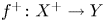 $f^+ \colon X^+ \to Y$ have fibers of dimension bounded by one and $Y$ has canonical hypersurface singularities of multiplicity two. We consider the fiber product $W=X\times _YX^+$ with projections $p\colon W\to X$, $p^+\colon W\to X^+$ and prove that the flop functors $F = Rp^+_*Lp^* \colon {\mathcal {D}}^b(X) \to {\mathcal {D}}^b(X^+)$, $F^+= Rp_*L{p^+}^* \colon {\mathcal {D}}^b(X^+) \to {\mathcal {D}}^b(X)$ are equivalences, inverse to those constructed by Van den Bergh. The composite $F^+ \circ F \colon {\mathcal {D}}^b(X) \to {\mathcal {D}}^b(X)$ is a non-trivial auto-equivalence. When variety $Y$ is affine, we present $F^+ \circ F$ as the spherical cotwist of a spherical couple $(\Psi ^*,\Psi )$ which involves a spherical functor $\Psi$ constructed by deriving the inclusion of the null category $\mathscr {A}_f$ of sheaves ${\mathcal {F}} \in \mathop {{\rm Coh}}\nolimits (X)$ with $Rf_*({\mathcal {F}} )=0$ into $\mathop {{\rm Coh}}\nolimits (X)$. We construct a spherical pair ( ${\mathcal {D}}^b(X)$, ${\mathcal {D}}^b(X^+)$) in the quotient ${\mathcal {D}}^b(W) /{\mathcal {K}}^b$, where ${\mathcal {K}}^b$ is the common kernel of the derived push-forwards for the projections to $X$ and $X^+$, thus implementing in geometric terms a schober for the flop. A technical innovation of the paper is the $L^1f^*f_*$ vanishing for Van den Bergh's projective generator. We construct a projective generator in the null category and prove that its endomorphism algebra is the contraction algebra.


On the Kawamata–Viehweg vanishing theorem for log del Pezzo surfaces in positive characteristic
- Part of
-
- Journal:
- Compositio Mathematica / Volume 158 / Issue 4 / April 2022
- Published online by Cambridge University Press:
- 13 June 2022, pp. 750-763
- Print publication:
- April 2022
-
- Article
-
- You have access
- Open access
- HTML
- Export citation
-
We prove the Kawamata–Viehweg vanishing theorem for surfaces of del Pezzo type over perfect fields of positive characteristic $p>5$. As a consequence, we show that klt threefold singularities over a perfect base field of characteristic $p>5$ are rational. We show that these theorems are sharp by providing counterexamples in characteristic $5$.
$5$.


Embedding codimension of the space of arcs
- Part of
-
- Journal:
- Forum of Mathematics, Pi / Volume 10 / 2022
- Published online by Cambridge University Press:
- 21 February 2022, e4
-
- Article
-
- You have access
- Open access
- HTML
- Export citation
Covering action on Conley index theory
- Part of
-
- Journal:
- Ergodic Theory and Dynamical Systems / Volume 43 / Issue 5 / May 2023
- Published online by Cambridge University Press:
- 21 February 2022, pp. 1633-1665
- Print publication:
- May 2023
-
- Article
- Export citation
Stringy invariants and toric Artin stacks
- Part of
-
- Journal:
- Forum of Mathematics, Sigma / Volume 10 / 2022
- Published online by Cambridge University Press:
- 07 February 2022, e9
-
- Article
-
- You have access
- Open access
- HTML
- Export citation
-
We propose a conjectural framework for computing Gorenstein measures and stringy Hodge numbers in terms of motivic integration over arcs of smooth Artin stacks, and we verify this framework in the case of fantastacks, which are certain toric Artin stacks that provide (nonseparated) resolutions of singularities for toric varieties. Specifically, let $\mathcal {X}$ be a smooth Artin stack admitting a good moduli space $\pi : \mathcal {X} \to X$, and assume that X is a variety with log-terminal singularities, $\pi $ induces an isomorphism over a nonempty open subset of X and the exceptional locus of $\pi $ has codimension at least $2$. We conjecture a change-of-variables formula relating the motivic measure for $\mathcal {X}$ to the Gorenstein measure for X and functions measuring the degree to which $\pi $ is nonseparated. We also conjecture that if the stabilisers of $\mathcal {X}$ are special groups in the sense of Serre, then almost all arcs of X lift to arcs of $\mathcal {X}$, and we explain how in this case (assuming a finiteness hypothesis satisfied by fantastacks) our conjectures imply a formula for the stringy Hodge numbers of X in terms of a certain motivic integral over the arcs of $\mathcal {X}$. We prove these conjectures in the case where $\mathcal {X}$ is a fantastack.


ON THE CHOW THEORY OF PROJECTIVIZATIONS
- Part of
-
- Journal:
- Journal of the Institute of Mathematics of Jussieu / Volume 22 / Issue 3 / May 2023
- Published online by Cambridge University Press:
- 11 November 2021, pp. 1465-1508
- Print publication:
- May 2023
-
- Article
-
- You have access
- Open access
- HTML
- Export citation
-
In this paper, we prove a decomposition result for the Chow groups of projectivizations of coherent sheaves of homological dimension $\le 1$. In this process, we establish the decomposition of Chow groups for the cases of the Cayley trick and standard flips. Moreover, we apply these results to study the Chow groups of symmetric powers of curves, nested Hilbert schemes of surfaces, and the varieties resolving Voisin maps for cubic fourfolds.

On minimal log discrepancies and kollár components
- Part of
-
- Journal:
- Proceedings of the Edinburgh Mathematical Society / Volume 64 / Issue 4 / November 2021
- Published online by Cambridge University Press:
- 04 November 2021, pp. 982-1001
-
- Article
- Export citation
-
In this article, we prove a local implication of boundedness of Fano varieties. More precisely, we prove that $d$
 -dimensional $a$
 -log canonical singularities with standard coefficients, which admit an $\epsilon$
 -plt blow-up, have minimal log discrepancies belonging to a finite set which only depends on $d,\,a$
 and $\epsilon$
 . This result gives a natural geometric stratification of the possible mld's in a fixed dimension by finite sets. As an application, we prove the ascending chain condition for minimal log discrepancies of exceptional singularities. We also introduce an invariant for klt singularities related to the total discrepancy of Kollár components.


INTERSECTION COHOMOLOGY OF RANK 2 CHARACTER VARIETIES OF SURFACE GROUPS
- Part of
-
- Journal:
- Journal of the Institute of Mathematics of Jussieu / Volume 22 / Issue 4 / July 2023
- Published online by Cambridge University Press:
- 08 October 2021, pp. 1615-1654
- Print publication:
- July 2023
-
- Article
-
- You have access
- Open access
- HTML
- Export citation
-
For $G = \mathrm {GL}_2, \mathrm {SL}_2, \mathrm {PGL}_2$ we compute the intersection E-polynomials and the intersection Poincaré polynomials of the G-character variety of a compact Riemann surface C and of the moduli space of G-Higgs bundles on C of degree zero. We derive several results concerning the P=W conjectures for these singular moduli spaces.
Fano-type surfaces with large cyclic automorphisms
- Part of
-
- Journal:
- Forum of Mathematics, Sigma / Volume 9 / 2021
- Published online by Cambridge University Press:
- 05 August 2021, e54
-
- Article
-
- You have access
- Open access
- Export citation
-
We give a characterisation of Fano-type surfaces with large cyclic automorphisms. As an application, we give a characterisation of Kawamata log terminal $3$-fold singularities with large class groups of rank at least $2$.
$2$.


Birational boundedness of low-dimensional elliptic Calabi–Yau varieties with a section
- Part of
-
- Journal:
- Compositio Mathematica / Volume 157 / Issue 8 / August 2021
- Published online by Cambridge University Press:
- 21 July 2021, pp. 1766-1806
- Print publication:
- August 2021
-
- Article
- Export citation
-
We prove that there are finitely many families, up to isomorphism in codimension one, of elliptic Calabi–Yau manifolds $Y\rightarrow X$ with a rational section, provided that $\dim (Y)\leq 5$ and $Y$ is not of product type. As a consequence, we obtain that there are finitely many possibilities for the Hodge diamond of such manifolds. The result follows from log birational boundedness of Kawamata log terminal pairs $(X, \Delta )$ with $K_X+\Delta$ numerically trivial and not of product type, in dimension at most four.


ON THE FIRST STEPS OF THE MINIMAL MODEL PROGRAM FOR THE MODULI SPACE OF STABLE POINTED CURVES
- Part of
-
- Journal:
- Journal of the Institute of Mathematics of Jussieu / Volume 22 / Issue 1 / January 2023
- Published online by Cambridge University Press:
- 22 April 2021, pp. 145-211
- Print publication:
- January 2023
-
- Article
-
- You have access
- Open access
- Export citation
The Kodaira Problem for Kähler Spaces with Vanishing First Chern Class
- Part of
-
- Journal:
- Forum of Mathematics, Sigma / Volume 9 / 2021
- Published online by Cambridge University Press:
- 15 March 2021, e24
-
- Article
-
- You have access
- Open access
- Export citation
-
Let X be a normal compact Kähler space with klt singularities and torsion canonical bundle. We show that X admits arbitrarily small deformations that are projective varieties if its locally trivial deformation space is smooth. We then prove that this unobstructedness assumption holds in at least three cases: if X has toroidal singularities, if X has finite quotient singularities and if the cohomology group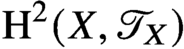 ${\mathrm {H}^{2} \!\left ( X, {\mathscr {T}_{X}} \right )}$ vanishes.
THE EMBEDDINGS OF THE HEISENBERG GROUP INTO THE CREMONA GROUP
- Part of
-
- Journal:
- Glasgow Mathematical Journal / Volume 64 / Issue 1 / January 2022
- Published online by Cambridge University Press:
- 09 March 2021, pp. 243-251
-
- Article
- Export citation
Some effectivity questions for plane Cremona transformations in the context of symmetric key cryptography
- Part of
-
- Journal:
- Proceedings of the Edinburgh Mathematical Society / Volume 64 / Issue 1 / February 2021
- Published online by Cambridge University Press:
- 01 March 2021, pp. 1-28
-
- Article
- Export citation
EFFECTIVE BOUNDS FOR THE NUMBER OF MMP-SERIES OF A SMOOTH THREEFOLD
- Part of
-
- Journal:
- Glasgow Mathematical Journal / Volume 64 / Issue 1 / January 2022
- Published online by Cambridge University Press:
- 18 December 2020, pp. 106-113
-
- Article
-
- You have access
- Open access
- Export citation
Strong submeasures and applications to non-compact dynamical systems
- Part of
-
- Journal:
- Ergodic Theory and Dynamical Systems / Volume 42 / Issue 1 / January 2022
- Published online by Cambridge University Press:
- 14 December 2020, pp. 287-309
- Print publication:
- January 2022
-
- Article
-
- You have access
- Open access
- Export citation
-
A strong submeasure on a compact metric space X is a sub-linear and bounded operator on the space of continuous functions on X. A strong submeasure is positive if it is non-decreasing. By the Hahn–Banach theorem, a positive strong submeasure is the supremum of a non-empty collection of measures whose masses are uniformly bounded from above. There are many natural examples of continuous maps of the form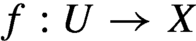 $f:U\rightarrow X$, where X is a compact metric space and $U\subset X$ is an open-dense subset, where f cannot extend to a reasonable function on X. We can mention cases such as transcendental maps of $\mathbb {C}$, meromorphic maps on compact complex varieties, or continuous self-maps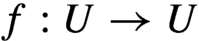 $f:U\rightarrow U$ of a dense open subset $U\subset X$ where X is a compact metric space. For the aforementioned mentioned the use of measures is not sufficient to establish the basic properties of ergodic theory, such as the existence of invariant measures or a reasonable definition of measure-theoretic entropy and topological entropy. In this paper we show that strong submeasures can be used to completely resolve the issue and establish these basic properties. In another paper we apply strong submeasures to the intersection of positive closed $(1,1)$ currents on compact Kähler manifolds.


RC-positive metrics on rationally connected manifolds
- Part of
-
- Journal:
- Forum of Mathematics, Sigma / Volume 8 / 2020
- Published online by Cambridge University Press:
- 16 November 2020, e53
-
- Article
-
- You have access
- Open access
- Export citation
-
In this paper, we prove that if a compact Kähler manifold X has a smooth Hermitian metric $\omega $ such that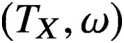 $(T_X,\omega )$ is uniformly RC-positive, then X is projective and rationally connected. Conversely, we show that, if a projective manifold X is rationally connected, then there exists a uniformly RC-positive complex Finsler metric on $T_X$.


