Refine listing
Actions for selected content:
1073 results in 05Cxx
A note on the computational complexity of weak saturation
- Part of
-
- Journal:
- Combinatorics, Probability and Computing / Volume 35 / Issue 1 / January 2026
- Published online by Cambridge University Press:
- 16 October 2025, pp. 83-88
-
- Article
-
- You have access
- Open access
- HTML
- Export citation
-
We prove that determining the weak saturation number of a host graph $F$ with respect to a pattern graph $H$ is computationally hard, even when $H$ is the triangle. Our main tool establishes a connection between weak saturation and the shellability of simplicial complexes.


Counting minimal cutsets and $p_c<1$
- Part of
-
- Journal:
- Forum of Mathematics, Pi / Volume 13 / 2025
- Published online by Cambridge University Press:
- 14 October 2025, e23
-
- Article
-
- You have access
- Open access
- HTML
- Export citation
-
We prove two results concerning percolation on general graphs.
• We establish the converse of the classical Peierls argument: if the critical parameter for (uniform) percolation satisfies $p_c<1$, then the number of minimal cutsets of size n separating a given vertex from infinity is bounded above exponentially in n. This resolves a conjecture of Babson and Benjamini from 1999.
• We prove that $p_c<1$ for every uniformly transient graph. This solves a problem raised by Duminil-Copin, Goswami, Raoufi, Severo, and Yadin, and provides a new proof that $p_c<1$ for every transitive graph of superlinear growth.


Random embeddings of bounded-degree trees with optimal spread
- Part of
-
- Journal:
- Combinatorics, Probability and Computing / Volume 35 / Issue 1 / January 2026
- Published online by Cambridge University Press:
- 13 October 2025, pp. 71-82
-
- Article
-
- You have access
- Open access
- HTML
- Export citation
-
A seminal result of Komlós, Sárközy, and Szemerédi states that any $n$-vertex graph $G$ with minimum degree at least $(1/2+\alpha )n$ contains every $n$-vertex tree $T$ of bounded degree. Recently, Pham, Sah, Sawhney, and Simkin extended this result to show that such graphs $G$ in fact support an optimally spread distribution on copies of a given $T$, which implies, using the recent breakthroughs on the Kahn-Kalai conjecture, the robustness result that $T$ is a subgraph of sparse random subgraphs of $G$ as well. Pham, Sah, Sawhney, and Simkin construct their optimally spread distribution by following closely the original proof of the Komlós-Sárközy-Szemerédi theorem which uses the blow-up lemma and the Szemerédi regularity lemma. We give an alternative, regularity-free construction that instead uses the Komlós-Sárközy-Szemerédi theorem (which has a regularity-free proof due to Kathapurkar and Montgomery) as a black box. Our proof is based on the simple and general insight that, if $G$ has linear minimum degree, almost all constant-sized subgraphs of $G$ inherit the same minimum degree condition that $G$ has.


Beyond the broken tetrahedron
- Part of
-
- Journal:
- Combinatorics, Probability and Computing / Volume 35 / Issue 1 / January 2026
- Published online by Cambridge University Press:
- 10 October 2025, pp. 59-70
-
- Article
- Export citation
-
Here we consider the hypergraph Turán problem in uniformly dense hypergraphs as was suggested by Erdős and Sós. Given a $3$-graph $F$, the uniform Turán density $\pi _{\boldsymbol{\therefore }}(F)$ of $F$ is defined as the supremum over all $d\in [0,1]$ for which there is an $F$-free uniformly $d$-dense $3$-graph, where uniformly $d$-dense means that every linearly sized subhypergraph has density at least $d$. Recently, Glebov, Král’, and Volec and, independently, Reiher, Rödl, and Schacht proved that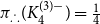 $\pi _{\boldsymbol{\therefore }}(K_4^{(3)-})=\frac {1}{4}$, solving a conjecture by Erdős and Sós. Despite substantial attention, the uniform Turán density is still only known for very few hypergraphs. In particular, the problem due to Erdős and Sós to determine $\pi _{\boldsymbol{\therefore }}(K_4^{(3)})$ remains wide open.
In this work, we determine the uniform Turán density of the $3$-graph on five vertices that is obtained from $K_4^{(3)-}$ by adding an additional vertex whose link forms a matching on the vertices of $K_4^{(3)-}$. Further, we point to two natural intermediate problems on the way to determining $\pi _{\boldsymbol{\therefore }}(K_4^{(3)})$, and solve the first of these.


Estimation of on- and off-time distributions in a dynamic Erdős–Rényi random graph
- Part of
-
- Journal:
- Advances in Applied Probability , First View
- Published online by Cambridge University Press:
- 09 October 2025, pp. 1-30
-
- Article
- Export citation
On the existence of reflecting n-queens configurations
- Part of
-
- Journal:
- Forum of Mathematics, Sigma / Volume 13 / 2025
- Published online by Cambridge University Press:
- 08 October 2025, e169
-
- Article
-
- You have access
- Open access
- HTML
- Export citation
-
In 1967, Klarner proposed a problem concerning the existence of reflecting n-queens configurations. The problem considers the feasibility of placing n mutually nonattacking queens on the reflecting chessboard, an $n\times n$ chessboard with a $1\times n$ “reflecting strip” of squares added along one side of the board. A queen placed on the reflecting chessboard can attack the squares in the same row, column, and diagonal, with the additional feature that its diagonal path can be reflected via the reflecting strip. Klarner noted the equivalence of this problem to a number theory problem proposed by Slater, which asks: for which n is it possible to pair up the integers 1 through n with the integers $n+1$ through $2n$ such that no two of the sums or differences of the n pairs of integers are the same. We prove the existence of reflecting n-queens configurations for all sufficiently large n, thereby resolving both Slater’s and Klarner’s questions for all but a finite number of integers.


Saturation in random hypergraphs
- Part of
-
- Journal:
- Combinatorics, Probability and Computing / Volume 35 / Issue 1 / January 2026
- Published online by Cambridge University Press:
- 07 October 2025, pp. 40-58
-
- Article
-
- You have access
- Open access
- HTML
- Export citation
-
Let $K^r_n$ be the complete $r$-uniform hypergraph on $n$ vertices, that is, the hypergraph whose vertex set is $[n] \, :\! = \{1,2,\ldots ,n\}$ and whose edge set is $\binom {[n]}{r}$. We form $G^r(n,p)$ by retaining each edge of $K^r_n$ independently with probability $p$. An $r$-uniform hypergraph $H\subseteq G$ is $F$-saturated if $H$ does not contain any copy of $F$, but any missing edge of $H$ in $G$ creates a copy of $F$. Furthermore, we say that $H$ is weakly $F$-saturated in $G$ if $H$ does not contain any copy of $F$, but the missing edges of $H$ in $G$ can be added back one-by-one, in some order, such that every edge creates a new copy of $F$. The smallest number of edges in an $F$-saturated hypergraph in $G$ is denoted by ${\textit {sat}}(G,F)$, and in a weakly $F$-saturated hypergraph in $G$ by $\mathop {\mbox{$w$-${sat}$}}\! (G,F)$. In 2017, Korándi and Sudakov initiated the study of saturation in random graphs, showing that for constant $p$, with high probability ${\textit {sat}}(G(n,p),K_s)=(1+o(1))n\log _{\frac {1}{1-p}}n$, and $\mathop {\mbox{$w$-${sat}$}}\! (G(n,p),K_s)=\mathop {\mbox{$w$-${sat}$}}\! (K_n,K_s)$. Generalising their results, in this paper, we solve the saturation problem for random hypergraphs $G^r(n,p)$ for cliques $K_s^r$, for every $2\le r \lt s$ and constant $p$.
$p$.


Inducibility of rainbow graphs
- Part of
-
- Journal:
- Mathematical Proceedings of the Cambridge Philosophical Society / Volume 180 / Issue 1 / January 2026
- Published online by Cambridge University Press:
- 02 October 2025, pp. 191-218
- Print publication:
- January 2026
-
- Article
-
- You have access
- Open access
- HTML
- Export citation
-
We prove that there is an absolute constant $C{\,\gt\,}0$ such that every k-vertex connected rainbow graph R with minimum degree at least $C\log k$ has inducibility $k!/(k^k-k)$. The same result holds if $k\ge 11$, and R is a clique. This answers a question posed by Huang, that is a generalisation of an old problem of Erdös and Sós. It remains open to determine the minimum k for which this is true.


Forbidden induced subgraphs for graphs and signed graphs with eigenvalues bounded from below
- Part of
-
- Journal:
- Forum of Mathematics, Sigma / Volume 13 / 2025
- Published online by Cambridge University Press:
- 01 October 2025, e163
-
- Article
-
- You have access
- Open access
- HTML
- Export citation
-
The smallest eigenvalue of a graph is the smallest eigenvalue of its adjacency matrix. We show that the family of graphs with smallest eigenvalue at least $-\lambda $ can be defined by a finite set of forbidden induced subgraphs if and only if $\lambda < \lambda ^*$, where $\lambda ^* = \rho ^{1/2} + \rho ^{-1/2} \approx 2.01980$, and $\rho $ is the unique real root of $x^3 = x + 1$. This resolves a question raised by Bussemaker and Neumaier. As a byproduct, we find all the limit points of smallest eigenvalues of graphs, supplementing Hoffman’s work on those limit points in $[-2, \infty )$.
We also prove that the same conclusion about forbidden subgraph characterization holds for signed graphs. Our impetus for the study of signed graphs is to determine the maximum cardinality of a spherical two-distance set with two fixed angles (one acute and one obtuse) in high dimensions. Denote by $N_{\alpha , \beta }(d)$ the maximum number of unit vectors in $\mathbb {R}^d$ where all pairwise inner products lie in $\{\alpha , \beta \}$ with $-1 \le \beta < 0 \le \alpha < 1$. Very recently Jiang, Tidor, Yao, Zhang, and Zhao determined the limit of $N_{\alpha , \beta }(d)/d$ as $d\to \infty $ when $\alpha + 2\beta < 0$ or $(1-\alpha )/(\alpha -\beta ) \in \{1,\sqrt 2,\sqrt 3\}$, and they proposed a conjecture on the limit in terms of eigenvalue multiplicities of signed graphs. We establish their conjecture whenever $(1-\alpha )/(\alpha - \beta ) < \lambda ^*$.


On the gcd-graphs over polynomial rings
- Part of
-
- Journal:
- Canadian Journal of Mathematics , First View
- Published online by Cambridge University Press:
- 01 October 2025, pp. 1-28
-
- Article
- Export citation
-
Gcd-graphs over the ring of integers modulo n are a natural generalization of unitary Cayley graphs. The study of these graphs has foundations in various mathematical fields, including number theory, ring theory, and representation theory. Using the theory of Ramanujan sums, it is known that these gcd-graphs have integral spectra; i.e., all their eigenvalues are integers. In this work, inspired by the analogy between number fields and function fields, we define and study gcd-graphs over polynomial rings with coefficients in finite fields. We establish some fundamental properties of these graphs, emphasizing their analogy to their counterparts over ${\mathbb {Z}}.$

COUNTEREXAMPLE TO CONJECTURES ON COMPLEMENTED ZERO-DIVISOR GRAPHS OF SEMIGROUPS
- Part of
-
- Journal:
- Bulletin of the Australian Mathematical Society , First View
- Published online by Cambridge University Press:
- 26 September 2025, pp. 1-5
-
- Article
- Export citation
-
This paper is motivated by two conjectures proposed by Bender et al. [‘Complemented zero-divisor graphs associated with finite commutative semigroups’, Comm. Algebra 52(7) (2024), 2852–2867], which have remained open questions. The first conjecture states that if the complemented zero-divisor graph $ G(S) $ of a commutative semigroup $ S $ with a zero element has clique number three or greater, then the reduced graph $ G_r(S) $ is isomorphic to the graph $ G(\mathcal {P}(n)) $. The second conjecture asserts that if $ G(S) $ is a complemented zero-divisor graph with clique number three or greater, then $ G(S) $ is uniquely complemented. We construct a commutative semigroup $ S $ with a zero element that serves as a counter-example to both conjectures.


Random independent sets in triangle-free graphs
- Part of
-
- Journal:
- Forum of Mathematics, Sigma / Volume 13 / 2025
- Published online by Cambridge University Press:
- 25 September 2025, e156
-
- Article
-
- You have access
- Open access
- HTML
- Export citation
-
We establish several new results on the existence of probability distributions on the independent sets in triangle-free graphs where each vertex is present with a given probability. This setting was introduced and studied under the name of “fractional coloring with local demands” by Kelly and Postle and is closely related to the well-studied fractional chromatic number of graphs.
Our first main result strengthens Shearer’s classic bound on independence number, proving that for every triangle-free graph G there exists a distribution over independent sets where each vertex v appears with probability $(1-o(1))\frac {\ln d_G(v)}{d_G(v)}$, resolving a conjecture by Kelly and Postle. This in turn implies new upper bounds on the fractional chromatic number of triangle-free graphs with a prescribed number of vertices or edges, which resolves a conjecture by Cames van Batenburg et al. and addresses yet another one by the same authors.
Our second main result resolves Harris’ conjecture on triangle-free d-degenerate graphs, showing that such graphs have fractional chromatic number at most $(4+o(1))\frac {d}{\ln d}$. As previously observed by various authors, this in turn has several interesting consequences. A notable example is that every triangle-free graph with minimum degree d contains a bipartite induced subgraph of minimum degree $\Omega (\log d)$. This settles a conjecture by Esperet, Kang, and Thomassé.
The main technique employed to obtain our results is the analysis of carefully designed random processes on vertex-weighted triangle-free graphs that preserve weights in expectation. The analysis of these processes yields weighted generalizations of the aforementioned results that may be of independent interest.


On extremal numbers of the triangle plus the four-cycle
- Part of
-
- Journal:
- Forum of Mathematics, Sigma / Volume 13 / 2025
- Published online by Cambridge University Press:
- 23 September 2025, e154
-
- Article
-
- You have access
- Open access
- HTML
- Export citation
-
For a family $\mathcal {F}$ of graphs, let ${\mathrm {ex}}(n,\mathcal {F})$ denote the maximum number of edges in an n-vertex graph which contains none of the members of $\mathcal {F}$ as a subgraph. A longstanding problem in extremal graph theory asks to determine the function ${\mathrm {ex}}(n,\{C_3,C_4\})$. Here we give a new construction for dense graphs of girth at least five with arbitrary number of vertices, providing the first improvement on the lower bound of ${\mathrm {ex}}(n,\{C_3,C_4\})$ since 1976. As a corollary, this yields a negative answer to a problem in Chung-Graham [3].


The Eigenvalue Method in coding theory
- Part of
-
- Journal:
- Canadian Journal of Mathematics , First View
- Published online by Cambridge University Press:
- 22 September 2025, pp. 1-41
-
- Article
-
- You have access
- Open access
- HTML
- Export citation
Glauber dynamics for the hard-core model on bounded-degree $H$-free graphs
- Part of
-
- Journal:
- Combinatorics, Probability and Computing / Volume 34 / Issue 6 / November 2025
- Published online by Cambridge University Press:
- 19 September 2025, pp. 803-814
-
- Article
-
- You have access
- Open access
- HTML
- Export citation
-
The hard-core model has as its configurations the independent sets of some graph instance $G$. The probability distribution on independent sets is controlled by a ‘fugacity’ $\lambda \gt 0$, with higher $\lambda$ leading to denser configurations. We investigate the mixing time of Glauber (single-site) dynamics for the hard-core model on restricted classes of bounded-degree graphs in which a particular graph $H$ is excluded as an induced subgraph. If $H$ is a subdivided claw then, for all $\lambda$, the mixing time is $O(n\log n)$, where $n$ is the order of $G$. This extends a result of Chen and Gu for claw-free graphs. When $H$ is a path, the set of possible instances is finite. For all other $H$, the mixing time is exponential in $n$ for sufficiently large $\lambda$, depending on $H$ and the maximum degree of $G$.
$G$.


Geometric approaches to matrix normalization and graph balancing
- Part of
-
- Journal:
- Forum of Mathematics, Sigma / Volume 13 / 2025
- Published online by Cambridge University Press:
- 18 September 2025, e149
-
- Article
-
- You have access
- Open access
- HTML
- Export citation
-
Normal matrices, or matrices which commute with their adjoints, are of fundamental importance in pure and applied mathematics. In this paper, we study a natural functional on the space of square complex matrices whose global minimizers are normal matrices. We show that this functional, which we refer to as the non-normal energy, has incredibly well-behaved gradient descent dynamics: despite it being nonconvex, we show that the only critical points of the non-normal energy are the normal matrices, and that its gradient descent trajectories fix matrix spectra and preserve the subset of real matrices. We also show that, even when restricted to the subset of unit Frobenius norm matrices, the gradient flow of the non-normal energy retains many of these useful properties. This is applied to prove that low-dimensional homotopy groups of spaces of unit norm normal matrices vanish; for example, we show that the space of $d \times d$ complex unit norm normal matrices is simply connected for all $d \geq 2$. Finally, we consider the related problem of balancing a weighted directed graph – that is, readjusting its edge weights so that the weighted in-degree and out-degree are the same at each node. We adapt the non-normal energy to define another natural functional whose global minima are balanced graphs and show that gradient descent of this functional always converges to a balanced graph, while preserving graph spectra and realness of the weights. Our results were inspired by concepts from symplectic geometry and Geometric Invariant Theory, but we mostly avoid invoking this machinery and our proofs are generally self-contained.


Can you tell a tree from its branches?
- Part of
-
- Journal:
- Proceedings of the Edinburgh Mathematical Society / Volume 69 / Issue 1 / February 2026
- Published online by Cambridge University Press:
- 15 September 2025, pp. 304-338
-
- Article
- Export citation
-
For each set X, an X-split is a partition of X into two parts. For each X-split S and each subset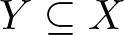 $Y\subseteq X$, the restriction of S on Y is the Y-split whose parts are obtained by intersecting the parts of S with Y. For a graph G with vertex set V, the G-coboundary size of a V-split S is the number of edges in G having non-empty intersections with both parts of S. Let T be a tree without degree-two vertices, and let V and L denote its vertex set and leaf set, respectively. For each positive integer k, a k-split on T is an L-split that is the restriction of a V-split with T-coboundary size k, while a score-k split on T is a k-split on T that is not any k′-split for any integer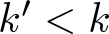 $k' \lt k$. Buneman’s split equivalence theorem states that the tree T is entirely encoded by its system of score-1 splits. We identify the unique exceptional case in which the tree T is not determined by its score-2 split system. To explore how our work can be extended to more general tree isomorphism problems, we propose several conjectures and open problems related to set systems and generalized Buneman graphs.
A Negami-type splitting formula for the Jones and Ribbon graph polynomials
- Part of
-
- Journal:
- Proceedings of the Edinburgh Mathematical Society / Volume 69 / Issue 1 / February 2026
- Published online by Cambridge University Press:
- 12 September 2025, pp. 284-303
-
- Article
-
- You have access
- Open access
- HTML
- Export citation
RETRACTION - EXISTENCE OF MODELING LIMITS FOR SEQUENCES OF SPARSE STRUCTURES
- Part of
-
- Journal:
- The Journal of Symbolic Logic / Volume 91 / Issue 1 / March 2026
- Published online by Cambridge University Press:
- 11 September 2025, pp. e1-e2
- Print publication:
- March 2026
-
- Article
-
- You have access
- HTML
- Export citation
On the multicolor Turán conjecture for color-critical graphs
- Part of
-
- Journal:
- Canadian Journal of Mathematics , First View
- Published online by Cambridge University Press:
- 10 September 2025, pp. 1-31
-
- Article
- Export citation
-
A simple k-coloring of a multigraph G is a decomposition of the edge multiset as a disjoint sum of k simple graphs which are referred to as colors. A subgraph H of a multigraph G is called multicolored if its edges receive distinct colors in a given simple k-coloring of G. In 2004, Keevash–Saks–Sudakov–Verstraëte introduced the k-color Turán number ${\text {ex}}_k(n,H)$, which denotes the maximum number of edges in an n-vertex multigraph that has a simple k-coloring containing no multicolored copies of H. They made a conjecture for any $r\geq 3$ and r-color-critical graph $H,$ that in the range of $k\geq \frac {r-1}{r-2}(e(H)-1)$, if n is sufficiently large, then ${\text {ex}}_k(n, H)$ is achieved by the multigraph consisting of k colors all of which are identical copies of the Turán graph $T_{r-1}(n)$. In this article, we show that this holds in the range of $k\geq 2\frac {r-1}{r}(e(H)-1)$, significantly improving earlier results. Our proof combines the stability argument of Chakraborti–Kim–Lee–Liu–Seo with a novel graph packing technique for embedding multigraphs.


