Refine listing
Actions for selected content:
30 results in 46Mxx
Inclusions of operator algebras from tensor categories: beyond irreducibility
- Part of
-
- Journal:
- Glasgow Mathematical Journal , First View
- Published online by Cambridge University Press:
- 03 November 2025, pp. 1-35
-
- Article
-
- You have access
- Open access
- HTML
- Export citation
Stable finiteness does not imply linear soficity
- Part of
-
- Journal:
- Mathematical Proceedings of the Cambridge Philosophical Society / Volume 175 / Issue 2 / September 2023
- Published online by Cambridge University Press:
- 11 April 2023, pp. 319-325
- Print publication:
- September 2023
-
- Article
- Export citation
Dilations of Markovian semigroups of measurable Schur multipliers
- Part of
-
- Journal:
- Canadian Journal of Mathematics / Volume 76 / Issue 3 / June 2024
- Published online by Cambridge University Press:
- 05 April 2023, pp. 774-797
- Print publication:
- June 2024
-
- Article
- Export citation
-
Using probabilistic tools, we prove that any weak* continuous semigroup $(T_t)_{t \geqslant 0}$ of self-adjoint unital completely positive measurable Schur multipliers acting on the space $\mathrm {B}({\mathrm {L}}^2(X))$ of bounded operators on the Hilbert space ${\mathrm {L}}^2(X)$, where X is a suitable measure space, can be dilated by a weak* continuous group of Markov $*$-automorphisms on a bigger von Neumann algebra. We also construct a Markov dilation of these semigroups. Our results imply the boundedness of the McIntosh’s ${\mathrm {H}}^\infty $ functional calculus of the generators of these semigroups on the associated Schatten spaces and some interpolation results connected to ${\mathrm {BMO}}$-spaces. We also give an answer to a question of Steen, Todorov, and Turowska on completely positive continuous Schur multipliers.


Projective freeness and stable rank of algebras of complex-valued BV functions
- Part of
-
- Journal:
- Canadian Mathematical Bulletin / Volume 66 / Issue 3 / September 2023
- Published online by Cambridge University Press:
- 16 January 2023, pp. 844-853
- Print publication:
- September 2023
-
- Article
-
- You have access
- Open access
- HTML
- Export citation
The generator rank of subhomogeneous $C^*\!$-algebras
- Part of
-
- Journal:
- Canadian Journal of Mathematics / Volume 75 / Issue 4 / August 2023
- Published online by Cambridge University Press:
- 14 June 2022, pp. 1314-1342
- Print publication:
- August 2023
-
- Article
-
- You have access
- Open access
- HTML
- Export citation
-
We compute the generator rank of a subhomogeneous $C^*\!$-algebra in terms of the covering dimension of the pieces of its primitive ideal space corresponding to irreducible representations of a fixed dimension. We deduce that every $\mathcal {Z}$-stable approximately subhomogeneous algebra has generator rank one, which means that a generic element in such an algebra is a generator.
This leads to a strong solution of the generator problem for classifiable, simple, nuclear $C^*\!$-algebras: a generic element in each such algebra is a generator. Examples of Villadsen show that this is not the case for all separable, simple, nuclear $C^*\!$-algebras.


Exact structures for operator modules
- Part of
-
- Journal:
- Canadian Journal of Mathematics / Volume 75 / Issue 2 / April 2023
- Published online by Cambridge University Press:
- 31 January 2022, pp. 421-446
- Print publication:
- April 2023
-
- Article
-
- You have access
- Open access
- HTML
- Export citation
CENTRE OF BANACH ALGEBRA VALUED BEURLING ALGEBRAS
- Part of
-
- Journal:
- Bulletin of the Australian Mathematical Society / Volume 105 / Issue 3 / June 2022
- Published online by Cambridge University Press:
- 13 September 2021, pp. 490-498
- Print publication:
- June 2022
-
- Article
- Export citation
-
We prove that for a Banach algebra A having a bounded $\mathcal {Z}(A)$-approximate identity and for every $\mathbf {[IN]}$ group G with a weight w which is either constant on conjugacy classes or satisfies $w \geq 1$, $\mathcal {Z}(L^{1}_{w}(G) \otimes ^{\gamma } A) \cong \mathcal {Z}(L^{1}_{w}(G)) \otimes ^{\gamma } \mathcal {Z}(A)$. As an application, we discuss the conditions under which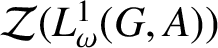 $\mathcal {Z}(L^{1}_{\omega }(G,A))$ enjoys certain Banach algebraic properties, such as weak amenability or semisimplicity.


ON THE STABILITY OF THE DIFFERENTIAL PROCESS GENERATED BY COMPLEX INTERPOLATION
- Part of
-
- Journal:
- Journal of the Institute of Mathematics of Jussieu / Volume 21 / Issue 1 / January 2022
- Published online by Cambridge University Press:
- 20 August 2020, pp. 303-334
- Print publication:
- January 2022
-
- Article
- Export citation
Ring-theoretic (In)finiteness in reduced products of Banach algebras
- Part of
-
- Journal:
- Canadian Journal of Mathematics / Volume 73 / Issue 5 / October 2021
- Published online by Cambridge University Press:
- 29 June 2020, pp. 1423-1458
- Print publication:
- October 2021
-
- Article
- Export citation
-
We study ring-theoretic (in)finiteness properties—such as Dedekind-finiteness and proper infiniteness—of ultraproducts (and more generally, reduced products) of Banach algebras.
While we characterise when an ultraproduct has these ring-theoretic properties in terms of its underlying sequence of algebras, we find that, contrary to the $C^*$-algebraic setting, it is not true in general that an ultraproduct has a ring-theoretic finiteness property if and only if “ultrafilter many” of the underlying sequence of algebras have the same property. This might appear to violate the continuous model theoretic counterpart of Łoś’s Theorem; the reason it does not is that for a general Banach algebra, the ring theoretic properties we consider cannot be verified by considering a bounded subset of the algebra of fixed bound. For Banach algebras, we construct counter-examples to show, for example, that each component Banach algebra can fail to be Dedekind-finite while the ultraproduct is Dedekind-finite, and we explain why such a counter-example is not possible for $C^*$-algebras. Finally, the related notion of having stable rank one is also studied for ultraproducts.


TENSOR-PRODUCT COACTION FUNCTORS
- Part of
-
- Journal:
- Journal of the Australian Mathematical Society / Volume 112 / Issue 1 / February 2022
- Published online by Cambridge University Press:
- 24 March 2020, pp. 52-67
-
- Article
- Export citation
-
Recent work by Baum et al. [‘Expanders, exact crossed products, and the Baum–Connes conjecture’, Ann. K-Theory 1(2) (2016), 155–208], further developed by Buss et al. [‘Exotic crossed products and the Baum–Connes conjecture’, J. reine angew. Math. 740 (2018), 111–159], introduced a crossed-product functor that involves tensoring an action with a fixed action $(C,\unicode[STIX]{x1D6FE})$, then forming the image inside the crossed product of the maximal-tensor-product action. For discrete groups, we give an analogue for coaction functors. We prove that composing our tensor-product coaction functor with the full crossed product of an action reproduces their tensor-crossed-product functor. We prove that every such tensor-product coaction functor is exact, and if $(C,\unicode[STIX]{x1D6FE})$ is the action by translation on $\ell ^{\infty }(G)$, we prove that the associated tensor-product coaction functor is minimal, thereby recovering the analogous result by the above authors. Finally, we discuss the connection with the $E$-ization functor we defined earlier, where $E$ is a large ideal of $B(G)$.


The Category of Ordered Bratteli Diagrams
- Part of
-
- Journal:
- Canadian Journal of Mathematics / Volume 73 / Issue 1 / February 2021
- Published online by Cambridge University Press:
- 03 September 2019, pp. 1-28
- Print publication:
- February 2021
-
- Article
-
- You have access
- Export citation
Weak containment of measure-preserving group actions
- Part of
-
- Journal:
- Ergodic Theory and Dynamical Systems / Volume 40 / Issue 10 / October 2020
- Published online by Cambridge University Press:
- 17 April 2019, pp. 2681-2733
- Print publication:
- October 2020
-
- Article
- Export citation
Completeness of Infinite-dimensional Lie Groups in Their Left Uniformity
- Part of
-
- Journal:
- Canadian Journal of Mathematics / Volume 71 / Issue 1 / February 2019
- Published online by Cambridge University Press:
- 07 January 2019, pp. 131-152
- Print publication:
- February 2019
-
- Article
-
- You have access
- Open access
- Export citation
-
We prove completeness for the main examples of infinite-dimensional Lie groups and some related topological groups. Consider a sequence
$G_{1}\subseteq G_{2}\subseteq \cdots \,$ of topological groups
Rigid C*-Tensor Categories and their Realizations as Hilbert C*-Bimodules
- Part of
-
- Journal:
- Proceedings of the Edinburgh Mathematical Society / Volume 62 / Issue 2 / May 2019
- Published online by Cambridge University Press:
- 16 November 2018, pp. 367-393
-
- Article
- Export citation
A WEAK HILBERT SPACE THAT IS A TWISTED HILBERT SPACE
- Part of
-
- Journal:
- Journal of the Institute of Mathematics of Jussieu / Volume 19 / Issue 3 / May 2020
- Published online by Cambridge University Press:
- 15 May 2018, pp. 855-867
- Print publication:
- May 2020
-
- Article
- Export citation
DUALITIES FOR MAXIMAL COACTIONS
- Part of
-
- Journal:
- Journal of the Australian Mathematical Society / Volume 102 / Issue 2 / April 2017
- Published online by Cambridge University Press:
- 12 May 2016, pp. 224-254
-
- Article
-
- You have access
- Export citation
-
We present a new construction of crossed-product duality for maximal coactions that uses Fischer’s work on maximalizations. Given a group $G$ and a coaction $(A,\unicode[STIX]{x1D6FF})$ we define a generalized fixed-point algebra as a certain subalgebra of $M(A\rtimes _{\unicode[STIX]{x1D6FF}}G\rtimes _{\,\widehat{\unicode[STIX]{x1D6FF}}}G)$ , and recover the coaction via this double crossed product. Our goal is to formulate this duality in a category-theoretic context, and one advantage of our construction is that it breaks down into parts that are easy to handle in this regard. We first explain this for the category of nondegenerate *-homomorphisms and then, analogously, for the category of $C^{\ast }$ -correspondences. Also, we outline partial results for the ‘outer’ category, which has been studied previously by the authors.


OPERATOR SYSTEM NUCLEARITY VIA $C^{\ast }$ -ENVELOPES
- Part of
-
- Journal:
- Journal of the Australian Mathematical Society / Volume 101 / Issue 3 / December 2016
- Published online by Cambridge University Press:
- 11 May 2016, pp. 356-375
-
- Article
-
- You have access
- Export citation
-
We prove that an operator system is (min, ess)-nuclear if its $C^{\ast }$ -envelope is nuclear. This allows us to deduce that an operator system associated to a generating set of a countable discrete group by Farenick et al. [‘Operator systems from discrete groups’, Comm. Math. Phys.329(1) (2014), 207–238] is (min, ess)-nuclear if and only if the group is amenable. We also make a detailed comparison between ess and other operator system tensor products and show that an operator system associated to a minimal generating set of a finitely generated discrete group (respectively, a finite graph) is (min, max)-nuclear if and only if the group is of order less than or equal to three (respectively, every component of the graph is complete).


BIPROJECTIVITY AND BIFLATNESS OF LAU PRODUCT OF BANACH ALGEBRAS DEFINED BY A BANACH ALGEBRA MORPHISM
- Part of
-
- Journal:
- Bulletin of the Australian Mathematical Society / Volume 91 / Issue 1 / February 2015
- Published online by Cambridge University Press:
- 15 July 2014, pp. 134-144
- Print publication:
- February 2015
-
- Article
-
- You have access
- Export citation
-
Let ${\it\varphi}$ be a homomorphism from a Banach algebra ${\mathcal{B}}$ to a Banach algebra ${\mathcal{A}}$. We define a multiplication on the Cartesian product space ${\mathcal{A}}\times {\mathcal{B}}$ and obtain a new Banach algebra ${\mathcal{A}}\times _{{\it\varphi}}{\mathcal{B}}$. We show that biprojectivity as well as biflatness of ${\mathcal{A}}\times _{{\it\varphi}}{\mathcal{B}}$ are stable with respect to ${\it\varphi}$.


THE SIMILARITY DEGREE OF SOME ${C}^{\ast } $-ALGEBRAS
- Part of
-
- Journal:
- Bulletin of the Australian Mathematical Society / Volume 89 / Issue 1 / February 2014
- Published online by Cambridge University Press:
- 27 June 2013, pp. 60-69
- Print publication:
- February 2014
-
- Article
-
- You have access
- Export citation
-
We define the class of weakly approximately divisible unital ${C}^{\ast } $-algebras and show that this class is closed under direct sums, direct limits, any tensor product with any ${C}^{\ast } $-algebra, and quotients. A nuclear ${C}^{\ast } $-algebra is weakly approximately divisible if and only if it has no finite-dimensional representations. We also show that Pisier’s similarity degree of a weakly approximately divisible ${C}^{\ast } $-algebra is at most five.


FELL BUNDLES AND IMPRIMITIVITY THEOREMS: MANSFIELD’S AND FELL’S THEOREMS
- Part of
-
- Journal:
- Journal of the Australian Mathematical Society / Volume 95 / Issue 1 / August 2013
- Published online by Cambridge University Press:
- 07 June 2013, pp. 68-75
-
- Article
-
- You have access
- Export citation
