We partner with a secure submission system to handle manuscript submissions.
Please note:
You will need an account for the submission system, which is separate to your Cambridge Core account. For login and submission support, please visit the
submission and support pages.
Please review this journal's author instructions, particularly the
preparing your materials
page, before submitting your manuscript.
Click Proceed to submission system to continue to our partner's website.
To save this undefined to your undefined account, please select one or more formats and confirm that you agree to abide by our usage policies. If this is the first time you used this feature, you will be asked to authorise Cambridge Core to connect with your undefined account.
Find out more about saving content to .
To send this article to your Kindle, first ensure no-reply@cambridge.org is added to your Approved Personal Document E-mail List under your Personal Document Settings on the Manage Your Content and Devices page of your Amazon account. Then enter the ‘name’ part of your Kindle email address below. Find out more about sending to your Kindle.
Find out more about saving to your Kindle.
Note you can select to save to either the @free.kindle.com or @kindle.com variations. ‘@free.kindle.com’ emails are free but can only be saved to your device when it is connected to wi-fi. ‘@kindle.com’ emails can be delivered even when you are not connected to wi-fi, but note that service fees apply.
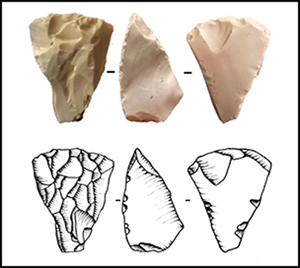
The north-western Negev is an under-researched ecotonal region. We excavated two late Middle Palaeolithic open-air sites and recovered rich lithic industries that could be refitted, as well as remains of fauna, and charcoal. Palaeoenvironmental information and dates indicate interesting inter-site differences.
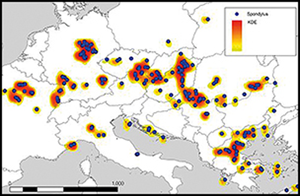
The Big Exchange project investigates large-scale exchange systems in Eurasia and Africa (8000–1 BC). We concentrate on raw materials of known origin (‘sourced finds’). Network analysis of tools and artificial intelligence methods are used to analyse the combined data sets. We invite broad collaboration on bimodal exchange networks.
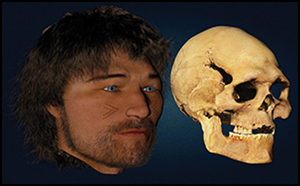
This project examines the local impact of Neolithic and Steppe population dispersals on archaeological cultures west of the Rhine, using new high-coverage ancient genomes from present-day Luxembourg. In addition, we sampled the Beaker-period grave of Dunstable Downs in England, which offers close parallels to the grave of Altwies in Luxembourg.
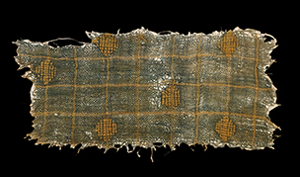
Excavations at Nahal Omer, an Early Islamic way station in the Negev Desert (sixth to ninth centuries AD), have yielded exotic textiles such as silks and cottons. Through a new study of these textiles, this project investigates the trade networks and global connectivity along this little-known artery of the Silk Road.
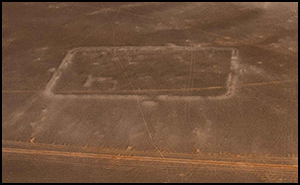
Remote sensing survey in southern Jordan has identified at least three Roman temporary camps that indicate a probable undocumented military campaign into what is today Saudi Arabia, and which we conjecture is linked to the Roman annexation of the Nabataean kingdom in AD 106.
Survey around Porto Rafti Bay in Greece reveals evidence of a prosperous community that exploited near-shore islets for habitation and craft production following the Late Bronze Age collapse. Surface assemblages provide insights into the strategies undertaken by this mercantile maritime group aptly navigating a dynamic socioeconomic environment.
Detailed photogrammetry and 3D laser scanning of rock art, geophysics research and sondage excavations conducted at the Painted Hand Petroglyph Panel, a large rock art site in south-western Colorado, USA, has revealed new information about the cultural situation in the pre-Columbian and historic North American Southwest.
This new project studies the diversity of socioecological niches across the agropastoral transition in the Andes, utilising a multi-isotope approach to track human territories and allocate subsistence tasks. During the agropastoral period, we discriminate different diachronic niches with varying extents of maize farming and altitudinal mobility.
Research carried out in the Carangas region of highland Bolivia has identified a surprising concentration of pre-Hispanic religious sites, which are linked both to ancient Andean cults of wak'a (sacred mountains, tutelary hills and mummified ancestors) and to the Incan settlement of the region. Of these sites, one ceremonial centre stands out for its unprecedented characteristics for the Andes.
In 2018, excavations at Markowice in central Poland produced sound evidence for the uptake of the Baden Culture in the region: the remains of a young male interred with two cattle drawing a funerary sledge were unearthed, along with several other Funnel Beaker (TRB) inhumations that date to 3500–3100 BC.
Recent study of Vlaho in Pelagonia confirms that it is the earliest known Neolithic settlement in North Macedonia. Multidisciplinary research of the architecture and material reveals a complex enclosure site dating to the seventh millennium BC, with dozens of ditches, daub buildings, white painted pottery and domesticated plants and animals.
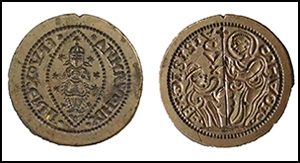
In 2019, an ethnographic survey of Indian workshops and shops producing and selling putalis (Venetian ducats and their imitations) was conducted in Nashik, Maharashtra. The study, supplemented by information from written and documentary sources, provides observations relevant to archaeologists studying the process of reinterpreting Roman coin design in Early Historic India.
Excavations at Tiaotou reveal evidence for cultural continuity through the late third to the mid first millennia BC. This research explores shifts in subsistence, production and ritual at Tiaotou, and the emergence of the Pishan-Tiaotou Culture (1200–1000 BC). Tiaotou/Pishan-Tiaotou represents a missing link among Taihu Lake archaeological cultures and contributes to our knowledge of complex political formations and cultural change in Bronze Age southern China.
Excavations of the Kopilo cemetery in central Bosnia in 2021 and 2022 have provided the first insights into Bronze and Iron Age burial practices in this part of Europe. We documented a total of 46 inhumation graves, with the variety of finds indicating supra-regional contacts of this population.
A Mongolian-German project is investigating abandoned early modern military and monastic sites in central Mongolia, including how the ruins of these urban nodes continue to shape cultural memory within nomadic society. Initial excavations have revealed a previously unknown site type, interpreted as garrisons from the period of Manchu rule (AD 1636–1911).
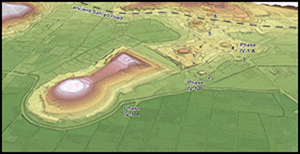
The authors present the results of a drone-based airborne LiDAR survey of the fifth century AD Tsukuriyama mounded tomb group in Okayama Prefecture, Japan, revealing the relationship between tomb building and the surrounding landscape during Japan's period of ancient state formation.
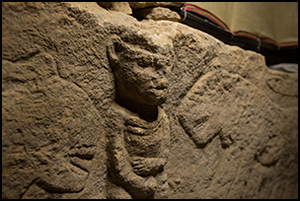
A wall relief, comprising five figures carved on a bench in a communal building dating to the ninth millennium BC, was found in south-eastern Turkey in 2021. It constitutes the earliest known depiction of a narrative ‘scene’, and reflects the complex relationship between humans, the natural world and the animal life that surrounded them during the transition to a sedentary lifestyle.
The Tracking Pleistocene Human Occupations in the East of Iran project was initiated with two field seasons in 2020 and 2022. The authors present the results of this fieldwork, which identified 176 Palaeolithic localities, demonstrating the presence of Lower Palaeolithic and Middle Palaeolithic occupations in the Ferdows-Sarayan-Qaen plains.
The authors present preliminary results from a new research project based in Jebel Shaqadud, Sudan. Their findings highlight the potential for this region's archaeological record to expand our understanding of the adaptation strategies used by human groups in arid north-east African environments away from rivers and lakes during the Holocene. Furthermore, they present exceptionally early radiocarbon dates that push postglacial human occupation in the eastern Sahel back to the twelfth millennium BP.
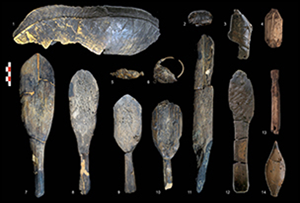
The transition to the Neolithic on the East European Plain was a very different process to the Western model, featuring a long-lasting hunter-gatherer economy and late introduction of agriculture. The authors present results from multiproxy research on a 13.5m-deep core of organic deposits from the Serteya mire as part of an international research project to understand human-environment relations in the Western Dvina Lakeland.