Contents
Research Article
p-ADIC VALUATION OF $\sigma _k(n)$

- Part of:
-
- Published online by Cambridge University Press:
- 26 January 2026, pp. 1-5
-
- Article
- Export citation
-
For any integer k and any positive integer n, let $\sigma _k(n)=\sum _{d\mid n}d^k$
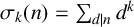 . For any prime p and any positive integer m, let $\nu _p(m)$
 be the largest integer $\alpha $
 such that $p^\alpha \mid m$
 and let $\lceil x\rceil $
 denote the least integer not less than x. In 2021, Amdeberhan et al. [‘Arithmetic properties of the sum of divisors’, J. Number Theory 223 (2021), 325–349] proved that $\nu _2(\sigma _1(n))\le \lceil \log _2n\rceil $
 for any positive integer n and that $\nu _p(\sigma _1(n))\le \lceil \log _pn\rceil $
 for any odd prime p if n satisfies some conditions. Recently, Zhao and Chen [‘p-adic valuation of the sum of divisors’, Front. Math. 20(4) (2025), 795–827] proved this unconditionally. We generalise these results to all k: for any prime p, any n and any $k\ge 2$
 , $\nu _p(\sigma _k(n))\le \lceil k\log _p n\rceil .$
 Let $p^\star $
 be an odd prime. We also prove that there are an integer $k\ge 2$
 and a prime q satisfying $\nu _{p^\star }(\sigma _k(q))=\lceil k\log _{p^\star }q\rceil $
 if and only if $p^\star $
 is a Fermat prime.


ON A PROBLEM OF NATHANSON ON NONMINIMAL ADDITIVE COMPLEMENTS
- Part of:
-
- Published online by Cambridge University Press:
- 15 December 2025, pp. 6-13
-
- Article
-
- You have access
- Open access
- HTML
- Export citation
-
Let C and W be two sets of integers. If $C+W=\mathbb {Z}$
 , then C is called an additive complement to W. We further call C a minimal additive complement to W if no proper subset of C is an additive complement to W. Answering a problem of Nathanson in part, we give sufficient conditions to show that W has no minimal additive complements. Our result extends a result of Chen and Yang [‘On a problem of Nathanson related to minimal additive complements’, SIAM J. Discrete Math. 26 (2012), 1532–1536].

PARTITIONS OF NATURAL NUMBERS AND THEIR ORDERED REPRESENTATION FUNCTIONS
- Part of:
-
- Published online by Cambridge University Press:
- 12 February 2026, pp. 14-21
-
- Article
- Export citation
-
Let $\mathbb {N}$
 be the set of all nonnegative integers. For a set $A\subseteq \mathbb {N}$
 , let $R_2(A,n)$
 and $R_3(A,n)$
 be the number of solutions of the equation $n=a_1+a_2$
 with $a_1<a_2, a_1,a_2\in A$
 and with $a_1\le a_2, a_1,a_2\in A$
 , respectively. If $-N\le g\le N$
 , Yan [‘On the structure of partition which the difference of their representation function is a constant’, Period. Math. Hungar. 82 (2021), 149–152] showed that there is a set $A\subseteq \mathbb {N}$
 such that $R_i(A,n)-R_i(\mathbb {N}\setminus A,n)=g$
 for all integers $n\ge 2N-1$
 , where N is a positive integer. In this paper, we prove that if $g_1,g_2$
 are nonnegative integers with $g_1\neq g_2$
 , then there does not exist $A\subseteq \mathbb {N}$
 such that $R_i(A,2n)-R_i(\mathbb {N}\setminus A,2n)=g_1$
 and $R_i(A,2n+1)-R_i(\mathbb {N}\setminus A,2n+1)=g_2$
 for all sufficiently large integers n.


SUMS OF TERMS OF RECURRENCE SEQUENCES AND S-UNITS IN THE SOLUTION SETS OF NORM FORM EQUATIONS
- Part of:
-
- Published online by Cambridge University Press:
- 10 March 2026, pp. 22-33
-
- Article
- Export citation
POLYNOMIAL DENSITIES AND HEILBRONN’S CRITERION
- Part of:
-
- Published online by Cambridge University Press:
- 23 February 2026, pp. 34-45
-
- Article
- Export citation
-
Heilbronn gave a sufficient condition for a number field with a totally ramified prime to fail to be norm-Euclidean. We say that Heilbronn’s criterion applies to a polynomial f if it applies to the number field $K=\mathbb {Q}[x]/(f)$
 generated by f. Suppose $n\geq 3$
 is odd and $p\geq 5$
 is prime with $\gcd (p-1,n)=1$
 . Let $\mathcal {F}_{p,n}$
 denote the collection of monic polynomials $f\in \mathbb {Z}[x]$
 of degree n that are Eisenstein at the prime p. Order the polynomials by the natural height $\operatorname {\mathrm {Ht}}(f)$
 . Define $\delta _{p,n}(X)$
 to be the proportion of polynomials $f\in \mathcal {F}_{p,n}$
 with $\operatorname {\mathrm {Ht}}(f)\leq X$
 for which Heilbronn’s criterion applies. Then, $$ \begin{align*} \liminf_{X\to\infty} \delta_{p,n}(X)\geq \max\{\tfrac{2}{27},\;1-\varepsilon(p)\}, \end{align*} $$
where $\varepsilon (p)\to 0$
 and is effectively computable. In particular, the lower density tends to $1$
 as $p\to \infty $
 uniformly in n. We also give a version of this result where we weaken the condition on $\gcd (p-1,n)$
 . As a corollary, we show that given an integer $n\geq 2$
 , a positive proportion of Eisenstein polynomials of degree n fail to generate norm-Euclidean fields.


NOTES ON GENERALISED INTEGRAL POLYNOMIAL PELL EQUATIONS
- Part of:
-
- Published online by Cambridge University Press:
- 09 December 2025, pp. 46-58
-
- Article
- Export citation
-
Given a nonzero integer n, Gupta and Saha [‘Integer solutions of the generalised polynomial Pell equations and their finiteness: the quadratic case’, Canad. Math. Bull., to appear] classified all polynomials $x^2+ax+b\in {\mathbb {Z}}[x]$
 for which the polynomial Pell equation $P^2-(x^2+ax+b)Q^2=n$
 has solutions ${P,Q\in {\mathbb {Z}}[x]}$
 with $Q\neq 0$
 . We generalise their work to the equation $P^2-(f^2+af+b)Q^2=nR$
 , where f is a fixed polynomial in ${\mathbb {Z}}[x]$
 . As an application of our results, we study the equation $P^2-D(f)Q^2=n$
 , where D is a monic, quartic and non square-free polynomial in ${\mathbb {Z}}[x]$
 . This extends Theorem 1.4 of Scherr and Thompson [‘Quartic integral polynomial Pell equations’, J. Number Theory 259 (2024), 38–56].


ON PROPERLY $\theta $
 -CONGRUENT NUMBERS OVER REAL NUMBER FIELDS
- Part of:
-
- Published online by Cambridge University Press:
- 13 February 2026, pp. 59-64
-
- Article
- Export citation
-
The notion of $\theta $
 -congruent numbers generalises the classical congruent number problem. A positive integer n is $\theta $
 -congruent if it is the area of a rational triangle with an angle $\theta $
 whose cosine is rational. Das and Saikia [‘On $\theta $
 -congruent numbers over real number fields’, Bull. Aust. Math. Soc. 103(2) (2021), 218–229] established criteria for numbers to be $\theta $
 -congruent over certain real number fields and concluded their work by posing four open questions regarding the relationship between $\theta $
 -congruent and properly $\theta $
 -congruent numbers. In this work, we provide complete answers to those questions. Indeed, we remove a technical assumption from their result on fields with degrees coprime to six, provide a definitive answer for real cubic fields without congruence restrictions, extend the analysis to fields of degree six and examine the exceptional cases $n=1, 2, 3$
 and $6$
 .
.


GALOIS GROUPS OF APÉRY-LIKE SERIES MODULO PRIMES
- Part of:
-
- Published online by Cambridge University Press:
- 13 February 2026, pp. 65-78
-
- Article
-
- You have access
- Open access
- HTML
- Export citation
ON THE NORMALISERS OF ALL NON-p-NILPOTENT SUBGROUPS IN A FINITE GROUP
- Part of:
-
- Published online by Cambridge University Press:
- 28 November 2025, pp. 79-86
-
- Article
- Export citation
-
For a prime p, let $\mathcal {N}_p(G)$
 denote the intersection of the normalisers of all non-p-nilpotent subgroups of a finite group G and set $\mathcal {N}_p(G)=G$
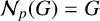 if G itself is p-nilpotent. We give some properties of $\mathcal {N}_p(G)$
 and investigate the influence of $\mathcal {N}_p(G)$
 on G.
on G.


GROUPS WITH AT MOST 13 NONPOWER SUBGROUPS
- Part of:
-
- Published online by Cambridge University Press:
- 30 January 2026, pp. 87-100
-
- Article
- Export citation
-
For a group G and $m\ge 1$
 , $G^m$
 denotes the subgroup generated by the elements $g^m$
 , where g runs through G. The subgroups not of the form $G^m$
 are called nonpower subgroups. We extend the classification of groups with few nonpower subgroups from groups with at most nine nonpower subgroups to groups with at most 13 nonpower subgroups.


THE REIDEMEISTER SPECTRUM OF ZM-GROUPS
- Part of:
-
- Published online by Cambridge University Press:
- 12 January 2026, pp. 101-106
-
- Article
- Export citation
-
Given a group G and an automorphism $\varphi $
 of G, two elements $x,y\in G$
 are said to be $\varphi $
 -conjugate if $x=gy\varphi (g)^{-1}$
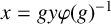 for some $g\in G$
 . The number $R(\varphi )$
 of equivalence classes with respect to this relation is called the Reidemeister number of $\varphi $
 and the set $\{R(\varphi ) \mid \varphi \in \text {Aut}(G)\}$
 is called the Reidemeister spectrum of G. We determine the Reidemeister spectrum of ZM-groups, extending some results of Senden [‘The Reidemeister spectrum of split metacyclic groups’, Preprint, 2022, arXiv:2109.12892].


GROUPS WITH ONLY NEARLY NORMAL OR CONTRANORMAL SUBGROUPS
- Part of:
-
- Published online by Cambridge University Press:
- 30 January 2026, pp. 107-116
-
- Article
- Export citation
-
Several authors have investigated the structure of groups in which each subgroup satisfies a property $\mathcal {X}$
 or a property which is antagonistic to $\mathcal {X}$
 . This point of view will be adopted here, considering groups in which each subgroup is either nearly normal or contranormal.


A NOTE ON THE EXPLICIT ANALYTIC SOLUTION TO A NONAUTONOMOUS ABSTRACT EVOLUTION EQUATION
- Part of:
-
- Published online by Cambridge University Press:
- 11 May 2026, pp. 117-126
-
- Article
- Export citation
MULTIPLE SOLUTIONS FOR QUASILINEAR SCHRÖDINGER EQUATIONS WITH NONLINEARITY SUBLINEAR AT ZERO
- Part of:
-
- Published online by Cambridge University Press:
- 26 January 2026, pp. 127-139
-
- Article
- Export citation
-
We consider quasilinear Schrödinger equations in $\mathbb {R}^N$
 of the form $-\Delta u+V(x)u-u\Delta (u^2)=g(u)$
 , where the potential V is allowed to be sign-changing and the nonlinearity g is sublinear at zero. Except for being subcritical, no additional condition is imposed on $g(u)$
 for $|u|$
 large. We obtain a sequence of solutions with negative energy and converging to zero via Clark’s theorem. We also obtain a similar result for fourth-order quasilinear Schrödinger equations in $\mathbb {R}^N$
 of the form $\Delta ^2u-\Delta u+ V(x)u-u\Delta (u^2)=g(u)$
 .
.


A TOPOLOGY FOR ENGEL EXPANSIONS: EVALUATION AND DIGIT CODING MAPS
- Part of:
-
- Published online by Cambridge University Press:
- 01 June 2026, pp. 140-148
-
- Article
- Export citation
-
We develop a topological framework for Engel expansions that treats both directions of the correspondence between points of $(0,1]$
 and nondecreasing digit sequences. We endow the sequence space with the product topology to study the evaluation map, and we fix a nonterminating digit algorithm to study the digit coding map. We also record the correspondence between cylinder sets and fundamental intervals and give an application to Baire category results for functions of the digits.

MIN-PHASE-ISOMETRIES ON THE UNIT SPHERE OF $L^1$
 SPACES
- Part of:
-
- Published online by Cambridge University Press:
- 01 April 2026, pp. 149-159
-
- Article
- Export citation
-
Let $(\Omega , \mathfrak {M}, \mu )$
 be a measure space. We show that if a surjective map $f: S_{L^1(\mu )} \to S_Y$
 between the unit spheres of real $L^1(\mu )$
 and of an arbitrary real normed space Y satisfies $$ \begin{align*} \min\{\|f(x)+f(y)\|, \|f(x)-f(y)\|\}=\min\{\|x+y\|, \|x-y\|\},\quad x,y\in S_{L^1(\mu)}, \end{align*} $$
then there exists a phase function $\varepsilon : S_{L^1(\mu )} \to \{-1, 1\}$
 such that $\varepsilon \cdot f$
 is a surjective isometry from $S_{L^1(\mu )}$
 onto $S_Y$
 , and furthermore, this isometry can be extended to a linear isometry on the whole space $L^1(\mu )$
 .
.


PROJECTION ALGORITHMS FOR FIXED POINT PROBLEMS
- Part of:
-
- Published online by Cambridge University Press:
- 21 April 2026, pp. 160-169
-
- Article
- Export citation
FIXED-ROTATION MINKOWSKI AVERAGING: CLASSIFICATION AND SHARP RATES
- Part of:
-
- Published online by Cambridge University Press:
- 29 January 2026, pp. 170-181
-
- Article
- Export citation
-
We study a discrete process on planar convex bodies in which, at each step, a body is replaced by a weighted Minkowski average of itself and its rotation by a fixed angle. Up to translation and uniform scaling, this produces a rigid averaging dynamical system. We give a complete classification of the limit shapes. If the angle is an irrational multiple of $2\pi $
 , the iterates converge to a disk. If the angle is rational, they converge to the average of finitely many rotated copies of the initial body. We also obtain sharp convergence rates. In the rational case, the decay is uniform and exponential with an explicit constant depending only on the weight and the denominator of the angle. For irrational angles, we prove quantitative rates under a mild number-theoretic condition that holds for almost every angle: low regularity inputs have polynomial decay up to a logarithmic factor, while real analytic inputs have stretched exponential decay. For angles with bounded continued fraction coefficients, we give matching lower bounds along subsequences. These results describe the global attractors of the dynamics and indicate the absence of chaotic behaviour.

A SLICE CROMWELL INEQUALITY FOR HOMOGENEOUS LINKS
-
- Published online by Cambridge University Press:
- 02 March 2026, pp. 182-190
-
- Article
- Export citation
-
Cromwell [‘Homogeneous links’, J. London Math. Soc. (2) 39(3) (1989), 535–552] proved that the minimum v-degree of the HOMFLY polynomial of a homogeneous link L is bounded above by $1-\chi (L)$
 , where $\chi (L)$
 is the maximum Euler characteristic of Seifert surfaces of L. We prove its slice version, stating that the minimum v-degree of the HOMFLY polynomial of a homogeneous link L is bounded above by $1-\chi _4(L)$
 , where $\chi _4(L)$
 is the maximum four-dimensional Euler characteristic of L. As a byproduct, we prove a conjecture of Stoimenow [‘Some inequalities between knot invariants’, Internat. J. Math. 13(4) (2002), 373–393] that for an alternating link, the minimum v-degree of the HOMFLY polynomial is smaller than or equal to its signature.


THE KNOT QUANDLES OF SUCIU’S RIBBON n-KNOTS AND AUTOMORPHISMS ON THE FREE GROUP OF RANK TWO
- Part of:
-
- Published online by Cambridge University Press:
- 13 February 2026, pp. 191-196
-
- Article
- Export citation