Refine listing
Actions for selected content:
42 results in 34Mxx
GALOIS GROUPS OF APÉRY-LIKE SERIES MODULO PRIMES
- Part of
-
- Journal:
- Bulletin of the Australian Mathematical Society , First View
- Published online by Cambridge University Press:
- 13 February 2026, pp. 1-14
-
- Article
-
- You have access
- Open access
- HTML
- Export citation
A note on internality of certain differential systems
- Part of
-
- Journal:
- Canadian Mathematical Bulletin , First View
- Published online by Cambridge University Press:
- 06 February 2026, pp. 1-7
-
- Article
- Export citation
-
We prove two results, generalizing certain theorems by Jin and Moosa (2020, Trans. Amer. Math. Soc., 373, 4863–4887), on the internality of the system of differential equations
where f and g are rational functions in one variable.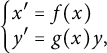 $$ \begin{align*} \begin{cases} \begin{aligned} x' &= f(x)\\ y' &= g(x)y,\\ \end{aligned} \end{cases} \end{align*} $$
Differential transcendence and walks on self-similar graphs
- Part of
-
- Journal:
- Canadian Mathematical Bulletin , First View
- Published online by Cambridge University Press:
- 30 January 2026, pp. 1-21
-
- Article
-
- You have access
- Open access
- HTML
- Export citation
-
Symmetrically self-similar graphs are an important type of fractal graph. Their Green’s functions satisfy order one iterative functional equations. We show that when the branching number of a generating cell is two, either the graph is a star consisting of finitely many one-sided lines meeting at an origin vertex, in which case the Green’s function is algebraic, or the Green’s function is differentially transcendental over $\mathbb {C}(z)$. The proof strategy relies on a result in a recent preprint of Di Vizio, Fernandes, and Mishna. The result adds evidence to a conjecture of Krön and Teufl about the spectra of the difference Laplacian of this family of graphs.

General rogue waves of infinite order: exact properties, asymptotic behaviour, and effective numerical computation
- Part of
-
- Journal:
- Journal of Nonlinear Waves / Volume 1 / 2025
- Published online by Cambridge University Press:
- 13 November 2025, e19
-
- Article
-
- You have access
- Open access
- HTML
- Export citation
-
This paper is devoted to a comprehensive analysis of a family of solutions of the focusing nonlinear Schrödinger equation called general rogue waves of infinite order. These solutions have recently been shown to describe various limit processes involving large-amplitude waves, and they have also appeared in some physical models not directly connected with nonlinear Schrödinger equations. We establish the following key property of these solutions: they are all in $L^2(\mathbb{R})$ with respect to the spatial variable but they exhibit anomalously slow temporal decay. In this paper, we define general rogue waves of infinite order, establish their basic exact and asymptotic properties, and provide computational tools for calculating them accurately.

Spherical normal forms for germs of parabolic line biholomorphisms
- Part of
-
- Journal:
- Ergodic Theory and Dynamical Systems / Volume 45 / Issue 10 / October 2025
- Published online by Cambridge University Press:
- 07 April 2025, pp. 3255-3304
- Print publication:
- October 2025
-
- Article
- Export citation
-
We address the inverse problem for holomorphic germs of a mapping of the complex line near a fixed point which is tangent to the identity. We provide a preferred parabolic map $\Delta $ realizing a given Birkhoff–Écalle–Voronin modulus $\psi $ and prove its uniqueness in the functional class we introduce. The germ is the time- $1$ map of a Gevrey formal vector field admitting meromorphic sums on a pair of infinite sectors covering the Riemann sphere. For that reason, the analytic continuation of $\Delta $ is a multivalued map admitting finitely many branch points with finite monodromy. In particular, $\Delta $ is holomorphic and injective on an open slit sphere containing $0$ (the initial fixed point) and $\infty $, where the companion parabolic point is situated under the involution ${-1}/{\mathrm {Id}}$. One finds that the Birkhoff–Écalle–Voronin modulus of the parabolic germ at $\infty $ is the inverse $\psi ^{\circ -1}$ of that at $0$.
$0$.


Complex linear differential equations with solutions in weighted Dirichlet spaces and derivative Hardy spaces
- Part of
-
- Journal:
- Canadian Mathematical Bulletin / Volume 68 / Issue 3 / September 2025
- Published online by Cambridge University Press:
- 06 January 2025, pp. 653-666
- Print publication:
- September 2025
-
- Article
- Export citation
-
In this article, by the use of nth derivative characterization, we obtain several some sufficient conditions for all solutions of the complex linear differential equation
to lie in weighted Dirichlet spaces and derivative Hardy spaces, respectively, where $$ \begin{align*}f^{(n)}+A_{n-1}(z)f^{(n-1)}+\ldots+A_1(z)f'+A_0(z)f=A_n(z) \end{align*} $$ $A_i(z) (i=0,1,\ldots ,n)$ are analytic functions defined in the unit disc. This work continues the lines of the investigations by Heittokangas, et al. for growth estimates about the solutions of the above equation.


EXPONENTIAL ASYMPTOTICS USING NUMERICAL RATIONAL APPROXIMATION IN LINEAR DIFFERENTIAL EQUATIONS
- Part of
-
- Journal:
- The ANZIAM Journal / Volume 65 / Issue 4 / October 2023
- Published online by Cambridge University Press:
- 22 April 2024, pp. 285-307
-
- Article
-
- You have access
- Open access
- HTML
- Export citation
Non-integrability of the restricted three-body problem
- Part of
-
- Journal:
- Ergodic Theory and Dynamical Systems / Volume 44 / Issue 10 / October 2024
- Published online by Cambridge University Press:
- 06 March 2024, pp. 3012-3040
- Print publication:
- October 2024
-
- Article
- Export citation
From topological recursion to wave functions and PDEs quantizing hyperelliptic curves
- Part of
-
- Journal:
- Forum of Mathematics, Sigma / Volume 11 / 2023
- Published online by Cambridge University Press:
- 31 October 2023, e99
-
- Article
-
- You have access
- Open access
- HTML
- Export citation
-
Starting from loop equations, we prove that the wave functions constructed from topological recursion on families of degree $2$ spectral curves with a global involution satisfy a system of partial differential equations, whose equations can be seen as quantizations of the original spectral curves. The families of spectral curves can be parametrized with the so-called times, defined as periods on second type cycles, and with the poles. These equations can be used to prove that the WKB solution of many isomonodromic systems coincides with the topological recursion wave function, which proves that the topological recursion wave function is annihilated by a quantum curve. This recovers many known quantum curves for genus zero spectral curves and generalizes this construction to hyperelliptic curves.

Global Asymptotics of the Sixth Painlevé Equation in Okamoto’s Space
- Part of
-
- Journal:
- Forum of Mathematics, Sigma / Volume 11 / 2023
- Published online by Cambridge University Press:
- 13 March 2023, e17
-
- Article
-
- You have access
- Open access
- HTML
- Export citation
PILOT-WAVE HYDRODYNAMICS: QUANTISATION OF PARTIAL INTEGRABILITY FROM A NONLINEAR INTEGRO-DIFFERENTIAL EQUATION OF THE SECOND ORDER
- Part of
-
- Journal:
- Bulletin of the Australian Mathematical Society / Volume 108 / Issue 3 / December 2023
- Published online by Cambridge University Press:
- 27 February 2023, pp. 472-479
- Print publication:
- December 2023
-
- Article
-
- You have access
- Open access
- HTML
- Export citation
A fixed-point curve theorem for finite-orbits local diffeomorphisms
- Part of
-
- Journal:
- Ergodic Theory and Dynamical Systems / Volume 43 / Issue 12 / December 2023
- Published online by Cambridge University Press:
- 16 February 2023, pp. 4138-4165
- Print publication:
- December 2023
-
- Article
- Export citation
-
We study local biholomorphisms with finite orbits in some neighborhood of the origin since they are intimately related to holomorphic foliations with closed leaves. We describe the structure of the set of periodic points in dimension 2. As a consequence we show that given a finite-orbits local biholomorphism F, in dimension 2, there exists an analytic curve passing through the origin and contained in the fixed-point set of some non-trivial iterate of $F.$ As an application we obtain that at least one eigenvalue of the linear part of F at the origin is a root of unity. Moreover, we show that such a result is sharp by exhibiting examples of finite-orbits local biholomorphisms such that exactly one of the eigenvalues is a root of unity. These examples are subtle since we show they cannot be embedded in one-parameter groups.

On the oscillation of certain second-order linear differential equations
- Part of
-
- Journal:
- Proceedings of the Royal Society of Edinburgh. Section A: Mathematics / Volume 153 / Issue 6 / December 2023
- Published online by Cambridge University Press:
- 09 December 2022, pp. 1965-1992
- Print publication:
- December 2023
-
- Article
- Export citation
-
This paper consists of three parts: First, letting $b_1(z)$
 , $b_2(z)$
 , $p_1(z)$
 and $p_2(z)$
 be nonzero polynomials such that $p_1(z)$
 and $p_2(z)$
 have the same degree $k\geq 1$
 and distinct leading coefficients $1$
 and $\alpha$
 , respectively, we solve entire solutions of the Tumura–Clunie type differential equation $f^{n}+P(z,\,f)=b_1(z)e^{p_1(z)}+b_2(z)e^{p_2(z)}$
 , where $n\geq 2$
 is an integer, $P(z,\,f)$
 is a differential polynomial in $f$
 of degree $\leq n-1$
 with coefficients having polynomial growth. Second, we study the oscillation of the second-order differential equation $f''-[b_1(z)e^{p_1(z)}+b_2(z)e^{p_2(z)}]f=0$
 and prove that $\alpha =[2(m+1)-1]/[2(m+1)]$
 for some integer $m\geq 0$
 if this equation admits a nontrivial solution such that $\lambda (f)<\infty$
 . This partially answers a question of Ishizaki. Finally, letting $b_2\not =0$
 and $b_3$
 be constants and $l$
 and $s$
 be relatively prime integers such that $l> s\geq 1$
 , we prove that $l=2$
 if the equation $f''-(e^{lz}+b_2e^{sz}+b_3)f=0$
 admits two linearly independent solutions $f_1$
 and $f_2$
 such that $\max \{\lambda (f_1),\,\lambda (f_2)\}<\infty$
 . In particular, we precisely characterize all solutions such that $\lambda (f)<\infty$
 when $l=2$
 and $l=4$
 .
.


EXACT SOLUTIONS FOR THE SINGULARLY PERTURBED RICCATI EQUATION AND EXACT WKB ANALYSIS
- Part of
-
- Journal:
- Nagoya Mathematical Journal / Volume 250 / June 2023
- Published online by Cambridge University Press:
- 08 December 2022, pp. 434-469
-
- Article
-
- You have access
- Open access
- HTML
- Export citation
-
The singularly perturbed Riccati equation is the first-order nonlinear ordinary differential equation $\hbar \partial _x f = af^2 + bf + c$ in the complex domain where $\hbar $ is a small complex parameter. We prove an existence and uniqueness theorem for exact solutions with prescribed asymptotics as $\hbar \to 0$ in a half-plane. These exact solutions are constructed using the Borel–Laplace method; that is, they are Borel summations of the formal divergent $\hbar $-power series solutions. As an application, we prove existence and uniqueness of exact WKB solutions for the complex one-dimensional Schrödinger equation with a rational potential.


DESCRIPTION OF GROWTH AND OSCILLATION OF SOLUTIONS OF COMPLEX LDE’S
- Part of
-
- Journal:
- Journal of the Australian Mathematical Society / Volume 115 / Issue 2 / October 2023
- Published online by Cambridge University Press:
- 16 June 2022, pp. 145-171
-
- Article
-
- You have access
- Open access
- HTML
- Export citation
-
It is known that, in the unit disc as well as in the whole complex plane, the growth of the analytic coefficients $A_0,\dotsc ,A_{k-2}$ of determines, under certain growth restrictions, not only the growth but also the oscillation of the equation’s nontrivial solutions, and vice versa. A uniform treatment of this principle is given in the disc
 $$ \begin{align*} f^{(k)} + A_{k-2} f^{(k-2)} + \dotsb + A_1 f'+ A_0 f = 0, \quad k\geqslant 2, \end{align*} $$ $D(0,R)$, $0<R\leqslant \infty $, by using several measures for growth that are more flexible than those in the existing literature, and therefore permit more detailed analysis. In particular, the results obtained are not restricted to cases where the solutions are of finite (iterated) order of growth in the classical sense. The new findings are based on an accurate integrated estimate for logarithmic derivatives of meromorphic functions, which preserves generality in terms of three free parameters.


ON THE MODULARITY OF SOLUTIONS TO CERTAIN DIFFERENTIAL EQUATIONS OF HYPERGEOMETRIC TYPE
- Part of
-
- Journal:
- Bulletin of the Australian Mathematical Society / Volume 105 / Issue 3 / June 2022
- Published online by Cambridge University Press:
- 15 September 2021, pp. 385-391
- Print publication:
- June 2022
-
- Article
- Export citation
NOTES ON VANISHING CYCLES AND APPLICATIONS
- Part of
-
- Journal:
- Journal of the Australian Mathematical Society / Volume 109 / Issue 3 / December 2020
- Published online by Cambridge University Press:
- 29 October 2020, pp. 371-415
-
- Article
-
- You have access
- Export citation
q-DISCRETE PAINLEVÉ EQUATIONS: THEIR HIERARCHIES AND PROPERTIES
- Part of
-
- Journal:
- Bulletin of the Australian Mathematical Society / Volume 103 / Issue 2 / April 2021
- Published online by Cambridge University Press:
- 14 September 2020, pp. 333-334
- Print publication:
- April 2021
-
- Article
-
- You have access
- Export citation
On the number of linearly independent admissible solutions to linear differential and linear difference equations
- Part of
-
- Journal:
- Canadian Journal of Mathematics / Volume 73 / Issue 6 / December 2021
- Published online by Cambridge University Press:
- 30 July 2020, pp. 1556-1591
- Print publication:
- December 2021
-
- Article
- Export citation
-
A classical theorem of Frei states that if $A_p$ is the last transcendental function in the sequence $A_0,\ldots ,A_{n-1}$ of entire functions, then each solution base of the differential equation $f^{(n)}+A_{n-1}f^{(n-1)}+\cdots +A_{1}f'+A_{0}f=0$ contains at least $n-p$ entire functions of infinite order. Here, the transcendental coefficient $A_p$ dominates the growth of the polynomial coefficients $A_{p+1},\ldots ,A_{n-1}$. By expressing the dominance of $A_p$ in different ways and allowing the coefficients $A_{p+1},\ldots ,A_{n-1}$ to be transcendental, we show that the conclusion of Frei’s theorem still holds along with an additional estimation on the asymptotic lower bound for the growth of solutions. At times, these new refined results give a larger number of linearly independent solutions of infinite order than the original theorem of Frei. For such solutions, we show that $0$ is the only possible finite deficient value. Previously, this property has been known to hold for so-called admissible solutions and is commonly cited as Wittich’s theorem. Analogous results are discussed for linear differential equations in the unit disc, as well as for complex difference and complex q-difference equations.


Classification of algebraic solutions of irregular Garnier systems
- Part of
-
- Journal:
- Compositio Mathematica / Volume 156 / Issue 5 / May 2020
- Published online by Cambridge University Press:
- 14 April 2020, pp. 881-907
- Print publication:
- May 2020
-
- Article
- Export citation
-
We prove that algebraic solutions of Garnier systems in the irregular case are of two types. The classical ones come from isomonodromic deformations of linear equations with diagonal or dihedral differential Galois group; we give a complete list in the rank-2 case (two indeterminates). The pull-back ones come from deformations of coverings over a fixed degenerate hypergeometric equation; we provide a complete list when the differential Galois group is $\text{SL}_{2}(\mathbb{C})$. As a byproduct, we obtain a complete list of algebraic solutions for the rank-2 irregular Garnier systems.

