Refine listing
Actions for selected content:
1421984 results in Open Access
Shock persistence, uncertainty, and news-driven business cycles
-
- Journal:
- Macroeconomic Dynamics / Volume 29 / 2025
- Published online by Cambridge University Press:
- 08 October 2024, e43
-
- Article
-
- You have access
- Open access
- HTML
- Export citation
Characterizing English Preposing in PP constructions
-
- Journal:
- Journal of Linguistics , First View
- Published online by Cambridge University Press:
- 08 October 2024, pp. 1-39
-
- Article
-
- You have access
- Open access
- HTML
- Export citation
A Complex Legacy - Andrew Garrett, The Unnaming of Kroeber Hall: Language, Memory, and Indigenous California (Cambridge Massachusetts, MIT Press, 2023, 472 p.)
-
- Journal:
- European Journal of Sociology / Archives Européennes de Sociologie / Volume 65 / Issue 3 / December 2024
- Published online by Cambridge University Press:
- 08 October 2024, pp. 436-441
-
- Article
- Export citation
A. J. BOYLE (ED.), SENECA HERCULES, EDITED WITH INTRODUCTION, TRANSLATION AND COMMENTARY. Oxford and New York: Oxford University Press, 2023. Pp. xiii + 789. isbn 9780198856948 (hbk). £190.00.
-
- Journal:
- The Journal of Roman Studies / Volume 114 / November 2024
- Published online by Cambridge University Press:
- 08 October 2024, pp. 184-185
- Print publication:
- November 2024
-
- Article
- Export citation
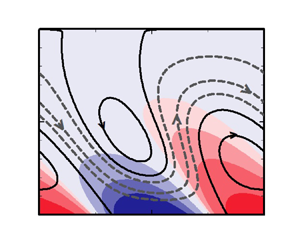
On the reduction of flow rate losses using thermal waves
-
- Journal:
- Journal of Fluid Mechanics / Volume 997 / 25 October 2024
- Published online by Cambridge University Press:
- 08 October 2024, A12
-
- Article
-
- You have access
- Open access
- HTML
- Export citation
AFH volume 65 issue 1 Cover and Back matter
-
- Journal:
- The Journal of African History / Volume 65 / Issue 1 / March 2024
- Published online by Cambridge University Press:
- 08 October 2024, pp. b1-b3
-
- Article
-
- You have access
- Export citation
Ownership and Inheritance in Sanskrit Jurisprudence. By Christopher T. Fleming. Oxford: Oxford University Press, 2021. Pp. 272. $85.00 (cloth); $84.99 (digital). ISBN: 9780198852377.
-
- Journal:
- Journal of Law and Religion / Volume 39 / Issue 3 / September 2024
- Published online by Cambridge University Press:
- 08 October 2024, pp. 540-544
-
- Article
-
- You have access
- HTML
- Export citation
A PROOF OF HIRSCHHORN’S CONJECTURE ON $2^n$-DISSECTION OF EULER’S PRODUCT
- Part of
-
- Journal:
- Bulletin of the Australian Mathematical Society / Volume 111 / Issue 2 / April 2025
- Published online by Cambridge University Press:
- 08 October 2024, pp. 186-196
- Print publication:
- April 2025
-
- Article
- Export citation
-
Using properties of Ramanujan’s theta functions, we give an elementary proof of Hirschhorn’s conjecture on $2^n$-dissection of Euler’s product $E(q):=(q;q)_\infty $.


First report of Leptoglossus occidentalis (Hemiptera: coreidae) feeding on Rubus (Rosaceae) fruit
-
- Journal:
- The Canadian Entomologist / Volume 156 / 2024
- Published online by Cambridge University Press:
- 08 October 2024, e25
-
- Article
- Export citation
IMPROVED UPPER BOUNDS ON DIOPHANTINE TUPLES WITH THE PROPERTY $D(n)$
- Part of
-
- Journal:
- Bulletin of the Australian Mathematical Society / Volume 111 / Issue 3 / June 2025
- Published online by Cambridge University Press:
- 08 October 2024, pp. 428-432
- Print publication:
- June 2025
-
- Article
-
- You have access
- Open access
- HTML
- Export citation
-
Let n be a nonzero integer. A set S of positive integers is a Diophantine tuple with the property $D(n)$ if $ab+n$ is a perfect square for each $a,b \in S$ with $a \neq b$. It is of special interest to estimate the quantity $M_n$, the maximum size of a Diophantine tuple with the property $D(n)$. We show the contribution of intermediate elements is $O(\log \log |n|)$, improving a result by Dujella [‘Bounds for the size of sets with the property $D(n)$’, Glas. Mat. Ser. III 39(59)(2) (2004), 199–205]. As a consequence, we deduce that $M_n\leq (2+o(1))\log |n|$, improving the best known upper bound on $M_n$ by Becker and Murty [‘Diophantine m-tuples with the property $D(n)$’, Glas. Mat. Ser. III 54(74)(1) (2019), 65–75].


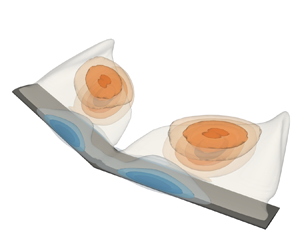
Sensitivity of flows over three-dimensional swept wings at low Reynolds number
-
- Journal:
- Journal of Fluid Mechanics / Volume 997 / 25 October 2024
- Published online by Cambridge University Press:
- 08 October 2024, A11
-
- Article
-
- You have access
- Open access
- HTML
- Export citation
FLM volume 995 Cover and Front matter
-
- Journal:
- Journal of Fluid Mechanics / Volume 995 / 25 September 2024
- Published online by Cambridge University Press:
- 08 October 2024, p. f1
-
- Article
-
- You have access
- Export citation
Public Interest and State Legitimation: Early Modern England, Japan, and China By Wenkai He. Cambridge: Cambridge University Press, 2023. 320 pp. £25.99 (paper)
-
- Journal:
- Journal of Chinese History / Volume 9 / Issue 2 / July 2025
- Published online by Cambridge University Press:
- 08 October 2024, pp. 439-441
-
- Article
- Export citation
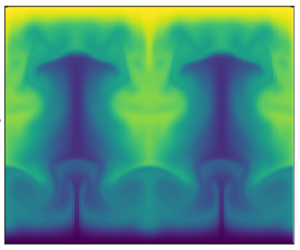
Aspect-ratio-dependent heat transport by baroclinic acoustic streaming
-
- Journal:
- Journal of Fluid Mechanics / Volume 997 / 25 October 2024
- Published online by Cambridge University Press:
- 08 October 2024, A7
-
- Article
-
- You have access
- Open access
- HTML
- Export citation
-
Standing acoustic waves have been known to generate Eulerian time-mean ‘streaming’ flows at least since the seminal investigation of Lord Rayleigh in the 1880s. Nevertheless, a recent body of numerical and experimental evidence has shown that inhomogeneities in the ambient density distribution lead to much faster flows than arise in classical Rayleigh streaming. The emergence of these unusually strong flows creates new opportunities to enhance heat transfer in systems in which convective cooling cannot otherwise be easily achieved. To assess this possibility, a theoretical study of acoustic streaming in an ideal gas confined in a rectangular channel with top and bottom walls maintained at fixed but differing temperatures is performed. A two time scale system of equations is utilized to efficiently capture the coupling between the fast acoustic waves and the slowly evolving streaming flow, enabling strongly nonlinear regimes to be accessed. A large suite of numerical simulations is carried out to probe the streaming dynamics, to highlight the critical role played by baroclinically generated wave vorticity and to quantify the additional heat flux induced by the standing acoustic wave. Proper treatment of the two-way coupling between the waves and mean flow is found to be essential for convergence to a self-consistent steady state, and the variation of the resulting acoustically enhanced steady-state heat flux with both the amplitude of the acoustic wave and the $O(1)$ aspect ratio of the channel is documented. For certain parameters, heat fluxes almost two orders of magnitude larger than those realizable by conduction alone can be attained.

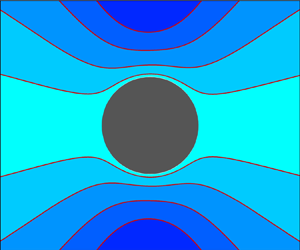
Impact of laterally mobile surface charge on diffusiophoresis of hydrophobic rigid colloids
-
- Journal:
- Journal of Fluid Mechanics / Volume 997 / 25 October 2024
- Published online by Cambridge University Press:
- 08 October 2024, A8
-
- Article
-
- You have access
- Open access
- HTML
- Export citation
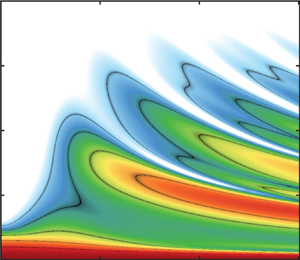
Self-induced transparency of long water waves over bathymetry: the dispersive shock mechanism
-
- Journal:
- Journal of Fluid Mechanics / Volume 997 / 25 October 2024
- Published online by Cambridge University Press:
- 08 October 2024, A9
-
- Article
-
- You have access
- Open access
- HTML
- Export citation
Exploring the Rebirth of a Chronicle: Why Robert the Monk's Historia Iherosolimitana Gained New Life in the Fifteenth Century - ADDENDUM
-
- Journal:
- The Journal of Ecclesiastical History , First View
- Published online by Cambridge University Press:
- 08 October 2024, pp. 1-2
-
- Article
- Export citation
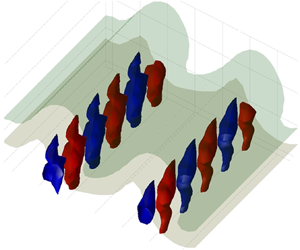
Plasma-based base flow modification on swept-wing boundary layers: dependence on flow parameters
-
- Journal:
- Journal of Fluid Mechanics / Volume 997 / 25 October 2024
- Published online by Cambridge University Press:
- 08 October 2024, A13
-
- Article
-
- You have access
- Open access
- HTML
- Export citation
Urban water footprint in Mashhad, Iran’s second largest city
-
- Journal:
- Environmental Conservation / Volume 51 / Issue 4 / December 2024
- Published online by Cambridge University Press:
- 07 October 2024, pp. 263-269
-
- Article
- Export citation
