To save content items to your account,
please confirm that you agree to abide by our usage policies.
If this is the first time you use this feature, you will be asked to authorise Cambridge Core to connect with your account.
Find out more about saving content to .
To save content items to your Kindle, first ensure no-reply@cambridge.org
is added to your Approved Personal Document E-mail List under your Personal Document Settings
on the Manage Your Content and Devices page of your Amazon account. Then enter the ‘name’ part
of your Kindle email address below.
Find out more about saving to your Kindle.
Note you can select to save to either the @free.kindle.com or @kindle.com variations.
‘@free.kindle.com’ emails are free but can only be saved to your device when it is connected to wi-fi.
‘@kindle.com’ emails can be delivered even when you are not connected to wi-fi, but note that service fees apply.
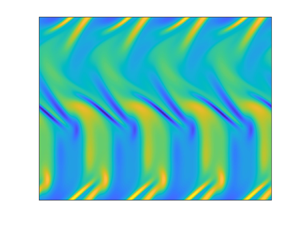
Zonal flows are mean flows in the east–west direction, which are ubiquitous on planets, and can be formed through ‘zonostrophic instability’: within turbulence or random waves, a weak large-scale zonal flow can grow exponentially to become prominent. In this paper, we study the statistical behaviour of the zonostrophic instability and the effect of magnetic fields. We use a stochastic white noise forcing to drive random waves, and study the growth of a mean flow in this random system. The dispersion relation for the growth rate of the expectation of the mean flow is derived, and properties of the instability are discussed. In the limits of weak and strong magnetic diffusivity, the dispersion relation reduces to manageable expressions, which provide clear insights into the effect of the magnetic field and scaling laws for the threshold of instability. The magnetic field mainly plays a stabilising role and thus impedes the formation of the zonal flow, but under certain conditions it can also have destabilising effects. Numerical simulation of the stochastic flow is performed to confirm the theory. Results indicate that the magnetic field can significantly increase the randomness of the zonal flow. It is found that the zonal flow of an individual realisation may behave very differently from the expectation. For weak magnetic diffusivity and moderate magnetic field strengths, this leads to considerable variation of the outcome, that is whether zonostrophic instability takes place or not in individual realisations.
This work presents a reflection on the meaning and significance of knowledge coproduction in the field of glaciology. We start by invoking the paradigm of Structure–Form–Environment Interplay (SFEI) to formulate a generalised definition of glaciology, which highlights the relevance of knowledge coproduction. The adoption of a relational view of glaciological knowledge leads us to identify five core dimensions of knowledge coproduction: purpose, ethics, ambiguity, inclusion/exclusion, and relationships. Based on those dimensions, we delve into the decisive methodological aspects of the coproduction process, namely the definition of its purpose, the identification of participants, the organisation of the process, the recognition of ambiguity in Ways of Knowing (WoKs), and the consideration of ethical implications. In addition to the already known three stages of knowledge coproduction process (codesign, codevelopment, and codelivery), we propose the inclusion of an additional preparation stage, which entails the acknowledgment of the identity and involvement of all human and nonhuman participants, their positionality, and means to ensure their cultural and ontological safety. We reason that knowledge coproduction does not replace the scientific method, but rather complements it, eliciting the possibility to unveil deeper insights that might be difficult to attain through unilateral means.
We study the problem of identifying a small number $k\sim n^\theta$, $0\lt \theta \lt 1$, of infected individuals within a large population of size $n$ by testing groups of individuals simultaneously. All tests are conducted concurrently. The goal is to minimise the total number of tests required. In this paper, we make the (realistic) assumption that tests are noisy, that is, that a group that contains an infected individual may return a negative test result or one that does not contain an infected individual may return a positive test result with a certain probability. The noise need not be symmetric. We develop an algorithm called SPARC that correctly identifies the set of infected individuals up to $o(k)$ errors with high probability with the asymptotically minimum number of tests. Additionally, we develop an algorithm called SPEX that exactly identifies the set of infected individuals w.h.p. with a number of tests that match the information-theoretic lower bound for the constant column design, a powerful and well-studied test design.
An experiment was conducted in 2022 and 2023 near Rocky Mount and Clayton, NC, to evaluate residual herbicide-coated fertilizer for cotton tolerance and Palmer amaranth control. Treatments included acetochlor, atrazine, dimethenamid-P, diuron, flumioxazin, fluometuron, fluridone, fomesafen, linuron, metribuzin, pendimethalin, pyroxasulfone, pyroxasulfone + carfentrazone, S-metolachlor, and sulfentrazone. Each herbicide was individually coated on granular ammonium sulfate (AMS) and top-dressed at 321 kg ha−1 (67 kg N ha−1) onto 5- to 7-leaf cotton. The check plots received the equivalent rate of nonherbicide-treated AMS. Before top-dress, all plots (including the check) were treated with glyphosate and glufosinate to control previously emerged weeds. All herbicides except metribuzin resulted in transient cotton injury. Cotton response to metribuzin varied by year and location. In 2022, metribuzin caused 11% to 39% and 8% to 17% injury at the Clayton and Rocky Mount locations, respectively. In 2023, metribuzin caused 13% to 32% injury at Clayton and 73% to 84% injury at Rocky Mount. Pyroxasulfone (91%), pyroxasulfone + carfentrazone (89%), fomesafen (87%), fluridone (86%), flumioxazin (86%), and atrazine (85%) controlled Palmer amaranth ≥85%. Pendimethalin and fluometuron were the least effective treatments, resulting in 58% and 62% control, respectively. As anticipated, early season metribuzin injury translated into yield loss; plots treated with metribuzin yielded 640 kg ha−1 and were comparable to yields after linuron (790 kg ha−1) was used. These findings suggest that with the exception of metribuzin, residual herbicides coated onto AMS may be suitable and effective in cotton production, providing growers with additional modes of action for late-season control of multiple herbicide–resistant Palmer amaranth.
Food systems in Africa are under pressure from climate change, conflicts, health pandemics such as COVID-19 and rising food prices. The COVID-19 pandemic highlighted weaknesses in global food systems and indeed Africa’s was not spared. Although COVID-19 mortality and morbidity in Africa were relatively low in comparison to other regions, the containment measures employed by countries amplified a rather dire situation. Disruptions were seen in livelihoods, food value chains, increases in food prices and loss of income. These changes affected access to nutritious foods. A resilient food system that can withstand and recover from disruption and shocks will be important for ensuring access to healthy diets for all. This review paper assesses the state of food insecurity and malnutrition situation pre-COVID-19 and the impact of COVID-19 on Africa’s food systems and access to healthy diet. To put Africa on a path to accelerated recovery, a resilient and sustainable food system will be crucial. The following recommendations are made: (i) increasing agriculture productivity, with special attention to the foods that contribute to healthy diets – fruits and vegetables, and animal source foods (ii) promoting the production and consumption of nutritious African traditional and indigenous foods (iii) transforming Africa’s food systems to be gender-sensitive (iv) investing in well-targeted social protection programmes (v) supporting food environments that protect healthy diets and (vi) employing data and information to monitor food systems transformation.
This article examines the information sharing behavior of U.S. politicians and the mass public by mapping the ideological sharing space of political news on social media. As data, we use the near-universal currency of online information exchange: web links. We introduce a methodological approach and software to unify the measurement of ideology across social media platforms by using sharing data to jointly estimate the ideology of news media organizations, politicians, and the mass public. Empirically, we show that (1) politicians who share ideologically polarized content share, by far, the most political news and commentary and (2) that the less competitive elections are, the more likely politicians are to share polarized information. These results demonstrate that news and commentary shared by politicians come from a highly unrepresentative set of ideologically extreme legislators and that decreases in election pressures (e.g., by gerrymandering) may encourage polarized sharing behavior.
Responding to increasing concerns regarding human-induced climate change and shared commitment as environmental educators to support climate action, we crafted this article as a composite piece — an emerging method of inquiry. We are eleven contributors: the Editorial Executive of the Australian Journal of Environmental Education and two colleagues who each respond to prompts concerning our experience of climate change and our practices of climate change education. The responses provide insights regarding how we strive to enact meaningful climate action, education, advocacy and agency. This article presents the reader with various ways environmental educators work through eco-anxiety and engage in active hope when supporting climate change education/agency/action. The following insights emerged, illustrating 1. the significance of embracing diverse perspectives and knowledge systems; 2. Emotions as catalysts for action and activism; 3. the value of fostering collaborative spaces/relationships/communities that empower people; 4. the importance of integrating ethical responses and critical climate literacy in climate change education/research; 5. learning from places and multi-species entanglements; 6. acknowledging tensions. We offer these six insights not as a solution but as a potentially generative heuristic for navigating the complexity and uncertainty of climate change education in contemporary times.
Nuclear deterrence strategies are predicated on nuclear use scenarios. However, as nuclear weapons haven’t been used since 1945, why does use occur in scenarios but not in practice? If scenarios incorporated the political challenges of crossing the nuclear threshold, how would this change the utility of the deterrence strategies they support? To address these questions, this article examines Cold War-era American debates about a Soviet ‘first strike’, discusses the limits of technical critiques of nuclear use scenarios, and argues for an alternative approach to scenario design and criticism that includes political factors observable in crises and wars involving nuclear states.
Our study aims to enhance future pandemic preparedness by leveraging insights from historical pandemics, focusing on the multidimensional analysis of past outbreaks. In this study, we digitised and analysed for the first time aggregated mortality and morbidity data series from the Russian flu in Switzerland in 1889/1890 and subsequent years to assess its comprehensive impact. The strongest effects were observed in January 1890, showing significant monthly excess mortality from all causes compared to the preceding five years (58.9%, 95% CI 36.6 to 81.0). Even though the whole of Switzerland was affected, the impact varied regionally due to ecological variations. Deaths from other conditions such as tuberculosis and heart disease also increased during this period. A significant drop in birth occurred 9 months later, in the autumn of 1890. Morbidity estimates by physicians suggest that around 60% of the Swiss population fell ill, with regional discrepancies and earlier outbreaks among postal workers (1–2 weeks earlier than the rest of the population). A subsequent spike in all-cause excess and influenza mortality was recorded in January 1894 but more localized than in 1890. Our findings show no cross-protection between the 1890 and 1894 outbreaks.
The relationship between psychosis and violence is often construed focusing on a narrow panel of factors; however, recent evidence suggests violence might be linked to a complex interplay of biopsychosocial factors among forensic psychiatric patients with psychosis (FPPP). This review describes violence incidents in FPPP, the factors associated with violence, and relevant implications.
Methods
This review was conducted following the preferred reporting items for systematic reviews and meta-analyses guideline. Databases, including CINAHL, EMBASE, Medline/PubMed, PsycINFO, and Web of Science, were searched for eligible studies that examined violence among adult FPPP. Screening of reports and data extraction were completed by at least two independent reviewers.
Results
Across the 29 included studies, violence was consistently related to prior contact with psychiatric services, active psychotic symptoms, impulsivity, adverse experiences, and low social support. However, FPPP who reported violence varied in most other biopsychosocial domains, suggesting the underlying combinatorial effects of multiple risk factors for violence rather than individual factors. Variability in violence was addressed by stratifying FPPP into subgroups using composite/aggregate of identifiable factors (including gender, onset/course of illness, system-related, and other biopsychosocial factors) to identify FPPP with similar risk profiles.
Conclusions
There are multiple explanatory pathways to violence in FPPP. Recent studies identify subgroups with underlying similarities or risk profiles for violence. There is a need for future prospective studies to replicate the clinical utility of stratifying FPPP into subgroups and integrate emerging evidence using recent advancements in technology and data mining to improve risk assessment, prediction, and management.
The primary objective of this study was to evaluate the feasibility and clinical impact of utilizing low-field portable MRI in a remote setting in Canada.
Methods:
This was a single-site prospective cohort study. An ultra-low-field (0.064 T) portable MRI was installed in Weeneebayko General Hospital, Moose Factory, Ontario. Adults presenting with any indication for neuroimaging between November 2021 and June 2023 were eligible for study inclusion. Clinical presentation, indication for imaging,and radiology report turnaround time were recorded. Images were evaluated for diagnostic quality, and radiology reports were analyzed to determine the diagnostic utility of ultra-low-field MRI.
Results:
An ultra-low-field portable MRI was successfully installed in a remote Canadian location. Fifty patients received a portable MRI scan. Comments on suboptimal image quality were made for 12 (24%) of the portable MRI examinations; however, only 2 (4%) of these were deemed nondiagnostic requiring conventional imaging for further evaluation. Clinically significant pathology was identified in 5 (10%) of the examinations.
Conclusion:
This first-of-its-kind study demonstrates the application of ultra-low-field portable MRI in a remote setting in Canada is feasible and offers clinical information that may help triage which patients require transfer to a center with conventional high-field MRI availability.
Understanding the genetic basis of porcine mental health (PMH)-related traits in intensive pig farming systems may promote genetic improvement animal welfare enhancement. However, investigations on this topic have been limited to a retrospective focus, and phenotypes have been difficult to elucidate due to an unknown genetic basis. Intensively farmed pigs, such as those of the Duroc, Landrace, and Yorkshire breeds, have undergone prolonged selection pressure in intensive farming systems. This has potentially subjected genes related to mental health in these pigs to positive selection. To identify genes undergoing positive selection under intensive farming conditions, we employed multiple selection signature detection approaches. Specifically, we integrated disease gene annotations from three human gene–disease association databases (Disease, DisGeNET, and MalaCards) to pinpoint genes potentially associated with pig mental health, revealing a total of 254 candidate genes related to PMH. In-depth functional analyses revealed that candidate PMH genes were significantly overrepresented in signaling-related pathways (e.g., the dopaminergic synapse, neuroactive ligand‒receptor interaction, and calcium signaling pathways) or Gene Ontology terms (e.g., dendritic tree and synapse). These candidate PMH genes were expressed at high levels in the porcine brain regions such as the hippocampus, amygdala, and hypothalamus, and the cell type in which they were significantly enriched was neurons in the hippocampus. Moreover, they potentially affect pork meat quality traits. Our findings make a significant contribution to elucidating the genetic basis of PMH, facilitating genetic improvements for the welfare of pigs and establishing pigs as valuable animal models for gaining insights into human psychiatric disorders.
Drawing on pedagogical tools utilized in clinical scenario simulation and emergency preparedness training, the authors describe an innovative method for teaching clinical ethics consultation skills, which they call a “tabletop” exercise. Implemented at the end of a clinical ethics intensive course, the tabletop enables learners to implement the knowledge and practice the skills they gained during the course. The authors highlight the pedagogical tools on which the tabletop exercise draws, describe the tabletop exercise itself, offer how to best operationalize such an exercise, reflect on the method’s strengths and weaknesses, and provide insights for others who may want to implement their own tabletop for ethics consultation education.
Anosov automorphisms with Jordan blocks are not periodic data rigid. We introduce a refinement of the periodic data and show that this refined periodic data characterizes $C^{1+}$ conjugacy for Anosov automorphisms on $\mathbb {T}^4$ with a Jordan block.
In recent years concern about Foetal Alcohol Spectrum Disorder (FASD) has intensified, prompting calls for societal action. Pregnant women's consumption of alcohol is increasingly surveilled, public health campaigns now promote abstinence, and in some jurisdictions, prenatal alcohol exposure (PAE) resulting in FASD has received criminal sanction. This paper anticipates potential calls to criminalise PAE resulting in FASD by envisioning what such a case might look like. Applying Duff et al's framework for determining whether an act should be criminalised, we draw upon public health and jurisprudential discourses to trace the outline of an argument for framing maternal alcohol consumption causing injury to the child born alive as a public wrong and a crime.1 We show how an ‘in principle’ case may be constructed, but argue that countervailing principles, including women's rights, and practical considerations, tell decisively against criminalisation.
The significantly divergent trajectories of terrorism and climate change as security issues for Western states in the early years of the 21st century represent a puzzle. While sharing some attributes – uncertainty and the primacy of risk-management responses – climate change clearly represents a more fundamental threat to life than terrorism. Despite this, terrorism has occupied a prominent place on states’ security agendas, while climate change has been decidedly marginal. This paper explores this divergence. Employing the securitisation framework, the paper maps the approach to terrorism and climate change as ‘security’ issues among key proponents of the ‘war on terror’, before exploring why these two issues were treated in such different ways. This analysis suggests a clear inclination to define and approach terrorism as an urgent security threat necessitating emergency measures: a willingness not evident in the case of climate change. While noting elements of the latter that militated against its securitisation, the paper points to the role of ideology – the beliefs and commitments of political leaders in particular – in driving choices around the construction of the security agenda. It concludes by suggesting that unlike the response to terrorism, impediments to enacting emergency measures to address the climate crisis remain.