To save content items to your account,
please confirm that you agree to abide by our usage policies.
If this is the first time you use this feature, you will be asked to authorise Cambridge Core to connect with your account.
Find out more about saving content to .
To save content items to your Kindle, first ensure no-reply@cambridge.org
is added to your Approved Personal Document E-mail List under your Personal Document Settings
on the Manage Your Content and Devices page of your Amazon account. Then enter the ‘name’ part
of your Kindle email address below.
Find out more about saving to your Kindle.
Note you can select to save to either the @free.kindle.com or @kindle.com variations.
‘@free.kindle.com’ emails are free but can only be saved to your device when it is connected to wi-fi.
‘@kindle.com’ emails can be delivered even when you are not connected to wi-fi, but note that service fees apply.
This article uses the well-being valuation (WV) approach to estimate and monetize the well-being impacts of informal care provision on caregivers. Using nationally representative longitudinal data from the UK, the British Household Panel Survey, we address two challenging methodological issues related to the economic valuation of informal care: (i) the anticipatory nature of informal care; and (ii) the sensitivity of income estimates used in valuation. We address the anticipatory issue by focusing on well-being impacts associated with caring for a relative who had recently suffered a serious accident. We use the fixed effects filtered (FEF) estimator to estimate a “time-invariant income” coefficient free from individual fixed effects bias, which helps to partially improve the quality of the income estimate as an alternative to using instrumental variables. This estimate is used in the calculation of shadow prices of informal care. Our estimates suggest that, focusing on the first year of unanticipated care provision, those experiencing the well-being losses from providing unanticipated informal care would be willing to pay approximately £13,167 on average to avoid it.
Majority of coronary artery fistulas are of the congenital origin, and they have been rarely reported after congenital heart surgery. Here, we present echocardiographic images and prognosis of multiple acquired coronary artery fistulas occurring after surgical myectomy in a child diagnosed with double-chamber right ventricle complicated with infective endocarditis involving the right heart valves.
Group-based identities are an important basis of political competition. Politicians consciously appeal to specific social groups, and these group-based appeals often improve the evaluation of parties and candidates. Studying place-based appeals, we advance the understanding of this strategy by distinguishing between dominant and subordinate social groups. Using two survey experiments in Germany and England, we show that group appeals improve candidate evaluation among subordinate (rural) voters. By contrast, appeals to the dominant (urban) group trigger a negative reaction. While urban citizens’ weaker local identities and lower place-based resentment partly explain this asymmetry, they mainly dislike group-based appeals because of their antagonistic nature. If the same policies are framed as benefiting urban and rural dwellers alike, candidate evaluation improves. Thus, people on the dominant side of a group divide reject a framing of politics as antagonistically structured by this divide, even if they identify with the dominant group.
A wide range of animal taxa, including vertebrates and invertebrates, are controlled or kept by humans. They may be used as pets, for recreation, sport and hobbies, as working animals, as producers of animal-derived (food) products or as biomedical models in research. There is a need for clear guidance on the treatment of animals, regardless of their phylogenetic distance from humans. Current animal welfare concepts, which emphasise animal sentience and the ability of animals to experience negative or positive mental states, are limited in scope to a small proportion of the animal kingdom, as the vast majority of species are (currently) thought to lack sentience. We discuss four options for addressing the question of which basic concept(s) could be used to derive guidelines for the treatment of animal species, sentient or non-sentient: (1) alternative concepts tailored to specific groups of species; (2) ‘welfare’ concepts not presupposing sentience; (3) the precautionary principle; or (4) the concept of animal integrity. Since questions regarding the appropriate treatment of animals, including species with a large phylogenetic distance from humans, have an ethical/moral dimension, we also address who counts morally and how much, and how animals should be treated given their moral status. We suggest that the concept of animal integrity, possibly complemented and extended by the concept of habitat/ecosystem integrity, is suitable for application to all species. However, a current concept of animal welfare should serve as the primary basis for guidance on how to treat species that are sentient and capable of experiencing emotions.
PSR J0837$-$2454 is a young 629 ms radio pulsar whose uncertain distance has important implications. A large distance would place the pulsar far out of the Galactic plane and suggest it is the result of a runaway star, while a short distance would mean the pulsar is extraordinarily cold. Here we present further radio observations and the first deep X-ray observation of PSR J0837$-$2454. Data from the Parkes Murriyang telescope show flux variations over short and long timescales and also yield an updated timing model, while the position and proper motion (and, less strongly, parallax) of the pulsar are constrained by a number of low-significance detections with the Very Long Baseline Array. XMM-Newton data enable detection of X-ray pulsations for the first time from this pulsar and yield a spectrum that is thermal and blackbody-like, with a cool blackbody temperature $\approx$$70\ \mbox{eV}$ or atmosphere temperature $\approx$$50\ \mbox{eV}$, as well as a small hotspot. The spectrum also indicates the pulsar is at a small distance of $\lesssim$$1\ \mbox{kpc}$, which is compatible with the marginal VLBA parallax constraint that favours a distance of $\gtrsim$330 pc. The low implied luminosity ($\sim7.6\times10^{31}\mbox{erg\, s}^{-1}$ at 0.9 kpc) suggests PSR J0837$-$2454 has a mass high enough that fast neutrino emission from direct Urca reactions operates in this young star and points to a nuclear equation of state that allows for direct Urca reactions at the highest densities present in neutron star cores.

This article explores the competitive hoeing matches, which were a significant feature of certain parts of Scottish rural life in the period 1840 to 1940. An analysis of newspaper reports shows how important such matches were in Aberdeenshire, attracting significant numbers of both competitors and spectators. By contrast, similar reports for the rest of Scotland show only a small number of such matches outside the northeast. Reasons for the differences are attributed to both material factors, such as the visibility of cultivation, and the social structure of the areas. In Aberdeenshire, a culture valorising hard work and skill was set in a social structure of small farmers and farm servants, which led to self-sustaining organisational forms. By contrast, elsewhere a top-down form of organisation prioritising the needs of farm productivity meant that competitive hoeing matches failed to kindle much enthusiasm. The value of a focus on taken-for-granted practices is the way it can shed light on such contrasts.
We study the association of shareholder returns with liberalization in government policy during Britain's railway run-up of 1844–5. The findings sustain two main claims. First, the railway returns during the run-up were associated with the advent of liberalizing policies, especially related to free trade, enhanced transparency and governance of firms, and industry consolidation. Second, analysis of cross-sectional variation reveals higher returns to large railways in the South and Midlands of England, several of which were leading consolidators. This study is the first to report an association between policy liberalization and run-up returns and to identify consolidators as the prime beneficiaries of the liberalization.
The aim was to gain a deeper understanding of the meaning of reconciliation as a concept in palliative care. Terminal illnesses affect almost all aspects of life and being close to death may lead to a need for reconciliation. The end of life is stressful on an existential level for both patients and relatives. It can therefore be of relevance for palliative care nurses to understand the meaning of reconciliation.
Methods
This study used a design for a literature study in accordance with a hybrid model. A deductive qualitative content analysis of autobiographies about being seriously ill and in a palliative stage in life was used to test the meaning of reconciliation. Ethical aspects concerning the use of autobiographies and the ethical principles of the Helsinki Declaration were considered. The theoretical perspective was the caritative theory of caring.
Results
The result showed that for patients in palliative care, reconciliation can be described as a strive for acceptance, to live in a truthful way, to forgive and be forgiven. People wish to create meaning in their existence and reconcile as a whole in body, spirit, and soul. By striving to unite suffering, life, and death as well as a peaceful relationship with relatives, people can achieve reconciliation at the end of life. Reconciliation is something ongoing and can be a force in what has been, what is, and what will be.
Significance of results
We conclude that reconciliation is a concept of importance when caring for patients in end-of-life care. However, reconciliation can be expressed in different ways without necessarily using the concept itself. A broader and deeper understanding of the concept facilitates conversations about the meaning of reconciliation in palliative care and can enable patients who strive to achieve reconciliation to be more easily identified and supported.
Despite high levels of psychological distress, mental health service use among Syrian refugees in urban settings is low. To address the mental healthcare gap, the World Health Organization developed group problem management plus (gPM+), a scalable psychological intervention delivered by non-specialist peer facilitators. The study aimed to evaluate the effectiveness of gPM+ in reducing symptoms of depression and anxiety among Syrian refugees in Istanbul, Türkiye.
Methods
A randomized controlled trial was conducted among 368 distressed (Kessler Psychological Distress Scale, K10 > 15) adult Syrian refugees with impaired functioning (World Health Organization Disability Assessment Schedule, WHODAS 2.0 > 16). Participants were recruited between August 2019 and September 2020 through a non-governmental organization providing services to refugees. Participants were randomly allocated to gPM+ and enhanced care as usual (gPM+/E-CAU) (184 participants) or E-CAU only (184 participants). Primary outcomes were symptoms of depression and anxiety (Hopkins Symptom Checklist (HSCL-25)) at 3-month follow-up. Secondary outcomes were post-traumatic stress disorder (PTSD) symptoms (PTSD Checklist for Diagnostic and Statistical Manual of Mental Disorders-5; PCL-5), functional impairment (WHODAS 2.0), and self-identified problems (psychological outcome profiles).
Results
Intent-to-treat analyses showed no significant effect of gPM+ on symptoms of anxiety, depression, PTSD and self-identified problems. Yet, there was a significant reduction in functional impairment in gPM+/E-CAU compared to E-CAU at 3-month follow-up (adjusted mean difference 1.66, 95 % CI 0.04, 3.27, p = 0.045, d = 0.19). Post-hoc subgroup analyses among participants with probable baseline depression or anxiety showed that there was a small but significant reduction in depression (adjusted mean difference −0.17, 95 % CI −0.32, −0.02, p = 0.028, d = 0.27) and anxiety (adjusted mean difference −0.21, 95 % CI −0.37, −0.05, p = 0.009, d = 0.30) symptoms comparing gPM+/E-CAU to E-CAU only at 1-week post assessment, but not at 3-month follow-up. There was a significant difference between conditions on functional impairment at 3-month follow-up, favouring gPM+/E-CAU condition (adjusted mean difference −1.98, 95 % CI −3.93, −0.02, p = 0.048, d = 0.26).
Conclusion
In this study in an urban setting in Türkiye, gPM+ did not alleviate symptoms of depression and anxiety among Syrian refugees experiencing psychological distress and daily living difficulties. However, participants with higher distress at baseline seemed to benefit from gPM+, but treatment gains disappeared in the long term. Current findings highlight the potential benefit of tailored psychosocial interventions for highly distressed refugees in volatile low-resource settings.
The proportion of physician-investigators involved in biomedical research is shrinking even as the need for high-quality, interdisciplinary research is growing. Building the physician-investigator workforce is thus a pressing concern. Flexible, “light-weight” training modalities can help busy physician-investigators prepare for key stages of the research life cycle and personalize their learning to their own needs. Such training can also support researchers from diverse backgrounds and lighten the work of mentors.
Materials and Methods:
The University of Pittsburgh’s Institute for Clinical Research Education designed the Stackables Microcredentials in Clinical and Translational Research (Stackables) program to provide flexible, online training to supplement and enhance formal training programs. This training utilizes a self-paced, just-in-time format along with an interactive, storytelling approach to sustain learner engagement. Learners earn badges for completing modules and certificates for completing “stacks” in key competency areas. In this paper, we describe the genesis and development of the Stackables program and report the results of a pilot study in which we evaluated changes in confidence in key skill areas from pretest to posttest, as well as engagement and perceived effectiveness.
Results:
Our Stackables pilot study showed statistically significant gains in learner confidence in all skill areas from pretest to posttest. Pilot participants reported that the module generated high levels of engagement and enhanced their skills, knowledge, and interest in the subject.
Conclusions:
Stackables provide an important complement to formal coursework by focusing on discrete skill areas and allowing learners to access the training they need when they need it.
Inflammation is increasingly recognised as a fundamental component of the pathophysiology of major depressive disorder (MDD), with a variety of inflammatory biomarkers playing pivotal roles. These markers are closely linked to both the severity of symptoms and the responsiveness to treatments in MDD.
Aims
This scoping review aims to explore the scientific literature investigating the complex relationships between inflammatory biomarkers and depression, by identifying new studies and critical issues in current research.
Method
Following the PRISMA Extension for Scoping Reviews guidelines, we systematically searched databases including PubMed, Scopus, PsycINFO, Open Grey and Cochrane Library. Our search focused on articles published from 1 January 2020 to 1 May 2024. We included studies evaluating inflammatory biomarkers in adult patients with MDD, utilising observational and randomised controlled trial designs, and review studies.
Results
Our analysis examined 44 studies on the complex interplay between inflammation and its multiple effects on MDD. Significant associations between specific inflammatory biomarkers and depression severity were found, requiring cautious interpretation. We also highlight several methodological limitations in the current studies, which warrant caution in directly applying these findings to clinical practice. However, identified methodologies show potential for using these biomarkers as diagnostic tools or therapeutic targets, including anti-inflammatory interventions.
Conclusions
The findings emphasise the need for sophisticated, integrative research to understand inflammation's role in MDD. Future studies should identify specific biomarker panels for diagnosing depression and bridging peripheral biomarker measurements with central neuroinflammatory processes, leading to better diagnostic and treatment strategies.
The caudillo strongman remains emblematic of Latin American authoritarianism, but scholarship has seldom reflected on the semantic shifts that this concept suffered over time and its implications for the history of political thought. Numerous political experiments have been marginalized from historical and state-building narratives as the irrelevant work of caudillos, such as the short-lived Rio Grandense Republic in southern Brazil (1836–45). By explaining the Rio Grandense caudillos’ engagement with constitutionalism, this article argues that ‘caudillo’ can be a useful category of analysis if historically contextualized. The article thus reconsiders the history of political thought and state-building in Latin America and beyond in the age of revolutions, suggesting the serious need to scrutinize ‘failed’ states and revolutions. This argument is pursued in three steps. First, the article describes shifting understandings and usages of ‘caudillo’ in nineteenth-century Brazil and neighbouring River Plate states. Second, it analyses the Rio Grandense Republic’s 1842–3 constituent assembly and the novel electoral procedures it employed. Third, it examines the never-promulgated constitutional draft produced by its assemblymen. This constitutional draft is then compared to contemporary River Plate and Brazilian constitutions and its rejection is explained through the assemblymen’s divergent understandings of constitutionalism and democracy.
Palliative care (PC) faces a workforce crisis. Seriously ill patients surpass the supply of PC cliniciansin their work clinicians face repeated loss and extreme suffering which can have deleterious consequences, such as burnout and attrition. We urgently need interventions that foster thriving communities in this emotionally complex environment. Storytelling represents a promising path forward. In response to widespread loneliness and moral distress among PC clinicians before, during, and after the early months of the COVID-19 pandemic, we created the Palliative Story Exchange (PSE), a storytelling intervention to build community, decrease isolation, and help clinicians rediscover the shared meaning in their work. This paper discusses this novel intervention and initial program evaluation data demonstrating the PSE’s impact thus far.
Methods
Participants voluntarily complete a post-then-pre wellness survey reflecting on their experience.
Results
Thus far, over 1,000 participants have attended a PSE. In the fall of 2022, we began distributing a post-then-pre-evaluation survey. To date, 130 interprofessional participants from practice locations across 10 different countries completed the survey. Responses demonstrate an increase in the connection that participants felt toward their work and the larger palliative care community after attending a PSE. Further, more than half of all free-text responses include terms such as, “meaningful,” “healing,” “powerful,” and “universal,” to describe their participation.
Significance of Results
Training programs and healthcare organizations use the humanities to support clinician wellness and improve patient care. The PSE builds upon this work through a novel combination of storytelling, community co-creation using reflection, and shared meaning making. Initial survey data demonstrates that after attending a PSE, participants feel increased meaning in their work, in the significance of their own stories, and connection with the PC community. Moving forward, we seek to expand our community of practice, host a facilitator leadership course, and rigorously study the PSE’s impact on clinician wellness outcomes.
This article re-examines the traditional account of administrative decision-making under wide conferrals of statutory power. The received wisdom in such cases is that public officials exercise “discretion”, usually defined as freedom of choice. Based on a doctrinal study of the English planning system and related case law, this paper contends that the notion of discretion as choice obscures one of the defining characteristics of modern government. That is, the making of public decisions tackling practical problems with intelligent and expert judgement under legal standards set out in legislation and further developed by the courts. More widely, the paper discusses the foundational role of tacit knowledge and decision-making expertise in public administration.
The Duke Activity Status Index is used to assess an individual patient’s perception of their fitness abilities. It has been validated and shown to predict actual fitness in adults but has been studied less in the paediatric population, specifically those with heart disease. This study aims to assess if the Duke Activity Status Index is associated with measured markers of physical fitness in adolescents and young adults with heart disease.
Methods:
This retrospective single-centre cohort study includes patients who completed a minimum of 12 weeks of cardiac rehabilitation between 2016 and 2022. Cardiac rehabilitation outcomes included physical, performance, and psychosocial measures. A comparison between serial testing was performed using a paired t-test. Univariable and multivariable analyses for Duke Activity Status Index were performed. Data are reported as median [interquartile range].
Results:
Of the 118 participants (20 years-old [13.9–22.5], 53% male), 33 (28%) completed at least 12 weeks of cardiac rehabilitation. Median peak oxygen consumption was 60.1% predicted [49–72.8%], and Duke Activity Status Index was 32.6 [21.5–48.8]. On Pearson’s correlation assessing the Duke Activity Status Index, there were significant associations with % predicted peak oxygen consumption (r = 0.49, p < 0.0001), 6-minute walk distance (r = 0.45, p < 0.0001), Duke Activity Status Index metabolic equivalents (r = 0.45, p < 0.0001), and dominant hand grip (r = 0.48, p < 0.0001). In multivariable analysis, the % predicted peak oxygen consumption (r = 0.40, p = 0.005) and dominant hand grip (r = 0.37, p = 0.005) remained statistically significant.
Conclusions:
Duke Activity Status Index is associated with measures of physical fitness in paediatric and young adults with heart disease who complete a cardiac rehabilitation program.
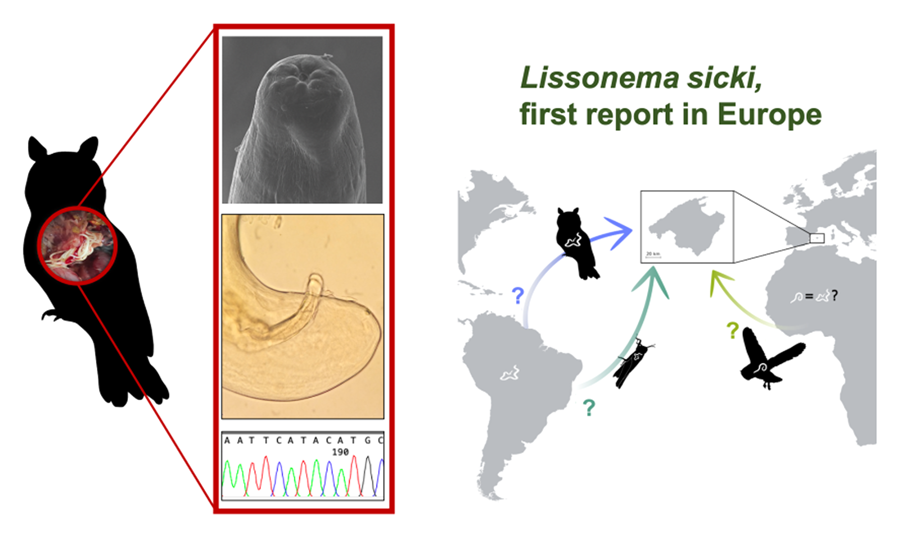
In recent years, air sac parasitic helminths have been reported to cause severe disease in birds. In addition, various species appear to be expanding and infecting new avian hosts in various regions worldwide. In this context, an air sac nematode was initially detected in 2014 infecting the Eurasian scops owl, hospitalized in the local wildlife hospital in Mallorca (Balearic Islands, Spain). Years later, the parasite was detected in 2 other owl species. Air sac nematodes had never been reported in the Mallorcan Strigiformes before. A comprehensive molecular and morphological characterization analysis, including scanning electron microscopy, was required for species confirmation. The species was identified as Lissonema sicki, a parasite infrequently reported in South American owls. Since its first introduction to Mallorca, it has dramatically increased in prevalence in hospitalized birds, being highly prevalent in the Eurasian scops owl (41%), in the long-eared owl (11%) and in the barn owl (4%). The introduction pathway of this parasite to Europe remains unknown. This discovery underscores the expanding range and impact of L. sicki, emphasizing the importance of ongoing surveillance and research to comprehend and manage the implications of its emergence in new territories.
In epidemiological investigations, pathogen genomics can provide insights and test epidemiological hypotheses that would not have been possible through traditional epidemiology. Tools to synthesize genomic analysis with other types of data are a key requirement of genomic epidemiology. We propose a new ‘phylepic’ visualization that combines a phylogenomic tree with an epidemic curve. The combination visually links the molecular time represented in the tree to the calendar time in the epidemic curve, a correspondence that is not easily represented by existing tools. Using an example derived from a foodborne bacterial outbreak, we demonstrated that the phylepic chart communicates that what appeared to be a point-source outbreak was in fact composed of cases associated with two genetically distinct clades of bacteria. We provide an R package implementing the chart. We expect that visualizations that place genomic analyses within the epidemiological context will become increasingly important for outbreak investigations and public health surveillance of infectious diseases.
Field horsetail (Equisetum arvense L.) is a perennial weed native to many areas of the northern hemisphere. Like other horsetail species, field horsetail is a spore-bearing plant from an ancient clade. Unlike some other horsetails, field horsetail is a problematic agricultural weed. It is especially difficult to control in low-tillage cropping systems. Neither chemical nor mechanical tactics are likely to achieve full control in a single operation. However, these tactics may be successfully combined in an integrated weed management program. This review summarizes available information about the biology, ecology, and management of field horsetail. We also note its potential value as a source of pharmaceutical compounds.
Venovenous collaterals are abnormal connections between the systemic and pulmonary venous systems. They are commonly seen in the Fontan circulation and may lead to significant hypoxaemia. Transcatheter closure of venovenous collaterals is a potential but controversial treatment as the long-term benefits and outcomes are not well understood.
Methods:
This retrospective cohort study utilised data from the Australian and New Zealand Fontan Registry. Patients who underwent transcatheter venovenous collateral occlusion for hypoxemia from the year 2000 onwards were included. Atriopulmonary and Kawashima-type Fontan circulations were excluded to reflect a more contemporary Fontan cohort.
Results:
Nineteen patients (age 19.3 ± 7.8 years, 53% female) underwent transcatheter venovenous collateral occlusion. Compared to baseline, mean oxygen saturation was improved at latest follow-up (90.5% vs 87.0%; p = 0.003). Nine patients achieved a clinically significant response (defined as an increase of at least 5% to 90% or greater), and this was associated with lower baseline Fontan pressures (12.9 v 15.6 mmHg; p = 0.02). No heart failure hospitalisations, arrhythmia, transplant referrals, or mortality were observed during the median follow-up period of 4 years. Two patients experienced thromboembolic events and five patients underwent re-intervention.
Conclusion:
Transcatheter occlusion of venovenous collaterals in Fontan patients with chronic hypoxaemia resulted in a modest increase in oxygenation over a median follow-up of 4 years and longer-term prognosis did not appear to be adversely affected. Lower Fontan pressures at baseline were associated with a greater improvement in oxygenation.