To save content items to your account,
please confirm that you agree to abide by our usage policies.
If this is the first time you use this feature, you will be asked to authorise Cambridge Core to connect with your account.
Find out more about saving content to .
To save content items to your Kindle, first ensure no-reply@cambridge.org
is added to your Approved Personal Document E-mail List under your Personal Document Settings
on the Manage Your Content and Devices page of your Amazon account. Then enter the ‘name’ part
of your Kindle email address below.
Find out more about saving to your Kindle.
Note you can select to save to either the @free.kindle.com or @kindle.com variations.
‘@free.kindle.com’ emails are free but can only be saved to your device when it is connected to wi-fi.
‘@kindle.com’ emails can be delivered even when you are not connected to wi-fi, but note that service fees apply.
Genotype-based dietary and physical activity advice can be delivered to young adults before unhealthy lifestyle behaviours or metabolic and physiological conditions have developed. The aim of the present study was to investigate the factors that influence the intention to adopt genotype-based personalised advice on diet and physical activity in young adults who perceive themselves to be a healthy weight versus those who perceive themselves to be overweight or obese. An online survey of 396 young adults (18–25 years) evaluated background factors (participant characteristics (including perception of body weight), psychological factors, belief composites) and constructs of the Theory of Planned Behaviour (TPB) related to the adoption of genotype-based personalised advice. The association between background factors and TPB constructs was assessed using multiple linear regression. The constructs of TPB predicted intention to adopt genotype-based personalised nutrition (P < 0.001, adj. R2 = 0.54; attitude: B = 0.24, subjective norm: B = 0.25, PBC: B = 0.45). Background factors including belief composites, health locus of control, gender, physical activity, and food choice motives of ‘health’, ‘price’, ‘familiarity’, ‘weight control’, and ‘convenience’ significantly added to models of TPB constructs related to the intention to adopt personalised advice (P < 0.05). The influence of background factors varied between TPB constructs and differed based on participants perception of their body weight. The study provides support for the use of the TPB in understanding the intention of young adults to adopt gene-based advice for dietary and physical activity behaviour. In addition to perceived body weight, the background factors identified should help to inform and modify the delivery of advice in behaviour change interventions that seek to use genotype-based personalised advice in young adult populations.
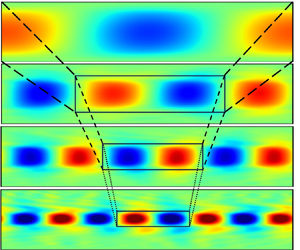
Elastoinertial turbulence (EIT) is a chaotic flow resulting from the interplay between inertia and viscoelasticity in wall-bounded shear flows. Understanding EIT is important because it is thought to set a limit on the effectiveness of turbulent drag reduction in polymer solutions. Here, we analyse simulations of two-dimensional EIT in channel flow using spectral proper orthogonal decomposition (SPOD), discovering a family of travelling wave structures that capture the sheetlike stress fluctuations that characterise EIT. The frequency-dependence of the leading SPOD mode contains distinct peaks and the mode structures corresponding to these peaks exhibit well-defined travelling structures. The structure of the dominant travelling mode exhibits shift–reflect symmetry similar to the viscoelasticity-modified Tollmien–Schlichting (TS) wave, where the velocity fluctuation in the travelling mode is characterised by large-scale regular structures spanning the channel and the polymer stress field is characterised by thin, inclined sheets of high polymer stress localised at the critical layers near the channel walls. The travelling structures corresponding to the higher-frequency modes have a very similar structure, but are nested in a region roughly bounded by the critical layer positions of the next-lower-frequency mode. A simple theory based on the idea that the critical layers of mode $\kappa$ form the ‘walls’ for the structure of mode $\kappa +1$ yields quantitative agreement with the observed wave speeds and critical layer positions, indicating self-similarity between the structures. The physical idea behind this theory is that the sheetlike localised stress fluctuations in the critical layer prevent velocity fluctuations from penetrating them.
This article aims to further Noel Malcolm’s discussion on Thomas Hobbes’s involvement in the affairs of the Virginia Company and to add new perspectives on the subject. For instance, at the time Hobbes joined, William Cavendish was a prominent director and the head of the Bermuda subsidiary; numerous clues suggest that Hobbes attended more courts than the number proposed by Malcolm; moreover, Hobbes was commissioned to solve significant problems within both companies. Examining Hobbes’s views on monopolies suggests that his political work bears the traces of the experience he accumulated during the 1620s, and that ignoring what he observed leads to misreading what he wrote.
We study actions of higher rank lattices $\Gamma <G$ on hyperbolic spaces and we show that all such actions satisfying mild properties come from the rank-one factors of G. In particular, all non-elementary isometric actions on an unbounded hyperbolic space are of this type.
The UK welfare landscape is increasingly challenging due to ongoing austerity involving public sector cuts, service retrenchment, and withdrawal of statutory responsibilities. This article shows that as the welfare state contracts, precarity increases and responsibility for service provision is progressively devolved to front-line individuals and service users. To illustrate, the article examines the use of assistive and everyday technologies to improve social housing residents’ quality of life based on a longitudinal mixed methods study conducted between 2020 and 2022. The findings highlight how housing providers can support person-led technology interventions for older residents, where minor improvements positively impact day-to-day living. However, interventions are often limited by practicalities, capacity, and cost. This article connects technological engagement in housing to the ongoing ‘responsibilisation’ of many areas of housing provision to social landlords and tenants. This suggests an extension of responsibility where social housing providers are papering over the cracks in the welfare state.
In this study, we investigate how eco-social attitudes are interlinked with various modes of political action aimed at preventing environmental change and promoting social welfare. Using multiple correspondence analysis and cluster analysis, we explore the links between attitudes and political action, and associated socio-political characteristics, in the case of Sweden. Our results show a three-node pattern forming a political action triangle: individuals expressing joint support for social welfare and environmental concerns are most actively engaged in political action, while those supporting environmental concerns are sympathetic to take part in political action without actually participating, and those supporting social welfare or expressing low support for either set of concerns seem overly reluctant towards all types of political action. This pattern, which is also tied to distinctive socio-political characteristics, has wider implications for understanding the agency and the mobilization of support for tackling the multiple ecological and social crises contemporary societies are facing.
The world around us is growing increasingly digital and data-intensive, affecting our lives and practices as citizens and researchers in a multitude of ways. We have to ask how we ensure that academic research remains trustworthy and transparent as digitalization disrupts our practices. This article draws attention to the multifaceted nature of the challenges early-career researchers face with academic publishing in the digital era. Thus, rather than zooming in on one aspect, and losing track of the complexity of the problem, it addresses (1) the purpose of academic publishing, (2) the type of material to be published, (3) the role and use of AI and data in research, (4) the entanglement of academic publishing and research assessment, (5) the role of Open Science, and (6) what makes early-career researchers as a group different from other researchers.
This article analyzes the relationship between living systems theory (LST) and the army's military doctrine in the 1980s. General Donn Starry, Colonel Mike Malone, and Major James Cary worked with James G. Miller, the founder of LST, to make the army more efficient at fighting a Soviet invasion of Western Europe. LST conceptualized that living organisms organized matter and energy and that its components could function because they worked as a part of the whole to adapt to their environment. The article reveals how these officers employed LST as a framework to model a reciprocal relationship between individual agency and collective unity in the army's hierarchical organization. Situating this doctrinal reform in the years after the end of the draft and the mainstreaming of neoclassical economics in the 1980s, it finds that the army officers were using LST to replace Robert McNamara's mechanical strategic paradigm used in the Vietnam War.
The United States’ free speech regime, as codified in the First Amendment to the United States Constitution, comes with obvious contrasts to Thailand’s ill-famed lèse–majesté law—Section 112 of the Thai Criminal Code—which prohibits defamation or even truthful degradation of the Thai King and Royal Family. Recent scholarship has focused on such differences and has largely depicted the two regimes as diametric opposites. When viewing the First Amendment and Thailand’s lèse–majesté law in temporal isolation, the recent scholarly consensus has significant merit. However, by analyzing the two regimes over time, similarities arise suggesting that both regimes represent each respective country’s attempt to accommodate competing and changing values present within the respective countries.
Natural disturbances influence wetland carbon cycling, and fire is a key driver of terrestrial carbon stocks. However, the influence of fire on wetland carbon cycling remains poorly understood. Here, we investigated how prescribed fire and wildfire impact soil carbon storage in a forested floodplain of south-eastern Australia. We sampled four areas within Murray Valley National Park, the world’s largest river red gum (Eucalyptus camaldulensis) stand, and compared soil carbon (C), nitrogen (N) and C:N ratios between control (unburnt in the 50 years prior to sampling), prescribed burn and wildfire-impacted floodplain areas. Mean soil C and N concentrations were 4.7% ± 0.32% and 0.36% ± 0.02%, respectively, and mean C:N ratios were 14.23 ± 0.33. Carbon concentrations and C:N were highest in control areas of the floodplain, while N concentrations were highest at wildfire-impacted areas. However, flood frequency was a stronger driver of soil C than fire disturbance. Soils at more frequently flooded areas had higher C concentrations compared to less frequently flooded areas, suggesting that resilience to C loss through fire could be enhanced through hydrological restoration. We believe this warrants further research as a potential nature-based climate measure. Mean C density data indicate soil C stocks of 9.4 Tg across Barmah-Millewa Forest, highlighting the significant carbon storage value of this ecosystem.
This paper presents a methodology to design band-pass filters having ultrawide stopband characteristics using multilayer circular substrate-integrated waveguide (SIW) cavities. The orthogonal microstrip feedlines are used as input and output ports that are present at the top and bottom layers, while the middle layers are used to couple the SIW cavities. Higher-order spurious modes of the circular SIW cavity are suppressed by using orthogonal feeding mechanism and properly adjusting the arc-shaped slots between the cavities. To validate the present approach, two filters (second- and fourth-order) have been designed and fabricated and their characteristics are measured. The second-order filter exhibits a stopband rejection below 25 dB up to nearly 5.07f0, while the fourth-order filter has a stopband characteristic of nearly 5.05f0 with 20 dB rejection. The filters allow only TM010 mode propagation and attenuate the higher-order spurious modes of the cavity.
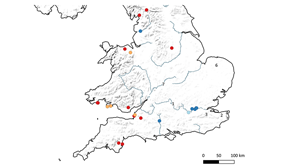
Substantial debate surrounds the relative lack of formal burials in Britain during the fifth century AD, which was a key period of social and economic transition following the withdrawal of the Roman army. Here, the authors argue that the ‘missing fifth century’ may be explained, in part, by the continuation of archaeologically invisible mortuary treatments practised in the preceding Iron Age and Roman period. Compilation of published radiocarbon dates from human remains found in cave and riverine contexts demonstrates that a variety of methods for the disposal of the dead—outside of formal cemeteries—existed in the first millennium AD.
This comment on Moritz Altenried's The Digital Factory discusses how the book offers four interrelated theoretical contributions to the study of labour in the digital economy – redefining the factory, specifying digital Taylorism, materializing its infrastructure, and mapping class relations – through four sites of investigation. The piece discusses the implications of the resulting multiplication of labour and labour relations for reconfigured class relations and resistance and argues that the differentiated social relations across spatial and material contexts ask for a theorization of the conjunctural nature of these relations.
This article identifies a sub-category of norm contestation I've termed ‘norm weaving’, where actors contest the constitution of norm clusters, instead of the validity of individual norms. This occurs through processes of stretching or reproducing individual strands of existing norm clusters before weaving them together to create behaviour guides in undergoverned issue areas that are greater than the sum of their individual parts. I identify two examples of weaving in the world-leading actions of Fiji and Vanuatu around domestic climate mobilities. Using these two cases, we can see that existing models of norm dynamics need to be developed to better explain and understand weaving-like processes of norm contestation. There are two areas where norm weaving extends our understanding – in how clusters of norms emerge and change, and in how contestation applies to groupings of norms. Clarifying what norm weaving looks like in these cases could open the door to further examples being identified in other contexts and a more complete understanding of how norms operate in global politics.
With the advent of socio-technical systems that gather and process personal data, the capacity to identify and even locate people in an automated fashion has dramatically increased. This article discusses what militaries need to know about data protection and the right to digital privacy/private life when personal data is processed. The focus in this discussion is on sensitive data that makes individuals identifiable. It is here argued that the right to data protection and the right to digital privacy/private life are distinctive and separate rights and should be treated as such, despite some overlaps. Although the law of armed conflict approaches processing of sensitive data in a topical manner, it remains firm on the delimitation between what is permissible and what becomes unlawful when it comes to processing data. This article illustrates that elements of both data protection and protection of the right to privacy/private life can be traced in the law of armed conflict. In fact, both rights remain distinctive also in times of armed conflict and must be separately protected through obligations of result as well as obligations of conduct.
This Article examines the criminal law defense of provocation in the U.S., which employs an objective reasonable person standard, as applied to recent Asian immigrants. It discusses approaches taken in other countries and describes the cultural defense. The Article concludes with different possibilities for a hypothetical Asian defendant who was provoked: Improving education about U.S. laws as a preventative measure, using expert cultural witnesses at trial, and taking the defendant’s characteristics into consideration during the sentencing stage.
To realize the potential of materials comprising living organisms, bioengineers require a holistic understanding of the reciprocal relationship between environmental conditions and the biochemical and biophysical processes that influence development and behaviour. Mathematical modelling has a critical part to play in managing the complexity of biological dynamical systems and attaining higher degrees of control over their trajectories and endpoints. To support the development of mycelium-based engineered living materials, this paper reviews the literature of growth models for filamentous fungi with emphasis on the connection between morphogenesis and metabolism.
Varicella is a vaccine-preventable infectious disease. Since 1 December 2018, the varicella vaccine has been included in the local Expanded Programme on Immunization (EPI) in Wuxi, China, and children born after 1 December 2014 are eligible for free vaccination. To evaluate the effect of varicella vaccination in Wuxi city, we selected 382 397 children born from 2012 to 2016 as subjects. Their disease data were obtained from the Chinese Disease Prevention and Control Information System, and their vaccination data were obtained from the Jiangsu Province Vaccination Integrated Service Management Information System. The incidence of breakthrough varicella cases increased in the first 4 years and reached the peak in the fifth year. With the increase of vaccination rate, the incidence of varicella decreased significantly. The vaccine effectiveness (VE) was found to be 88.17%–95.78% for one dose and 98.65%–99.93% for two doses. Although the VE per dose decreased from 99.57% in the first year to 93.04% in the eighth year, it remained high. These findings confirmed the effectiveness of varicella vaccination in children, supported the use of a two-dose varicella vaccination strategy to achieve better protection, and provided important insights into the optimal vaccination strategy for varicella prevention in children.
This article analyzes the affective economy of West Germany's postwar society. After delineating the intellectual history of the Frankfurt Institute for Social Research's “Gruppenexperiment,” which consisted of 137 group interviews with different segments of West German society, my article focuses on one transcript of a 1950 group discussion of young fashion-designer apprentices. Based on a close reading, I study how the younger generation in West Germany constructed a passive and privatist self-image in which they could both articulate their emotional dissociation from National Socialism while clinging to antidemocratic, racist, and antisemitic feelings in metamorphosed form. The micrological focus of the analysis of the group's emotions is balanced by a rereading of both Helmut Schelsky's study about the “skeptical generation” and texts by researchers associated with the Institute for Social Research who came to markedly different conclusions about the West German youth.
This article assesses the changes in humanitarianism by locally stationed British government officials after the Balkan Wars and after the First World War. Studies have examined British humanitarian goals in the Ottoman Empire in relation to the First World War, but lacking is an assessment of efforts from locally stationed British officials, with a particular absence of research regarding the Balkan Wars. We find that while British humanitarianism was expanded after the First World War, the framework for those changes was established during the Balkan Wars. Comparing evolving humanitarianism during these time periods is best seen via changes in the range of intervention strategies to create ‘good government’, to prevent and stop atrocities, and to care for refugees. Unlike the British relationship with the Ottoman government during the Balkan Wars, Britain’s humanitarian stance in 1918 and 1919 was matched by a stronger grasp on power in Constantinople and over the Ottoman Porte. However, as the political, social, financial, and military demands of the post-war landscape undermined Constantinople’s power, so too was British humanitarianism undermined.