To save content items to your account,
please confirm that you agree to abide by our usage policies.
If this is the first time you use this feature, you will be asked to authorise Cambridge Core to connect with your account.
Find out more about saving content to .
To save content items to your Kindle, first ensure no-reply@cambridge.org
is added to your Approved Personal Document E-mail List under your Personal Document Settings
on the Manage Your Content and Devices page of your Amazon account. Then enter the ‘name’ part
of your Kindle email address below.
Find out more about saving to your Kindle.
Note you can select to save to either the @free.kindle.com or @kindle.com variations.
‘@free.kindle.com’ emails are free but can only be saved to your device when it is connected to wi-fi.
‘@kindle.com’ emails can be delivered even when you are not connected to wi-fi, but note that service fees apply.
Does gender influence how candidates in the United States present their prior political experience to voters? Messaging one’s experience might demonstrate a history of power-seeking behavior, a gender role violation for women under traditional norms. As a result, men should be more likely to make experience-based appeals than women candidates. For evidence, we analyze the contents of 1,030 televised advertisements from 2018 state legislative candidates from the Wesleyan Media Project. We find that ads sponsored by experienced men are significantly more likely to highlight experience than ads sponsored by experienced women. However, we find that women’s and men’s ads are roughly equally likely to discuss work experience, suggesting that men’s greater emphasis on experience is limited to prior officeholding. The results contribute to our understanding of gender dynamics in political campaigns, the information available to voters, and how advertising shapes the criteria voters use to assess candidates.
Violence against women in politics is on the rise, threatening political achievements with respect to equality. Little research, however, has been conducted on the experiences of women from minority communities. This article, therefore, takes an intersectional approach to explore how gender, religion, and other categories of difference intersect when it comes to Muslim women’s experiences in the UK. Based on a longitudinal case study of Bradford West during the 2015, 2017, and 2019 general elections that combines participant observations, qualitative interviews, and a Twitter analysis, we argue that, in addition to the violence often experienced by women, Muslim women are also confronted with Islamophobic bias and abuse, as well as intersectional intimidation and harassment from within the Muslim community in their constituencies. Our case study approach, however, also reveals the existence of appreciation and support for Muslim women in politics that needs to be nurtured to counter abuse.
The conventional approach to Isaiah Berlin's writings has been to treat them discursively, as philosophical texts. While such approaches are insightful, there is more to Berlin's writings than his arguments. Among his literary strategies is a comparative approach that involves the use of metaphors, similes, and analogies. As I will argue, Berlin's use of metaphor constitutes a core component of his work, where his meaning is often suggestive more than precise. Berlin's intention seems to be to exhibit those aspects of experience reflective of uncertainty, where our choices are not determined by necessity. Such an intention ostensibly exhibits his value pluralism, as well as an oft-neglected sensitivity to the forms of language. By resorting to metaphors Berlin accomplishes several things: he shows how the intelligibility of experience is partially imagistic, he illustrates how meaning can be structured comparatively but nondiscursively, and he exemplifies the importance of these things for decision making.
The state of the Free Exercise Clause in U.S. constitutional law is uncertain. With an opportunity in Fulton v. Philadelphia to clarify the vitality of the current standard from Employment Division v. Smith, the United States Supreme Court has declined to do so. The lasting impact of Smith has been to move away from directly requiring government justifications for infringing free exercise. Instead, courts now use neutrality and general applicability as heuristics for government justification. Yet, relying solely on neutrality and general applicability to proxy for government justification when infringing religious exercise distracts courts from conducting a fact-based inquiry. This article demonstrates how more scrutiny of the legislative facts in free exercise doctrine may serve as a viable alternative to Smith’s flawed approach for evaluating government justifications. The author first shows empirically how more factual scrutiny—directly requiring the government to justify its actions with evidence—can benefit government and religious claimants and then discusses the normative advantages of a fact-intensive approach to constitutional scrutiny. During a moment of sharp division over religious freedom and other competing rights, factual scrutiny can be a powerful tool for handling free exercise challenges and promoting responsible religious freedom.
While several risk factors for schizophrenia have been identified, their individual impacts are rather small. The relative independent and cumulative impacts of multiple risk factors on disease risk and age of onset warrant further investigation.
Study design
We conducted a register-based case–control study including all individuals receiving a schizophrenia spectrum disorder in Denmark from 1973 to 2018 (N = 29,142), and a healthy control sample matched 5:1 on age, sex, and parental socioeconomic status (N = 136,387). Register data included parental history of psychiatric illness, birth weight, gestational age, season of birth, population density of birthplace, immigration, paternal age, and Apgar scores. Data were analysed using logistic regression and machine learning.
Results
Parental history of psychiatric illness (OR = 2.32 [95%CI 2.21–2.43]), high paternal age (OR = 1.30 [1.16–1.45]), and low birth weight (OR = 1.28 [1.16–1.41]) increased the odds of belonging to the patient group. In contrast, being a second-generation immigrant (OR = 0.65 [0.61–0.69]) and high population density of the birthplace (OR = 0.92 [0.89–0.96]) decreased the odds. The findings were supported by a decision tree analysis where parental history, paternal age, and birth weight contributed most to diagnostic classification (ACCtest = 0.69, AUCtest = 0.59, p < 0.001). Twenty percent of patients were child-onset cases. Here, female sex (OR = 1.82 [1.69–1.97]) and parental psychiatric illness (OR = 1.62 [1.49–1.77]) increased the odds of receiving the diagnosis <18 years.
Conclusion
Multiple early factors contribute independently to a higher psychosis risk, suggesting cumulative effects leading to symptom onset. Routine assessments of the most influential risk factors could be incorporated into clinical practise. Being female increased the risk of diagnosis during childhood, suggesting sex differences in the developmental trajectories of the disorder.
We study the parameterized complexity of the problem to decide whether a given natural number n satisfies a given $\Delta _0$-formula $\varphi (x)$; the parameter is the size of $\varphi $. This parameterization focusses attention on instances where n is large compared to the size of $\varphi $. We show unconditionally that this problem does not belong to the parameterized analogue of $\mathsf {AC}^0$. From this we derive that certain natural upper bounds on the complexity of our parameterized problem imply certain separations of classical complexity classes. This connection is obtained via an analysis of a parameterized halting problem. Some of these upper bounds follow assuming that $I\Delta _0$ proves the MRDP theorem in a certain weak sense.
Collation of satellite imagery and new fieldwork in Şanlıurfa (south-east Türkiye) has revealed large numbers of stone-walled desert kites, some of which may date to the Pre-Pottery Neolithic (c. 9500–7000 BC). The authors briefly explore the potential role of these structures in the processes of early sedentism and monumentality.
Given the dramatic growth in the financial burden of cancer care over the past decades, individuals with cancer are increasingly susceptible to developing social needs (e.g., housing instability and food insecurity) and experiencing an adverse impact of these needs on care management and health outcomes. However, resources required to connect individuals with needed social and community services typically exceed the available staffing within clinical teams. Using input from focus groups, key informant interviews, user experience/user interface testing, and a multidisciplinary community advisory board, we developed a new technology solution, ConnectedNest, which connects individuals in need to community based organizations (CBOs) that provide services through direct and/or oncology team referrals, with interfaces to support all three groups (patients, CBOs, and oncology care teams). After prototype development, we conducted usability testing, with participants noting the importance of the technology for filling a current gap in screening and connecting individuals with cancer with needed social and community services. We employ a patient-empowered approach that engages the support of an individual’s healthcare team and community organizations. Future work will examine the integration and implementation of ConnectedNest for oncology patients, oncology care teams, and cancer-focused CBOs to build capacity for effectively addressing distress in this population.
This article details the concept of constitutional embedding and demonstrates its utility in four country-rights cases. Constitutional embedding refers to the process by which some understanding of constitutional rights comes to take root in everyday life, moving from words on paper to something that shapes expectations and behavior. The degree of constitutional embedding varies along two dimensions: social and legal, or how individuals and groups operating in the social sphere understand and relate to constitutional rights, and how those working in the formal legal sphere do so. In a global political climate defined by democratic backsliding, powerful vested interests, and backlash against moves toward equality, the status of constitutional rights and how they become and remain embedded is doubly important. The constitutional embedding framework highlights how interactions between legal elites and ordinary citizens constitute the extent to which constitutional law influences daily life. The framework has broad applicability across contexts and rights domains.
Mainstream cognitive behavioural theory stipulates that clinically significant health anxiety persists over time at least partially due to negatively reinforced health-related behaviours, but there exists no broad and psychometrically valid measure of such behaviours.
Aims:
To draft and evaluate a new self-report scale – the Health Anxiety Behavior Inventory (HABI) – for the measurement of negatively reinforced health anxiety behaviours.
Method:
We drafted the HABI from a pool of 20 candidate items administered in a clinical trial at screening, and before and after cognitive behaviour therapy (n=204). A psychometric evaluation focused on factor structure, internal consistency, convergent and discriminant validity, test–retest reliability, and sensitivity to change.
Results:
Based on factor analysis, the HABI was completed as a 12-item instrument with a four-dimensional factor structure corresponding to the following scales: (i) bodily preoccupation and checking, (ii) information- and reassurance-seeking, (iii) prevention and planning, and (iv) overt avoidance. Factor inter-correlations were modest. The internal consistency (α=.73–.87) and 2-week test–retest reliability (r=.75–.90) of the scales was adequate. The bodily preoccupation and checking, and information- and reassurance-seeking scales were most strongly correlated with the cognitive and emotional components of health anxiety (r=0.41, 0.48), and to a lower extent correlated to depressive symptoms and disability. Change scores in all HABI scales correlated with improvement in the cognitive and emotional components of health anxiety during cognitive behaviour therapy.
Conclusions:
The HABI appears to reliably measure negatively reinforced behaviours commonly seen in clinically significant health anxiety, and might be clinically useful in the treatment of health anxiety.
This study aimed to explore relationships between parental stress, coping, and outcomes for parents of infants with CHD, via observational approach reflecting domains of the Parental Stress and Resilience in CHD (PSRCHD) model.
Methods:
Fifty-five parents of 45 infants with CHD completed questionnaires with measures of parental stress, Problem-Focused Coping (PFC), Emotion-Focused Coping (EFC), Avoidant Coping (AC), mental health (symptoms of anxiety and symptoms of depression), post-traumatic growth (PTG) and quality of life (QoL). Demographic and infant clinical data were obtained.
Results:
Parental stress showed significant small to medium positive correlations with MH and PTG, but no significant correlations with QoL. EFC and AC showed significant small to medium positive correlations with MH, and medium negative correlations with parental QoL. EFC and PFC had significant small to medium correlations with PTG. PFC and AC had significant small to medium correlations with infant QoL. Hierarchical multiple regression analyses indicated that parental symptoms of anxiety, PTG, parental QoL, infant QoL were significantly predicted by models comprising of parental stress, coping styles, and clinical controls (adjusted R2 = 13.0–47.9%, p range < 0.001–.048), with results for parental symptoms of depression falling marginally above significance (adjusted R2 = 12.3%, p = .056).
Conclusions:
Parental stress, coping styles, and length of hospital stay are related to psychological outcomes in parents of infants with CHD. Future research may use the PSRCHD framework to assess mechanisms underlying CHD parents’ stress and coping experiences and investigate longitudinal relationships between parental factors and parent and child outcomes.
Civic associations underpin American democracy. How can politically cross-cutting associations engage members who hold divergent viewpoints amidst increasing partisan polarization and nationalization of politics? I examine this question in the context of labor unions, studying how unions engage members who hold conservative views at odds with some of the union’s political actions. Using original surveys of local union presidents, members, and non-members along with in-depth interviews in selected local unions, I show how local union leaders can foster norms of participation among politically cross-pressured members. Norms of participation increase conservative members’ perceptions of political representation and engagement in politics, including participation in the union’s political action committee and support for union political mobilization. These findings have implications for understanding civic associations and participation in an era of political division, as well as the role unions continue to play in politics.
This article examines Morgenthau's switch from international law to international politics, arguing that it was fundamental to his emergence as a founder of postwar realism in the United States. More precisely, it sets this switch in the context of a far-reaching but largely overlooked debate among American jurists during the 1930s on the question of peaceful change: of how to revise an international order or major aspects of it by means other than war. This debate provided Morgenthau with a solution to the impasse reached by his project in international law before World War II, allowing him to transform what appeared to be a problem from the vantage point of international law into a structural element of an approach to international politics—of his realism.
In [A. Capozzoli, C. Curcio, A. Liseno, MMS, Pizzo Calabro, Italy, 2022], the problem of modeling a source/scatterer using an equivalent radiator has been addressed and an approach has been given and numerically assessed.
Once dimensioned the radiating panel, a practical implementation can be provided by a non-uniform array. The element positions should be chosen so that the array is capable to approximate, with an adequate accuracy, the fields radiated by the equivalent radiator. Here, the array element positioning is performed by exploiting a quadrature rule which takes into account that the singular functions supported on the region of interest associated to the most significant singular values of the radiation operator are related to those supported on the equivalent panel by a radiation integral. The quadrature rule enables also to choose a set of weights which are essential in the definition of the element excitation coefficients from the knowledge of the source distribution on the equivalent panel. For simplicity, a one-dimensional problem with a Legendre quadrature rule is considered. The approach is numerically assessed by checking the capability of the array to radiate, with a satisfactory degree of accuracy, the singular functions associated to the region of interest.
Many citizens in liberal democracies are concerned about immigration and its impact on their countries. Governments often seek to address these concerns by restricting the post-entry rights of immigrants such as the right to permanent settlement or access to welfare benefits. Thereby, it is expected that immigrants with an inferior legal status are (perceived as) less threatening to natives and, as a result, make the latter more willing to accept new immigrants. Does this policy rationale indeed attenuate public opposition to immigrant admission and thus allow for the reconciliation of the economic need for immigrants with the political concerns of domestic constituents? This study advances the theoretical argument of a rights-conditionality in citizens’ immigration preferences and provides empirical evidence on the phenomenon. A factorial survey experiment among citizens in the United States and Switzerland tests the effect of residence and welfare rights on the public opposition to immigrant admission. The results show that restricting immigrants’ welfare rights does significantly decrease public opposition towards immigration across the two countries. In contrast, restricting immigrants’ residence rights does not, and in the context of Switzerland, even increases opposition to immigrant admission. Citizens critical of immigration are thus not per se more welcoming to immigrants if they receive an inferior legal status but seem to care about immigrants’ contributions and commitment to the receiving society. The findings highlight the importance of immigrants‘ post-entry rights in the view of citizens and show how the design of immigration policies may help to understand public immigration preferences.
Tactical litigation is a reality of the adversarial litigation framework that is currently in place. However, there is a difference between the tactical litigation of choosing a forum which may have more favorable law or be more convenient and choosing a forum with the intent to drive the opposing party to failure. The latter has been the issue with some of the tactical litigation that has occurred under the European Union’s framework of lis pendens. While the Recast Brussels I Regulation has alleviated some of those issues, it has not addressed all of them. While some scholars have argued that these issues of lis pendens may be answered by introducing the common law doctrine of forum non conveniens to these proceedings, that is not the case. This Article explores the pitfalls of lis pendens and forum non conveniens and ultimately finds that forum non conveniens is unable to solve the issues lis pendens creates in tactical litigation. Furthermore, the Article finds that forum non conveniens, inherently and acting as it should, has its own problems which echo lis pendens’ own issues in the European Union. Furthermore, forum non conveniens is simply incompatible with the policies the European Union implemented with lis pendens. Ultimately, forum non conveniens is unable to answer the problems lis pendens has created and solutions must be found from within the European Union’s own civil system.
In 1884, during the period of the Socialist Laws, August Bebel took the time to publish a historical work entitled Die mohamedanisch- arabische Kulturperiode. In it Bebel positioned Islam and the early caliphates as the unacknowledged link between Greco-Roman traditions of knowledge and the blossoming of European culture that, he argued, had occurred since the Renaissance. He also used the book as an opportunity to reject claims that Christianity had played this key role in world historical progress. Through an examination and contextualization of Bebel's writings on Islam, this article shows how he viewed the role of different religious traditions within world history and how his views intersected with contemporary questions regarding the relationship between religion and socialism. The article also examines how Bebel's work fits within a longer tradition of socialist solidarity with the Ottoman Empire.
Major depressive disorder (MDD) is a leading cause of disability and premature mortality. This study compared the overall survival (OS) between patients with MDD and non-MDD controls stratified by gender, age, and comorbidities.
Methods
This nationwide population-based cohort study utilized longitudinal patient data (01/01/2010 – 12/31/2020) from the Hungarian National Health Insurance Fund database, which contains healthcare service data for the Hungarian population. Patients with MDD were selected and matched 1:1 to those without MDD using exact matching. The rates of conversion from MDD to bipolar disorder (BD) or schizophrenia were also investigated.
Results
Overall, 471,773 patients were included in each of the matched MDD and non-MDD groups. Patients with MDD had significantly worse OS than non-MDD controls (hazard ratio [HR] = 1.50; 95% CI: 1.48−1.51; males HR = 1.69, 95% CI: 1.66–1.72; females HR = 1.40, 95% CI: 1.38–1.42). The estimated life expectancy of patients with MDD was 7.8 and 6.0 years less than that of controls aged 20 and 45 years, respectively. Adjusted analyses based on the presence of baseline comorbidities also showed that patients with MDD had worse survival than non-MDD controls (adjusted HR = 1.29, 95% CI: 1.28–1.31). After 11 years of follow-up, the cumulative conversions from MDD to BD and schizophrenia were 6.8 and 3.4%, respectively. Converted patients had significantly worse OS than non-converted patients.
Conclusions
Compared with the non-MDD controls, a higher mortality rate in patients with MDD, especially in those with comorbidities and/or who have converted to BD or schizophrenia, suggests that early detection and personalized treatment of MDD may reduce the mortality in patients diagnosed with MDD.
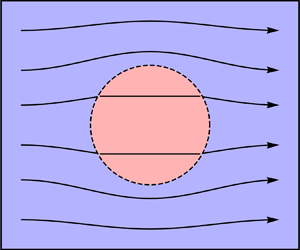
The flow of a nematic liquid crystal in a Hele-Shaw cell with an electrically controlled viscous obstruction is investigated using both a theoretical model and physical experiments. The viscous obstruction is created by temporarily electrically altering the viscosity of the nematic in a region of the cell across which an electric field is applied. The theoretical model is validated experimentally for a circular cylindrical obstruction, demonstrating user-controlled flow manipulation of an anisotropic liquid within a heterogeneous single-phase microfluidic device.