To save content items to your account,
please confirm that you agree to abide by our usage policies.
If this is the first time you use this feature, you will be asked to authorise Cambridge Core to connect with your account.
Find out more about saving content to .
To save content items to your Kindle, first ensure no-reply@cambridge.org
is added to your Approved Personal Document E-mail List under your Personal Document Settings
on the Manage Your Content and Devices page of your Amazon account. Then enter the ‘name’ part
of your Kindle email address below.
Find out more about saving to your Kindle.
Note you can select to save to either the @free.kindle.com or @kindle.com variations.
‘@free.kindle.com’ emails are free but can only be saved to your device when it is connected to wi-fi.
‘@kindle.com’ emails can be delivered even when you are not connected to wi-fi, but note that service fees apply.
I argue that the term ‘naturalism’ is so empty of meaning that it is not suitable for serious theorizing in philosophy. In particular, I argue that the question of whether or not some theory or thesis should count as naturalistic is an empty verbal dispute with no further theoretical significance. I also discuss naturalism construed as a methodological thesis and argue that any plausible version will collapse into triviality. Lastly, I briefly discuss the idea that naturalism is not a thesis at all but rather a ‘stance’ and suggest that this too succumbs to the charge of emptiness. I conclude that we should stop talking about naturalism altogether.
The Gothic translation of Phil 2.6–8 differs from the Greek in three ways: it says that Christ did not think it robbery to be ‘like God’; it breaks the parallelism between the ‘form of God’ and ‘form of a slave’; and it states explicitly that Christ was obedient ‘to the Father’. Scholars have focused exclusively on the first element, crediting it to the Homoian ‘Arian’ prejudices of the translator, Wulfila, or to his opposition to modalist tendencies in pro-Nicene thought of the 340s. Neither interpretation is satisfactory, the first because the Gothic displays no generalised Homoian bias, the second on philological grounds. When the passage is viewed as a whole, an explanation can be found in the history of exegesis. Homoian churchmen, who followed a theology close to the elderly Wulfila’s, seem to have construed ἁρπαγμός (Gothic wulwa, English ‘robbery’) as res rapienda, in the typology developed by N.T. Wright. Christ did not ‘seize’ equality with God. Incompatible with this view, the Gothic is a better fit for res retinenda (Christ did not ‘hold fast’ his divine status). In an ancient analogue to modern ‘functional equivalence’, it is representing the meaning of the text, as agreed among Greek exegetes, on the translation’s surface. Just why Wulfila did this remains obscure: certainly to clarify the passage’s Christology, but possibly also to head off misinterpretation in his Gothic context. Either way, the Gothic text shows a more flexible approach to translation than scholarship, still focused on stereotyped ‘Arianism’ and lexical equivalence, has yet recognised.
Do we have free will? In this interview, Professor Helen Beebee sets out the problem, a key argument for the conclusion that we lack free will, and explores the solutions that have been offered.
The Strength of Weak Ties is among the most influential social theories of the past 50 years. However, its prediction that weak ties are especially useful for obtaining novel information is sometimes not supported. To understand why, I investigate whether social networks typically satisfy the theory’s assumptions, and whether the theory’s prediction is robust to violations of its assumptions. First, examining a diverse corpus of 56 empirical social networks, I show that empirical social networks (nearly) satisfy some but not all of the theory’s assumptions. Second, using a simulation of information diffusion, I show that the predicted utility of weak ties is not robust to violations of these assumptions. When the assumptions of the theory are violated, as is common in social networks, access to novel information depends on bridging ties, regardless of their strength. Moreover, when they exist, strong bridges (i.e., bridges with high bandwidth) are more useful than weak bridges (i.e., bridges with low bandwidth). I conclude by recommending that research applying this theory should first consider whether its assumptions are satisfied, and that a tie’s strength and bridgeness should be measured and modeled independently.
Since commencing its illegal invasion in 2022, the Russian military and authorities have committed numerous war crimes against the people of Ukraine. These include the mutilation and execution of combatants; the torture, kidnapping, forced expulsion, rape, and massacre of civilians; and indiscriminate attacks on densely populated areas. In this essay, I evaluate the strategic implications of this misconduct, focusing exclusively on Western responses. I argue that war crimes can and often do negatively impact the strategic goals of the perpetrator, but whether and how this occurs is rarely governed exclusively by the offending action. Western perceptions of battlefield atrocity, shaped as they are by identity, race, and politics, may radically shift from one context to another. In the case of the Russia-Ukraine war, the status of both the participants and the conflict itself has helped inculcate a particular sensitivity among Western actors to the battlefield criminality of Russia. Drawing on evidence from the 2022 Bucha massacre and the ongoing bombing of Ukrainian civilians, I argue that Russian misconduct has consolidated Western support for the Ukrainian military effort, politically, diplomatically, and materially.
The human right to leave any country protects an intrinsic interest in free movement and is also a vital pre-condition to seeking asylum. The right to leave attracts little academic interest, but it is quietly being eroded. Exit restrictions in States of origin or transit have become an instrument of extraterritorial migration control for European Union Member States seeking to prevent the arrival of unwanted migrants. This article first explores the revival of exit restrictions, focusing on agreements between European destination States and select African States of departure. It argues that the adoption of exit restrictions from one State to prevent entry to another creates the paradox of seamless borders, where regulation of exit and entry are harmonized and fused to serve the singular objective of preventing entry to the destination State. The article further argues that the political and discursive coupling of anti-smuggling and search-and-rescue regimes occlude the rights-violating character of exit restrictions and enables breach of the right to leave to hide in plain sight. Additionally, current approaches to jurisdiction and State responsibility in regional and international courts render the prospect of destination State liability uncertain in circumstances where the destination State does not exercise legal and physical control over enforcement. The article draws on ‘crimmigration’ and border criminology literature to identify the common element of carcerality that connects confinement of migrants to the territory of departure States with migrant detention inside the territory. Beyond lamenting the erosion of exit rights, the article concludes by querying whether the erosion of the right to leave is symptomatic of a larger trend toward the regulation of mobility itself.
Classical archaeological chronologies are steeped in relative dating, but the application of absolute methods does not always support such clear-cut seriation. Here, the authors consider the significance of a Macedonian vase in reconciling the conventional and absolute chronologies of Early Iron Age Greece. Decorated with compass-drawn concentric circles and found in a Late Bronze Age context at ancient Eleon, Boeotia, the authors argue that this vessel establishes a chronological anchor and supports a twelfth-century BC emergence of the Protogeometric style in central Macedonia. A model for the indigenous development and dispersal of the Macedonian Protogeometric style is presented for future elaboration.
In the early twentieth century, the Iranian Reza Shah state (1925–1941), in conjunction with the emerging group of state-trained scholars, called the status of ulama as knowledge producers into question. Existing scholarship has primarily examined the impact of state modernization on the Muslim clergy and their responses to modernization but has paid lesser attention to the passive role of the ulama or their representation in modernist intellectual and literary discourses. I examine two major Persian sources of the period to argue that intellectual representation of the ulama, in both polemics and academic critique, aided the state in its attempt to push the ulama from the center of intellectual and social life to the margins of ritual purity. Among my primary sources is a previously unexamined academic thesis authored by Qasim Tuysirkani in 1938.
On October 7, 2023, Palestinian armed groups, chiefly Hamas's armed wing, breached the fence around the Gaza strip and launched attacks on Israeli territory. Over several hours, Palestinian fighters killed 1,269 people, mostly civilians, engaged in sexual violence and torture, and took 253 hostages. The same day, Israel's Prime Minister Benjamin Netanyahu declared, “Israel is at war,” and the Israel Defense Forces (IDF) launched air strikes and later a ground invasion of Gaza. In the eleven months since, Palestinian groups have continued to hold, mistreat, and kill hostages and launched rockets into Israel's population centers. Meanwhile, the IDF has killed an estimated forty-one thousand people in Gaza, mostly civilians, engaged in sexual violence and torture of Palestinian detainees, damaged or destroyed most of the food, water, and medical infrastructure, and restricted humanitarian access, with dire consequences. Civilian casualty experts argue the death toll (which excludes the likely greater number killed “indirectly” through disease and deprivation) far exceeds what we have come to expect from contemporary military campaigns. Both sides have committed violations of International Humanitarian Law (IHL), too many to list individually.
This article charts a new course for the study of the Middle Persian documents from early Islamic Iran, which takes their early Islamic context into account more fully than has hitherto been done. This approach and its potential fruits for the study of early Islamic history are illustrated through an in-depth treatment of four seventh-century documents from the Qom region (previously edited and discussed by Dieter Weber), each of which contains a fiscal term that is apparently otherwise unattested in the documentary corpus. I show that the existing interpretations of these documents anachronistically project the fiscal terminology and structures of a later time into early Islamic Iran, and that these documents, considered in aggregate, suggest a certain course of development for the Islamic fiscal system in the post-Sasanian territories in the decades following the initial conquests: from broad and relatively unspecific impositions to more targeted exactions, based on increasingly detailed assessments.
Focusing on the cultural history of vocal music in Pahlavi Iran, this article examines the senses in modern Iranian history. As the article shows, the performance of Iranian vocal music became subject to a gendered male and female dichotomy. While this dichotomy did not exist in early Pahlavi Iran, in the early 1950s, a gendered consciousness and language emerged among male musicophilias, eventually separating genres of vocal performance across gender lines. Hence, vocal music known as āvāz became increasingly associated with male performers, while tarāneh and tasnif were increasingly associated with female performers. As the article attempts to show, this gender dichotomy should be contextualized in the broader tension between the sense of vision and sight and disciplined notions of aurality and the body. While the “modern woman's” body permeated the visual domain in the public sphere, the cultural ideals of disciplined aurality and body docility informed the male musicophilias countercultural claims in Pahlavi Iran. Eventually, the latter attempted to challenge the female agency in the public music sphere.
Now in its third year, the Russian war of aggression against Ukraine remains at the very top of the international security agenda. This conflict has largely refocused the West's attention away from the counterterrorism and counterinsurgency campaigns that followed the terrorist attacks of September 11, 2001. In February 2022, German chancellor Olaf Scholz went so far as to declare that the invasion signaled a zeitenwende, or “dawn of a new era.”1 Russia's aggression and the threat of having to fight a peer or near-peer competitor raises difficult questions, many of which are ethical in nature. The essays gathered in this roundtable seek to provide answers to some of those questions. They are the result of a workshop I organized for the King's College London Centre for Military Ethics in October 2023. One of my ambitions for this workshop was to put leading academics working on the ethics of war into discussion with military practitioners, making sure to include Ukrainian voices. I was very fortunate to succeed in these objectives, and I am convinced that the published essays have benefited enormously from our conversations.
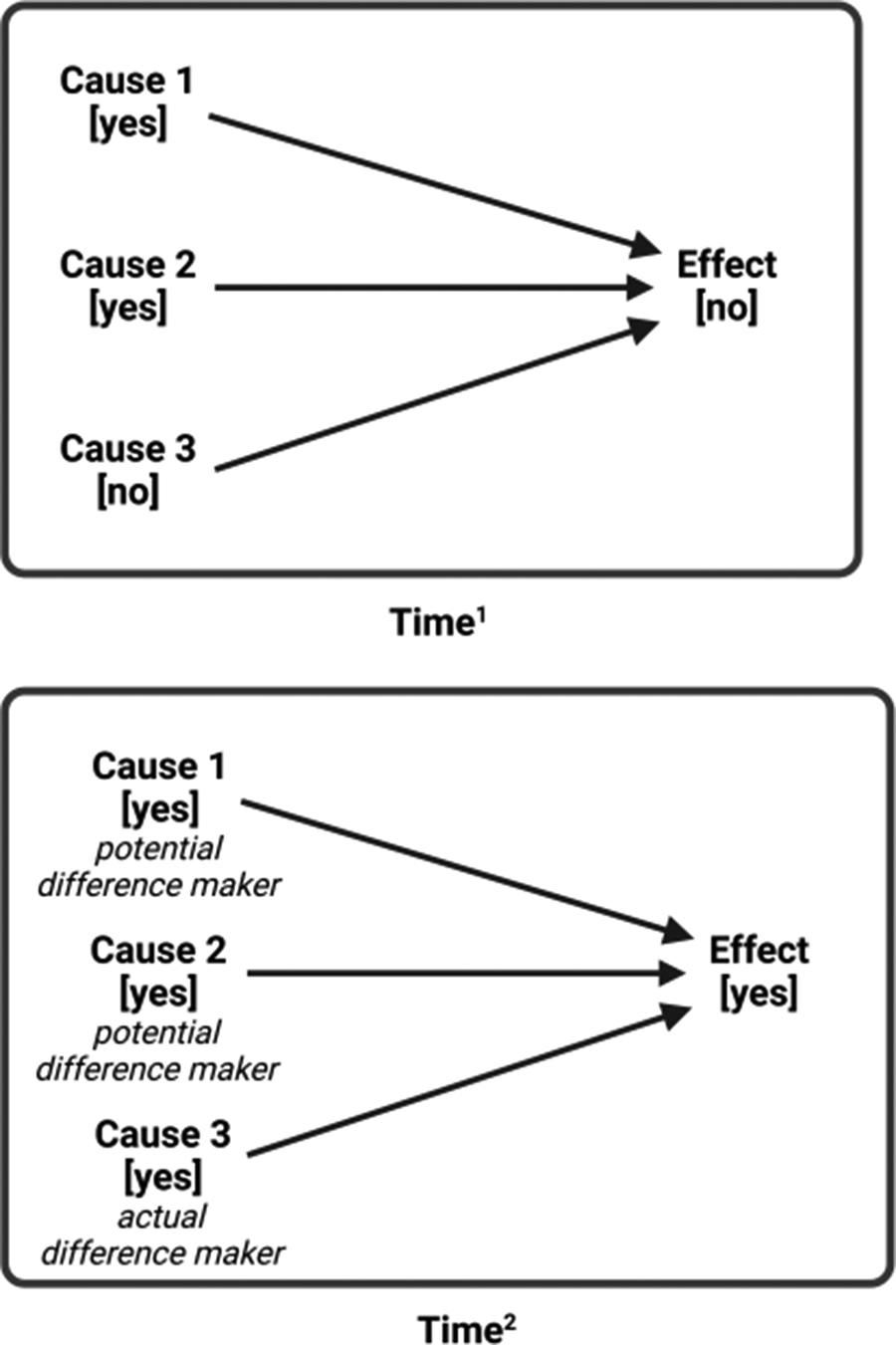
Theorists of human evolution are interested in understanding major shifts in human behavioural capacities (e.g. the creation of a novel technological industry, such as the Acheulean). This task faces empirical challenges arising both from the complexity of these events and the time-depths involved. However, we also confront issues of a more philosophical nature, such as how to best think about causation and explanation. This article considers such fundamental questions from the perspective of a prominent theory of causation in the philosophy of science literature, namely, the interventionist theory of causation. A signature feature of this framework is its recognition of a family of distinct types of causes. We set out several of these causal notions and show how they can contribute to explaining transitions in human behavioural complexity. We do so, first, in a preliminary way, and then in a more detailed way, taking the origins of behavioural modernity as our extended case study. We conclude by suggesting some ways in which the approach developed here might be elaborated and extended.
In ‘Scorekeeping in a Language Game’, David Lewis famously compares conversations to playing baseball. Just like baseball, conversations have a score which, together with rules for correct play, determines which utterances are acceptable or even true in the course of a conversation. For all similarities, however, there is a crucial difference between conversations and baseball games. Unlike the score of a baseball game, conversational score adjusts in such a way that the utterances made in the course of a conversation count as correct play. This is also known as accommodation. Starting from this scorekeeping approach to language use, the overall aim of the present paper is to provide a better understanding of how the methods and interventions of talking therapies work from a linguistic point of view. According to the scorekeeping model, the methods and interventions of talking therapies are effective by changing the score of the therapeutic conversation, in particular in the form of accommodation. This has significant implications for the therapeutic practice, as it highlights the importance of training therapists in the linguistic aspects of therapeutic methods, in particular in the use of accommodation.
Considering Roman art as a cumulative process could help resolve a small iconographical problem. Cubiculum N in the burial hypogeum under the Via Dino Compagni in Rome (c.350–75 ce) features a series of figure scenes referencing the exploits of the mythological hero Hercules. One of these scenes, presently entitled Hercules Slaying an Unknown Enemy, has no direct equivalent in extant Roman art and so has proved difficult to identify. This article suggests that Hercules’ battle with Cacus is most likely the incident referred to here. This is because Antonine medallions and coins, and third-century Roman sarcophagi, use imagery associated with the Cacus story that collectively could have contributed to the design of the Unknown Enemy panel. Further, identifying the defeated enemy as Cacus fits in with, and indeed helps to clarify, programmatic themes and associations already established in the other figure scenes in this funerary chamber.
Climate justice movements and scholars have established that marginalized communities, including people of color, Indigenous Peoples, women, and the Global South, are most vulnerable to climate change. Recently, scholars also have established that the climate crisis places LGBTQ+ communities in precarious positions. Yet, we know little about how LGBTQ+ activists practice climate justice and build political bridges between LGBTQ+ and climate justice movements. By analyzing queer climate activism, I find that bridging the US climate and LGBTQ+ movements share three elements: (1) vulnerability and intersectional analysis, (2) survival and resilience, and (3) play. In bridging the movements, activists “queer” climate justice by spatially shifting on what grounds or issues to fight, prefiguring worlds not yet in existence on a larger scale, and reimagining how to perform climate activism.
The braincase and middle ear region underwent a dramatic reconfiguration during the fish–tetrapod transition, involving the loss of the intracranial joint and associated structures, as well as the loss of the lateral commissure and the transformation of the hyomandibula into a stapes. The earliest examples of the tetrapod condition are seen in Devonian stem tetrapods. Complete otoccipital regions have only been described from two genera, Ichthyostega and Acanthostega, which differ greatly from each other. Here we present the first complete otoccipital region of Ventastega, together with new data on Acanthostega that modify the published reconstruction. In lateral view, both braincases are similar in shape, with large fenestrae vestibuli and anteroposteriorly short, but tall, exoccipitals. However, in occipital view the exoccipital-basioccipital complex of Ventastega resembles that of Eusthenopteron and differs substantially from Acanthostega. Remarkably, both braincases contain an arcual plate, a sarcopterygian fish characteristic known in taxa with an intracranial joint, such as Eusthenopteron and Latimeria, but never before seen in a tetrapod. The hypophysial region of Acanthostega contains an interorbital foramen similar to that in post-Devonian tetrapods, contrasting with Ventastega which has a solid braincase wall with small foramina similar to the condition in Eusthenopteron. The suture pattern of the skull roof of Ventastega is fully resolved and the presence of an intertemporal bone is confirmed.
In response to Bentley and O'Brien's (2024) article, I wish to focus on a specific aspect of cultural inheritance—that of technological innovation in later prehistory. In essence, I agree that “inherited social practices and knowledge” (2024: 1407) are indeed the backbone of technological transmission. Many examples can be cited where technological expertise (potting, metalworking, etc.) is passed down within a family or through apprenticeship schemes. For example, the first Ming Emperor of China (Hongwu, reigned AD 1368–1398) initiated in 1381 a census (the ‘Yellow Book’) in which households were classified for taxation purposes into one of four categories: general, military families, artisans and salt-producers. Artisans were classified by trade and the implication is that the family trade was fixed and inherited (Huang 1974: 32). This system continued until at least the end of the Ming dynasty (AD 1644).