To save content items to your account,
please confirm that you agree to abide by our usage policies.
If this is the first time you use this feature, you will be asked to authorise Cambridge Core to connect with your account.
Find out more about saving content to .
To save content items to your Kindle, first ensure no-reply@cambridge.org
is added to your Approved Personal Document E-mail List under your Personal Document Settings
on the Manage Your Content and Devices page of your Amazon account. Then enter the ‘name’ part
of your Kindle email address below.
Find out more about saving to your Kindle.
Note you can select to save to either the @free.kindle.com or @kindle.com variations.
‘@free.kindle.com’ emails are free but can only be saved to your device when it is connected to wi-fi.
‘@kindle.com’ emails can be delivered even when you are not connected to wi-fi, but note that service fees apply.
The dramatic impacts of climate change presage an inevitable surge in mass migration; however, advanced democracies are ill-equipped for this impending crisis. Moreover, we know very little about how publics evaluate this group of prospective migrants, who are estimated to increase from 100 million to 200 million worldwide within decades. This study investigates American attitudes toward climate-related migrants in a conjoint experiment of more than 1,000 US adults, in which respondents evaluated fictional refugee profiles that varied across multiple attributes. Findings reveal that Americans (1) prefer political refugees over climate-related refugees; and (2) prefer climate-related and economic migrants to a similar extent, and that these preferences are not driven by concerns over climate-related refugees’ integration into American society. Subgroup analyses indicate that younger individuals, those with high climate-change anxiety, and those who previously engaged in climate-related political activities discriminated less against climate-related migrants. Analyses of open-ended responses reveal that climate anxiety is a driver of positive evaluations of climate-related migrants.
There is no scholarly consensus on whether Paul’s mandates on head coverings were directed solely to married women or to all women in the Corinthian community. I suggest the discussion can be tentatively advanced by considering two factors that have not received the attention they warrant in conjunction with this passage: first, the presence of slaves in the community, and second, that the Genesis material which Paul alludes to in these verses was understood in some ancient thought as addressing the institution of marriage rather than creation. I propose that, in view of these considerations, it is more likely that Paul directed his exhortations towards free(d) married women.
Recent years have seen a vast expansion of scholarly interest in eighteenth- and nineteenth-century Black British histories, and increasing calls to support the work of early-career scholars (ECRs) in this field. Yet ECRs continue to face several specific challenges in conducting this crucial research. This section consists of a brief introduction and two case studies based on the research and experiences of Ph.D. students Annabelle Gilmore and Montaz Marché. Gilmore aims to amplify the connections between the lives and labour of enslaved people on plantations in Jamaica and the wealth and art collection of William Thomas Beckford, now held at Charlecote Park, from the mid-eighteenth to the mid-nineteenth centuries. Marché seeks to trace the presence of Black women in eighteenth-century London, drawing on archival documents that provide traces of who these women may have been, and confronting the limitations of the traditional archive. Together, these pieces offer a glimpse into how these ECRs are positioning themselves within the historiography as well as considering how they hope to contribute to the field.
This article argues that the current approach of the European Court of Human Rights (ECtHR) to evaluating scientific evidence is lacking and hampers its ability to properly handle cases involving questions of science, and particularly environmental cases which are replete with them. It identifies three problem areas in relation to the ECtHR's adjudication of such cases: the evaluation of evidence proving the causation of harm; the extent of the Court's deference to the determinations made by national authorities; and the Court's evaluation of evidence adduced by the respondent State in justifying its conduct as being in line with the standard of due diligence. Several cases that illustrate the recurring problem of the lack of science-based reasoning in the Court's judgments are then identified, highlighting the shortcomings of its approach. Such issues have an impact upon the legitimacy of the ECtHR, and it is therefore imperative that it engages more robustly with scientific evidence. The article suggests the best way to do this would be for the ECtHR to make more use of its power to seek assistance from independent scientific experts in environmental cases.
How do opinion diversity and belief polarisation affect epistemic group decision-making, particularly if decisions must be made without delay and on the basis of permissive evidence? In an agent-based model, we track the consistency of group opinions aggregated through sentence-wise majority voting. Simulations on the model reveal that high opinion diversity, but not polarisation, incurs a significant inconsistency risk. These results indicate that epistemic group decisions based on permissive evidence can be particularly difficult for diverse groups. The results also improve our understanding of what can reasonably be expected of expert groups, and where expert advice might have limits.
This paper argues that commodification of housing plays a key role in the reproduction of social and economic relations and contributes to debates by, firstly, recognising modern slavery as a fundamental intersection of economic and social vulnerability intimately connected to experiences of housing. Secondly, rather than understanding modern slavery in terms of exclusion, it should be understood as a form of adverse incorporation in the labour market and housing. Awareness, therefore, of critical realism as an analytical framework usefully takes debates beyond exploring relations between housing supply and housing experience to also include political economy and ideology. From this broader ontology of housing, it is possible to emphasise housing within reproduction of social and economic relations and consider ways in which this relates to modern slavery.
This article explores the Maroon landscape of the Caribbean island of Dominica (Wai'tukubuli) by creating a geographic information system (GIS) model to determine the reasons behind settlement location choices. For more than 50 years, hundreds of self-emancipated Africans inhabited the mountainous interior of Dominica, where they formed various communities that actively resisted European colonialism and slavery not only to maintain their freedom but to assist in liberating enslaved Africans throughout the island. Contemporary Dominican communities maintain connections to these revolutionary ancestors through the landscape and continuing cultural practices. None of the Maroon encampments, however, have been studied archaeologically. This study uses geospatial methods to understand the visibility, defensibility, and spatial accessibility of nine Maroon camps. The results of the viewshed and least cost path analysis allows us to map Dominican Maroon social networks and reimagine the possible routes that the Maroons took to maintain their freedom.
One of the most pronounced features of the war in Ukraine has been the heavy reliance of the Russian forces on convict-soldiers, most notably by the private military and security company (PMSC) the Wagner Group. In this essay, I explore the ethical problems with using convict-soldiers and assess how using them compares to other military arrangements, such as conscription or an all-volunteer force. Overall, I argue that the central issue with using prisoners to fight wars is their perceived expendability. To do this, I present three arguments. First, although many prisoners have been under major duress, using convict-soldiers may be somewhat preferable to using conscripts in this regard. Second, convict-soldiers are more likely to be subject to human rights abuses than other types of soldiers and this should be seen as the main problem with their use. Third, convict-soldiers’ liability to lethal force for fighting in an unjust war does not render it permissible to treat them as expendable.
This article presents an exomusicologically informed response to the theme of alienation through encounter in Oli Jan's Three Singers on Planet M, in which actors execute apparently ritualistic sounds and actions. Their activities signal aesthetic intentionality but do so through an unfamiliar cultural display that defies the rules of our own lived experience of embodiment and environment. The conceit sets up an interesting question related to the somatic imaginary: how can and how do we relate to the imagination of non-human bodies?
In this collaborative account of Iddon's Sapindales, the authors recount how their experiences of live and virtual clarinet sounds and environmental sounds combine in varied ways. By focusing on relationships among sonic layers, the authors emphasise the dynamic interplay of live and recorded performance, music and environment, the real and the virtual, the abstract and the concrete. Each relationship involves mediation and ambiguity, with elements that alternatively split apart or join together. The listening outcomes that we describe repeatedly highlight a positional swing between subject and object, as the authors reach across explanatory modes, drawing on phenomenology, musicology, psychoanalysis and ecological psychology, among others. We aim to capture the process of aesthetic listening, a process that is live, interactive, constructive, imaginative.
This paper examines the materialization of trauma as both a narrative and embodied phenomenon in Hassan Bani Ameri's 2006 novel, Gonjeshkha Behesht ra Mifahmand, using contemporary narrative and trauma theory. The postmodernist narrative, told from the perspective of a photojournalist, reconstructs events surrounding the death of a celebrated Iran-Iraq War commander. I argue that traumatic truths resist full integration into conventional frameworks of understanding, evident in the novel's non-linear, fragmented narrative and its shift from visual realism to confessional surrealism in an ending that challenges traditional storytelling and historical documentation. By vividly simulating the sensory processing of traumatic memories, the novel emphasizes the material reality of trauma that demands to be seen, heard, and physically felt, thus negating celebratory institutional narratives around the culture of war and martyrdom.
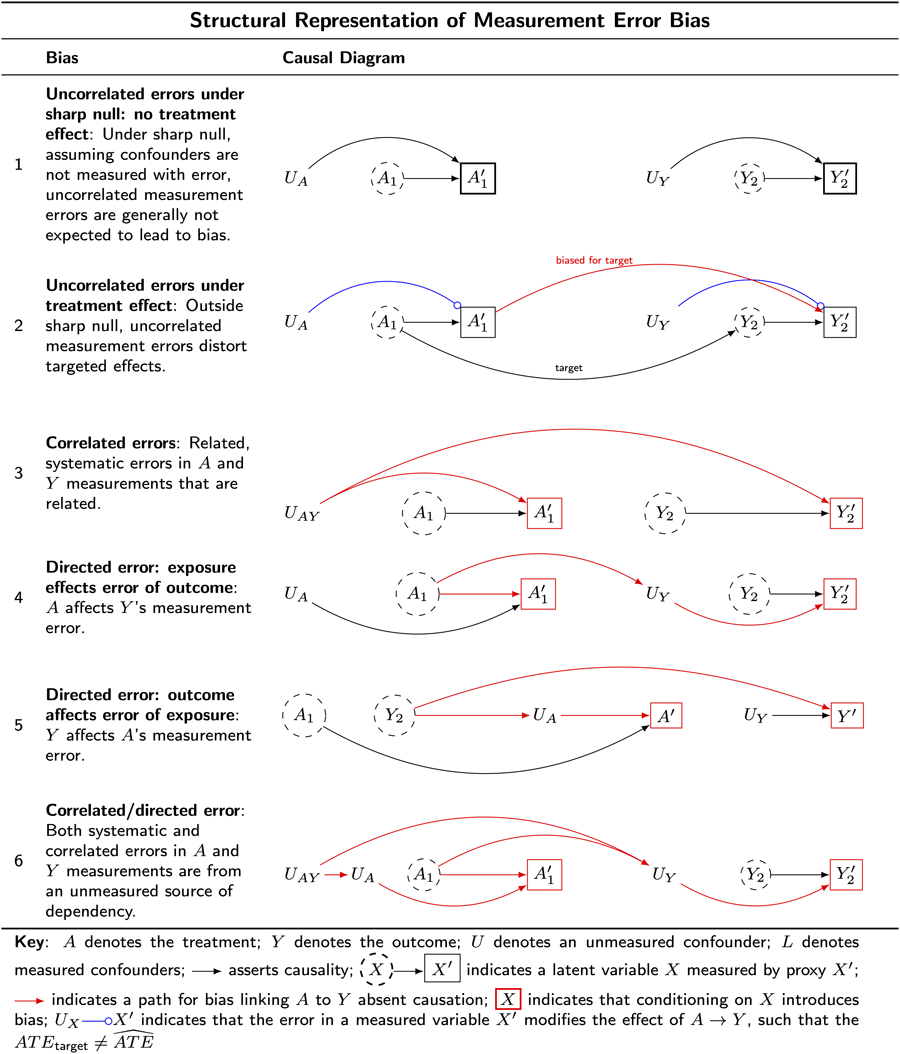
The human sciences should seek generalisations wherever possible. For ethical and scientific reasons, it is desirable to sample more broadly than ‘Western, educated, industrialised, rich, and democratic’ (WEIRD) societies. However, restricting the target population is sometimes necessary; for example, young children should not be recruited for studies on elderly care. Under which conditions is unrestricted sampling desirable or undesirable? Here, we use causal diagrams to clarify the structural features of measurement error bias and target population restriction bias (or ‘selection restriction’), focusing on threats to valid causal inference that arise in comparative cultural research. We define any study exhibiting such biases, or confounding biases, as weird (wrongly estimated inferences owing to inappropriate restriction and distortion). We explain why statistical tests such as configural, metric and scalar invariance cannot address the structural biases of weird studies. Overall, we examine how the workflows for causal inference provide the necessary preflight checklists for ambitious, effective and safe comparative cultural research.
The Early Mississippian site of Willie's Hole in south-eastern Scotland hosts some of the earliest terrestrial tetrapods. This study reports on the palaeoenvironment, micropalaeontology and palaeoecology of this important locality. The 8 m thick section comprises saline–hypersaline lake facies (dolostones, evaporites), fluvial facies (conglomerate lags, rippled, planar-laminated, and cross-bedded sandstones and siltstones) and overbank facies (laminated grey siltstones, sandy siltstones, very fine sandstones and palaeosols). Numerous exposure surfaces characterised by rooting, desiccation or brecciation indicate the repeated wetting and drying of the floodplain. Vertebrate, invertebrate and plant fossils are concentrated in the overbank facies association, particularly in sandy siltstones. Macro- and microfossils present are tetrapods, rhizodonts, actinopterygians, gyracanthids, dipnoans, chondrichthyans (Ageleodus), bivalve molluscs, eumalacostracans, myriapods (diplopods), eurypterids, scorpions, branchiopods, ostracods, Spirorbis, Serpula, Calcitarcha, Monocraterion trace fossils, plant stems, arborescent lycopsids (Stigmaria, Lepidodendron) and megaspores of the creeping lycopsid Oxroadia conferta. Various palaeoenvironments coexisted on a tropical, coastal, low-lying floodplain: evaporitic saline lakes, small meandering river channels, brackish salinity temporary lakes, wet marshes and sub-aerial dry land with scrubby vegetation and trees. Tetrapods inhabited waterlogged floodplain marshes and were transported post-mortem by meteoric flooding events into brackish lakes and pools. The abundance of tetrapod and other fossils is attributed to taphonomic concentration and preferential preservation during rapid burial. The Willie's Hole succession gives a window into the rich ecology and habitats on coastal floodplains after life recovered from the end-Devonian extinction and tetrapods walked on land.
This introductory article defines somatic music/ology as music that emphasises and reflects on its embodied nature and an associated theoretical discourse that addresses this aspect. It further traces the genealogy of this concept to the convergence of different intellectual and artistic currents from the mid twentieth century, including the phenomenology of Edmund Husserl and Maurice Merleau-Ponty, ecological psychology associated with James J. Gibson, performance- and body-oriented musicology represented by Roland Barthes and Carolyn Abbate and later developments such as 4E cognition as well as the experimental music theatre emerging from the 1960s. Finally, it introduces the various contributions to the issue.
In the books reviewed there is a cumulative resistance to the normative discourse, shifting our attention away from the centre and to the margins. This might mean listening to marginalized women, from the poets themselves to characters in poetry, or people today who relate to those female characters’ experiences. It might mean pushing beyond spatial boundaries and encountering dislocation and disjunction in the hazy hinterland of the non-elite. It might mean moving the human to one side, so that nature and the nonhuman can come to the fore (and teach us about what it means to be human, along the way). These books give voice to suppressed groups including women, animals, and the land. They highlight axes of oppression, and give us tools to shift the balance of power: from the language we use to the way we relate to the world around us. And with stories of prophetic horses, sympathetic lions, and pensive pigs, their interpretations – as well as the classical tales they recount – are not to be missed!
Neuropsychological assessment of preschool children is essential for early detection of delays and referral for intervention prior to school entry. This is especially pertinent in low- and middle-income countries (LMICs), which are disproportionately impacted by micronutrient deficiencies and teratogenic exposures. The Grenada Learning and Memory Scale (GLAMS) was created for use in limited resource settings and includes a shopping list and face-name association test. Here, we present psychometric and normative data for the GLAMS in a Grenadian preschool sample.
Methods:
Typically developing children between 36 and 72 months of age, primarily English speaking, were recruited from public preschools in Grenada. Trained Early Childhood Assessors administered the GLAMS and NEPSY-II in schools, homes, and clinics. GLAMS score distributions, reliability, and convergent/divergent validity against NEPSY-II were evaluated.
Results:
The sample consisted of 400 children (190 males, 210 females). GLAMS internal consistency, inter-rater agreement, and test-retest reliability were acceptable. Principal components analysis revealed two latent factors, aligned with expected verbal/visual memory constructs. A female advantage was observed in verbal memory. Moderate age effects were observed on list learning/recall and small age effects on face-name learning/recall. All GLAMS subtests were correlated with NEPSY-II Sentence Repetition, supporting convergent validity with a measure of verbal working memory.
Conclusions:
The GLAMS is a psychometrically sound measure of learning and memory in Grenadian preschool children. Further adaptation and scale-up to global LMICs are recommended.
Inspired by K. Fujita's algebro-geometric result that complex projective space has maximal degree among all K-semistable complex Fano varieties, we conjecture that the height of a K-semistable metrized arithmetic Fano variety $\mathcal {X}$ of relative dimension $n$ is maximal when $\mathcal {X}$ is the projective space over the integers, endowed with the Fubini–Study metric. Our main result establishes the conjecture for the canonical integral model of a toric Fano variety when $n\leq 6$ (the extension to higher dimensions is conditioned on a conjectural ‘gap hypothesis’ for the degree). Translated into toric Kähler geometry, this result yields a sharp lower bound on a toric invariant introduced by Donaldson, defined as the minimum of the toric Mabuchi functional. Furthermore, we reformulate our conjecture as an optimal lower bound on Odaka's modular height. In any dimension $n$ it is shown how to control the height of the canonical toric model $\mathcal {X},$ with respect to the Kähler–Einstein metric, by the degree of $\mathcal {X}$. In a sequel to this paper our height conjecture is established for any projective diagonal Fano hypersurface, by exploiting a more general logarithmic setup.
Sonic Bothy is an inclusive experimental and new-music organisation with an ensemble of musicians with and without disabilities and neurodiversities. This article considers their audiovisual piece Verbaaaaatim (2020–21), its form marked by the context of its development and composition during the COVID-19 pandemic, using a set of interlayered perspectives that mirror the formal layers of the piece. Recorded in a single take, it comprises instrumental sounds, spoken words, written words, static and dynamic graphics and videos of the performers, aligned so that the piece seems consistently to flow onwards, although it is not always clear which element impels its forward motion. The article considers, in particular, Verbaaaaatim's presentation of modes of embodied conviviality between its performers, the ways these find resonance in wider histories of experimental music and the ways in which its elements can be understood in an ecological framework as ‘sound actions’.