To save content items to your account,
please confirm that you agree to abide by our usage policies.
If this is the first time you use this feature, you will be asked to authorise Cambridge Core to connect with your account.
Find out more about saving content to .
To save content items to your Kindle, first ensure no-reply@cambridge.org
is added to your Approved Personal Document E-mail List under your Personal Document Settings
on the Manage Your Content and Devices page of your Amazon account. Then enter the ‘name’ part
of your Kindle email address below.
Find out more about saving to your Kindle.
Note you can select to save to either the @free.kindle.com or @kindle.com variations.
‘@free.kindle.com’ emails are free but can only be saved to your device when it is connected to wi-fi.
‘@kindle.com’ emails can be delivered even when you are not connected to wi-fi, but note that service fees apply.
Complications following the Fontan procedure include prolonged pleural drainage and readmission for effusions. To address these complications, a post-Fontan management pathway was implemented with primary goals of reducing chest tube duration/reinsertion rates and decreasing hospital length of stay and readmissions.
Methods:
Fontan patients were identified by retrospective chart review (2017–2019) to obtain baseline data for chest tube duration/reinsertion rates, hospital length of stay, and readmission rates for effusion. A post-Fontan management pathway was implemented (2020–2021) utilising post-operative vasopressin, nasal cannula oxygen until chest tube removal, and discharge regimen of three times daily diuretics, sildenafil, and afterload reducing medications. Patients were followed to evaluate primary outcomes.
Results:
The pre- and post-pathway groups were similar in single ventricle morphology, demographics, and pre-operative haemodynamics. Forty-three and 36 patients were included in the pre- and post-pathway cohorts, respectively. There were statistically significant reductions in chest tube duration (8 vs. 5 days, p ≤ 0.001), chest tube output on post-operative day 4 (20.4 vs. 9.9 mL/kg/day, p = 0.003), and hospital readmission rates for effusion (13[30%] vs. 3[8%], p = 0.02) compared to baseline. There was an absolute reduction in hospital length of stay (11 vs. 9.5 days, p = 0.052). When combining average cost savings for the Fontan hospitalisations, readmissions for effusion, and cardiac catheterisations within 6 months of Fontan completion, there was a $325,144 total cost savings for 36 patients following pathway implementation.
Conclusion:
Implementation of a post-Fontan management pathway resulted in significant reductions in chest tube duration and output, and readmission rates for effusion in the perioperative period.
Numerous studies have examined the relationship between overweight/obesity and iron deficiency anaemia (IDA) across diverse population groups, but a definitive link has not been clearly determined. This systematic review examined the association between overweight/obesity and IDA in women of reproductive age (WRA).
Design:
The initial search was performed in the CINAHL, Embase, MEDLINE, SCOPUS and Web of Science databases. The studies included should report at least one Fe status with/without an inflammatory marker, using the BMI to define overweight/obesity. Only baseline data were extracted for longitudinal studies.
Setting:
Global.
Participant:
Pregnant or non-pregnant women aged 18–50 years.
Results:
In total, twenty-seven papers were included (twelve addressing pregnant women and fifteen addressing non-pregnant women). Overall, most of the studies reported no association between overweight/obesity and Hb concentration. However, a positive association was reported more frequently in pregnant women. The association between overweight/obesity and serum ferritin concentrations was mixed. Most of the studies on non-pregnant women reported a positive association. Only a few studies measured hepcidin and inflammatory markers, and the majority revealed an increased level among overweight/obese WRA. Among pregnant women, overweight/obesity was positively associated with anaemia and IDA but negatively associated with iron deficiency (ID). Meanwhile, overweight/obese non-pregnant women were positively associated with anaemia, ID and IDA.
Conclusions:
Overweight/obesity was associated with a decreased prevalence of anaemia and IDA but an increased prevalence of ID, while its association with several Fe markers was inconclusive. Further studies integrating the assessment of various Fe markers, inflammatory markers and hepcidin are needed.
Patients with schizophrenia die decades earlier than the general population. Among the factors involved in this mortality gap, evidence suggests a telomere length shortening in this clinical population, which is associated with premature ageing. Recent studies support the use of strength-based training exercise programmes to maintain, or even elongate, telomere length in healthy elderly populations. However, studies aiming at modifying telomere length in severe mental illnesses, such as schizophrenia, are still very scarce.
Aims
To investigate the effect of a strength-based physical exercise programme on the telomere length of individuals with schizophrenia.
Method
We propose a pragmatic, randomised controlled trial including 40 patients aged ≥18 years, with a stable diagnosis of schizophrenia, attending the Complejo de Rehabilitación Psicosocial (CRPS, Psychosocial Rehabilitation Centre) in Salamanca, Spain. These patients will be randomly assigned (1:1) to either receive the usual treatment and rehabilitation programmes offered by CRPS (treatment-as-usual group) or these plus twice weekly sessions of an evidence-based, strength-based training exercise programme for 12 weeks (intervention group). The primary outcome will be effect on telomere length. Secondary outcomes will include impact on cognitive function, frailty and quality of life.
Results
We expect to show the importance of implementing strength-based physical exercise programmes for patients with schizophrenia. We could find that such programmes induce biological and genetic changes that may lengthen life expectancy and decrease physical fragility.
Conclusions
We anticipate that our trial findings could contribute to parity of esteem for mental health, reducing premature ageing in patients with severe mental illnesses, such as schizophrenia.
Posttraumatic stress disorder (PTSD) is one of the most serious and incapacitating mental diseases that can result from trauma exposure. The exact prevalence of this disorder is not known as the literature provides very different results, ranging from 2.5% to 74%. The aim of this umbrella review is to provide an estimation of PTSD prevalence and to clarify whether the prevalence depends on the assessment methods applied (structured interview v. self-report questionnaire) and on the nature of the traumatic event (interpersonal v. not-interpersonal). A systematic search of major databases and additional sources (Google Scholar, EBSCO, Web of Science, PubMed, Galileo Discovery) was conducted. Fifty-nine reviews met the criteria of this umbrella review. Overall PTSD prevalence was 23.95% (95% confidence interval 95% CI 20.74–27.15), with no publication bias or significant small-study effects, but a high level of heterogeneity between meta-analyses. Sensitivities analyses revealed that these results do not change after removing meta-analysis also including data from underage participants (23.03%, 95% CI 18.58–27.48), nor after excluding meta-analysis of low quality (24.26%, 95% CI 20.46–28.06). Regarding the impact of diagnostic instruments on PTSD prevalence, the results revealed a lack of significant differences in PTSD prevalence when structured v. self-report instruments were applied (p = 0.0835). Finally, PTSD prevalence did not differ following event of intentional (25.42%, 95% CI 19.76–31.09) or not intentional (22.48%, 95% CI 17.22–27.73) nature (p = 0.4598). The present umbrella review establishes a robust foundation for future research and provides valuable insights on PTSD prevalence.
Water is an essential nutrient for all organisms and is important for maintaining life and health. We aimed to develop a biomarker-calibrated equation for predicting water turnover (WT) and pre-formed water (PW) using the doubly labelled water (DLW) method.
Design:
Cross-sectional study.
Setting:
General older population from the Kyoto–Kameoka Study, Japan.
Participants:
The 141 participants aged ≥ 65 years were divided into a model developing (n 71) and a validation cohort group (n 70) using a random number generation. WT and PW was measured using the DLW method in May–June of 2012. In developing the cohort, equations for predicting WT and PW were developed by multivariate stepwise regression using all data from the questionnaires in the Kyoto–Kameoka study (including factors such as dietary intake and personal characteristics). WT and PW measured using the DLW method were compared with the estimates from the regression equations developed using the Wilcoxon signed-rank test and correlation analysis in validation cohort.
Results:
The median WT and PW for 141 participants were 2·81 and 2·28 l/d, respectively. In the multivariate model, WT (R2 = 0·652) and PW (R2 = 0·623) were moderately predicted using variables, such as height, weight and fluid intake from beverages based on questionnaire data. WT (r = 0·527) and PW (r = 0·477) predicted that using this model was positively correlated with the values measured by the DLW method.
Conclusions:
Our results showed factors associated with water requirement and indicated a methodological approach of calibrating the self-reported dietary intake data using biomarkers of water consumption.
This paper explores the potential for extending relational ontologies to include a specific focus on human-plant relations. We theorise the emergence of a vegetal ontology, as a novel way of working and remaking theories around human-plant relations that can be applied to the field of environmental education. A vegetal ontological approach, as applied in the environmental education research project that informs this article, abandons hierarchical comparisons of plants, which are often historically positioned as “lesser species,” mere “objects” and “resources” even. We start our paper with a modest review of key theoretical approaches informing past and recent environmental education studies on child-plant relations. We then return to the discussion started within the introduction to the paper on how we have theorised a vegetal ontology as a mode of a relational ontology focussing particularly on human-plant relations and drawing on posthumanist, new materialist and Indigenous approaches. To conclude the paper, we then put this newly named vegetal ontology to work. We apply it to a recent study on childhood-plant encounters where researchers engaged with young children and their families in a botanical garden setting and a group of environmental education elders reflected on the significance of plant relations in their childhoods.
Despite the growing influence of the “material” turn within childhood studies and education, scholarship related to teaching and learning within the early childhood classroom remains a largely humanistic endeavour. By applying relational and multispecies onto-epistomologies to both children’s classroom relations and our own teacher subjectivities, this work aims to highlight what other possibilities emerge when the dominant hierarchies of teacher-researcher-child-non-human are destabilised. Taking the idea of destabilisation literally, we diffractively map our own experiences as teacher-researchers within early years educational contexts, utilising diffractive methods to narrow-in on the mutually constituted conditions of movement. These more-than-human movements emerged during improvised classroom encounters between young children, animals and plants and varied in intensity and duration, as these constructed cuts and data (re)presentations continue to “move” us years later. Building upon research that explores the relationalities of children and non-human others, as well as “how movement does relationships’’ in early childhood educational contexts (Riley & Proctor, 2023, p. 663), we argue that a complex meta/physics of more-than-human movement affords literal and conceptual turning, enmeshing, decentering, connecting and rupturing, producing a less certain but more attuned early years teacher.
Schizotypal traits include abnormalities in cognition, behavior, and interpersonal relationships that are similar, yet less severe than psychotic symptomology. It is estimated that approximately 5% of the general population displays psychotic symptoms and experiences that can be considered schizotypal in nature, but there is little research examining the neurological correlates of these traits. The mismatch negativity (MMN) event-related potential is an objective measure of auditory change detection derived from electroencephalography. The current study contributes to the limited body of evidence examining the neurobiological underpinnings of schizotypy in a non-clinical sample using the MMN. Participants were recruited from the general population and divided into high and low-schizotypy groups for comparison. Individuals with high schizotypal traits displayed reduced MMN amplitudes in response to frequency and location deviants, and longer MMN latencies in response to location deviants. Specific sub-traits of schizotypy were uniquely related to frequency and location amplitudes, suggesting the previously reported inconsistencies in the literature may be due to diverse samples and differing deviant tone types. Finally, impulsivity and sensation-seeking likely contributed to the slower processing seen in location deviance detection. Ultimately, the current results provide evidence that the neurobiological abnormalities seen in clinical populations of schizotypal personality disorder and psychosis also extend to non-clinical populations.
States have long been understood to have an obligation to protect the international legal rights and interests of others, consistent with the maxim sic utere tuo ut alienum non laedas (use what is yours in such a manner as not to injure that of another). As the world's population becomes more interdependent, this no harm obligation becomes more significant. Further, as knowledge increases about the consequences of human activity for the climate and the environment, the no harm obligation takes on greater relevance vis-à-vis the interests of the Earth's future populations. Future generations’ legal interests have been recognized in the context of sustainable development and through the principle of intergenerational equity. The no harm rule requires that these interests be properly considered and addressed appropriately, commensurate with what is at stake. At a minimum, this may require avoidance of ‘manifestly excessive adverse impacts’.
This manuscript calculates the estimated cost-savings associated with implementing criteria for multi-drug-resistant organisms (MDRO).
Design:
The study evaluated extended-spectrum beta-lactamase (ESBL) producing Enterobacterales isolates utilizing the MDRO criteria established by Infection Prevention and Control. Isolates were categorized as either meeting or not meeting criteria. The number of inpatient days for patients with isolates not meeting criteria was calculated. The average daily cost of personal protective equipment (PPE) for patients in contact isolation was determined via literature review. Annual cost savings were determined by multiplying the total number of inpatient days by the average cost of PPE per day. Because our institution only isolates patients who meet the MDRO criteria, this approach was considered a cost-saving measure.
Setting:
560 licensed bed, tertiary care facility in the United States.
Patients:
Adult inpatients between the years of 2019–2022 with an ESBL-producing Enterobacterales isolated from any specimen source.
Results:
229 patients met inclusion criteria. 73% of isolates did not meet MDRO criteria. The patients with ESBL isolates not meeting criteria represented 2942 isolation days over four years. The average cost of PPE for contact isolation per day was $40.18. Cost-savings were estimated at $118,209 over four years.
Conclusions:
Our findings provide support for other healthcare systems to define organisms that warrant transmission-based contact precautions.
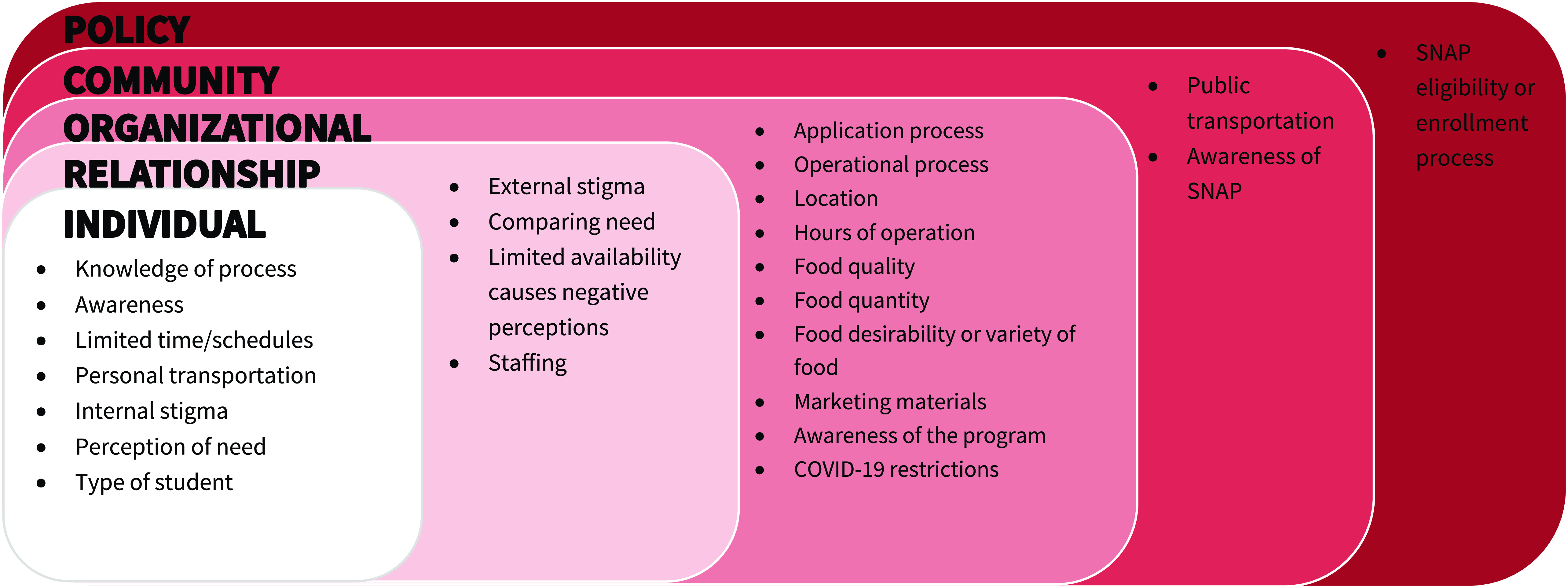
College student food insecurity (FI) is a public health concern. Programming and policies to support students have expanded but utilisation is often limited. The aim of this study was to summarise the barriers to accessing college FI programming guided by the social ecological model (SEM) framework. A scoping review of peer-reviewed literature included an electronic search conducted in MEDLINE, ERIC, and PubMed databases, with a secondary search in Google Scholar. Of the 138 articles identified, 18 articles met eligibility criteria and were included. Articles primarily encompassed organisational (17/18) level barriers, followed by individual (15/18), relationship (15/18), community (9/18), and policy (6/18) levels. Individual barriers included seven themes: Knowledge of Process, Awareness, Limited Time or Schedules, Personal Transportation, Internal Stigma, Perception of Need, and Type of Student. Four relationship barriers were identified: External Stigma, Comparing Need, Limited Availability Causes Negative Perceptions, and Staff. Ten barrier themes comprised the organisational level: Application Process, Operational Process, Location, Hours of Operation, Food Quality, Food Quantity, Food Desirability or Variety of Food, Marketing Materials, Awareness of the Program, and COVID-19 Restrictions. Two barrier themes were identified at the community level, Public Transportation and Awareness of SNAP, while one barrier theme, SNAP Eligibility and Process, encompassed the policy level. Higher education stakeholders should seek to overcome these barriers to the use of food programmes as a means to address the issue of college FI. This review offers recommendations to overcome these barriers at each SEM level.
The American sweet potato (Ipomoea batatas) is a globally important comestible crop that features prominently in Polynesian lore; however, the timing and mode of its Oceanic transplantation remain obscure. New research from the Māori cultivation site M24/11 in Aotearoa/New Zealand, presented here, offers a re-evaluation of evidence for the early use and distribution of the sweet potato in southern Polynesia. Consideration of plant microparticles from fourteenth-century archaeological contexts at the site indicates local cultivation of sweet potato, taro and yam. Of these, only sweet potato persisted through a post-1650 climatic downturn it seems, underscoring the enduring southern-Polynesian appeal of this hardy crop.
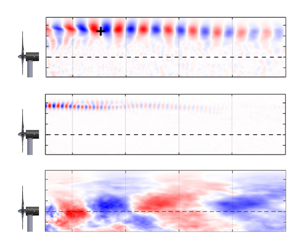
In this work we investigate the spatio-temporal nature of various coherent modes present in a wind turbine wake using a combination of new particle image velocimetry experiments and data from Biswas & Buxton (J. Fluid Mech., vol. 979, 2024, A34). A multiscale triple decomposition of the acquired velocity field is sought to extract the coherent modes and, thereafter, the energy exchanges to and from them are studied using the multiscale triple decomposed coherent kinetic energy budgets developed by Baj & Buxton (Phys. Rev. Fluids, vol. 2, 2017, 114607). Different frequencies forming the tip vortex system (such as the blade passing frequency, turbine's rotational frequency and their harmonics) are found to be energised by different sources such as production from the mean flow or nonlinear triadic interaction or both, similar to the primary, secondary or the mixed modes discussed in Biswas et al. (J. Fluid Mech., vol. 941, 2022, A36). The tip vortex system forms a complex network of nonlinear triadic energy transfers, the nature and the magnitudes of which depend on the tip speed ratio ($\lambda$). Contrastingly, the modes associated with the sheddings from the nacelle or tower and wake meandering are found to be primarily energised by the mean flow. We show that the tip vortex system exchanges energy with the mean flow primarily through the turbine's rotational frequency. In fact, the system transfers energy back to the mean flow through the turbine's rotational frequency at some distance downstream marking the onset location of wake recovery ($x_{wr}$). Here $x_{wr}$ is shown to reduce with $\lambda$ due to stronger interaction and earlier merging of the tip vortices at a higher $\lambda$.
Many paediatric studies report that patients must be established on aspirin therapy for a minimum of 5 days to achieve adequate response. This is not always practical especially in critical settings. Prospective identification of patients that are unresponsive to aspirin sooner could potentially prevent thrombotic events.
Aims:
The aim of this study was to investigate prospectively if the first dose of aspirin is effective in decreasing platelet aggregation, and thromboxane formation and if this can be measured after 2 hours in paediatric cardiology patients. A secondary aim was to identify a cut-off for a novel marker of aspirin responsiveness the maximum amplitude with arachidonic acid, which could potentially dramatically reduce the blood volume required. Third, we aimed to prospectively identify potentially non-responsive patients by spiking a sample of their blood ex vivo with aspirin.
Results:
The majority (92.3%) of patients were responsive, when measured 2 hours post first dose of aspirin. Non-response or inadequate response (7.7%) can also be identified at 2 hours after taking the first dose of aspirin. Additionally, we have shown a novel way to reduce blood sample volume requirements by measurement of the maximum amplitude with arachidonic acid as a marker of response, particularly for monitoring.
Conclusions:
These findings of rapid efficacy in the majority of patients offer assurance in a sound, practical way to attending clinicians, patients, and families.
An extensive theoretical and practitioner literature addresses the drivers and consequences of transformation of violent rebel actors during conflicts. However, measurement challenges constrain large-N empirical study of the effects and consequences of such transformations. This Research Note introduces a strategy to identify periods of transformation and change in the operation of non-state armed militant groups via computational text analysis of trends in reporting on activities. It presents the measurement approach and demonstrates scalability to a corpus of more than 200 militant groups operating from 1989 to 2020. The study concludes by extending a recent analysis of the impacts of uncertainty on conflict termination. An online Appendix demonstrates the advantages and drawbacks of the measurement through a series of case studies.
Sport climbing requires a combination of physical and cognitive skills, with working memory (WM) playing a crucial role in performance. This study aimed to investigate the association between WM capacity and climbing ability, while considering potential confounding factors including sex, age, education level, and climbing experience. Additionally, the study compared prefrontal cortex (PFC) hemodynamic responses among different climbing ability groups and sex during WM performance. Twenty-eight climbers participated, with WM assessed using the eCorsi task and PFC hemodynamic responses measured with near infrared spectroscopy (NIRS). Initial linear regression analyses revealed no association between WM and climbing ability. However, significant associations were found after adjustment for covariates. Specifically, sex (p = .014), sex in conjunction with age (p = .026), sex combined with climbing experience (p = .022), and sex along with education level (p = .038) were identified as significant predictors of differences in WM between Expert and Elite climbers. Additionally, notable differences in PFC hemodynamic responses were observed between Expert and Elite climbers, as well as between sexes during the WM task, providing support for differences in WM capacity. This study contributes to understanding the complex relationship between WM capacity and climbing performance, emphasizing the need to account for influencing factors in assessments.
The study sought to explore nutrition graduates’ employability and role of employability capitals in supporting nutrition science graduate outcomes.
Design:
In-depth semi-structured, audio-recorded interviews were conducted with nutrition graduates who had completed a nutrition science degree between 2015 and 2021. Interpretivism guided this study, which endeavoured to co-construct meaning with participants. Transcribed interviews were thematically analysed, whereby data were coded, themes identified and discussed by all authors. The data were further mapped against the graduate capital model (GCM) by deductively coding against the five graduate capitals (human, identity, social, psychological and cultural).
Setting:
Ireland and Australia.
Participants:
Forty-two nutrition graduates from across nine universities in Ireland and twenty-two from a single university programme in Australia.
Results:
All elements of the GCM were identified with human, social and identity capital most dominant and identified as significantly influential on employability. Presence or absence of these capitals could be clearly identified within each graduates’ experience. Formation of professional identity and connection to the profession was strongest amongst Irish graduates. However, more than half of the Australian cohort perceived barriers to professional identity formation, including lack of regulation, imposter syndrome, presence of non-qualified individuals and comparison to dietetics. Both psychological and cultural capitals were rarely spoken about.
Conclusion:
The development of human, social and identity capital is observed among nutrition science graduates. Further investigation is required to enhance the process of identity development and ascertain potential remedies for obstacles. The absence of psychological and cultural capital, therefore, poses a significant issue for the resilience and comprehension of prospective graduates.