Refine search
Actions for selected content:
60 results
ESCAPE RATE FOR SHIFTS WITH MARKOV MEASURE
- Part of
-
- Journal:
- Journal of the Australian Mathematical Society , First View
- Published online by Cambridge University Press:
- 20 April 2026, pp. 1-27
-
- Article
- Export citation
Feldman–Katok pseudometric and the GIKN non-hyperbolic ergodic measures
- Part of
-
- Journal:
- Ergodic Theory and Dynamical Systems , First View
- Published online by Cambridge University Press:
- 07 April 2026, pp. 1-29
-
- Article
-
- You have access
- Open access
- HTML
- Export citation
-
We introduce Feldman–Katok convergence for invariant measures of a topological dynamical system. This can be seen as a counterpart to the convergence with respect to the $\bar {f}$-metric for finite-state stationary processes (shift-invariant measures on a symbolic space). Feldman–Katok convergence is based on a dynamically defined Feldman–Katok pseudometric. This convergence is stronger than weak $^*$ convergence. We prove that Feldman–Katok convergence preserves ergodicity and makes the Kolmogorov–Sinai entropy lower semicontinuous, thereby preserving zero entropy. We apply our findings to non-hyperbolic (having at least one vanishing Lyapunov exponent) ergodic measures constructed using the GIKN method as axiomatized by Bonatti, Díaz and Gorodetski [Nonlinearity, 23 (2010), 687–705]. The GIKN method, originally introduced by Gorodetski, Ilyashenko, Kleptsyn and Nalsky [Functional Analysis and its Applications, 39 (2005), 21–30], has been widely adapted to produce non-hyperbolic ergodic measures for diffeomorphisms of compact manifolds. We prove that an ergodic measure satisfying the conditions provided by the axiomatized GIKN method is the Feldman–Katok limit of a sequence of periodic measures, which implies that it is either a periodic measure or a loosely Kronecker measure (a measure Kakutani equivalent to an aperiodic ergodic rotation on a compact group) and has zero entropy. This classifies all these measures up to Kakutani equivalence and confirms that geometric constructions of non-hyperbolic measures via periodic approximations based on the axiomatized GIKN method presented in Bonatti et al. [op. cit.] systematically produce zero-entropy systems.


Quantitative recurrence properties and strong dynamical Borel–Cantelli lemmas for dynamical systems with exponential decay of correlations
- Part of
-
- Journal:
- Ergodic Theory and Dynamical Systems , First View
- Published online by Cambridge University Press:
- 02 March 2026, pp. 1-20
-
- Article
- Export citation
-
Let $ ([0,1]^d,T,\mu ) $ be a measure-preserving dynamical system so that the correlations decay exponentially for Hölder continuous functions. Suppose that $ \mu $ is absolutely continuous with a density function $ h\in L^q(\mathcal L^d) $ for some $ q>1 $, where $ \mathcal L^d $ is the $ d $-dimensional Lebesgue measure. Under suitable conditions on the underlying dynamical system, we obtain a strong dynamical Borel–Cantelli lemma for recurrence: for any sequence $ \{R_n\} $ of hyperrectangles centered at the origin, with sides parallel to the axes and diameter going to $0$ as $n\to \infty $,
  where
where  $ \mathbf {x}\in [0,1]^d $ and $ R_n+\mathbf {x} $ is the translation of $ R_n $. The result applies to the Gauss map, $\beta $-transformations, and expanding toral endomorphisms.


 where
where 


Classification of conditional measures along certain invariant one-dimensional foliations
- Part of
-
- Journal:
- Ergodic Theory and Dynamical Systems , First View
- Published online by Cambridge University Press:
- 23 February 2026, pp. 1-31
-
- Article
- Export citation
-
Let $f:M\to M$ be a homeomorphism over a compact Riemannian manifold, ergodic with respect to a measure $\mu $ defined on the completion of the Borel $\sigma $-algebra, and $\mathcal F$ a f-invariant one-dimensional continuous foliation of M by $C^1$-leaves. Then, if f preserves a continuous $\mathcal {F}$-arc length system, then we only have three possibilities for the conditional measures of $\mu $ along $\mathcal F$, namely: (i) they are atomic for almost every leaf; or (ii) for almost every leaf, they are equivalent to the measure $\unicode{x3bb} _x$ induced by the invariant arc-length system over $\mathcal F$; or (iii) for almost every leaf, their support is a nowhere dense, perfect subset of the leaf. Furthermore, we show that restricted to ergodic partially hyperbolic diffeomorphism with one-dimensional topological neutral center direction, we are able to eliminate the third case obtaining a dichotomy.


Maximizing measures for countable alphabet shifts via blur shift spaces
- Part of
-
- Journal:
- Ergodic Theory and Dynamical Systems / Volume 46 / Issue 5 / May 2026
- Published online by Cambridge University Press:
- 22 January 2026, pp. 1166-1188
- Print publication:
- May 2026
-
- Article
-
- You have access
- HTML
- Export citation
Asymmetric infinite sumsets in large sets of integers
- Part of
-
- Journal:
- Forum of Mathematics, Sigma / Volume 14 / 2026
- Published online by Cambridge University Press:
- 15 January 2026, e7
-
- Article
-
- You have access
- Open access
- HTML
- Export citation
-
We show that for any set $A\subset {\mathbb N}$ with positive upper density and any $\ell ,m \in {\mathbb N}$, there exist an infinite set $B\subset {\mathbb N}$ and some $t\in {\mathbb N}$ so that $\{mb_1 + \ell b_2 \colon b_1,b_2\in B\ \text {and}\ b_1<b_2 \}+t \subset A,$ verifying a conjecture of Kra, Moreira, Richter and Robertson. We also consider the patterns $\{mb_1 + \ell b_2 \colon b_1,b_2\in B\ \text {and}\ b_1 \leq b_2 \}$, for infinite $B\subset {\mathbb N}$ and prove that any set $A\subset {\mathbb N}$ with lower density $\underline {\!\mathrm {d}}(A)>1/2$ contains such configurations up to a shift. We show that the value $1/2$ is optimal and obtain analogous results for values of upper density and when no shift is allowed.


Revisiting sums and products in countable and finite fields
- Part of
-
- Journal:
- Ergodic Theory and Dynamical Systems / Volume 46 / Issue 2 / February 2026
- Published online by Cambridge University Press:
- 13 October 2025, pp. 543-574
- Print publication:
- February 2026
-
- Article
-
- You have access
- Open access
- HTML
- Export citation
-
We establish a polynomial ergodic theorem for actions of the affine group of a countable field K. As an application, we deduce—via a variant of Furstenberg’s correspondence principle—that for fields of characteristic zero, any ‘large’ set $E\subset K$ contains ‘many’ patterns of the form $\{p(u)+v,uv\}$, for every non-constant polynomial $p(x)\in K[x]$. Our methods are flexible enough that they allow us to recover analogous density results in the setting of finite fields and, with the aid of a finitistic variant of Bergelson’s ‘colouring trick’, show that for $r\in \mathbb N$ fixed, any r-colouring of a large enough finite field will contain monochromatic patterns of the form $\{u,p(u)+v,uv\}$. In a different direction, we obtain a double ergodic theorem for actions of the affine group of a countable field. An adaptation of the argument for affine actions of finite fields leads to a generalization of a theorem of Shkredov. Finally, to highlight the utility of the aforementioned finitistic ‘colouring trick’, we provide a conditional, elementary generalization of Green and Sanders’ $\{u,v,u+v,uv\}$ theorem.


Non-uniformly hyperbolic endomorphisms
- Part of
-
- Journal:
- Compositio Mathematica / Volume 161 / Issue 6 / June 2025
- Published online by Cambridge University Press:
- 01 September 2025, pp. 1313-1356
- Print publication:
- June 2025
-
- Article
- Export citation
-
We show the existence of large $\mathcal C^1$ open sets of area-preserving endomorphisms of the two-torus which have no dominated splitting and are non-uniformly hyperbolic, meaning that Lebesgue almost every point has a positive and a negative Lyapunov exponent. The integrated Lyapunov exponents vary continuously with the dynamics in the $\mathcal C^1$ topology and can be taken as far away from zero as desired. Explicit real analytic examples are obtained by deforming linear endomorphisms, including expanding ones. The technique works in nearly every homotopy class, and the examples are stably ergodic (in fact Bernoulli), provided that the linear map has no eigenvalue of modulus one.


Stable functional CLT for deterministic systems
- Part of
-
- Journal:
- Ergodic Theory and Dynamical Systems / Volume 45 / Issue 10 / October 2025
- Published online by Cambridge University Press:
- 26 May 2025, pp. 3192-3222
- Print publication:
- October 2025
-
- Article
-
- You have access
- Open access
- HTML
- Export citation
-
We show that $\alpha $-stable Lévy motions can be simulated by any ergodic and aperiodic probability-preserving transformation. Namely we show that: for $0<\alpha <1$ and every $\alpha $-stable Lévy motion ${\mathbb {W}}$, there exists a function f whose partial sum process converges in distribution to ${\mathbb {W}}$; for $1\leq \alpha <2$ and every symmetric $\alpha $-stable Lévy motion, there exists a function f whose partial sum process converges in distribution to ${\mathbb {W}}$; for $1< \alpha <2$ and every $-1\leq \beta \leq 1$ there exists a function f whose associated time series is in the classical domain of attraction of an $S_\alpha (\ln (2), \beta ,0)$ random variable.


Modulus of continuity of invariant densities and entropies for piecewise expanding maps
- Part of
-
- Journal:
- Ergodic Theory and Dynamical Systems / Volume 45 / Issue 10 / October 2025
- Published online by Cambridge University Press:
- 07 April 2025, pp. 2976-2991
- Print publication:
- October 2025
-
- Article
-
- You have access
- Open access
- HTML
- Export citation
On partial rigidity of $\mathcal {S}$-adic subshifts
- Part of
-
- Journal:
- Ergodic Theory and Dynamical Systems / Volume 45 / Issue 9 / September 2025
- Published online by Cambridge University Press:
- 24 February 2025, pp. 2724-2764
- Print publication:
- September 2025
-
- Article
-
- You have access
- Open access
- HTML
- Export citation
-
We develop combinatorial tools to study partial rigidity within the class of minimal $\mathcal {S}$-adic subshifts. By leveraging the combinatorial data of well-chosen Kakutani–Rokhlin partitions, we establish a necessary and sufficient condition for partial rigidity. Additionally, we provide an explicit expression to compute the partial rigidity rate and an associated partial rigidity sequence. As applications, we compute the partial rigidity rate for a variety of constant length substitution subshifts, such as the Thue–Morse subshift, where we determine a partial rigidity rate of 2/3. We also exhibit non-rigid substitution subshifts with partial rigidity rates arbitrarily close to 1 and, as a consequence, using products of the aforementioned substitutions, we obtain that any number in $[0, 1]$ is the partial rigidity rate of a system.


On invariant measures of ‘satellite’ infinitely renormalizable quadratic polynomials
- Part of
-
- Journal:
- Ergodic Theory and Dynamical Systems / Volume 45 / Issue 6 / June 2025
- Published online by Cambridge University Press:
- 13 November 2024, pp. 1843-1869
- Print publication:
- June 2025
-
- Article
-
- You have access
- Open access
- HTML
- Export citation
-
Let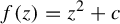 $f(z)=z^2+c$ be an infinitely renormalizable quadratic polynomial and $J_\infty $ be the intersection of forward orbits of ‘small’ Julia sets of its simple renormalizations. We prove that if f admits an infinite sequence of satellite renormalizations, then every invariant measure of $f: J_\infty \to J_\infty $ is supported on the postcritical set and has zero Lyapunov exponent. Coupled with [13], this implies that the Lyapunov exponent of such f at c is equal to zero, which partly answers a question posed by Weixiao Shen.

A recurrence-type strong Borel–Cantelli lemma for Axiom A diffeomorphisms
- Part of
-
- Journal:
- Ergodic Theory and Dynamical Systems / Volume 45 / Issue 3 / March 2025
- Published online by Cambridge University Press:
- 18 September 2024, pp. 936-955
- Print publication:
- March 2025
-
- Article
-
- You have access
- Open access
- HTML
- Export citation
-
Let $(X,\mu ,T,d)$ be a metric measure-preserving dynamical system such that three-fold correlations decay exponentially for Lipschitz continuous observables. Given a sequence $(M_k)$ that converges to $0$ slowly enough, we obtain a strong dynamical Borel–Cantelli result for recurrence, that is, for $\mu $-almost every $x\in X$, where
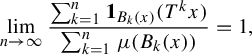 $$ \begin{align*} \lim_{n \to \infty}\frac{\sum_{k=1}^{n} \mathbf{1}_{B_k(x)}(T^{k}x)} {\sum_{k=1}^{n} \mu(B_k(x))} = 1, \end{align*} $$ $\mu (B_k(x)) = M_k$. In particular, we show that this result holds for Axiom A diffeomorphisms and equilibrium states under certain assumptions.


Schmidt games and Cantor winning sets
- Part of
-
- Journal:
- Ergodic Theory and Dynamical Systems / Volume 45 / Issue 1 / January 2025
- Published online by Cambridge University Press:
- 19 April 2024, pp. 71-110
- Print publication:
- January 2025
-
- Article
- Export citation
-
Schmidt games and the Cantor winning property give alternative notions of largeness, similar to the more standard notions of measure and category. Being intuitive, flexible, and applicable to recent research made them an active object of study. We survey the definitions of the most common variants and connections between them. A new game called the Cantor game is invented and helps with presenting a unifying framework. We prove surprising new results such as the coincidence of absolute winning and $1$ Cantor winning in metric spaces, and the fact that $1/2$ winning implies absolute winning for subsets of $\mathbb {R}$. We also suggest a prototypical example of a Cantor winning set to show the ubiquity of such sets in metric number theory and ergodic theory.


Invariant measures for $\mathscr {B}$-free systems revisited
- Part of
-
- Journal:
- Ergodic Theory and Dynamical Systems / Volume 44 / Issue 10 / October 2024
- Published online by Cambridge University Press:
- 08 March 2024, pp. 2901-2932
- Print publication:
- October 2024
-
- Article
- Export citation
-
For $\mathscr {B} \subseteq \mathbb {N} $, the $ \mathscr {B} $-free subshift $ X_{\eta } $ is the orbit closure of the characteristic function of the set of $ \mathscr {B} $-free integers. We show that many results about invariant measures and entropy, previously only known for the hereditary closure of $ X_{\eta } $, have their analogues for $ X_{\eta } $ as well. In particular, we settle in the affirmative a conjecture of Keller about a description of such measures [G. Keller. Generalized heredity in $\mathcal B$-free systems. Stoch. Dyn. 21(3) (2021), Paper No. 2140008]. A central assumption in our work is that $\eta ^{*} $ (the Toeplitz sequence that generates the unique minimal component of $ X_{\eta } $) is regular. From this, we obtain natural periodic approximations that we frequently use in our proofs to bound the elements in $ X_{\eta } $ from above and below.


Estimating the Hausdorff measure using recurrence
- Part of
-
- Journal:
- Proceedings of the Edinburgh Mathematical Society / Volume 67 / Issue 1 / February 2024
- Published online by Cambridge University Press:
- 12 January 2024, pp. 188-199
-
- Article
-
- You have access
- Open access
- HTML
- Export citation
Invariant measures for substitutions on countable alphabets
- Part of
-
- Journal:
- Ergodic Theory and Dynamical Systems / Volume 44 / Issue 9 / September 2024
- Published online by Cambridge University Press:
- 11 December 2023, pp. 2533-2564
- Print publication:
- September 2024
-
- Article
- Export citation
On the ergodicity of unitary frame flows on Kähler manifolds
- Part of
-
- Journal:
- Ergodic Theory and Dynamical Systems / Volume 44 / Issue 8 / August 2024
- Published online by Cambridge University Press:
- 16 October 2023, pp. 2143-2172
- Print publication:
- August 2024
-
- Article
- Export citation
-
Let $(M,g,J)$ be a closed Kähler manifold with negative sectional curvature and complex dimension $m := \dim _{\mathbb {C}} M \geq 2$. In this article, we study the unitary frame flow, that is, the restriction of the frame flow to the principal $\mathrm {U}(m)$-bundle $F_{\mathbb {C}}M$ of unitary frames. We show that if $m \geq 6$ is even and $m \neq 28$, there exists $\unicode{x3bb} (m) \in (0, 1)$ such that if $(M, g)$ has negative $\unicode{x3bb} (m)$-pinched holomorphic sectional curvature, then the unitary frame flow is ergodic and mixing. The constants $\unicode{x3bb} (m)$ satisfy $\unicode{x3bb} (6) = 0.9330...$, $\lim _{m \to +\infty } \unicode{x3bb} (m) = {11}/{12} = 0.9166...$, and $m \mapsto \unicode{x3bb} (m)$ is decreasing. This extends to the even-dimensional case the results of Brin and Gromov [On the ergodicity of frame flows. Invent. Math. 60(1) (1980), 1–7] who proved ergodicity of the unitary frame flow on negatively curved compact Kähler manifolds of odd complex dimension.


On some multiplicative properties of large difference sets
- Part of
-
- Journal:
- Canadian Journal of Mathematics / Volume 76 / Issue 5 / October 2024
- Published online by Cambridge University Press:
- 08 September 2023, pp. 1538-1555
- Print publication:
- October 2024
-
- Article
- Export citation
-
In our paper, we study multiplicative properties of difference sets $A-A$ for large sets $A \subseteq {\mathbb {Z}}/q{\mathbb {Z}}$ in the case of composite q. We obtain a quantitative version of a result of A. Fish about the structure of the product sets $(A-A)(A-A)$. Also, we show that the multiplicative covering number of any difference set is always small.


Statistical aspects of mean field coupled intermittent maps
- Part of
-
- Journal:
- Ergodic Theory and Dynamical Systems / Volume 44 / Issue 4 / April 2024
- Published online by Cambridge University Press:
- 19 July 2023, pp. 945-957
- Print publication:
- April 2024
-
- Article
-
- You have access
- Open access
- HTML
- Export citation
