Refine search
Actions for selected content:
180 results
1 - Introduction
-
- Book:
- Jihadist Peace
- Print publication:
- 30 July 2026, pp 1-22
-
- Chapter
- Export citation
3 - Global Evidence of Intractability
-
- Book:
- Jihadist Peace
- Print publication:
- 30 July 2026, pp 47-69
-
- Chapter
- Export citation
Intake of polyphenols, phenolic acids and lignans associated with lower mortality in women diagnosed with breast cancer
-
- Journal:
- British Journal of Nutrition / Accepted manuscript
- Published online by Cambridge University Press:
- 10 July 2026, pp. 1-27
-
- Article
-
- You have access
- Export citation

Jihadist Peace
- Ending Islamist Civil Wars
-
- Expected online publication date:
- July 2026
- Print publication:
- 30 July 2026
Diagnostic accuracy of magnetic resonance imaging for post-radiotherapy recurrent laryngeal cancer: a comparison study with primary laryngeal cancer
-
- Journal:
- The Journal of Laryngology & Otology , First View
- Published online by Cambridge University Press:
- 01 June 2026, pp. 1-7
-
- Article
-
- You have access
- Open access
- HTML
- Export citation
Factors associated with social functioning by relapse frequency in Japanese outpatients with schizophrenia: the Multicenter Treatment Survey and Assessments for Schizophrenia in Psychiatric Clinics (MUSASI)
-
- Journal:
- Psychological Medicine / Volume 56 / 2026
- Published online by Cambridge University Press:
- 29 May 2026, e159
-
- Article
-
- You have access
- Open access
- HTML
- Export citation
Impact of socioeconomic deprivation on the rate of residual or recurrent cholesteatoma following primary mastoidectomy
-
- Journal:
- The Journal of Laryngology & Otology , First View
- Published online by Cambridge University Press:
- 26 May 2026, pp. 1-7
-
- Article
-
- You have access
- Open access
- HTML
- Export citation
Quantitative recurrence properties and strong dynamical Borel–Cantelli lemmas for dynamical systems with exponential decay of correlations
- Part of
-
- Journal:
- Ergodic Theory and Dynamical Systems / Volume 46 / Issue 7 / July 2026
- Published online by Cambridge University Press:
- 02 March 2026, pp. 1735-1754
- Print publication:
- July 2026
-
- Article
- Export citation
-
Let $ ([0,1]^d,T,\mu ) $ be a measure-preserving dynamical system so that the correlations decay exponentially for Hölder continuous functions. Suppose that $ \mu $ is absolutely continuous with a density function $ h\in L^q(\mathcal L^d) $ for some $ q>1 $, where $ \mathcal L^d $ is the $ d $-dimensional Lebesgue measure. Under suitable conditions on the underlying dynamical system, we obtain a strong dynamical Borel–Cantelli lemma for recurrence: for any sequence $ \{R_n\} $ of hyperrectangles centered at the origin, with sides parallel to the axes and diameter going to $0$ as $n\to \infty $,
  where
where  $ \mathbf {x}\in [0,1]^d $ and $ R_n+\mathbf {x} $ is the translation of $ R_n $. The result applies to the Gauss map, $\beta $-transformations, and expanding toral endomorphisms.


 where
where 


Can a higher-order Markov chain be treated as a first-order Markov chain?
- Part of
-
- Journal:
- Probability in the Engineering and Informational Sciences / Volume 40 / Issue 3 / July 2026
- Published online by Cambridge University Press:
- 19 February 2026, pp. 400-415
-
- Article
-
- You have access
- Open access
- HTML
- Export citation
Early Versus Late Mobilization Following Chronic Subdural Hematoma Surgery: A Systematic Review
-
- Journal:
- Canadian Journal of Neurological Sciences , First View
- Published online by Cambridge University Press:
- 06 January 2026, pp. 1-9
-
- Article
-
- You have access
- Open access
- HTML
- Export citation
On ergodicity and transience for a class of level-dependent GI/M/1-type Markov chains
- Part of
-
- Journal:
- Journal of Applied Probability / Volume 62 / Issue 4 / December 2025
- Published online by Cambridge University Press:
- 21 November 2025, pp. 1301-1317
- Print publication:
- December 2025
-
- Article
- Export citation
QUANTITATIVE GROWTH OF LINEAR RECURRENCES
- Part of
-
- Journal:
- Journal of the Australian Mathematical Society / Volume 120 / Issue 1 / February 2026
- Published online by Cambridge University Press:
- 06 October 2025, pp. 107-140
-
- Article
- Export citation
-
Let $\{u_n\}_n$ be a nondegenerate linear recurrence sequence of integers with Binet’s formula given by ${u_n= \sum _{i=1}^{m} P_i(n)\alpha _i^n.}$ Assume $\max _i \vert \alpha _i \vert>1$. In 1977, Loxton and Van der Poorten conjectured that for any $\epsilon>0$, there is an effectively computable constant $C(\epsilon )$ such that if $ \vert u_n \vert < (\max _i\{ \vert \alpha _i \vert \})^{n(1-\epsilon )}$, then $n<C(\epsilon )$. Using results of Schmidt and Evertse, a complete noneffective (qualitative) proof of this conjecture was given by Fuchs and Heintze [‘On the growth of linear recurrences in function fields’, Bull. Aust. Math. Soc. 104(1) (2021), 11–20] and, independently, by Karimov et al. [‘The power of positivity’, Proc. LICS 23 (2023), 1–11]. In this paper, we give an effective upper bound for the number of solutions of the inequality $\vert u_n \vert < (\max _i\{ \vert \alpha _i \vert \})^{n(1-\epsilon )}$, thus extending several earlier results by Schmidt, Schlickewei and Van der Poorten.


Relapse rates in stable obsessive-compulsive disorder after antidepressant discontinuation versus maintenance: A systematic review and meta-analysis
-
- Journal:
- Psychological Medicine / Volume 55 / 2025
- Published online by Cambridge University Press:
- 28 August 2025, e252
-
- Article
-
- You have access
- Open access
- HTML
- Export citation

Multimodal Construction Grammar
-
- Published online:
- 25 August 2025
- Print publication:
- 25 September 2025
-
- Element
- Export citation
Congruences modulo powers of 5 for partition k-tuples with 5-cores
- Part of
-
- Journal:
- Proceedings of the Edinburgh Mathematical Society / Volume 68 / Issue 4 / November 2025
- Published online by Cambridge University Press:
- 17 June 2025, pp. 1245-1261
-
- Article
- Export citation
-
A partition is called a t-core if none of its hook lengths is a multiple of t. Let $a_t(n)$ denote the number of t-core partitions of n. Garvan, Kim and Stanton proved that for any $n\geq1$ and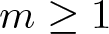 $m\geq1$, $a_t\big(t^mn-(t^2-1)/24\big)\equiv0\pmod{t^m}$, where $t\in\{5,7,11\}$. Let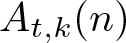 $A_{t,k}(n)$ denote the number of partition k-tuples of n with t-cores. Several scholars have been subsequently investigated congruence properties modulo high powers of 5 for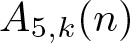 $A_{5,k}(n)$ with $k\in\{2,3,4\}$. In this paper, by utilizing a recurrence related to the modular equation of fifth order, we establish dozens of congruence families modulo high powers of 5 satisfied by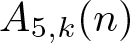 $A_{5,k}(n)$, where $4\leq k\leq25$. Moreover, we deduce an infinite family of internal congruences modulo high powers of 5 for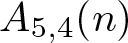 $A_{5,4}(n)$. In particular, we generalize greatly a recent result on a congruence family modulo high powers of 5 enjoyed by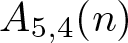 $A_{5,4}(n)$, which was proved by Saikia, Sarma and Talukdar (Indian J. Pure Appl. Math., 2024). Finally, we conjecture that there exists a similar phenomenon for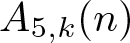 $A_{5,k}(n)$ with $k\geq26$.


Stationary measures of continuous-time Markov chains with applications to stochastic reaction networks
- Part of
-
- Journal:
- Advances in Applied Probability / Volume 57 / Issue 3 / September 2025
- Published online by Cambridge University Press:
- 14 May 2025, pp. 1031-1067
- Print publication:
- September 2025
-
- Article
- Export citation
-
We study continuous-time Markov chains on the nonnegative integers under mild regularity conditions (in particular, the set of jump vectors is finite and both forward and backward jumps are possible). Based on the so-called flux balance equation, we derive an iterative formula for calculating stationary measures. Specifically, a stationary measure $\pi(x)$ evaluated at $x\in\mathbb{N}_0$ is represented as a linear combination of a few generating terms, similarly to the characterization of a stationary measure of a birth–death process, where there is only one generating term, $\pi(0)$. The coefficients of the linear combination are recursively determined in terms of the transition rates of the Markov chain. For the class of Markov chains we consider, there is always at least one stationary measure (up to a scaling constant). We give various results pertaining to uniqueness and nonuniqueness of stationary measures, and show that the dimension of the linear space of signed invariant measures is at most the number of generating terms. A minimization problem is constructed in order to compute stationary measures numerically. Moreover, a heuristic linear approximation scheme is suggested for the same purpose by first approximating the generating terms. The correctness of the linear approximation scheme is justified in some special cases. Furthermore, a decomposition of the state space into different types of states (open and closed irreducible classes, and trapping, escaping and neutral states) is presented. Applications to stochastic reaction networks are well illustrated.


15 - Construction Grammar and Gesture
- from Part IV - Multimodality and Construction Grammar
-
-
- Book:
- The Cambridge Handbook of Construction Grammar
- Published online:
- 30 January 2025
- Print publication:
- 06 February 2025, pp 384-404
-
- Chapter
- Export citation
On several dynamical properties of shifts acting on directed trees
- Part of
-
- Journal:
- Canadian Journal of Mathematics / Volume 78 / Issue 2 / April 2026
- Published online by Cambridge University Press:
- 09 January 2025, pp. 375-404
- Print publication:
- April 2026
-
- Article
- Export citation
-
This article explores the notions of $\mathcal {F}$-transitivity and topological $\mathcal {F}$-recurrence for backward shift operators on weighted $\ell ^p$-spaces and $c_0$-spaces on directed trees, where $\mathcal {F}$ represents a Furstenberg family of subsets of $\mathbb {N}_0$. In particular, we establish the equivalence between recurrence and hypercyclicity of these operators on unrooted directed trees. For rooted directed trees, a backward shift operator is hypercyclic if and only if it possesses an orbit of a bounded subset that is weakly dense.


Reconsidering remission in recurrent late-life depression: clinical presentation and phenotypic predictors of relapse following successful antidepressant treatment
-
- Journal:
- Psychological Medicine / Volume 54 / Issue 16 / December 2024
- Published online by Cambridge University Press:
- 08 January 2025, pp. 4896-4907
-
- Article
-
- You have access
- Open access
- HTML
- Export citation
Prevalence and risk factors for dysplasia and malignancy in a large cohort of patients with recurrent respiratory papillomatosis
-
- Journal:
- The Journal of Laryngology & Otology / Volume 139 / Issue 6 / June 2025
- Published online by Cambridge University Press:
- 15 November 2024, pp. 507-511
- Print publication:
- June 2025
-
- Article
- Export citation
