To save content items to your account,
please confirm that you agree to abide by our usage policies.
If this is the first time you use this feature, you will be asked to authorise Cambridge Core to connect with your account.
Find out more about saving content to .
To save content items to your Kindle, first ensure no-reply@cambridge.org
is added to your Approved Personal Document E-mail List under your Personal Document Settings
on the Manage Your Content and Devices page of your Amazon account. Then enter the ‘name’ part
of your Kindle email address below.
Find out more about saving to your Kindle.
Note you can select to save to either the @free.kindle.com or @kindle.com variations.
‘@free.kindle.com’ emails are free but can only be saved to your device when it is connected to wi-fi.
‘@kindle.com’ emails can be delivered even when you are not connected to wi-fi, but note that service fees apply.
The basic principle of any version of insurance is the paradigm that exchanging risk by sharing it in a pool is beneficial for the participants. In case of independent risks with a finite mean, this is the case for risk-averse decision-makers. The situation may be very different in case of infinite mean models. In that case it is known that risk sharing may have a negative effect, which is sometimes called the nondiversification trap. This phenomenon is well known for infinite mean stable distributions. In a series of recent papers, similar results for infinite mean Pareto and Fréchet distributions have been obtained. We further investigate this property by showing that many of these results can be obtained as special cases of a simple result demonstrating that this holds for any distribution that is more skewed than a Cauchy distribution. We also relate this to the situation of deadly catastrophic risks, where we assume a positive probability for an infinite value. That case gives a very simple intuition why this phenomenon can occur for such catastrophic risks. We also mention several open problems and conjectures in this context.
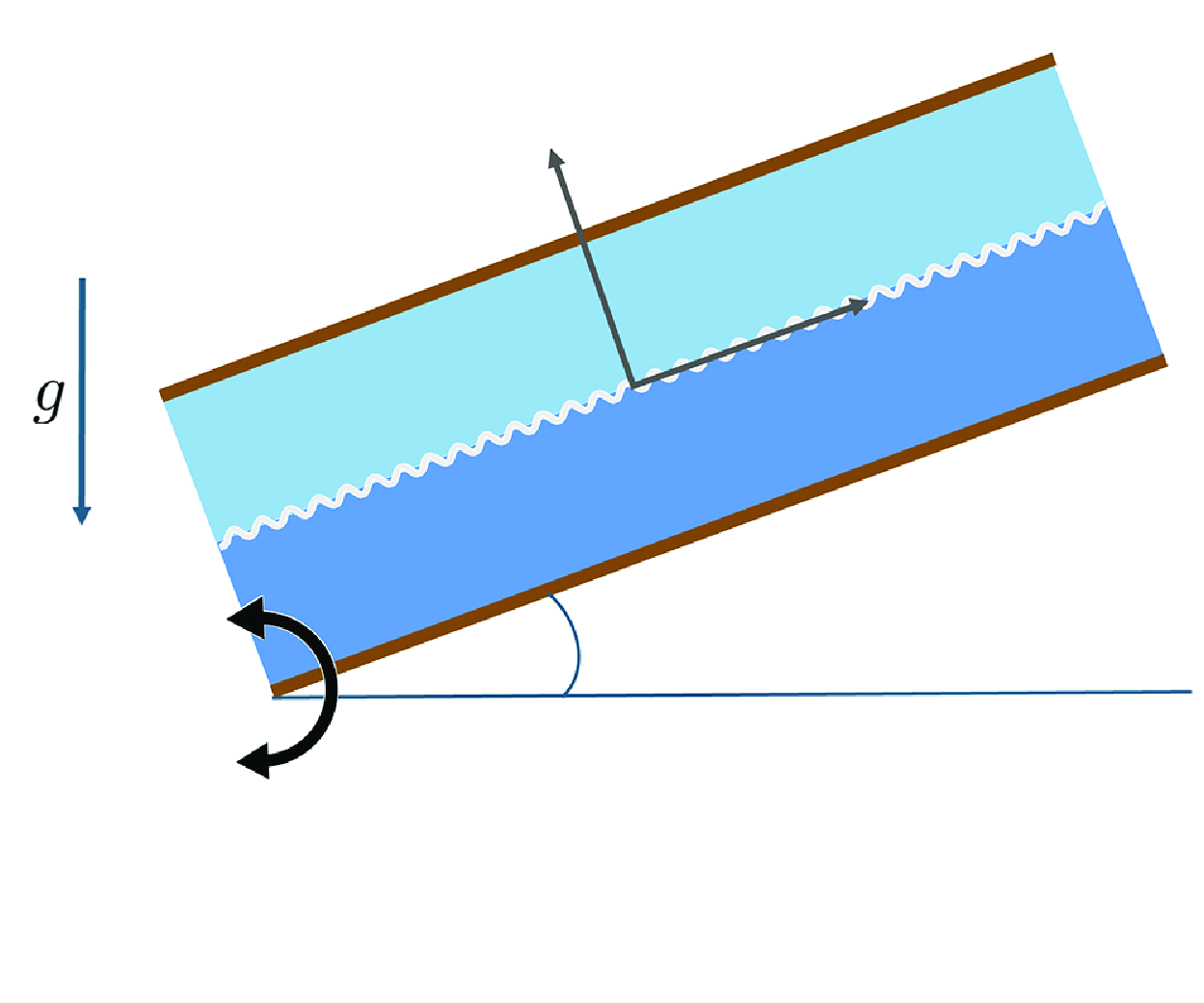
We consider the conceptual two-layered oscillating tank of Inoue & Smyth (2009 J. Phys. Oceanogr. vol. 39, no. 5, pp. 1150–1166), which mimics the time-periodic parallel shear flow generated by low-frequency (e.g. semi-diurnal tides) and small-angle oscillations of the density interface. Such self-induced shear of an oscillating pycnocline may provide an alternate pathway to pycnocline turbulence and diapycnal mixing in addition to the turbulence and mixing driven by wind-induced shear of the surface mixed layer. We theoretically investigate shear instabilities arising in the inviscid two-layered oscillating tank configuration and show that the equation governing the evolution of linear perturbations on the density interface is a Schrödinger-type ordinary differential equation with a periodic potential. The necessary and sufficient stability condition is governed by a non-dimensional parameter $\beta$ resembling the inverse Richardson number; for two layers of equal thickness, instability arises when $\beta \,{\gt}\,1/4$. When this condition is satisfied, the flow is initially stable but finally tunnels into the unstable region after reaching the time marking the turning point. Once unstable, perturbations grow exponentially and reveal characteristics of Kelvin–Helmholtz (KH) instability. The modified Airy function method, which is an improved variant of the Wentzel–Kramers–Brillouin theory, is implemented to obtain a uniformly valid, composite approximate solution to the interface evolution. Next, we analyse the fully nonlinear stages of interface evolution by modifying the circulation evolution equation in the standard vortex blob method, which reveals that the interface rolls up into KH billows. Finally, we undertake real case studies of Lake Geneva and Chesapeake Bay to provide a physical perspective.
Frailty in older adults with cancer is complex, evolving, and often overlooked in care. This qualitative study explored how frailty is experienced and reported using patient-reported outcome measures (PROMs) and visualized over time through journey maps. Eleven participants (65+) completed the Comprehensive Frailty Assessment Instrument (CFAI) and semi-structured interviews. Individual journey maps combined CFAI scores with personal narratives to track changes in physical, mental, and social aspects of frailty over time. While PROMs showed variability in frailty severity, narratives revealed discrepancies, such as low frailty scores despite significant treatment-related challenges. Fatigue, emotional distress, and isolation were common during treatment, with lasting impacts post-treatment. Findings suggest PROMs alone may not fully capture lived experience. Integrating narrative dialogue provides a more person-centred approach to frailty assessment and care planning.
During a survey of myxozoan infections in fishes from the Pardo River, Paranapanema River basin, São Paulo State, Brazil, 2 new species – Henneguya avareensis n. sp. and Myxobolus iheringichthys n. sp. – were discovered parasitizing the gills of Iheringichthys labrosus, a commercially important pimelodid fish in South America. Species descriptions were based on the morphology of myxospores and partial sequences of the small subunit ribosomal DNA. Phylogenetic analysis revealed host-related clustering, with the new species clustering together with other myxobolids that parasitize Pimelodidae (Siluriformes). Myxobolus iheringichthys n. sp. clustered specifically with Myxobolus cordeiroi, together forming yet another lineage of myxobolids infecting Pimelodidae fishes. Our analysis underscores the importance of monitoring the presence of these parasites in stocks of I. labrosus to assess potential pathologies they may cause. This is the first report of myxozoans parasitizing the gills of this Neotropical catfish.
A diversity of management and environmental factors influence weed seedbank community composition, yet the conditions under which each of these factors is an important driver of the weed seedbank are poorly understood. To investigate this relationship, we used a series of univariate and multivariate analyses to test associations between soil health, nematode community composition parameters, and the composition of the weed seedbank at 59 agricultural sites in the Prince Edward Island Soil Quality Monitoring (PEI SQM) Network spanning a range of land-use intensities and using potato (Solanum tuberosum L.) production systems as a case study. Land-use intensity is a nonstandard term that refers to increasing agricultural activity, including tillage and use of synthetic inputs to sustain high crop yield. Sites were classified into low, medium, and high land-use intensity categories based on frequency of potato cultivation in the past 10 yr. A total of 36 different weed species were found across all sites, and while neither seedbank density nor species richness was influenced by land-use intensity, community assemblage was. Seedbank communities at low land-use intensity sites were largely associated with grass weeds and other weakly competitive species, positively correlated with soil CO2 respiration and nematode community richness and diversity, and negatively correlated with the carbon to nitrogen ratio. In contrast, seedbank communities at medium and high land-use intensity sites were similar and composed of many highly competitive weedy species and correlated with the frequency of potato in the rotation and soil N and K, two commonly used soil fertility inputs. The absence of common agricultural weed species at low land-use intensity sites filtered by soil edaphic factors and abundance of neutral species despite past history of annual cropping suggest that these sites are not refuges for these species and may present a template for the design of weed seed–suppressive soils.
For time series with high temporal correlation, the empirical process converges rather slowly to its limiting distribution. Many statistics in change-point analysis, goodness-of-fit testing, and uncertainty quantification admit a representation as functionals of the empirical process and therefore inherit its slow convergence. As a result, inference based on the asymptotic distribution of those quantities is significantly affected by relatively small sample sizes. We assess the quality of higher-order approximations (HOAs) of the empirical process by deriving the asymptotic distribution of the corresponding error terms. Based on the limiting distribution of the higher-order terms, we propose a novel approach to calculate confidence intervals for statistical quantities such as the median. In a simulation study, we compare coverage rates and lengths of these confidence intervals with those based on the asymptotic distribution of the empirical process and highlight some benefits of HOAs of the empirical process.
This paper presents a novel design of quad-band rat-race couplers (RRCs) based on a modified T-shaped structure (MTSS). Two coupled lines are incorporated into the conventional dual-band T-shaped structure to create the MTSS, making it equivalent to a quarter-wavelength transmission line at four operating bands. The ABCD matrix method is applied to analyze the quad-band MTSS, deriving closed-form equations for calculating parameters of the structure. Then, a conventional RRC is separated into quarter-wavelength transmission lines, which are replaced by the proposed MTSS. To validate the design method, a quad-band RRC operating at 0.6, 1.196, 1.853, and 2.45 GHz is designed, fabricated, and tested. Simulation and experimental results demonstrate excellent agreement with theoretical prediction. The measured results show that input return loss exceeds 21.75 dB, isolation is greater than 21.6 dB, and insertion loss is less than 4.4 dB at all four operating frequencies. Phase deviations observed from the measured in-phase and out-phase responses are within 0o ± 4.6o and 180o ± 6.7o, respectively. Compared to most previously reported quad-band RRCs, the proposed circuit features a simple design and offers superior performance in isolation, return loss, and insertion loss.
Obstetric complications (OCs) are associated with cognitive and brain abnormalities observed in patients with schizophrenia. Gyrification, a measure of cortical integrity sensitive to events occurring during the prenatal and perinatal periods, is also altered in first-episode psychosis (FEP). We examined the relationship between OCs and gyrification in FEP, as well as whether gyrification mediates the relationship between OCs and cognition.
Methods
We examined differences in the Local Gyrification Index (LGI) for the frontal, parietal, temporal, occipital, and cingulate cortices between 139 FEP patients and 125 healthy controls (HCs). Regression analyses explored whether OCs and diagnosis interact to explain LGI variation. Parametric mediation analyses were conducted to assess the effect of LGI on the relationship between OCs and cognition for FEP and HC.
Results
Significant LGI differences were observed between FEP patients and HC in the left parietal and bilateral cingulate and occipital cortices. There was a significant interaction between OCs and diagnosis on the left cingulate cortex (LCC) that was specific to males (p = 0.04) and was driven by gestational rather than intrauterine OCs.
In HCs, OCs had a direct effect on working memory (WM) (p = 0.048) in the mediation analysis, whereas in FEP, we observed no significant effect of OCs on either verbal or WM.
Conclusions
OCs interact with diagnosis to predict LCC gyrification, such that males with FEP exposed to OCs exhibit the lowest LGI. OCs influence WM, and LCC gyrification may mediate this relation only in HC, suggesting a differential neurodevelopmental process in psychosis.
It has long been recognized that Sartre’s description of “being-in-itself” in the Introduction to Being and Nothingness (B&N) is reminiscent of Eleatic monism, the view traditionally attributed to Parmenides on which there is only one mind-independent entity, which is undifferentiated and atemporal. I reconstruct two arguments from premises Sartre endorses in B&N for Eleatic monism. These arguments are interesting not only because they give new life to an old reading of B&N, but also because there has recently been a revival of interest in monism in analytic metaphysics.
Suicidal behaviors (SB) in bipolar disorder (BD) are major adverse outcomes that may influence disease progression. While staging models exist for psychiatric disorders, none include suicide. This study aims to stratify suicidal risk in BD, propose a staging model for SB, and assess its clinical utility.
Methods
Participants from the FondaMental Advanced Centers of Expertise for Bipolar Disorder (FACE-BD) cohort were categorized into five stages (St) based on SB: St0 (no suicidal ideation [SI]), St1 (SI but no suicide attempt [SA]), St2a (non-severe/violent SA), St2b (severe /violent SA), and St3 (multiple SAs). Stages were analyzed based on demographic, clinical, cognitive, and biological characteristics using logistic regression.
Results
Key differences emerged between stages. St1 showed longer untreated illness and higher lability and lower functioning than St0. St2a was linked to anxiety, substance use disorders, and longer disorder duration, while male gender and lithium bitherapy were protective. St2b exhibited shorter untreated illness and higher childhood trauma (CTQ) scores, with male gender and alcohol use as risk factors. St3 was associated with BD-II, alcohol use, longer disorder duration, and more depressive episodes, but less anxiety. No biochemical or cognitive differences were found across stages. The model was significantly associated with SA occurrence (LRT = 28.74, p < 0.0001).
Conclusions
This staging model for suicidality in BD provides a multifaceted approach to risk stratification and predictive insights, although further refinement is needed.
Although virtually all academics who study human ‘race’ agree that it is a social construct, members of the general public still commonly regard ‘race’ as a biological property (i.e. they think that ‘races’ are genetically distinct). Even though empirical data from genetics and other fields do not support biological conceptions of race, this erroneous viewpoint is widely held, suggesting that there are impediments to effective communication of the relevant science. Here, we suggest five such impediments: (1) belief in genetic determinism, together with an over-reliance on an essentialist view of human groups, (2) overly simplistic interpretation of biological inheritance, (3) belief in the naturalistic fallacy and the associated naturalization of non-biological variation among racialized groups, (4) failure of the academic and educational communities to take responsibility for teaching the science of ‘race’ and racism, and (5) apologism towards racist founders of academic fields, including the evolutionary sciences. We address how and why each of these factors supports the spread of racism and suggest strategies for containing this spread.
Hidden Markov models (HMMs) are popular for modeling complex, longitudinal data. Existing identifiability theory for conventional HMMs assume emission probabilities are constant over time and the Markov chain governing transitions among the hidden states is irreducible, which are assumptions that may not be applicable in all educational and psychological research settings. We generalize existing conditions on homogeneous HMMs by considering heterogeneous HMMs with time-varying emission probabilities and the potential for absorbing states. Researchers are investigating a family of models known as restricted HMMs (RHMMs), which combine HMMs and restricted latent class models (RLCMs) to provide fine-grained classification of educationally and psychologically relevant attribute profiles over time. These RHMMs leverage the benefits of RLCMs and HMMs to understand changes in attribute profiles within longitudinal designs. The identifiability of RHMM parameters is a critical issue for ensuring successful applications and accurate statistical inference regarding factors that impact outcomes in intervention studies. We establish identifiability conditions for RHMMs. The new identifiability conditions for heterogeneous HMMs and RHMMs provide researchers insights for designing interventions. We discuss different types of assessment designs and the implications for practice. We present an application of a heterogeneous HMM to daily measures of positive and negative affect.
People with HIV (PWH) often encounter health-harming legal needs that impede their access to care, including structural issues such as racism, discrimination, unstable housing, and stigma. Medical-Legal Partnerships (MLPs) have emerged as a promising strategy to address these challenges within HIV care settings. This study aimed to identify the characteristics and strategies of MLPs that are most effective in improving HIV care continuum outcomes. A mixed-methods analysis was conducted utilizing data from a cross-sectional survey of 60 providers in MLPs. Categorical features of MLPs, such as the personnel responsible for screening for health-harming legal needs (HHLN), the organizational structure (community-based vs. institutional), and the delivery of legal services, were examined. A multiple, variable linear regression analysis was conducted to explore the association between these variables and outcomes. Community health organizations were found to be associated with a greater number of patients achieving suppressed HIV viral load. Additionally, a higher number of on-site services were positively correlated with a greater percentage of PWH achieving decreased viral load and completing follow-up appointments. Findings underscore the significance of comprehensive care approaches within MLPs for enhancing positive patient outcomes in HIV care settings.
Auditory hallucinations (hearing voices in the absence of physical stimuli) are present in clinical conditions, but they are also experienced less frequently by healthy individuals. In the non-clinical population, auditory hallucinations are described more often as positive and not intrusive; indeed, they have received less attention.
Aims
The present study explores the phenomenology of non-clinical auditory hallucinations and their possible relationship with religiosity.
Method
Starting from previous findings suggesting that non-clinical auditory hallucinations are often described as a gift or a way to be connected with ‘someone else’, we administered standardised questionnaires to quantify proneness to experiencing auditory hallucinations, religiosity and anxiety/depression scores.
Results
Regression analysis carried out using an auditory hallucinations, index as the dependent variable on a final sample of 680 responders revealed that a total of 31% of the variance was explained by a five-steps model including demographic characteristics (i.e. being young, a woman and a non-believer) and negative (e.g. being afraid of otherworldly punishments) and positive (e.g. believing in benevolent supernatural forces) components of religiosity, anxiety and depression. Crucially, compared with believers, non-believers revealed higher scores in depression, anxiety and in a specific questionnaire measuring proneness to auditory hallucinations.
Conclusions
Results suggests that religiosity acts as a potential protective factor for proneness to paranormal experiences, but a complex relationship emerges between religious beliefs, mood alterations and unusual experiences.
This study, grounded in critical disability studies, explores ableism in language education and its impact on Deaf and hard of hearing (DHH) students learning English as a foreign or third language (L3). Using interpretative phenomenological analysis, the lived experiences of 14 Iranian DHH undergraduate students, proficient in Esharani (sign language used by the Iranian Deaf community) and Persian, were analyzed. Participants recounted their experiences with ableism in English education through interviews. Analyzing interviews resulted in the emergence of three key themes: a) lack of awareness of (dis)ability and ableism throughout their English education, b) the prevalence of overt and covert ableism viewing deafness as a marker of “otherness,” and c) the need for advocacy and more inclusive practices and environments for DHH learners acquiring L3. This study highlights the challenges DHH learners face in L3 acquisition and calls for more inclusive language education policies to better support disabled students.
Patients with posttraumatic stress disorder (PTSD) exhibit smaller regional brain volumes in commonly reported regions including the amygdala and hippocampus, regions associated with fear and memory processing. In the current study, we have conducted a voxel-based morphometry (VBM) meta-analysis using whole-brain statistical maps with neuroimaging data from the ENIGMA-PGC PTSD working group.
Methods
T1-weighted structural neuroimaging scans from 36 cohorts (PTSD n = 1309; controls n = 2198) were processed using a standardized VBM pipeline (ENIGMA-VBM tool). We meta-analyzed the resulting statistical maps for voxel-wise differences in gray matter (GM) and white matter (WM) volumes between PTSD patients and controls, performed subgroup analyses considering the trauma exposure of the controls, and examined associations between regional brain volumes and clinical variables including PTSD (CAPS-4/5, PCL-5) and depression severity (BDI-II, PHQ-9).
Results
PTSD patients exhibited smaller GM volumes across the frontal and temporal lobes, and cerebellum, with the most significant effect in the left cerebellum (Hedges’ g = 0.22, pcorrected = .001), and smaller cerebellar WM volume (peak Hedges’ g = 0.14, pcorrected = .008). We observed similar regional differences when comparing patients to trauma-exposed controls, suggesting these structural abnormalities may be specific to PTSD. Regression analyses revealed PTSD severity was negatively associated with GM volumes within the cerebellum (pcorrected = .003), while depression severity was negatively associated with GM volumes within the cerebellum and superior frontal gyrus in patients (pcorrected = .001).
Conclusions
PTSD patients exhibited widespread, regional differences in brain volumes where greater regional deficits appeared to reflect more severe symptoms. Our findings add to the growing literature implicating the cerebellum in PTSD psychopathology.
The control of standard contract terms has become one of the most important yet controversial areas of contract law. By comparing the Directive 93/13/EEC on unfair terms in consumer contracts with the recently adopted US Restatement of Consumer Contracts, this Article sheds light on the relative strengths and weaknesses of the EU and US regulatory approaches to the use of standard terms in consumer contracts. Particular emphasis is placed on the review of dispute resolution clauses. The central thesis of this Article is that the personal scope of the European and US consumer contract control regimes should be broadened to protect small and medium sized enterprises and that their interplay with private international law needs to be clarified.
Organizations often face moral dilemmas. For example, in 2004 the UN Refugee Agency (UNHCR) needed to decide whether to help refugees in enclosed camps in Pakistan repatriate to Afghanistan. On the one hand, helping with repatriation might have made UNHCR complicit in forced returns, as refugees sought to repatriate just to avoid life without freedom in Pakistan. On the other hand, refusing to help with repatriation would leave refugees stranded in camps: perhaps repatriation was the best option if this was what refugees wanted. When organizations face this and other dilemmas, it is not clear how they should proceed. In other words, it is unclear which policy they should pursue when all feasible policies seem wrong. Some might think that, at least for hard dilemmas, every choice is just wrong, and so no choice is right. But that is not quite true. Even difficult dilemmas can be resolved using certain methods. One method is to ask those affected by potential policies what they think the most justifiable policy is. A second method is to choose what to do randomly. Randomly selecting a course of action can sometimes be the fairest way of determining what to do when every option seems wrong.
This article is an exploration of how Christian influences manifested in Indigenous rock art, comparing two distinct case studies: western Arnhem Land in northern Australia and the southern Andes in north-central Chile. The analysis aims to understand the intersection between Indigenous artistic traditions and the introduction of Christianity through European colonization. Our comparative analysis reveals significant regional differences. In western Arnhem Land, the scarcity of Christian imagery suggests resistance to or avoidance of religious symbols, while in north-central Chile, the prevalence of Christian symbols indicates a more profound incorporation of Christianity into Indigenous artistic practices. These findings underscore the importance of considering local contexts and historical processes when examining the impact of colonization on Indigenous art. Understanding these differences provides valuable insights into the complex interactions between Indigenous cultures and European colonizers, revealing resistance and adaptation in the face of profound social and religious changes.