To save content items to your account,
please confirm that you agree to abide by our usage policies.
If this is the first time you use this feature, you will be asked to authorise Cambridge Core to connect with your account.
Find out more about saving content to .
To save content items to your Kindle, first ensure no-reply@cambridge.org
is added to your Approved Personal Document E-mail List under your Personal Document Settings
on the Manage Your Content and Devices page of your Amazon account. Then enter the ‘name’ part
of your Kindle email address below.
Find out more about saving to your Kindle.
Note you can select to save to either the @free.kindle.com or @kindle.com variations.
‘@free.kindle.com’ emails are free but can only be saved to your device when it is connected to wi-fi.
‘@kindle.com’ emails can be delivered even when you are not connected to wi-fi, but note that service fees apply.
In this study, we investigate the impact of X-rays produced by conventional mCT instruments on fossil materials dated by radiocarbon. Our results clearly show a decrease on the collagen preservation in fossil and modern bones and teeth, and therefore on the radiocarbon analytical results (in particular, the collagen yield and, possibly, stable isotope composition), after mCT scanning. In other words, all the samples analysed here have experienced a noticeable radiation damage, regardless of their nature (bone and dental tissue) and age (modern and fossil). Given these observations, a prudent approach would be for radiocarbon laboratories to expect lower collagen yields for samples that have been previously mCT scanned and ensure appropriately sized standards are processed alongside these samples. Additionally, samples with originally low collagen yields might become unsuitable for radiocarbon dating after mCT or at least show a yield lower than the usual minimum cut-off value. In this case, it might be viable to extend the collagen yield quality assurance parameter for mCT scanned bones and teeth and instead focus on the C:N ratio as the most appropriate indicator of collagen quality, although we cannot exclude that the latter may also be impacted by X-ray exposure. Further investigations on a larger set of samples are required to confirm these first observations. Nevertheless, in the light of these results, we can reasonably conclude by recommending caution regarding the systematic and unlimited use of mCT scanning in palaeoanthropology or in other related disciplines involving fossil material.
Drinking culture. What happens in the field. It was just a joke. Don’t rock the boat. Archaeology staggers under the weight of its many “gray zones,” contexts of disciplinary culture where boundaries, relationships, ethical responsibilities, and expectations of behavior are rendered “blurry.” Gray zones rely on an ethos of silence and tacit cooperation rooted in structures of white supremacy, colonialism, heteropatriarchy, and ableism. In the gray zone, subtle and overt forms of abuse become coded as normal, inevitable, impossible, or the unfortunate cost of entry to the discipline. Drawing on narrative survey responses and interviews collected by the Working Group on Equity and Diversity in Canadian Archaeology in 2019 and 2020, we examine the concept of the gray zone in three intersecting contexts: the field, archaeology’s drinking culture, and relationships. The work of making archaeology more equitable relies on our ability to confront gray zones directly and collectively. We offer several practical recommendations while recognizing that bureaucratic solutions alone will not be sufficient. Change will require a shift in archaeological culture—a collective project that pulls gray zones into the open and prioritizes principles of care.
This article follows a session on ‘Using AI in the Classics Classroom’ delivered at the University of Cambridge Mentors’ Day for the Classics PGCE (Initial Teacher Education programme). The first half of the article provides a brief introduction to how generative AI operates and the impact AI has had on education in the UK. In addition, this section considers the advantages of AI for educators in supporting PGCE students and early career teachers, aiding with planning and resource creation as well as the advantages for pupils. It also sets out practical limitations such as AI hallucinations, biases, database limitations, data protection concerns, and the potential risks of pupils developing reliance on AI usage and how teachers can avoid this. The second half of this article provides guidance and examples of how teachers can use AI to support their workload outside of the classroom and for using AI with pupils in the classroom. This includes advice on how to improve AI prompts, example prompts, and prompt scaffolds, as well as recommendations of AI tools for teachers to use in the classroom.
Maya Blue is a unique hybrid pigment created by combining organic indigo with the inorganic clay mineral palygorskite. First used for architectonic decoration in the Terminal Preclassic, it became widespread in the Late Classic on figurines, murals, and elite ceramics. Unlike indigo, it is notable for its durability and resistance to degradation by acids, alkalines, organic solvents and fading. The authors analyzed 17 samples of Maya Blue on pottery from the Late-Terminal Classic periods, a.d. 680–860, from Buenavista del Cayo, Belize. Using laser ablation inductively coupled plasma mass spectrometry (LA-ICP-MS), it was determined that the palygorskite in these samples likely came from Sacalum, Yucatan, some 375 km away. The authors suggest several routes by which palygorskite might have been transported from Yucatán to Buenavista. The pigment or knowledge of how to produce it likely was conveyed through high-status exchanges rather than commercial trade. Maya Blue held significant cultural and religious importance. It symbolized water and rain and was associated with the god Chaahk. Maya Blue appeared initially at Buenavista on architecture and rare imported ceramics but its use gradually increased on locally produced Belize Valley wares. Use at Buenavista peaked in the early 9th century before disappearing around a.d. 860. The study demonstrates the potential of trace element analysis in identifying long-distance social interactions in ancient Mesoamerica.
This article examines the challenges Indigenous communities face in safeguarding their intangible cultural heritage (ICH) in the digital age, using two case studies. Referring to the Te Hiku Media case, it analyzes the threat of data colonialism posed by corporate digitization projects. The article argues that existing legal frameworks provide limited protection for Indigenous ICH, prompting Indigenous communities to develop the innovative theory of Indigenous data sovereignty (ID-SOV). The Government of Nunavut–Microsoft partnership case highlights the benefits and drawbacks of public–private partnerships (PPPs) for Indigenous ICH. Key takeaways from both cases’ analysis lead to our proposal of integrating ID-SOV principles into PPPs to limit data colonialism risks and improve the sustainability of Indigenous ICH digitization projects. The article contends that implementing ID-SOV principles by design and by default in PPPs can empower Indigenous communities while leveraging the oversight of public actors and resources of private partners to safeguard Indigenous ICH through digital tools.
Since 2015, four non-invasive campaigns have surveyed the San José Galleon shipwreck in the Colombian Caribbean, providing valuable insights into the age and provenance of artefacts found on the seabed. Numismatic, archaeological and historical approaches have been employed to analyse a collection of gold coins recorded within this underwater context.
This article concerns the practice of bed burial, a rare funerary custom found in some sixth- to early tenth-century ad graves ranging from southern Germany to Scandinavia and England. Existing research has often overlooked the diversity of bed burials, focusing mainly on the reconstruction of the beds, their style, the status of the deceased, and the objects associated with them, without examining the broader implications of the ritual. Here, the author explores the variations in bed burials, their relationship to the deceased, the artefacts linked with them, and the surrounding contexts. Her study is based on a new assessment of every aspect of the ritual, including the location of the graves, the biological and social identity of the deceased, the burial assemblage, and whether the beds were complete. This approach aims to demonstrate that the practice of bed burial should be addressed in the plural.
How did resource use, trade, and patterns of everyday life change at visita mission towns in the early decades of the colonial period in northern Yucatán, Mexico? We consider this question with an analysis of archaeological material assemblages from the site of Hunacti, occupied from 1557 to 1572. Household archaeology performed at three elite residences and investigations at the central plaza and church provide evidence of continuity, change, and metrics for assessing relative prosperity by which Hunacti can be compared to its contemporaries. This spectacularly built mission town evinces several signs of initial wealth and privilege enjoyed by the site’s Maya elites, but historical records reveal relentless persecution of these leaders for idolatry, which affected the longer-term prospects of the settlement. Our findings indicate the persistence of Maya religious rites through the site’s occupation, the importance of traditional Maya tools and technologies, and relative impoverishment (as conventionally measured). These patterns offer a profile of material life at a site that chose, ultimately, abiding resistance—and consequently, greater local self-sufficiency—in the face of accelerating external scrutiny and persecution.
The Parthenon’s structure suggests a thought-out design particularly attentive to light. This includes the orientation of the building towards the rising sun, the placement of windows, the use of barriers and grilles, the translucent marble ceilings, the skylights, and even ‘reflective’ pools of various liquid. These are all devices that, alongside bright materials, may have been used to enhance the experience of visitors to the temple and their encounter with the colossal gold and ivory statue of the goddess Athena. To test the validity and the effect that each of these purported design strategies produced, this article proposes an experiment using advanced 3D digital technologies, along with physically based lighting simulations, to recreate the ambient and architectural conditions that existed in the original temple design. The results suggest that this temple, contrary to long-standing beliefs that imagined the interior as a ‘bright marble space’, was generally quite dark and dim. The subsequent discussion and concluding remarks suggest that the illumination of the chryselephantine statue’s materials through the glow of a lamp, and on rare occasions from the sun, probably represented the pinnacle of the viewing encounters.
This article examines the reception of Sappho in Julius Pollux’s Onomasticon. The article shows that Pollux primarily quotes Sappho as an authoritative source on clothing and textiles. This presentation of Sappho is unusual, given that other ancient sources largely locate her poetry within an erotic, and sometimes sympotic, framework; and it is particularly notable for the way in which it emphasizes Sappho’s status as a specifically female poet with special insight into, and expertise in, the feminine domestic world. The article argues that this domestication of Sappho’s verses is not (primarily) an act of sexist belittlement, but rather demonstrates how Pollux reimagines Sappho in his own image. In the material world of the Onomasticon, Sappho becomes in turn an emblem of (feminine) materiality, whose apparent preoccupation with the fabric of everyday life productively mirrors the encyclopaedia’s own. As a whole, the article argues that Pollux’s creative engagement with Sappho’s poetry is both an important constituent part of, and a foil to, her wider reception in both antiquity and modernity.
This article looks at Byzantine dogs for the first time from the animal's point of view, i.e. not for what our textual sources tell us about their contribution to Byzantine human history, society, and culture, but for what they may enable us to trace regarding the dogs' own sensory and emotional experience, reactions and dispositions, individuality and agency. Methodologically this is made possible by using methods and insights from Animal Studies, especially by exploiting the benefits of a modern biological and ethological understanding of the nature of dogs, and of posthumanistic approaches that collapse the human–animal divide.
Domestic cats have lived alongside human communities for thousands of years, hunting rats, mice, and other pests and serving as pets and a source of pelts and meat. Cats have received limited archaeological attention because their independence limits direct insight into human societies. An adult and juvenile cat recovered from the Emanuel Point wreck 2 (EP2) reflect what are, most likely, the earliest cats in what is now the United States. Zooarchaeological analyses of these and other archaeological cats in the Americas demonstrate that cats ranged substantially in size: some were comparable to modern house cats, and others were much smaller. Isotopic analyses of the adult cat from EP2 provides insight into early shipboard cat behavior and their diet, which appears to have focused on consumption of fish and possibly domestic meat. Cats accompanied sailors on ships where they were relied on to hunt rats and mice that were infesting ships’ holds. Interestingly, based on these isotopic results, the adult cat from EP2 does not seem to have relied heavily on rats as a source of food. These pests were unintentionally introduced to the New World, and cats would have followed, hunting both native and invasive pests.
Paleoindians buried Spirit Cave Man in a Nevada cave, and archaeologists excavated these remains in 1940. Radiocarbon testing in 1996 dated the burial and associated grave goods as older than 10,700 years. Living just 10 miles from Spirit Cave, the Fallon Paiute-Shoshone Tribe filed a NAGPRA claim in 1997 requesting the repatriation of the Spirit Cave ancestor they call “The Storyteller.” This claim ignited a 20-year legal dispute that led the Fallon Paiute-Shoshone Tribe to make the gut-wrenching decision to permit DNA testing. This article documents a 10,000-year genetic continuity firmly linking Paleoindians at Spirit Cave to the Lovelock culture and that strongly suggests continuities to modern Paiutes living there today with no population replacement. We explore the associated radiocarbon record of these dynamics to understand the syncopated population movements that responded to shifting resource distributions. Resilience theory provides an operational way to understand this extraordinary continuity through key concepts, including tipping points, early warning signals, sunk-cost effects, and loss-of-resilience hypotheses. The Spirit Cave case also underscores the moribund concepts and assumptions underlying a century of Great Basin anthropological study that misread this long-term episode of Indigenous resilience and survivance.
A shift towards constructing large circular monuments, including henges, during the Middle Neolithic of Britain and Ireland is exemplified in the monumental landscape of south-west England. Seventeen new radiocarbon dates for the Flagstones circular enclosure and the adjacent long enclosure of Alington Avenue, presented here, provide a chronology that is earlier than expected. Comparison with similar sites demonstrates that Flagstones was part of a broader tradition of round enclosures but was also distinctly innovative, particularly in terms of its size. These findings reinforce the value in developing precise chronologies for refining understanding of monument forms and associated practices.
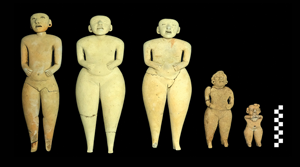
Representations of the human body are ubiquitous in cultures across the world. Beyond the aesthetic, figurines transmit deeper meanings that were readily decodable by their intended audience and may still offer sociocultural insights despite the loss of this coding through time. The discovery of a rare tableau of ‘Bolinas’-type clay figurines dating to 410–380 BC at San Isidro, El Salvador, now permits the theoretical reconstruction of a less stratified Preclassic society in south-east Mesoamerica and the exploration of its spheres of interaction, which may have stretched along the coast from Guatemala to Costa Rica.
This paper explores the evolving landscape of comparative research between ancient Egypt and China, focusing on various aspects such as culture, writing systems, political economy, and motivations behind these comparisons done in China and international environments. Embedded with the historical context, motivations and methodologies of scholars engaged in this comparative endeavour, the authors suggest that such research is linked to modern China's intellectual history and global engagement. It discusses potential motivations, including economic factors, national agenda and interdisciplinary integration. The authors also raise the need for more deliberate theorizations of Egypt–China comparisons, emphasizing the importance of greater reflexivity and inclusivity in shaping the trajectory of comparative studies. Overall, the document sheds light on the complexities, motivations and potential impacts of Egypt–China comparative research, highlighting its relevance in understanding both historical civilizations and contemporary global dynamics.
This article introduces the reader to current work at the intersection of classical studies and the public humanities. It begins from the observation that in recent years, efforts by classical scholars to relate to a wider public have intensified and taken on a new quality. Not so long ago, public-facing research was considered detrimental to “real” scholarship. By contrast, as this article sets out to show, there is now a growing interest in a true exchange of perspectives, knowledges, and methodologies with stakeholders outside of the confines of the academe. I argue that some of the most interesting work in this space emerges from the way in which the aims and objectives of the public humanities intersect with several trends currently driving classical studies. These include the emergence of the digital humanities, the maturing of classical reception studies, and the (often difficult) conversations around calls to “decolonize” the classics.
What does it mean to teach and work in a corporate university with colonial roots, today? The on-going events in Palestine – what have been described by many specialists and international organizations as a genocidal campaign – have brought to the surface the historical undercurrents, the tensions and the contradictions of such an institution as a nested sensorial assemblage of actors, memories, affects and interests. Starting from the events that happened in the context of teaching an archaeology course on social justice while a student encampment was in place on campus, in the spring of 2024, I reflect on the materiality of protest, on teaching as a transgressive undertaking and on the retooling of colonial and decolonial structures to advance emancipation. In the midst of a rather dark moment, this is ultimately a hopeful reflection.