To save content items to your account,
please confirm that you agree to abide by our usage policies.
If this is the first time you use this feature, you will be asked to authorise Cambridge Core to connect with your account.
Find out more about saving content to .
To save content items to your Kindle, first ensure no-reply@cambridge.org
is added to your Approved Personal Document E-mail List under your Personal Document Settings
on the Manage Your Content and Devices page of your Amazon account. Then enter the ‘name’ part
of your Kindle email address below.
Find out more about saving to your Kindle.
Note you can select to save to either the @free.kindle.com or @kindle.com variations.
‘@free.kindle.com’ emails are free but can only be saved to your device when it is connected to wi-fi.
‘@kindle.com’ emails can be delivered even when you are not connected to wi-fi, but note that service fees apply.
In this paper we present T. rex fossils as disruptive objects that can drastically influence the actions and reactions of humans that encounter them. We present a vision of the T. rex as being a key node within a web of human and object associations that ultimately produces, first, extreme desire in humans, and then a breakdown in human relationships resulting in disagreements, disputes, lawsuits, and the committing of crime. From there we bring these T. rex fossils into the concept of desirescape which sees a network of object/object and object/human reactions provoking irresistible desire in humans. We argue that this desire can push humans to violate law or social norms or, in several T. rex cases, sue each other. How then should we humans approach T. rex and other disruptive objects? Cautiously, and with the knowledge that these objects may be more powerful than we are.
This article examines the word histories of 12 nouns (eight zoonyms, two other lifeform names, and two toponyms) in Mixtec, a shallow or emergent language family of Mesoamerica. It argues that these nouns—now morphologically opaque—are fused compounds that arose from the Mixtec vocabulary of the mantic count of 260 days, a temporal organization that was part of the common cultural heritage of pre-Hispanic Mesoamerican peoples. With the European colonization and persecution of Mesoamerican religious practices, the use of the mantic count was abandoned. It was at this time that the compounds would have been demotivated; that is, the internal morphological structure would have become inaccessible to speakers who could no longer relate it to the mantic cycle. This then enriched the lexicon, creating etymological pairs for the same, or similar, referents. It is suggested that the survival of the eight zoonyms may have to do with their use in the context of omens.
The British antiquary William Gell (1777–1836) is known for his work on ancient Greece and Rome, which he based on a lifetime of Mediterranean travel and two decades of residence in Italy. This article uses a remarkable notebook held at the British School at Rome to explore his unheralded interest in Islamic Spain (al-Andalus), which emerged from his Iberian travels of 1808–11 and took up much of his energy in the early 1830s, the final years of his life. As such, the notebook shows how engagement with other cultures might continue well beyond an initial encounter through travel. It brings together Gell's on-the-spot sketches and descriptions of the Alhambra, his copious later reading on the Emirate of Granada and evidence that he was teaching himself Arabic, offering a case study of early nineteenth-century scholarship that straddles the transition between eighteenth-century antiquarianism and Romantic, Orientalist approaches. The materiality and the contents of Gell's notebook chart the changing ways in which British travellers and writers incorporated al-Andalus into their understandings of Europe and the Mediterranean.
This article revisits ear ornament data from Tikal—both material and visual—to better understand the varied roles of ear ornamentation in ancient Maya society over time. The author discusses relevant terms and terminology, then emphasizes the social aspects of ear piercing and stretching as well as the place of ear ornaments in economic exchange. Ear ornamentation was a critical aspect of socialization for ancestral Mayas, but the extent of this practice was classed. Whereas the styles of nonelite ear ornaments were more resistant to change over time, the jade earflares of elites became more standardized in form while growing in complexity. With this standardization, jade earflares achieved a status close to currency, not just to be coveted or collected but also to be displayed on the body to the fullest extent possible. However, like many currencies, jade earflares were more complex than simple tokens of exchange. The symbolic dimensions that gave these objects meaning and economic value were integral to their power.
In “How Can Spin, Ply, and Knot Direction Contribute to Understanding the Quipu Code?” (2005), mathematician Marcia Ascher referenced new data on 59 Andean khipus to assess the significance of their variable twists and knots. However, this aggregative, comparative impulse arose late in Ascher's khipu research; the mathematical relations she had identified among 200+ previously cataloged khipus were specified only at the level of individual specimens. This article pursues a new scale of analysis, generalizing the “Ascher relations” to recognize meaningful patterns in a 650-khipu corpus, the largest yet subjected to computational study. We find that Ascher formulae characterize at least 74% of khipus, which exhibit meaningful arrangements of internal sums. Top cords are shown to register a minority of sum relationships and are newly identified as markers of low-level, “working” khipus. We reunite two fragments of a broken khipu using arithmetic properties discovered between the strings. Finally, this analysis suggests a new khipu convention—the use of white pendant cords as boundary markers for clusters of sum cords. In their synthesis, exhaustive search, confirmatory study, mathematical rejoining, and hypothesis generation emerge as distinct contributions to khipu description, typology, and decipherment.
One century after its initial excavation, this article presents the first absolute chronology for the settlement of Karanis in Egypt. Radiocarbon dates from crops retrieved from settlement structures suggest that the site was inhabited beyond the middle of the fifth century AD, the time at which it was previously believed to have been abandoned. These dates add to the complex picture of population fluctuations and the remodelling and reuse of structures at Karanis. Two dates reach into the middle of the seventh century, placing the abandonment of the site in a period of political and environmental transition that changed the physical and social landscape of the Fayum region and beyond.
At the turn of the twentieth century, American logging companies backed by the US colonial regime initiated extensive extraction in Bikol, Philippines. Industrial infrastructure and the involvement of a newly assembled Bikolano workforce left a profound imprint on the region's landscape. This article discusses a collaborative archaeological project that used archival materials, place-name analysis, ethnographic interviews, discussions with local scholars, satellite mapping, and drone-mounted lidar scans of former industrial sites. Findings shed light on the enduring ramifications of American logging in the early 1900s on settlement patterns, the infrastructure of routes and mobility, the state of industries from Philippine independence in 1946 through the 1980s, and ongoing environmental hazards. These findings emphasize the legacy of American empire, reveal the role of Filipino logging workers in shaping the landscape through settlement decisions, and uncover intricate connections across a pan-Pacific American colonial frontier that was shaped by both extractive and settler colonialism. This article adds to an emerging trend in Americanist archaeology in which archaeology investigates recent historical and even contemporary events.
The activities of metal-detectorists and other finders and collectors of archaeological objects are increasingly of interest for researchers in archaeology and related disciplines. In this methods article, the authors introduce semi-structured archaeological object interviews—inspired by the object interview in sociology—as a means of observing the meanings and biographies that finder-collectors create for, and with, the objects in their stewardship. The challenges and opportunities for researchers using this method are explored and the authors offer reflections from in-the-field experiences with finder-collectors in Flanders, Finland and Norway.
This paper tests a new model to study the Roman conquest and colonization of the Western Mediterranean. This recent model depicts Roman expansion as a more sustainable process than previously assumed, which tapped into, reinforced and integrated wider Mediterranean settlement trends. Contrary to what is assumed by traditional narratives, colonization did not entail the immediate destruction and restructuring of native landscapes — but rather the integration, opportunistic reuse, appropriation and development of previous land-uses and settlements. Two legacy datasets collected through pedestrian survey in the colonial territories of Cosa (Italy) and Tarraco (Spain) were used to test this model on a supranational scale. The analysis indicated that certain portions of the native landscape were possibly integrated into the Roman Empire without initial drastic changes being reflected in the settlement patterns or the landscape.
Focusing on the late prehistoric southern Levant, we recently suggested that the diffused low-frequency distribution of large predator bones (lion, leopard and bear) coalesces into a coherent temporal pattern when observed at a sufficiently long timescale. While in the previous research we sought to determine what sort of sociocultural mechanism might explain this pattern, effectively drawing it into the orbit of the familiar, in this brief provocation, we push in the other direction, towards the unfamiliar: how can a process or phenomenon be culturally significant yet meaningless at the human and societal levels? How is a phenomenon substantial in the long term and insubstantial in the short term?
In the summer of 2022, Tulane University, in collaboration with archaeologists from other institutions, began excavations at the site of Pompeii. The archaeological work was focused on Insula 14 of Region 1, located in the southeastern sector of the site. To overcome the challenges of recording a complex urban excavation, and of working with a collaborative team, we designed and implemented a unique workflow that combines paperless and 3D data-capture methods through the use of GIS technologies. The final product of our documentation workflow was a robust and easy-to-use online geodatabase where archaeologists can revisit, explore, visualize, and analyze each excavated context using virtual tools. We present our workflow for digitally documenting observational and spatial data in the field, and how we made these data available to project archaeologists during and after the field season. First, we describe the development of digital forms in ESRI's Survey123. Then, we explain our procedures for 3D documentation through SfM photogrammetric methods and discuss how we integrated the data and transformed it into an accessible format by using interactive dashboards and online 3D web scenes. Finally, we discuss the components of our workflow that are broadly applicable and that can easily be adapted to other projects.
El objetivo principal de este trabajo es presentar importantes novedades sobre el marco histórico y productivo de la explotación minera de la sierra de Corduba en época romana, así como de la gestión de sus recursos. Desde hace años y a partir de la documentación epigráfica disponible, se ha venido apuntando una posible presencia en este territorio de la societas Sisaponensis y de la explotación de plomo y plata por su parte, a pesar de la afamada vinculación con el beneficio del cinabrio que recoge un conocido pasaje de Plinio. Nuestras investigaciones en el norte de Córdoba y los análisis arqueométricos realizados sobre tres lingotes de plomo recuperados en el paraje de Los Escoriales de Doña Rama, situado en la Sierra de Gata (Belmez-Córdoba), suponen una superación de la frontera del conocimiento sobre los aspectos reseñados, ya que permiten contrastar estas dos hipótesis tradicionales y proponer nuevas cuestiones sobre la explotación de estos parajes y la actividad de esta societas. Estos lingotes fueron encontrados en una instalación minero-metalúrgica romana, algo que es excepcional, y conservan una inscripción, S S, que los vincula sin duda con la societas Sisaponensis.
The study explores the meaning-making of cultural heritage in school field trips to five sites in the region Östergötland in Sweden. It treats the materiality of the place and experiences of the guides and the pupils, obtained in school as well as in other contexts, as meaning-making resources during the site visits. It emphasises that sites should be seen as processes, open to interpretations and reinterpretations. The visitor is steered by expectations and common values as well as by the ways in which the heritage site is displayed and presented. In the present study, both adults (guides) and children (pupils) are defined as visitors. The authors draw on theories from history education research and from heritage studies when interpreting how pupils encounter heritage sites, they underline the centrality of 'the flesh and embodied agency' in the experience of sites. This title is also available as Open Access on Cambridge Core.
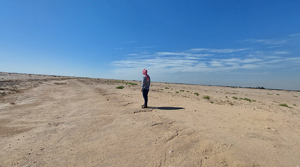
Decades of conflict in the Gaza Strip have contributed to widely documented cultural heritage destruction, demonstrating a need to monitor vulnerable sites and enhance the empirical base. This article describes how the Gaza Maritime Archaeology Project (GAZAMAP 2022–2023) was developed to monitor coastal and near-coastal sites, collaboratively. Owing to the unprecedented destruction of heritage since October 2023, GAZAMAP's scope has fundamentally shifted.