To save content items to your account,
please confirm that you agree to abide by our usage policies.
If this is the first time you use this feature, you will be asked to authorise Cambridge Core to connect with your account.
Find out more about saving content to .
To save content items to your Kindle, first ensure no-reply@cambridge.org
is added to your Approved Personal Document E-mail List under your Personal Document Settings
on the Manage Your Content and Devices page of your Amazon account. Then enter the ‘name’ part
of your Kindle email address below.
Find out more about saving to your Kindle.
Note you can select to save to either the @free.kindle.com or @kindle.com variations.
‘@free.kindle.com’ emails are free but can only be saved to your device when it is connected to wi-fi.
‘@kindle.com’ emails can be delivered even when you are not connected to wi-fi, but note that service fees apply.
We analyse seismic time series collected during experimental campaigns in the area of the David Glacier, Victoria Land, Antarctica, between 2003 and 2016. We observe hundreds of repeating seismic events, characterized by highly correlated waveforms (cross-correlation > 0.95), which mainly occur in the grounding zone, i.e. the region where the ice transitions from grounded ice sheet to freely floating ice shelf. The joint analysis of seismic events and observed local tidal measurements suggests that seismicity is not only triggered by a regular, periodic driver such as the ocean tides but also more likely by transient pulses. We consider potential environmental processes and their impact on the coupling between the glacier flow and the bedrock brittle failure. Among the environmental variables examined, our findings suggest that clustered and repeated seismic events may be related to transient episodes of ice-mass discharge correlated to a change in the subglacial hydrographic system that originates upstream of the glacier, lubricating the interface with the bedrock. This hypothesis is supported by the gravity variation observations provided by the GRACE satellite mission, which observed mass variations during periods characterized by seismic clustering.
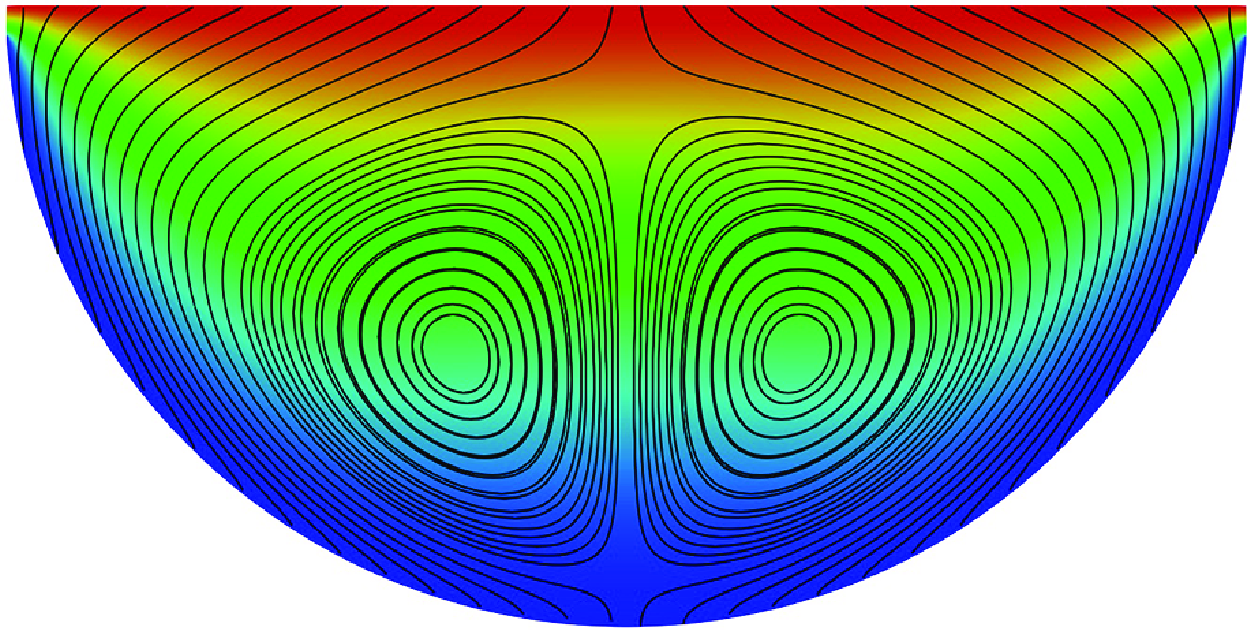
This paper presents a method to stabilise oscillations occurring in a mixed convective flow in a nearly hemispherical cavity, using actuation based on the receptivity map of the unstable mode. This configuration models the continuous casting of metallic alloys, where hot liquid metal is poured at the top of a hot sump with cold walls pulled in a solid phase at the bottom. The model focuses on the underlying fundamental thermohydrodynamic processes without dealing with the complexity inherent to the real configuration. This flow exhibits three branches of instability. The solution of the adjoint eigenvalue problem for the convective flow equations reveals that the regions of highest receptivity for unstable modes of each branch concentrate near the inflow upper surface. Simulations of the linearised governing equations show that a thermomechanical actuation modelled on the adjoint eigenmode asymptotically suppresses the unstable mode. If the actuation’s amplitude is kept constant in time, which is easier to implement in an industrial environment, the suppression is still effective but only over a finite time, after which it becomes destabilising. Based on this phenomenology, we apply the same actuation during the stabilising phase only in the nonlinear evolution of the unstable mode. It turns out stabilisation persists, even when the unstable mode is left to evolve freely after the actuation period. These results not only demonstrate the effectiveness of receptivity-informed actuation in stabilising convective oscillations but also suggest a simple strategy for their long-term control.
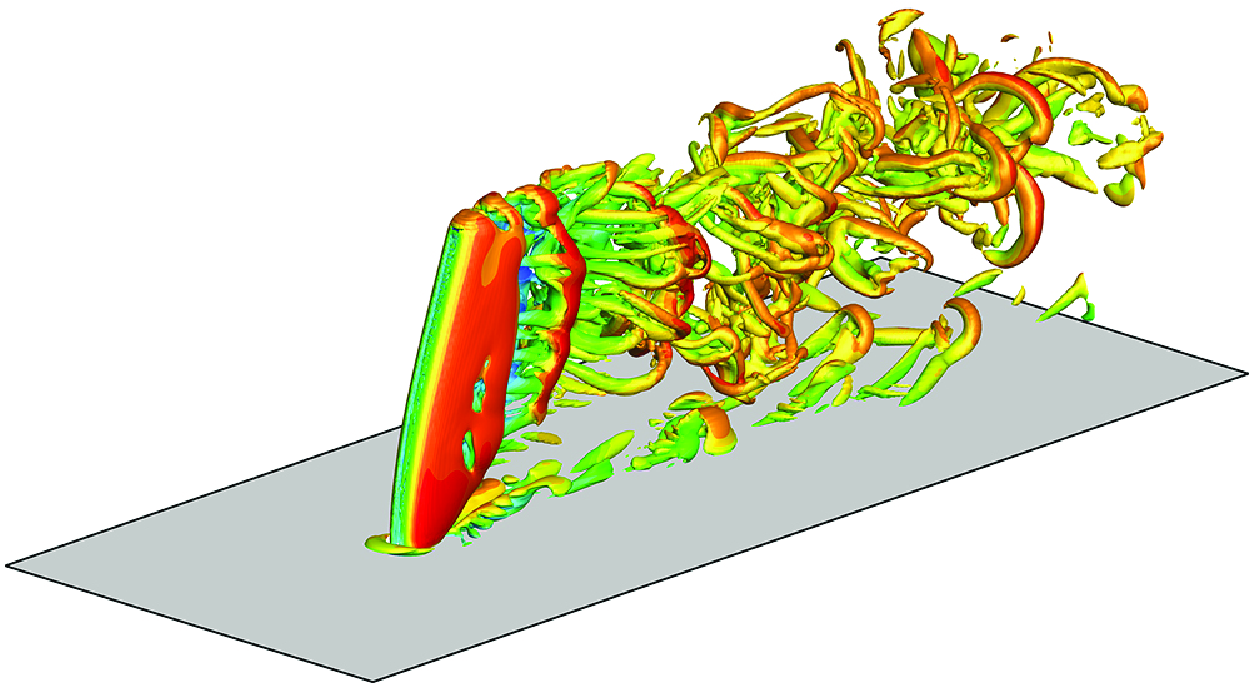
The dynamics of wall-mounted flexible structures, such as aquatic vegetation, is essential for analysing collective behaviours, flow distributions and vortex formation across different scales. To accurately model these structures under various flow conditions, we develop a novel numerical method that couples the immersed boundary method (IBM) with the vector form intrinsic finite element (VFIFE) method, referred to as the IBM–VFIFE method. We simulate both flexible and rigid stems, each with a constant aspect ratio of 10, mounted on an impermeable bottom in uniform flow with the Reynolds number ranging from 200 to 1000. In the rigid case, we identify three distinct flow regimes based on the vortex dynamics and lift spectral characteristics. Due to the influences of downwash flow at the free end and upwash flow near the junction, vortex shedding varies significantly along the vertical direction. For the flexible case, we examine a wide range of stem stiffness values to explore potential dynamic responses. The results reveal that stiffness plays a key role in stem behaviour, leading to three distinct classifications based on amplitude magnitude and displacement spectra respectively. Notably, the vortex dynamics of a flexible stem differs significantly from that of a rigid stem due to shape deformation and stem oscillation. A flexible stem with relatively high stiffness experiences greater hydrodynamic loads compared with its rigid counterpart. This study highlights the unique stem behaviours and vortex dynamics associated with flexible stems. We find that stem oscillation, combined with a near-wake base vortex, contributes to an upwash flow near the stem bottom, which significantly weakens (or, in some cases, eliminates) the downwash flow. Additionally, low-frequency oscillations in the streamwise and vertical directions are observed, while the transverse oscillation exhibits a dominant frequency one order of magnitude higher. Overall, this study provides valuable insights into the response and vortex dynamics of a single stem in uniform flow.
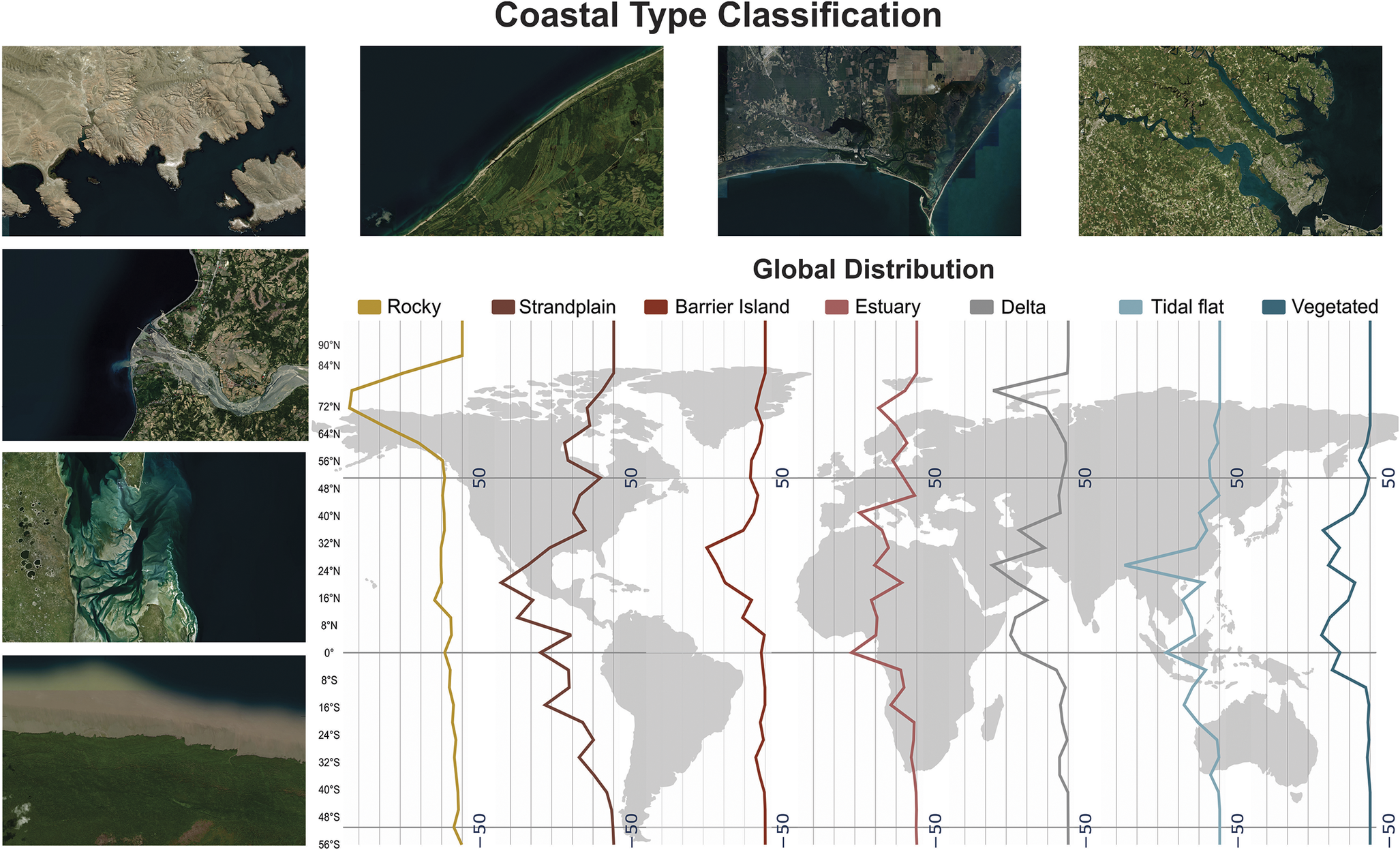
Addressing sea-level rise and coastal flooding requires adaptation strategies tailored to specific coastal environments. However, a lack of detailed geomorphological data on global coasts impedes effective strategy development. This research maps seven coastal environments worldwide, and for each environment analyzes the effect of coastal changes on coastal populations by including sea-level change, extreme sea-level events with varying return periods and population growth from 1950 to 2050. It identifies the historical exposure of low-lying deltaic and estuarine flood areas (>48% of total population) and reveals that flood exposure will significantly increase for barrier islands and strandplains by 2050 (with over a 40% rise in exposure), particularly along African coastlines. Population growth emerges as the primary factor behind the increased exposure. While sea-level rise is projected to contribute between 26% and 65% of the increased inundated area by 2050 compared to a 10-year extreme sea-level event, varying by coastal environment. The findings highlight the critical need for mitigation measures that account for the distinct responses of different coastal types to sea-level rise, posing various risks over varying timescales.
The classical water-wave theory often neglects water compressibility effects, assuming acoustic and gravity waves propagate independently due to their disparate spatial and temporal scales. However, nonlinear interactions can couple these wave modes, enabling energy transfer between them. This study adopts a dynamical systems approach to investigate acoustic–gravity wave triads in compressible water flow, employing phase-plane analysis to reveal complex bifurcation structures and identify steady-state resonant configurations. Through this framework, we identify specific parameter conditions that enable complete energy exchange between surface and acoustic modes, with the triad phase (also known as the dynamical phase) playing a crucial role in modulating energy transfer. Further, incorporating spatial dependencies into the triad system reveals additional dynamical effects that depend on the wave velocity and resonance conditions: we observe that travelling-wave solutions emerge, and their stability is governed by the Hamiltonian structure of the system. The phase-plane analysis shows that, for certain velocity regimes, the resonance dynamics remains similar to the spatially independent case, while in other regimes, bifurcations modify the structure of resonant interactions, influencing the efficiency of energy exchange. Additionally, modulated periodic solutions appear, exhibiting changes in wave amplitudes over time and space, with implications for wave-packet stability and energy localisation. These findings enhance the theoretical understanding of acoustic–gravity wave interactions, offering potential applications in geophysical phenomena such as oceanic microseisms.
‘Tropicalization’, the phenomenon of species shifting their ranges, has become increasingly prevalent as a response to environmental modifications induced by global change. This study points to an accelerated tropicalization process of marine fish species in the Gulf of Cadiz, a bioinvasion hotspot adjacent to the Strait of Gibraltar. We report accelerated, unusual, and rare occurrences of 15 fish species expanding and potentially establishing their ranges in the Gulf of Cadiz, driven by ocean warming over the past decade. These new insights are the combined consequence of a range expansion of some species, likely facilitated by temperature increases, an intensification of maritime traffic (with a consequent rise in propagule pressure), and a possible increase in sampling efforts and citizen science.
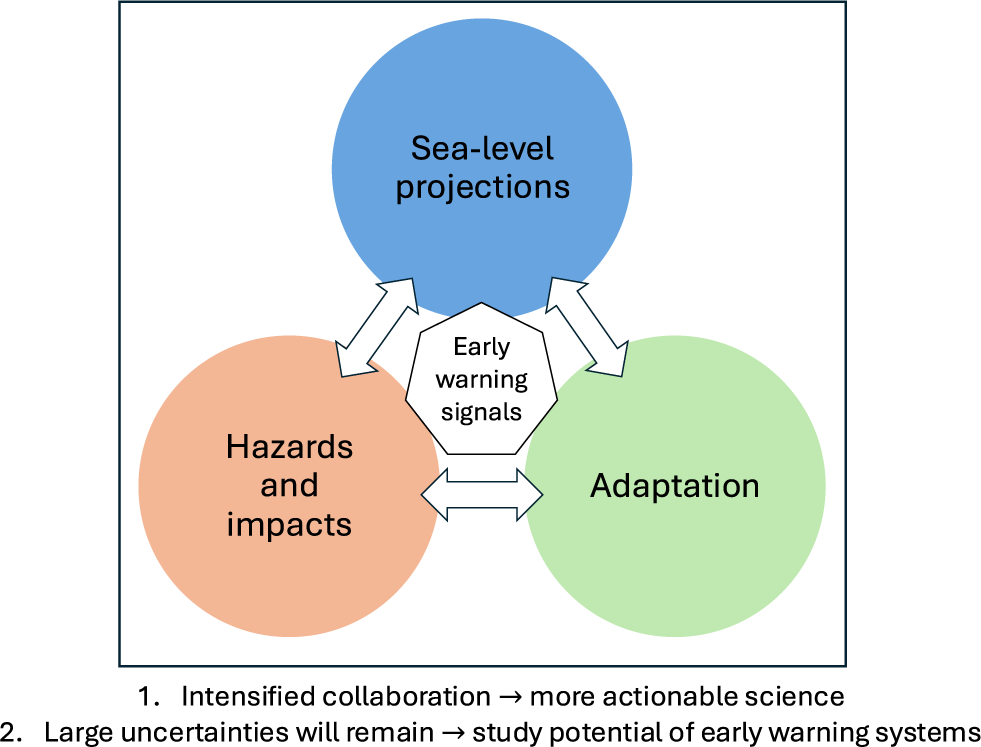
While adapting to future sea-level rise (SLR) and its hazards and impacts is a multidisciplinary challenge, the interaction of scientists across different research fields, and with practitioners, is limited. To stimulate collaboration and develop a common research agenda, a workshop held in June 2024 gathered 22 scientists and policymakers working in the Netherlands. Participants discussed the interacting uncertainties across three different research fields: sea-level projections, hazards and impacts, and adaptation. Here, we present our view on the most important uncertainties within each field and the feasibility of managing and reducing those uncertainties. We find that enhanced collaboration is urgently needed to prioritize uncertainty reductions, manage expectations and increase the relevance of science to adaptation planning. Furthermore, we argue that in the coming decades, significant uncertainties will remain or newly arise in each research field and that rapidly accelerating SLR will remain a possibility. Therefore, we recommend investigating the extent to which early warning systems can help policymakers as a tool to make timely decisions under remaining uncertainties, in both the Netherlands and other coastal areas. Crucially, this will require viewing SLR, its hazards and impacts, and adaptation as a whole.
Many marine invertebrates are intermediate hosts to parasites. As some of these parasites may influence host behaviour and act as cryptic agents involved in mass mortality, knowledge of their presence, dynamics, and life cycles is important. Our aim with the present study is to provide a survey of parasites in subtidal cockles in the Limfjorden (Denmark), to examine their influence on cockles, and to assess their possible role in the surfacing of cockles, as this phenomenon is considered a prelude to mortality. The trematode fauna of the studied subtidal population was poor in species, but about 19% of the examined cockles in late summer and autumn were infected by Monorchis parvus – a species not previously reported from cockles in Danish waters. Heavily infected cockles were filled with small, undulating, worm-like sporocysts, each filled with metacercariae. From August to November, the number of metacercariae in sporocysts increased, and at a certain point, the growing stock of sporocysts is supposed to reach a level where the cockle is unable to perform vital life functions. Our data show that infected individuals exhibit less annual shell growth than uninfected ones. There was no significant difference in the prevalence of M. parvus between unburied and buried cockles. Cockle-eating fish from the family Sparidae are known as final hosts to M. parvus, but these fish do not occur in Danish waters. Therefore, the record-high presence of M. parvus in cockles from the Limfjorden is surprising, and we consider alternative life cycle options for this trematode.
Previous typification acts are reviewed herein, in light of the International Code of Zoological Nomenclature, to correct improper procedures while raising new type specimens for Theriosynoecum silvai, Darwinula martinsi and Cypridea araripensis, after loss of the original ones.
Several transnational corporations, investors, international organizations, and philanthropies have formed coalitions to respond to global social and environmental challenges. Do these coalitions, consisting of large-scale actors, have the capacity to contribute to the sustainability transformations that are needed, or do they perpetuate the same systemic dynamics that created the problems in the first place? We investigate this question by comparing publicly available information from five coalitions working on financial and food systems sustainability.
Technical Summary
This paper examines whether large-scale actor coalitions (LSACs) may contribute to transformations toward equitable and sustainable futures. We use a ‘rapid assessment’ 20-variable framework to collect and analyze empirical data from five food and finance coalitions to identify their roles and capacities for transformative change. Our results indicate that LSACs implement distinct strategies to reach their goals. More specifically, due to their diverse set-ups, LSACs have the ability to raise awareness of sustainability issues, utilize ties to push forward agendas, engage in institutional policy-shaping processes, experiment with solutions, and showcase promising niche initiatives. We identify ways that LSACs’ actions can enable efforts of other change-makers who aim to change the food and finance systems and contribute to systems with high and diverse capacities for transformative change. We also discuss why the roles and lack of certain capacities of LSACs might hinder the creation of enabling conditions for transformative change within the food and finance sectors.
Social Media Summary
Coalitions consisting of powerful actors have a range of transformative capacities that, under certain conditions, can support systemic transformations within their sectors.
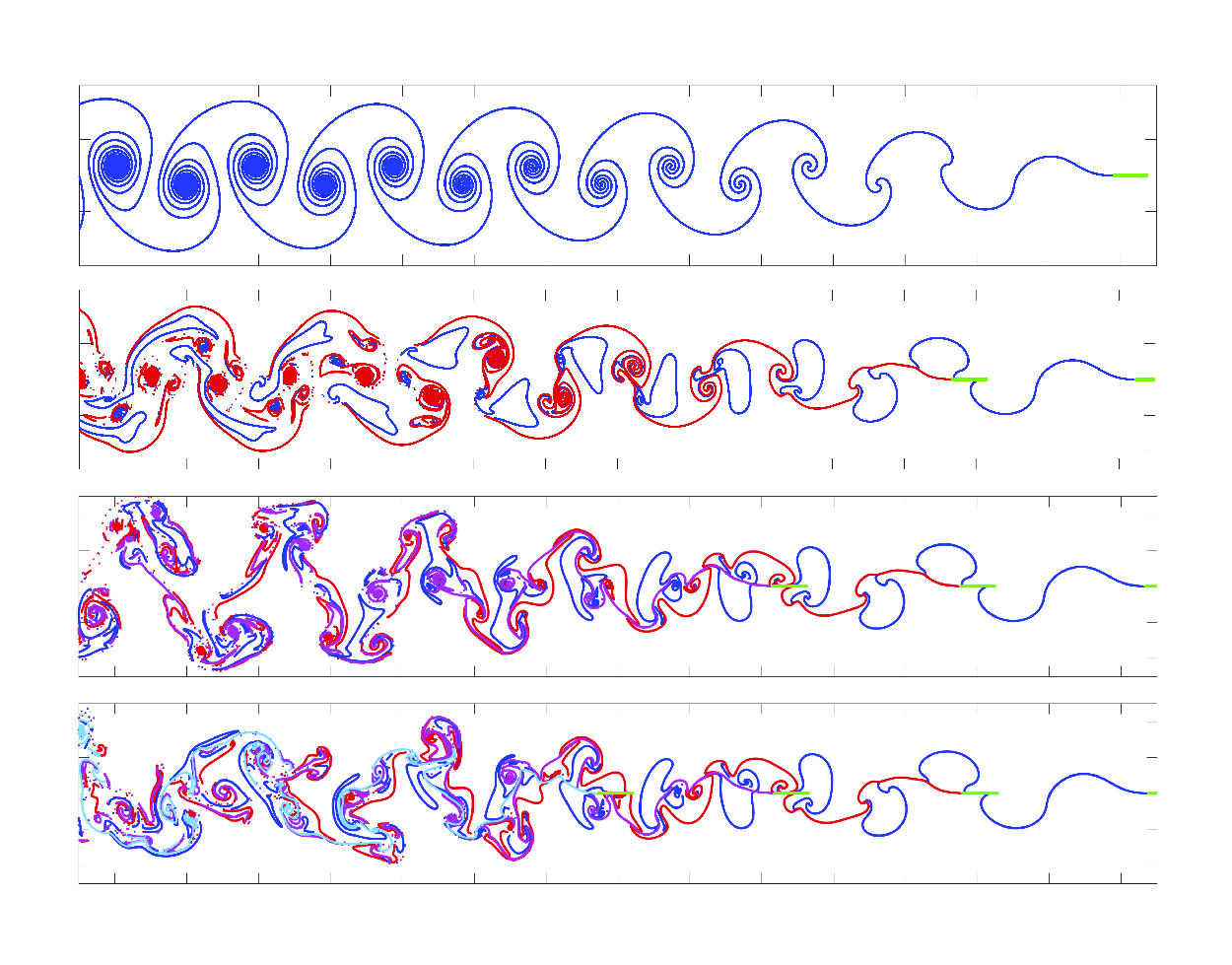
The motion of several plates in an inviscid and incompressible fluid is studied numerically using a vortex sheet model. Two to four plates are initially placed in line, separated by a specified distance, and actuated in the vertical direction with a prescribed oscillatory heaving motion. The vertical motion induces the plates’ horizontal acceleration due to their self-induced thrust and fluid drag forces. In certain parameter regimes, the plates adopt equilibrium ‘schooling modes’, wherein they translate at a steady horizontal velocity while maintaining a constant separation distance between them. The separation distances are found to be quantised on the flapping wavelength. As either the number of plates increases or the flapping amplitude decreases, the schooling modes destabilise via oscillations that propagate downstream from the leader and cause collisions between the plates, an instability that is similar to that observed in recent experiments on flapping wings in a water tank (Newbolt et al., 2024, Nat. Commun., vol. 15, 3462). A simple control mechanism is implemented, wherein each plate accelerates or decelerates according to its velocity relative to the plate directly ahead by modulating its own flapping amplitude. This mechanism is shown to successfully stabilise the schooling modes, with remarkable impact on the regularity of the vortex pattern in the wake. Several phenomena observed in the simulations are obtained by a reduced model based on linear thin-aerofoil theory.
Ficopomatus uschakovi has been reported in Galveston Bay (GB), Texas, USA, in taxonomic lists and studies of biofouling communities since 2017; however, after 2 years (from 2022 to 2024) of no observations of this species in the system, we report the first seasonal outbreak after the landfall of Hurricane Beryl in the summer of 2024, followed by 2 weeks of heavy rain, decreasing the salinity at the collection site. In this study, we provide the first genetic characterization of the specimens of F. cf. uschakovi from GB using mitochondrial cytochrome oxidase b DNA sequence data. Results demonstrated that specimens of F. cf. uschakovi in GB belong to the same genetic species as reported on both of coasts of Mexico, the Gulf coast of Florida, and Thailand. The presence of shared haplotypes suggests possible initial introduction from Asia and subsequent expansion of F. cf. uschakovi populations. The comparison of the morphological characters with reports from nearby localities showed a variation in the number of rows and spines on the operculum and in the tube colouration. This study highlights the importance of morphological and genetic analysis for reliable identification of invasive species, the need for wide geographical sampling, as well as examinations of the ecological drivers of F. cf. uschakovi outbreaks.
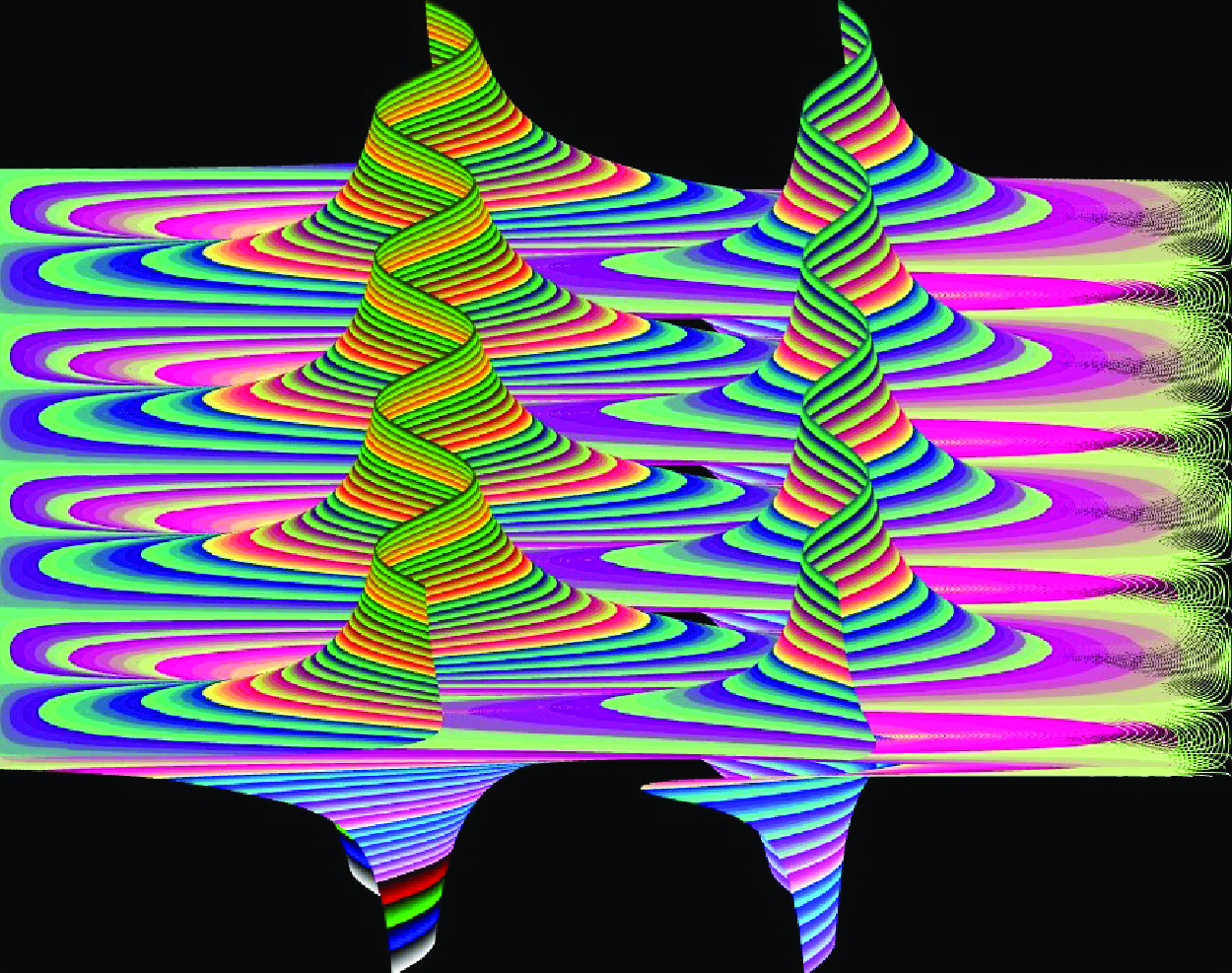
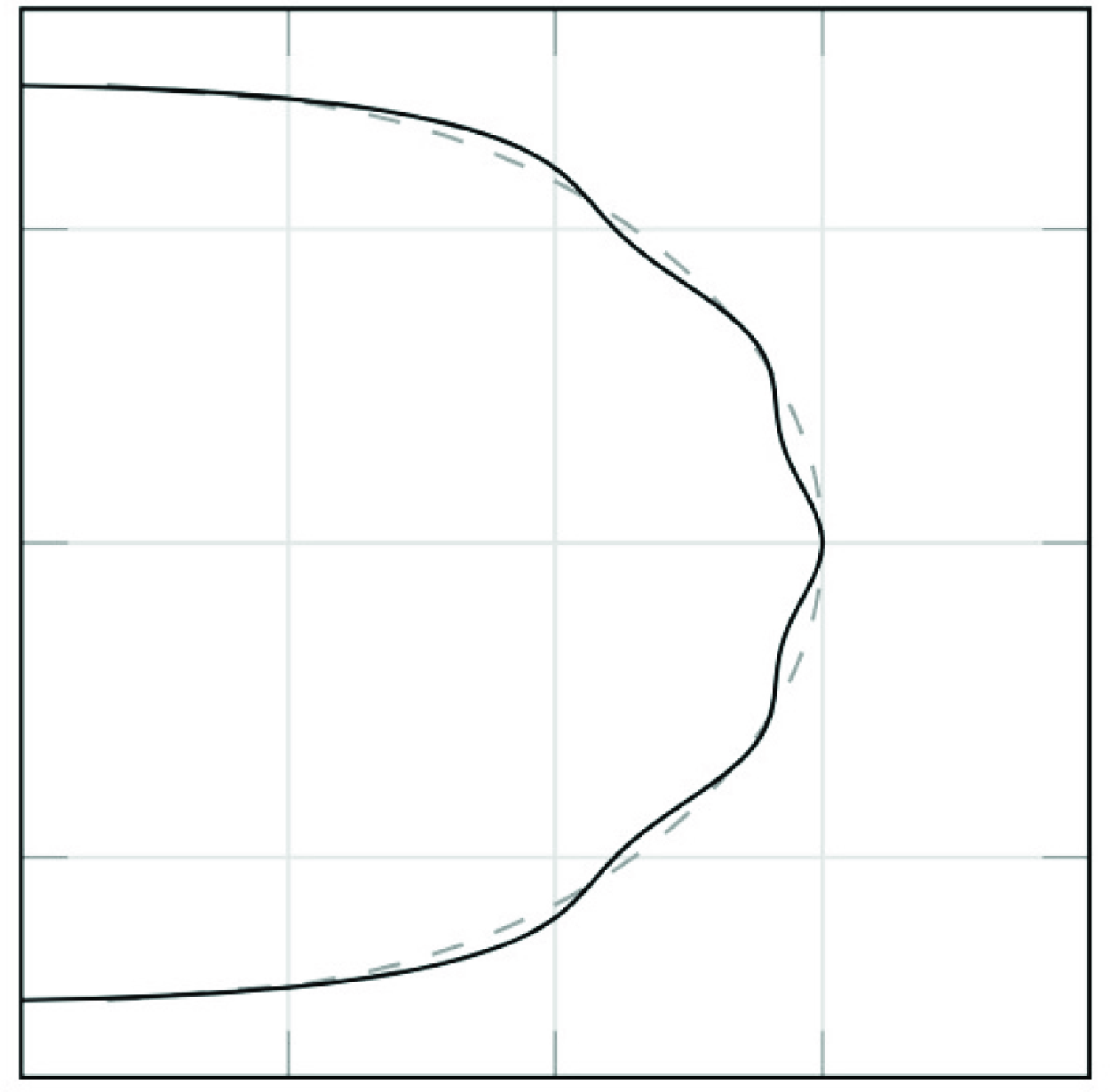
We present a numerical scheme that solves for the self-similar viscous fingers that emerge from the Saffman–Taylor instability in a divergent wedge. This is based on the formulation by Ben Amar (1991, Phys. Rev. A, vol. 44, pp. 3673–3685). It is demonstrated that there exists a countably infinite set of selected solutions, each with an associated relative finger angle, and furthermore, solutions can be characterised by the number of ripples located at the tip of their finger profiles. Our numerical scheme allows us to observe these ripples and measure them, demonstrating that the amplitudes are exponentially small in terms of the surface tension; the selection mechanism is driven by these exponentially small contributions. A recently published paper derived the selection mechanism for this problem using exponential asymptotic analytical techniques, and obtained bifurcation diagrams that we compare with our numerical results.
Ice-sheet volume during Marine Isotope Stage (MIS) 3 (57–29 ka) is controversial. Several recent studies have proposed that the Greenland Ice Sheet was smaller during MIS 3 than it is today based on radiocarbon ages of molluscan bivalve shells reworked into sedimentary deposits adjacent to the present ice margin. Such a result contrasts with available records of MIS 3 climate, ice volume, and sea level. We revisited a site previously interpreted as containing evidence for smaller than present ice during MIS 3. We collected marine bivalve shells and combined progressive acid dissolution in preparation for radiocarbon dating with new-generation amino acid analysis, which focuses on aspartic acid racemization. Our results suggest that contamination by young carbon yields finite radiocarbon ages despite bivalve shells likely dating to MIS 5e (∼125 ka) or even older. This result should be further tested, which could be accomplished with additional studies of this kind in combination with ice-sheet modeling and additional paleoclimate data generated from adjacent seas.
Waves propagating over oscillating periodic structures can be reflected and attenuated either by Bragg scattering or by local resonance. In this work, we focus on the interplay between surface gravity waves and submerged resonators, investigating the effect of the local resonance on wave propagation. The study is performed using a state of the art numerical simulation of the Navier–Stokes equation in two-dimensional form with free boundary and moving bodies. A volume of fluid interface technique is employed for tracking the free surface, and an immersed boundary method for the fluid–structure interaction. A wave maker is placed at one end of the flume and an absorbing beach at the other. The evolution in space of a monochromatic wave interacting with up to four resonators coupled only fluid mechanically is presented. We evaluate the efficiency of the system in terms of wave amplitude attenuation and energy transfers between the fluid and the solid phase. The results indicate that, near resonance conditions, both wave reflection and energy dissipation increase significantly. Conversely, far from resonance, waves can propagate through the system with minimal dissipation, even in the presence of numerous resonators. Moreover, when the time scale associated with the resonator’s restoring force is longer than the wave period, the resonators tend to follow the wave motion, oscillating with an amplitude comparable to that of the wave. In contrast, when the two time scales are similar, the resonator motion becomes amplified, resulting in stronger velocity gradients and enhanced viscous dissipation.
This is the first report of Jurassic brachyurans and anomurans from the territory of Russia. These findings come from the Upper Jurassic (Oxfordian) reef limestones of the North Caucasus. The anomuran Gastrosacus wetzleri von Meyer, 1851 was collected from the locality near the Urup River and is the first find of this species outside of western Europe. The dromiacean crab, Goniodromites aliquantulus Schweitzer, Feldmann, and Lazăr, 2007, was discovered from another locality near the Kamennomostsky village. This species was first described from the Oxfordian of Romania. Findings of fossil remains of Goniodromites aliquantulus and Gastrosacus wetzleri from the Oxfordian of the North Caucasus indicate an interconnected paleobiogeographical community of decapod faunas in the Late Jurassic in the Tethys basins.