Refine search
Actions for selected content:
179500 results in Earth and Environmental Sciences
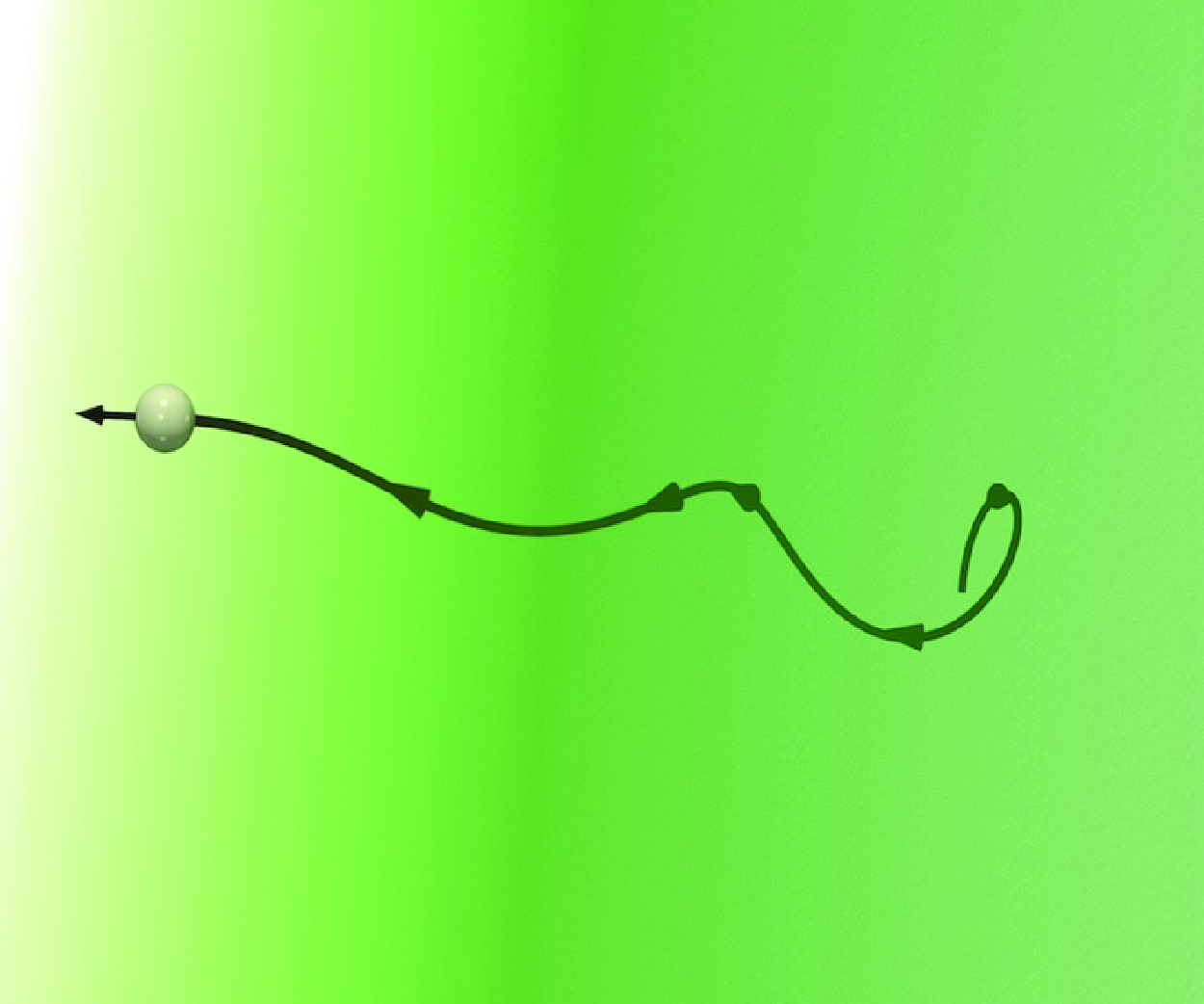
Viscotaxis of chiral microswimmer in viscosity gradients
-
- Journal:
- Journal of Fluid Mechanics / Volume 1013 / 25 June 2025
- Published online by Cambridge University Press:
- 23 June 2025, A42
-
- Article
- Export citation

Decarbonising Electricity
- The Promise of Renewable Energy Regions
-
- Published online:
- 20 June 2025
- Print publication:
- 03 July 2025
The future of ammonia use in 30 years: a deliberative experimental study envisioning the perspective of a future generation
-
- Journal:
- Global Sustainability / Volume 8 / 2025
- Published online by Cambridge University Press:
- 20 June 2025, e26
-
- Article
-
- You have access
- Open access
- HTML
- Export citation
Without enabling reuse, the Treaty risks locking in disposability
- Part of
-
- Journal:
- Cambridge Prisms: Plastics / Volume 3 / 2025
- Published online by Cambridge University Press:
- 20 June 2025, e15
-
- Article
-
- You have access
- Open access
- HTML
- Export citation
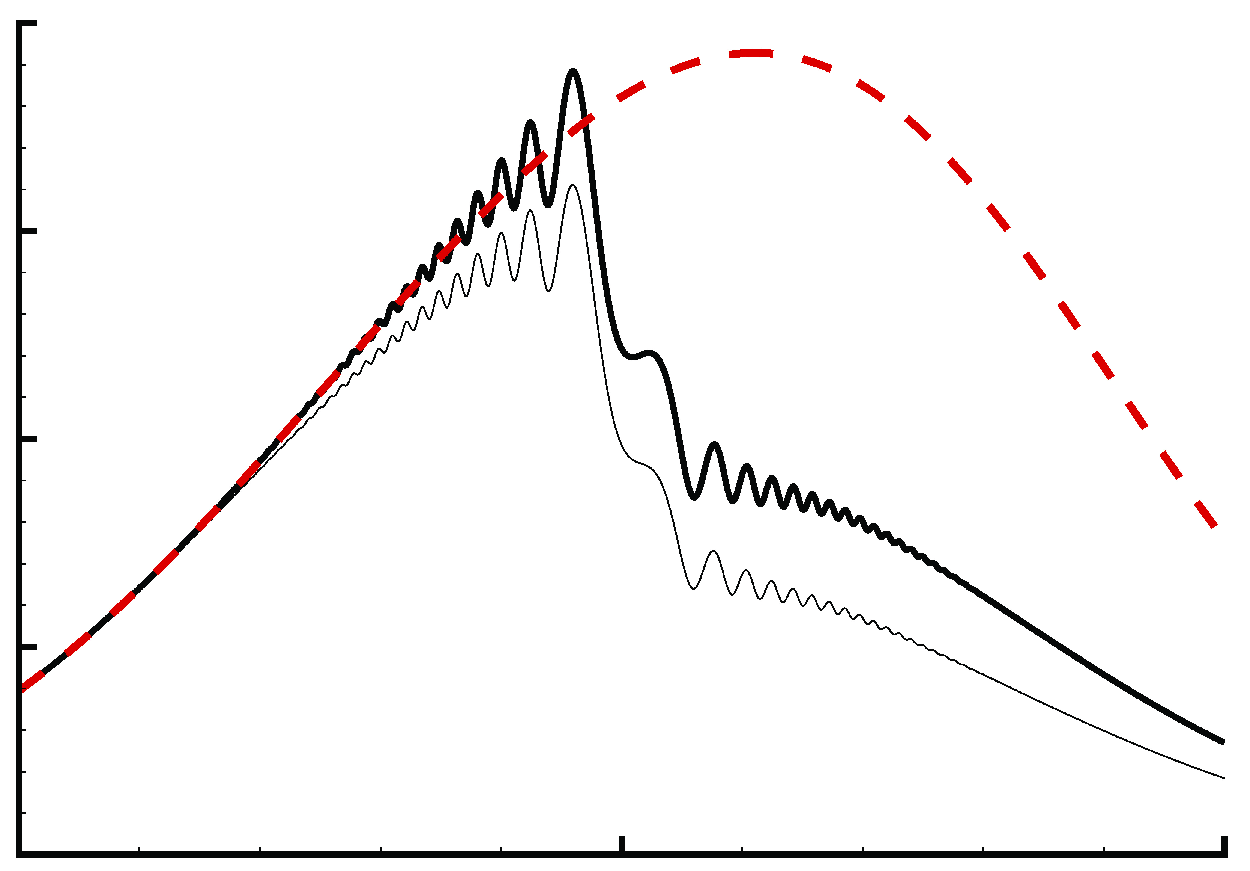
Nonlinear evolution of radiating modes in the presence of sound waves impinging on a supersonic boundary layer: subharmonic resonance
-
- Journal:
- Journal of Fluid Mechanics / Volume 1013 / 25 June 2025
- Published online by Cambridge University Press:
- 20 June 2025, A29
-
- Article
-
- You have access
- Open access
- HTML
- Export citation
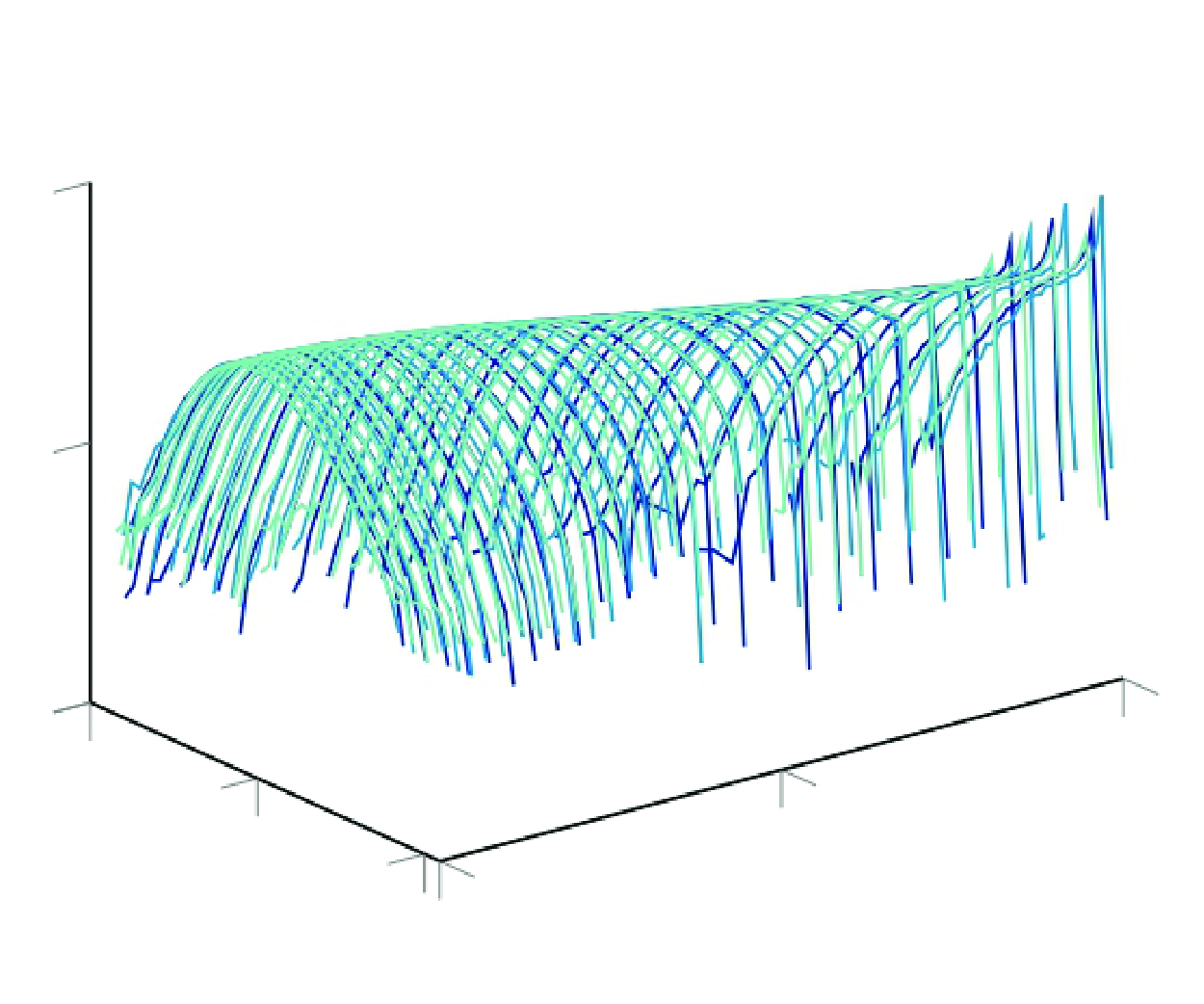
Passive scalar statistics in a turbulent round jet: symmetry theory and direct numerical simulation
-
- Journal:
- Journal of Fluid Mechanics / Volume 1013 / 25 June 2025
- Published online by Cambridge University Press:
- 20 June 2025, A33
-
- Article
-
- You have access
- Open access
- HTML
- Export citation
-
We analyse moment and probability density function (PDF) statistics of a passive scalar $\Theta$ at a Prandtl number of $Pr=0.71$ in a turbulent jet. For this, we conducted a direct numerical simulation at a Reynolds number of $Re=3500$ and, further, employed Lie symmetries applied to the multi-point moment equations, generalising recent work (Nguyen & Oberlack 2024b under review with Flow Turbul. Combust.) that focused on pure hydrodynamics. It is shown that the symmetry theory also provides highly precise results for free shear flows for all the quantities mentioned and statistical symmetries again play a key role. The scalar statistics are partly similar to the $U_z$ velocity statistics, and in particular, as in the above-mentioned work, a significant generalisation of the classical scalings has been derived so that a variation of the scaling laws solely controlled by the inflow is possible. An exponential behaviour of the scaling prefactors with the moment orders $m$ and $n$ for scalar and velocity is also discovered for any mixed moments. Instantaneous $\Theta$-moments and mixed $U_z$- $\Theta$-moments exhibit a Gaussian distribution with variation of the scaled radius $\eta =r/(z-z_0)$. Therein, the coefficient in the Gauss exponent is nonlinear with varying moment orders $m$ and $n$. The scalar PDF statistics are clearly different from the velocity statistics, i.e. already deviate from the Gaussian distribution on the jet axis, as is observed for the $U_z$ statistics, and become clearly skewed and heavy tailed for increasing $\eta$.


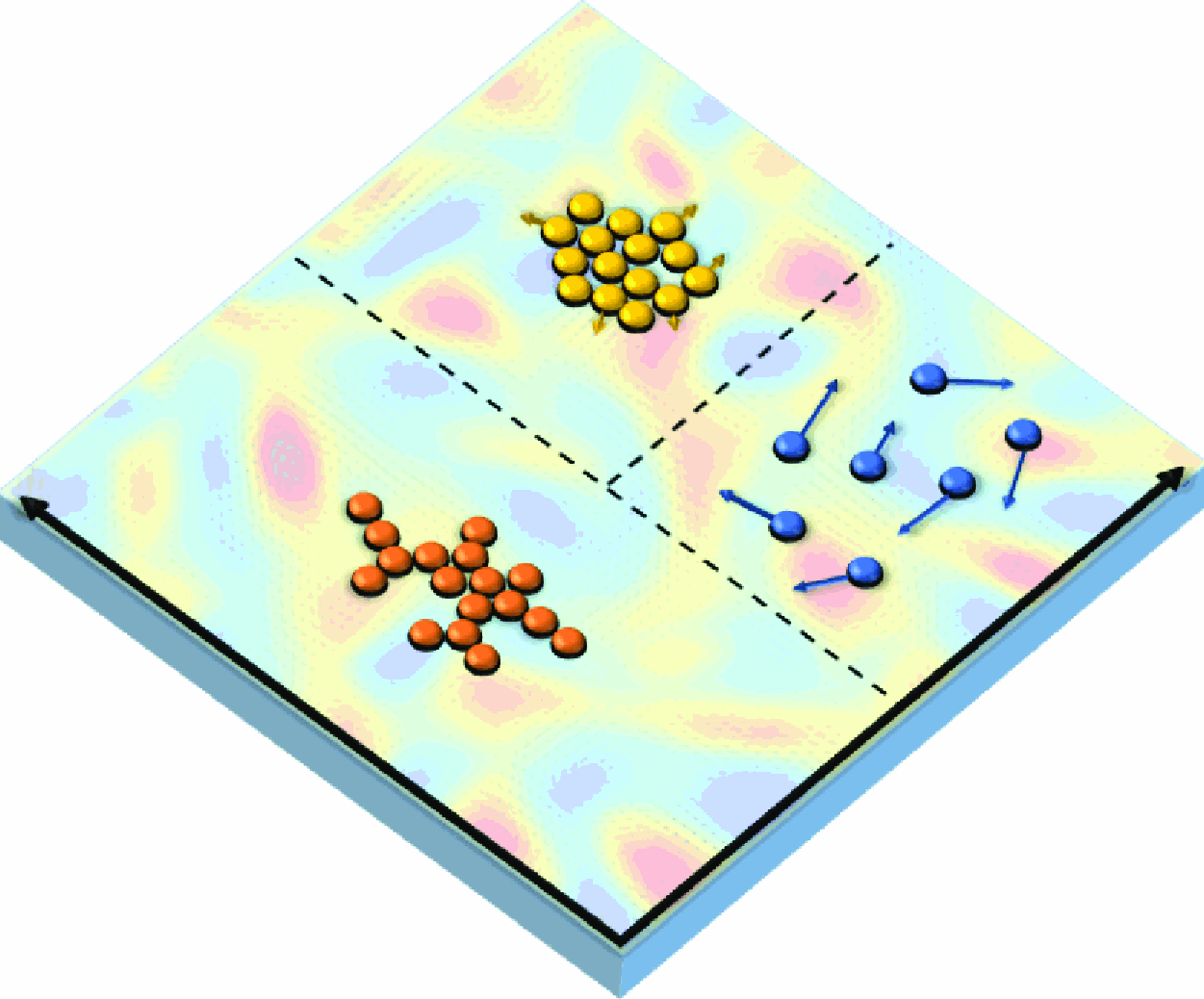
Particle clustering and dispersion in dense turbulent interfacial suspensions
-
- Journal:
- Journal of Fluid Mechanics / Volume 1013 / 25 June 2025
- Published online by Cambridge University Press:
- 20 June 2025, A31
-
- Article
-
- You have access
- Open access
- HTML
- Export citation
-
We investigate suspensions of non-Brownian, millimetric monodisperse spherical particles floating at quasi-two-dimensional fluid interfaces, from dilute to dense concentrations. Building upon the phase diagram in the capillary number ( $Ca$) and areal fraction ( $\phi$) constructed by Shin & Coletti (2024 J. Fluid Mech. 984, R7), we analyse the dynamics of both aggregation and dispersion. In the capillary-driven clustering regime ( $Ca \lt 1$), strong inter-particle bonds yield large, fractal-like clusters that grow by hit-and-stick collisions. In the drag-driven break-up regime ( $Ca \gt 1$, $\phi \lt 0.4$), turbulent fluctuations overcome capillarity and result in particles moving similarly to passive tracers and forming clusters by random adjacency. In the lubrication-driven clustering regime ( $Ca \gt 1$, $\phi \gt 0.4$), the close inter-particle proximity amplifies lubrication forces and results in large, crystal-like clusters. Above a threshold concentration that depends on $Ca$, self-similar percolating clusters span the entire domain. The particle transport exhibits a classic ballistic-to-diffusive transition, with the long-time diffusivity hindered by the reduced fluctuating energy at high concentrations. Nearby particles separate at initially slow rates due to strong capillary attraction, and then follow a super-diffusive dispersion regime. In dense suspensions, the process is characterised by the time scale associated with inter-particle collisions and by the energy dissipation rate defined by the lubrication force between adjacent particles. Our results provide a framework for predicting particle aggregation in interfacial suspensions such as froth flotation and pollutant dispersion, and may inform the design of advanced materials through controlled colloidal self-assembly.


On the species of the genus Talorchestia Dana, 1852 (Senticaudata, Talitridae) reported from India, with the description of a new species
-
- Journal:
- Journal of the Marine Biological Association of the United Kingdom / Volume 105 / 2025
- Published online by Cambridge University Press:
- 20 June 2025, e65
-
- Article
- Export citation
Seismic exploration of the sea floor using fin whale songs and seismic airguns in the Bransfield Strait, Antarctica
- Part of
-
- Journal:
- Antarctic Science / Volume 37 / Issue 5 / October 2025
- Published online by Cambridge University Press:
- 20 June 2025, pp. 395-406
-
- Article
-
- You have access
- Open access
- HTML
- Export citation
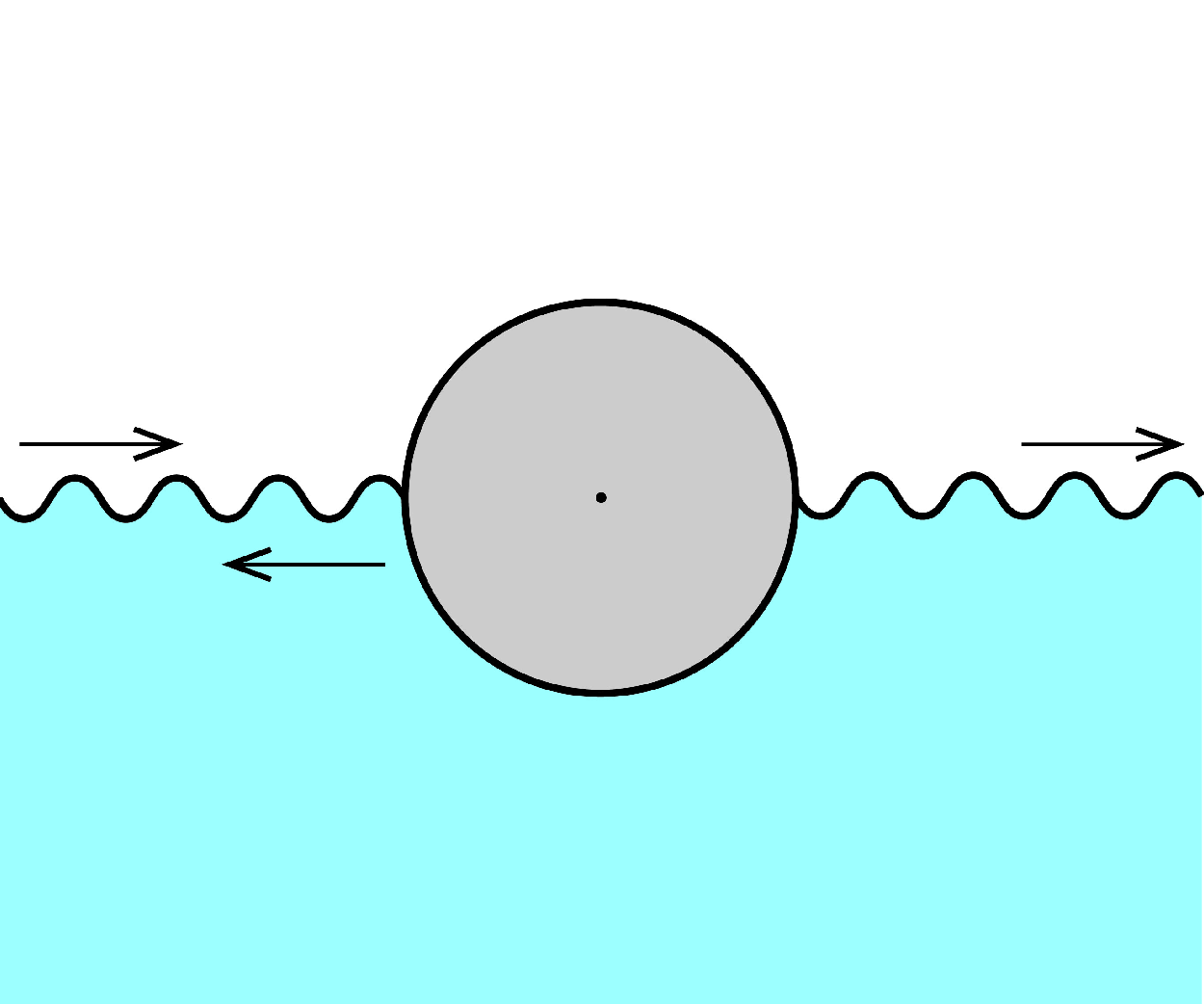
Theory of capillary-gravity wave scattering by a fixed, semi-immersed cylindrical barrier with contact line dissipation
-
- Journal:
- Journal of Fluid Mechanics / Volume 1013 / 25 June 2025
- Published online by Cambridge University Press:
- 19 June 2025, A27
-
- Article
-
- You have access
- Open access
- HTML
- Export citation
-
The scattering of surface waves by structures intersecting liquid surfaces is fundamental in fluid mechanics, with prior studies exploring gravity, capillary and capillary–gravity wave interactions. This paper develops a semi-analytical framework for capillary–gravity wave scattering by a fixed, horizontally placed, semi-immersed cylindrical barrier. Assuming linearised potential flow, the problem is formulated with differential equations, conformal mapping and Fourier transforms, resulting in a compound integral equation framework solved numerically via the Nyström method. An effective-slip dynamic contact line model accounting for viscous dissipation links contact line velocity to deviations from equilibrium contact angles, with fixed and free contact lines of no dissipation as limiting cases. The framework computes transmission and reflection coefficients as functions of the Bond number, slip coefficient and barrier radius, validating energy conservation and confirming a $90^\circ$ phase difference between transmission and reflection in specific limits. A closed-form solution for scattering by an infinitesimal barrier, derived using Fourier transforms, reveals spatial symmetry in the diffracted field, reduced transmission transitioning from gravity to capillary waves and peak contact line dissipation when the slip coefficient matches the capillary wave phase speed. This dissipation, linked to impedance matching at the contact lines, persists across a range of barrier sizes. These results advance theoretical insights into surface-tension-dominated fluid mechanics, offering a robust theoretical framework for analysing wave scattering and comparison with future experimental and numerical studies.

Super slippery surface concepts: A novel explanation for the dynamics and flow instability of glaciers and ice sheets
-
- Journal:
- Journal of Glaciology / Volume 71 / 2025
- Published online by Cambridge University Press:
- 19 June 2025, e85
-
- Article
-
- You have access
- Open access
- HTML
- Export citation
A study on the expansion wave diffraction over bodies – ERRATUM
-
- Journal:
- Journal of Fluid Mechanics / Volume 1013 / 25 June 2025
- Published online by Cambridge University Press:
- 19 June 2025, E2
-
- Article
-
- You have access
- HTML
- Export citation
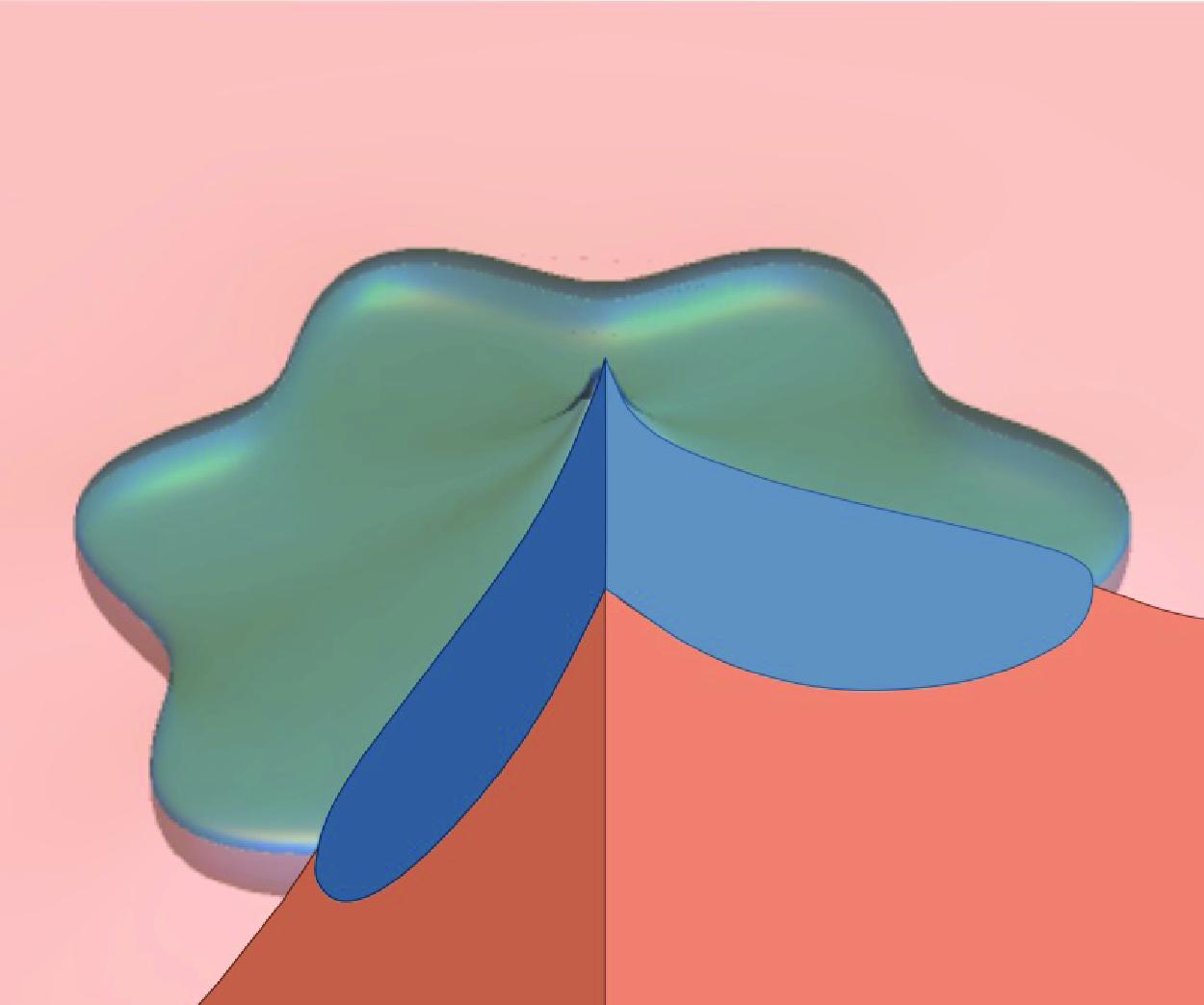
Non-porous viscous fingering of a thin film of fluid spreading over a lubricated substrate
-
- Journal:
- Journal of Fluid Mechanics / Volume 1013 / 25 June 2025
- Published online by Cambridge University Press:
- 19 June 2025, A32
-
- Article
-
- You have access
- Open access
- HTML
- Export citation
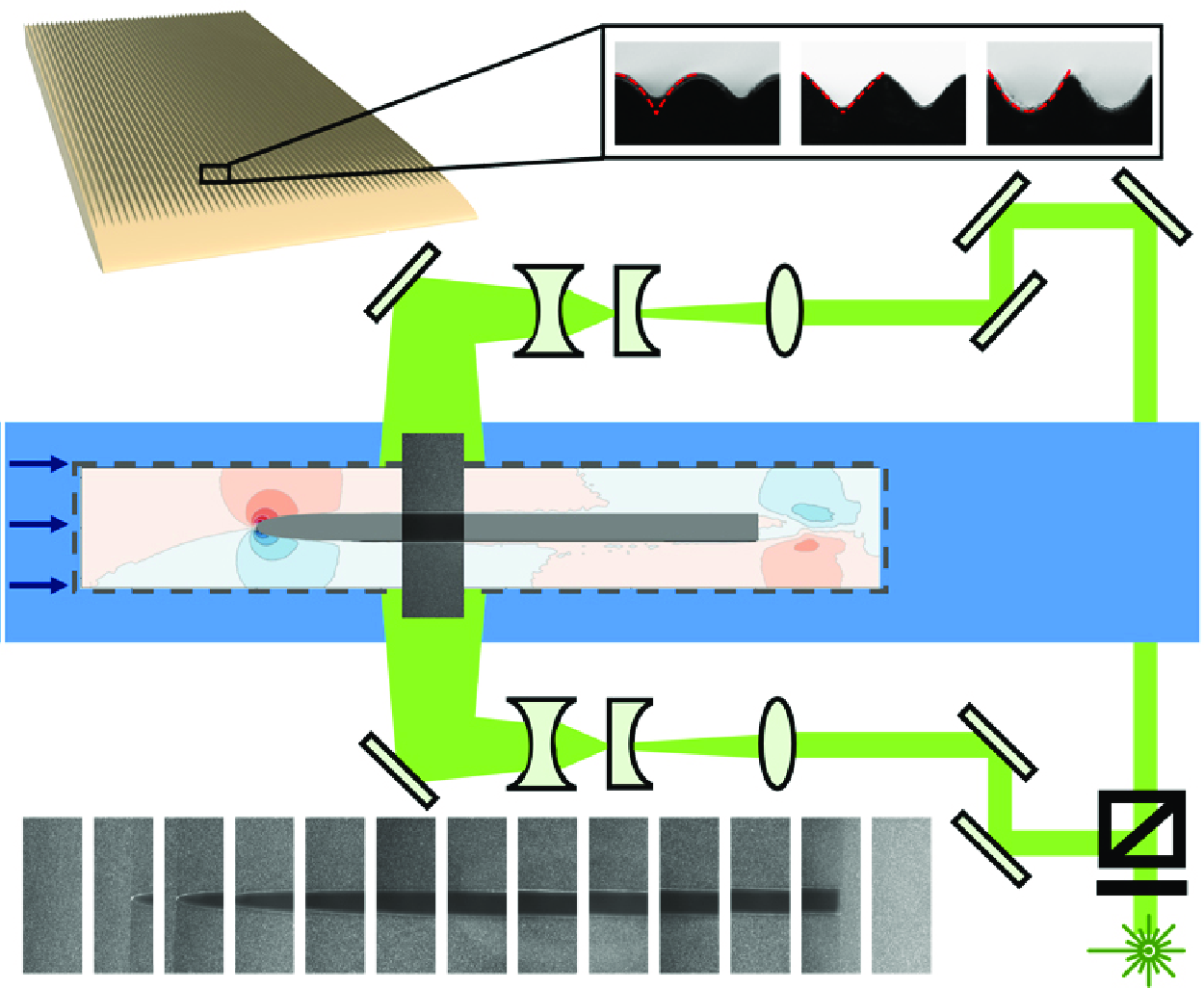
Localised performance of riblets with curved cross-sectional profiles in boundary layers past finite length bodies
-
- Journal:
- Journal of Fluid Mechanics / Volume 1013 / 25 June 2025
- Published online by Cambridge University Press:
- 19 June 2025, A21
-
- Article
-
- You have access
- Open access
- HTML
- Export citation
-
Riblets are a well-known passive drag reduction technique with the potential for as much as $9\, \%$ reduction in the frictional drag force in laboratory settings, and proven benefits for large-scale aircraft. However, less information is available on the applicability of these textures for smaller air/waterborne vehicles where assumptions such as periodicity and/or the asymptotic nature of the boundary layer (BL) no longer apply and the shape of the bodies of these vehicles can give rise to moderate levels of pressure drag. Here, we explore the effect of riblets on both sides of a finite-size foil consisting of a streamlined leading edge and a flat body in the Reynolds number range of $12\,200$– $24\,200$. We use high-resolution two-dimensional, two-component particle image velocimetry, with a double illumination and a consecutive-overlapping imaging technique to capture the velocity field in both the BL and the far field. We find the local velocity profiles and shear stress distribution, as well as the frictional and pressure components of the drag force and show the possibility of achieving reduction in both the frictional and pressure components of the drag force and record a maximum cumulative drag reduction of up to $6.5\, \%$. We present the intertwined relationship between the distribution of the spanwise-averaged shear stress distribution, the characteristics of the velocity profiles and the pressure distribution around the body, and how the local distribution of these parameters work together or against each other in enhancing or diminishing the drag-reducing ability of the riblets for the entirety of the body of interest.


Redescription of Labidocera gangetica Sewell, 1934 from Bay of Bengal, Indian Ocean
-
- Journal:
- Journal of the Marine Biological Association of the United Kingdom / Volume 105 / 2025
- Published online by Cambridge University Press:
- 19 June 2025, e64
-
- Article
- Export citation
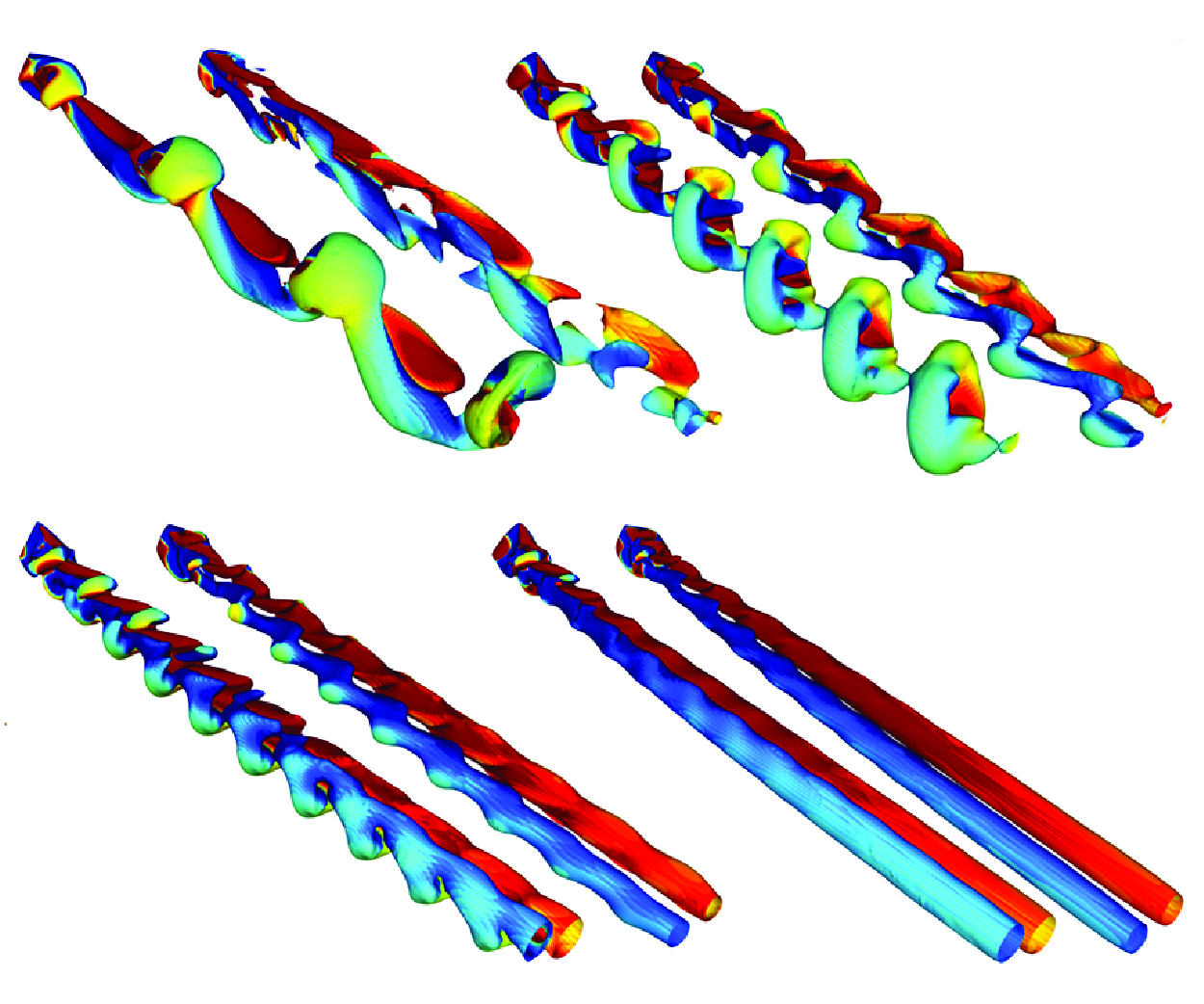
Transversely rotating angular particle in an inertial flow at moderate Reynolds numbers
-
- Journal:
- Journal of Fluid Mechanics / Volume 1013 / 25 June 2025
- Published online by Cambridge University Press:
- 19 June 2025, A30
-
- Article
-
- You have access
- Open access
- HTML
- Export citation
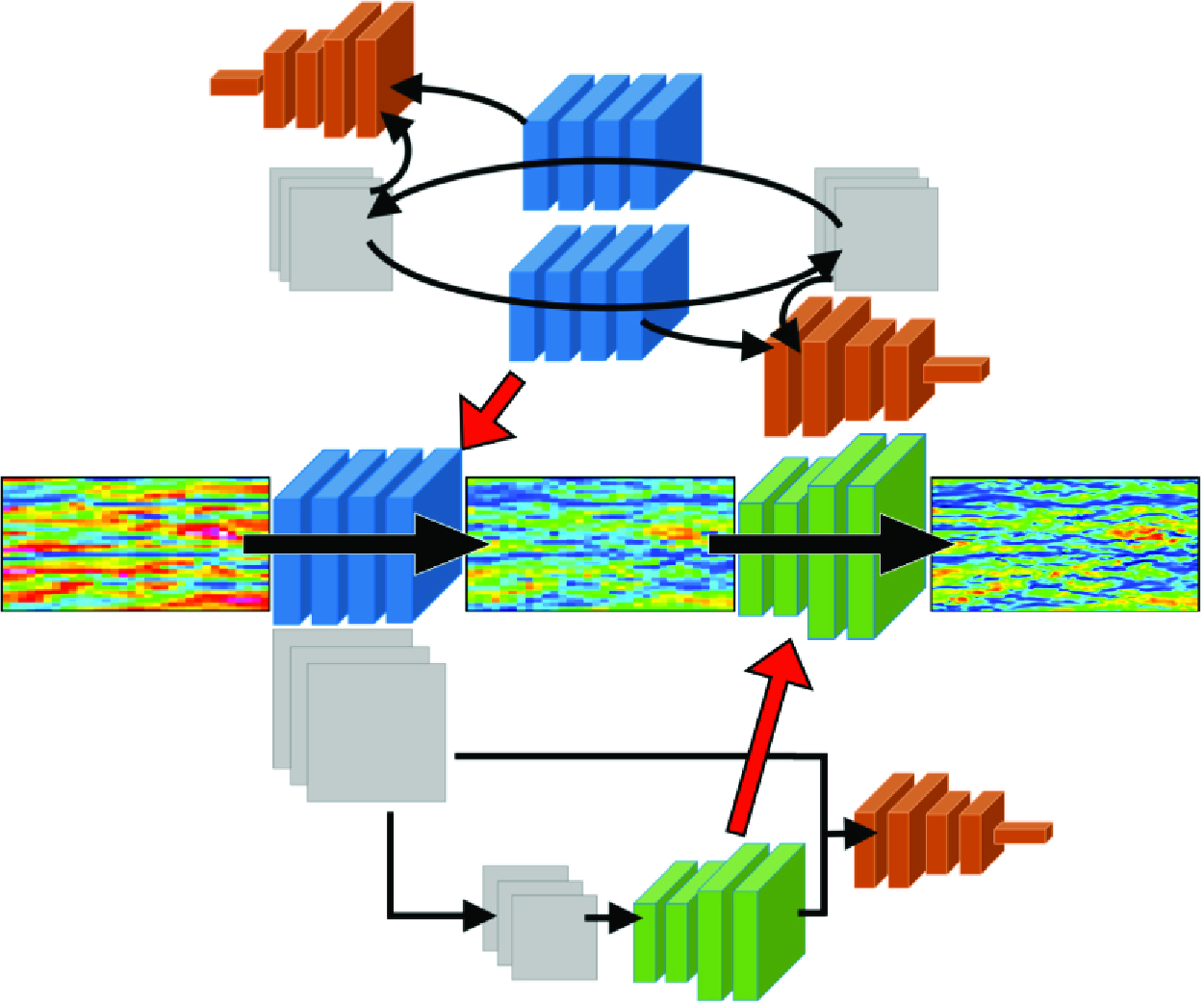
Unsupervised and supervised machine learning pipeline for super-resolution-based subgrid scale modelling in coarse-grid large-eddy simulations
-
- Journal:
- Journal of Fluid Mechanics / Volume 1013 / 25 June 2025
- Published online by Cambridge University Press:
- 19 June 2025, A28
-
- Article
-
- You have access
- Open access
- HTML
- Export citation
Annual variation of temperature and mass balance of first-year and second-year land-fast sea ice in Prydz Bay, East Antarctica
-
- Journal:
- Journal of Glaciology / Volume 71 / 2025
- Published online by Cambridge University Press:
- 19 June 2025, e84
-
- Article
-
- You have access
- Open access
- HTML
- Export citation
A unified framework for N-phase Navier–Stokes Cahn–Hilliard Allen–Cahn mixture models with non-matching densities
-
- Journal:
- Journal of Fluid Mechanics / Volume 1013 / 25 June 2025
- Published online by Cambridge University Press:
- 19 June 2025, A26
-
- Article
-
- You have access
- Open access
- HTML
- Export citation
Global detection of glacier surges from surface velocities, elevation change and SAR backscatter data between 2000 and 2024: a test of surge mechanism theories
-
- Journal:
- Journal of Glaciology / Volume 71 / 2025
- Published online by Cambridge University Press:
- 18 June 2025, e88
-
- Article
-
- You have access
- Open access
- HTML
- Export citation
