Refine search
Actions for selected content:
212951 results in Engineering
Asymptotic scaling relations for rotating spherical convection with strong zonal flows
-
- Journal:
- Journal of Fluid Mechanics / Volume 981 / 25 February 2024
- Published online by Cambridge University Press:
- 23 February 2024, A22
-
- Article
-
- You have access
- Open access
- HTML
- Export citation
Overcoming the relative bandwidth limitations of single VCO frequency synthesizers by implementing a novel PLL architecture
-
- Journal:
- International Journal of Microwave and Wireless Technologies / Volume 16 / Issue 5 / June 2024
- Published online by Cambridge University Press:
- 23 February 2024, pp. 720-729
-
- Article
-
- You have access
- Open access
- HTML
- Export citation

Momentum transfer across an open-channel, turbulent flow
-
- Journal:
- Journal of Fluid Mechanics / Volume 981 / 25 February 2024
- Published online by Cambridge University Press:
- 23 February 2024, A24
-
- Article
- Export citation
-
The distribution of stress generated by a turbulent flow matters for many natural phenomena, of which rivers are a prime example. Here, we use dimensional analysis to derive a linear, second-order ordinary differential equation for the distribution of stress across a straight, open channel, with an arbitrary cross-sectional shape. We show that this equation is a generic first-order correction to the shallow-water theory in a channel of large aspect ratio. It has two adjustable parameters – the dimensionless diffusion parameter, $\chi$, and a local-shape parameter, $\alpha$. By assuming that the momentum is carried across the stream primarily by eddies and recirculation cells with a size comparable to the flow depth, we estimate $\chi$ to be of the order of the inverse square root of the friction coefficient, $\chi \sim C_f^{-1/2}$, and predict that $\alpha$ vanishes when the flow is highly turbulent. We examine the properties of this equation in detail and confirm its applicability by comparing it with flume experiments and field measurements from the literature. This theory can be a basis for finding the equilibrium shape of turbulent rivers that carry sediment.


Transition to fully developed turbulence in liquid-metal convection facilitated by spatial confinement
-
- Journal:
- Journal of Fluid Mechanics / Volume 981 / 25 February 2024
- Published online by Cambridge University Press:
- 23 February 2024, R2
-
- Article
- Export citation
-
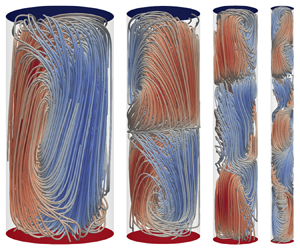
Using thermal convection in liquid metal, we show that strong spatial confinement not only delays the onset Rayleigh number $Ra_c$ of Rayleigh–Bénard instability but also postpones the various flow-state transitions. The $Ra_c$ and the transition to fully developed turbulence Rayleigh number $Ra_f$ depend on the aspect ratio $\varGamma$ with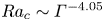 $Ra_c\sim \varGamma ^{-4.05}$ and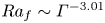 $Ra_f\sim \varGamma ^{-3.01}$, implying that the stabilization effects caused by the strong spatial confinement are weaker on the transition to fully developed turbulence when compared with that on the onset. When the flow state is characterized by the supercritical Rayleigh number $Ra/Ra_{c}$ ( $Ra$ is the Rayleigh number), our study shows that the transition to fully developed turbulence in strongly confined geometries is advanced. For example, while the flow becomes fully developed turbulence at $Ra\approx 200Ra_c$ in a $\varGamma =1$ cell, the same transition in a $\varGamma =1/20$ cell only requires $Ra\approx 3Ra_c$. Direct numerical simulation and linear stability analysis show that in the strongly confined regime, multiple vertically stacked roll structures appear just above the onset of convection. With an increase of the driving strength, the flow switches between different-roll states stochastically, resulting in no well-defined large-scale coherent flow. Owing to this new mechanism that only exists in systems with $\varGamma <1$, the flow becomes turbulent in a much earlier stage. These findings shed new light on how turbulence is generated in strongly confined geometries.


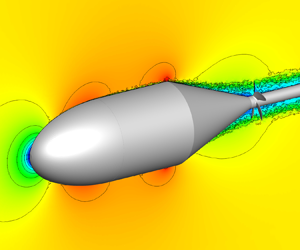
Rotor aeroacoustic response to an axisymmetric turbulent boundary layer
-
- Journal:
- Journal of Fluid Mechanics / Volume 981 / 25 February 2024
- Published online by Cambridge University Press:
- 23 February 2024, A25
-
- Article
-
- You have access
- Open access
- HTML
- Export citation
-
The acoustic response of a five-bladed rotor to an axisymmetric turbulent boundary layer at the tail end of a body of revolution (BOR) is investigated numerically to elucidate the physical sources of acoustics, particularly the role of coherent structures in sound generation. The BOR is at a length-based Reynolds number of $1.9 \times 10^6$ and free-stream Mach number of 0.059. Two rotor advance ratios, $1.44$ and $1.13$, are considered. The turbulent boundary layer on the nose and midsection of the BOR is computed using wall-modelled large-eddy simulation, whereas that in the acoustically important tail-cone section is wall-resolved. The radiated acoustic field is calculated using the Ffowcs Williams–Hawkings equation. The computed flow statistics and sound pressure spectra agree well with the experimental measurements at Virginia Tech. In addition to broadband turbulence-ingestion noise, spectral humps near multiples of the blade-passing frequency and accompanying valleys are captured. They are shown to be caused by correlated blade unsteady-loading dipole sources and their constructive and destructive interference as a result of successive blades cutting through the same coherent structures. The latter undergo rapid growth in the decelerating tail-cone boundary layer before their interaction with the rotor. The acoustic radiation is dominated by the outer region of the blade owing to a combination of larger blade chord-length, inflow turbulence intensity and blade speed. The numerical results also correctly predict the effect of the rotor advance ratio on the acoustic field. A mixed free-stream/convection Mach-number scaling successfully collapses the sound pressure spectra at the two advance ratios.


The modulation of coherent structures by the near-wall motions of particles
-
- Journal:
- Journal of Fluid Mechanics / Volume 981 / 25 February 2024
- Published online by Cambridge University Press:
- 23 February 2024, A26
-
- Article
- Export citation
-
Particle–wall interaction generates strong particle near-wall motion, including collision bounce and impact splashing. To distinguish the effect of particles and particle near-wall motions on the turbulent coherent structure, this study carried out three different cases of sand-laden two-phase flow measurements: a uniform sand release at the top, local-laying sand bed and global-laying sand bed (Liu et al., J. Fluid Mech., vol. 943, 2022, A8). Based on large field of view particle image velocimetry/particle tracking velocimetry measurements, we obtained the velocity field of a two-dimensional gas–solid two-phase dilute faction flow $(\varPhi _{v} \sim O(10^{-4}))$ with a friction Reynolds number $R e_{\tau }$ of 3950. Results indicate that particles weaken the high- and low-velocity iso-momentum zones and hairpin vortices, resulting in the increased length scale of the coherent structure. However, the collision bounce and impact splashing break up the inner iso-momentum zone and hairpin vortices while enhancing them in the outer region, thus reducing the structure scale. In addition, the upward-moving particles increase the large-scale structure inclination angle, while the downward-moving particles decrease it. The linear coherence spectrum analysis suggests that the particles themselves do not change the structural self-similarity, but their saltation motions disrupt the similarity of the near-wall structure, making the inclination angle decrease with the scale, and the generated ascending particles reduce the aspect ratio of the streamwise to wall-normal direction in the outer region.

Neural network modeling and prediction of HfO2 thin film properties tuned by thermal annealing
-
- Journal:
- High Power Laser Science and Engineering / Volume 12 / 2024
- Published online by Cambridge University Press:
- 22 February 2024, e21
-
- Article
-
- You have access
- Open access
- HTML
- Export citation
Generation of polarized electron beams through self-injection in the interaction of a laser with a pre-polarized plasma
-
- Journal:
- High Power Laser Science and Engineering / Volume 12 / 2024
- Published online by Cambridge University Press:
- 22 February 2024, e28
-
- Article
-
- You have access
- Open access
- HTML
- Export citation
-
Polarized electron beam production via laser wakefield acceleration in pre-polarized plasma is investigated by particle-in-cell simulations. The evolution of the electron beam polarization is studied based on the Thomas–Bargmann–Michel–Telegdi equation for the transverse and longitudinal self-injection, and the depolarization process is found to be influenced by the injection schemes. In the case of transverse self-injection, as found typically in the bubble regime, the spin precession of the accelerated electrons is mainly influenced by the wakefield. However, in the case of longitudinal injection in the quasi-1D regime (for example, F. Y. Li et al., Phys. Rev. Lett. 110, 135002 (2013)), the direction of electron spin oscillates in the laser field. Since the electrons move around the laser axis, the net influence of the laser field is nearly zero and the contribution of the wakefield can be ignored. Finally, an ultra-short electron beam with polarization of $99\%$ can be obtained using longitudinal self-injection.

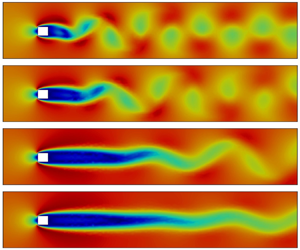
Active flow control for bluff body drag reduction using reinforcement learning with partial measurements
-
- Journal:
- Journal of Fluid Mechanics / Volume 981 / 25 February 2024
- Published online by Cambridge University Press:
- 21 February 2024, A17
-
- Article
-
- You have access
- Open access
- HTML
- Export citation
-
Active flow control for drag reduction with reinforcement learning (RL) is performed in the wake of a two-dimensional square bluff body at laminar regimes with vortex shedding. Controllers parametrised by neural networks are trained to drive two blowing and suction jets that manipulate the unsteady flow. The RL with full observability (sensors in the wake) discovers successfully a control policy that reduces the drag by suppressing the vortex shedding in the wake. However, a non-negligible performance degradation ( $\sim$50 % less drag reduction) is observed when the controller is trained with partial measurements (sensors on the body). To mitigate this effect, we propose an energy-efficient, dynamic, maximum entropy RL control scheme. First, an energy-efficiency-based reward function is proposed to optimise the energy consumption of the controller while maximising drag reduction. Second, the controller is trained with an augmented state consisting of both current and past measurements and actions, which can be formulated as a nonlinear autoregressive exogenous model, to alleviate the partial observability problem. Third, maximum entropy RL algorithms (soft actor critic and truncated quantile critics) that promote exploration and exploitation in a sample-efficient way are used, and discover near-optimal policies in the challenging case of partial measurements. Stabilisation of the vortex shedding is achieved in the near wake using only surface pressure measurements on the rear of the body, resulting in drag reduction similar to that in the case with wake sensors. The proposed approach opens new avenues for dynamic flow control using partial measurements for realistic configurations.

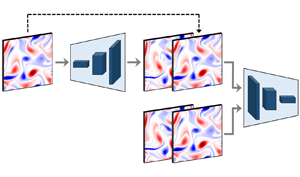
Prediction and control of two-dimensional decaying turbulence using generative adversarial networks
-
- Journal:
- Journal of Fluid Mechanics / Volume 981 / 25 February 2024
- Published online by Cambridge University Press:
- 21 February 2024, A19
-
- Article
-
- You have access
- Open access
- HTML
- Export citation
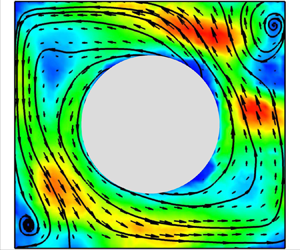
Enhanced heat transfer and reduced flow reversals in turbulent thermal convection with an obstructed centre
-
- Journal:
- Journal of Fluid Mechanics / Volume 981 / 25 February 2024
- Published online by Cambridge University Press:
- 21 February 2024, A16
-
- Article
- Export citation
-
We report an experimental study about the effect of an obstructed centre on heat transport and flow reversal by inserting an adiabatic cylinder at the centre of a quasi-two-dimensional Rayleigh–Bénard convection cell. The experiments are carried out in a Rayleigh number ( $Ra$) range of $2\times 10^7 \leq Ra \leq 2\times 10^9$ and at a Prandtl number ( $Pr$) of $5.7$. It is found that for low $Ra$, the obstructed centre leads to a heat transfer enhancement of up to 21 $\%$, while as $Ra$ increases, the magnitude of the heat transfer enhancement decreases and the heat transfer efficiency ( $Nu$) eventually converges to that of the unobstructed normal cell. Particle image velocimetry measurements show that the heat transfer enhancement originates from the change in flow topology due to the presence of the cylindrical obstruction. In the low- $Ra$ regime the presence of the obstruction promotes the transition of the flow topology from the four-roll state to the abnormal single-roll state then to the normal single-roll state with increasing obstruction size. While in the high- $Ra$ regime, the flow is always in the single-roll state regardless of the obstruction size, although the flow becomes more coherent with the size of the obstruction. We also found that in the presence of the cylindrical obstruction, the stability of the corner vortices is significantly reduced, leading to a large reduction in the frequency of flow reversals.


Analytical models for pressure-driven Stokes flow through superhydrophobic and liquid-infused tubes and annular pipes – ERRATUM
-
- Journal:
- Journal of Fluid Mechanics / Volume 981 / 25 February 2024
- Published online by Cambridge University Press:
- 21 February 2024, E1
-
- Article
-
- You have access
- Open access
- HTML
- Export citation
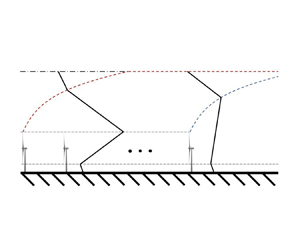
A shear stress parametrization for arbitrary wind farms in conventionally neutral boundary layers
-
- Journal:
- Journal of Fluid Mechanics / Volume 981 / 25 February 2024
- Published online by Cambridge University Press:
- 21 February 2024, A14
-
- Article
-
- You have access
- Open access
- HTML
- Export citation
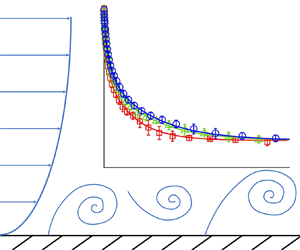
Robust relation of streamwise velocity autocorrelation in atmospheric surface layers based on an autoregressive moving average model
-
- Journal:
- Journal of Fluid Mechanics / Volume 981 / 25 February 2024
- Published online by Cambridge University Press:
- 21 February 2024, A20
-
- Article
- Export citation
-
We construct an autoregressive moving average (ARMA) model consisting of the history and random effects for the streamwise velocity fluctuation in boundary-layer turbulence. The distance to the wall and the boundary-layer thickness determine the time step and the order of the ARMA model, respectively. Based on the autocorrelation's analytical expression of the ARMA model, we obtain a global analytical expression for the second-order structure function, which asymptotically captures the inertial, dynamic and large-scale ranges. Specifically, the exponential autocorrelation of the ARMA model arises from the autoregressive coefficients and is modified to logarithmic behaviour by the moving-average coefficients. The asymptotic expressions enable us to determine model coefficients by existing parameters, such as the Kolmogorov and the Townsend–Perry constants. A consequent double-log expression for the characteristic length scale is derived and is justified by direct numerical simulation data with $Re_\tau \approx 5200$ and field-measured neutral atmospheric surface layer data with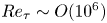 $Re_\tau \sim O(10^6)$ from the Qingtu Lake Observation Array site. This relation is robust because it applies to $Re_\tau$ from $O(10^4)$ to $O(10^6)$, and even when the statistics of natural ASL deviate from those of canonical boundary-layer turbulence, e.g. in the case of imbalance in energy production and dissipation, and when the Townsend–Perry constant deviates from traditional values.


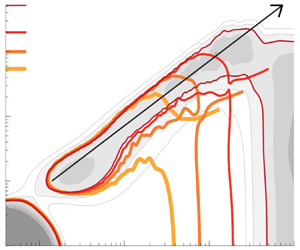
Reynolds-number scaling of wall-pressure–velocity correlations in wall-bounded turbulence
-
- Journal:
- Journal of Fluid Mechanics / Volume 981 / 25 February 2024
- Published online by Cambridge University Press:
- 21 February 2024, A15
-
- Article
-
- You have access
- Open access
- HTML
- Export citation
-
Wall-pressure fluctuations are a practically robust input for real-time control systems aimed at modifying wall-bounded turbulence. The scaling behaviour of the wall-pressure–velocity coupling requires investigation to properly design a controller with such input data so that it can actuate upon the desired turbulent structures. A comprehensive database from direct numerical simulations (DNS) of turbulent channel flow is used for this purpose, spanning a Reynolds-number range $Re_\tau \approx 550\unicode{x2013}5200$. Spectral analysis reveals that the streamwise velocity is most strongly coupled to the linear term of the wall pressure, at a Reynolds-number invariant distance-from-the-wall scaling of $\lambda _x/y \approx 14$ (and $\lambda _x/y \approx 8$ for the wall-normal velocity). When extending the analysis to both homogeneous directions in $x$ and $y$, the peak coherence is centred at $\lambda _x/\lambda _z \approx 2$ and $\lambda _x/\lambda _z \approx 1$ for $p_w$ and $u$, and $p_w$ and $v$, respectively. A stronger coherence is retrieved when the quadratic term of the wall pressure is concerned, but there is only little evidence for a wall-attached-eddy type of scaling. An experimental dataset comprising simultaneous measurements of wall pressure and velocity complements the DNS-based findings at one value of $Re_\tau \approx 2$k, with ample evidence that the DNS-inferred correlations can be replicated with experimental pressure data subject to significant levels of (acoustic) facility noise. It is furthermore shown that velocity-state estimations can be achieved with good accuracy by including both the linear and quadratic terms of the wall pressure. An accuracy of up to 72 % in the binary state of the streamwise velocity fluctuations in the logarithmic region is achieved; this corresponds to a correlation coefficient of $\approx$0.6. This thus demonstrates that wall-pressure sensing for velocity-state estimation – e.g. for use in real-time control of wall-bounded turbulence – has merit in terms of its realization at a range of Reynolds numbers.


Cross-flow instability on a swept-fin cone at Mach 6: characteristics and control
-
- Journal:
- Journal of Fluid Mechanics / Volume 981 / 25 February 2024
- Published online by Cambridge University Press:
- 21 February 2024, A18
-
- Article
-
- You have access
- Open access
- HTML
- Export citation
-
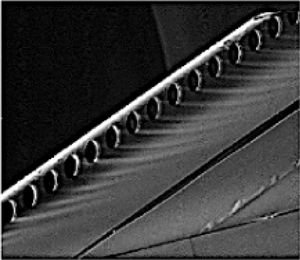
Experiments were performed to document the complex flow field around and over a $70^{\circ }$ swept fin mounted on a $7^{\circ }$ half-angle right-circular cone in a Mach 6 free-stream. Of particular interest is the turbulent transition of the boundary layer over the swept fin, which is expected to be dominated by a cross-flow instability. Stationary features in the surface temperature distribution over the fin are documented using infrared thermal imaging. These were processed further to determine average spatial Stanton number distributions over the fin. Wavelet analysis of the Stanton number distributions revealed stationary patterns with wavelengths near the fin leading edge that were consistent with linear theory predictions of stationary cross-flow modes. Further from the leading edge, the wavelength of the stationary patterns was observed to increase prior to turbulence onset. Based on these observations, specially designed arrays of discrete roughness elements (DREs) were investigated as a means of delaying turbulence transition with the objective of reducing surface heat flux on the swept fin. The DRE designs followed our previous approach used for cross-flow transition control (Corke et al., J. Fluid Mech., vol. 856, issue 10, 2018, pp. 822–849; Arndt et al., J. Fluid Mech., vol. 887, 2020, A30). These focused on either the shorter wavelengths near the leading edge, or the longer wavelengths that developed near turbulence onset. With regard to delaying transition and reducing the surface heat flux, the DREs that focused on the larger wavelengths of stationary modes were most effective. The fin included an array of pressure sensors that were used to document travelling disturbances that could include those associated with travelling cross-flow modes. Phase analysis of the pressure fluctuation time series was used to determine the wavelength, wave angle and phase speed that were consistent with the travelling cross-flow modes. Cross-bicoherence analysis between the stationary and travelling disturbances indicates a nonlinear phase locking that can account for the development of the longer-wavelength stationary features in the surface heat flux, presumed to be due to stationary cross-flow modes, prior to turbulence onset.


Fixed-time anti-saturation control with concise system structure for the 6-DOF motion of spacecraft
-
- Journal:
- The Aeronautical Journal / Volume 128 / Issue 1326 / August 2024
- Published online by Cambridge University Press:
- 21 February 2024, pp. 1627-1651
-
- Article
- Export citation

Blackburn Buccaneer
-
- Published by:
- Amsterdam University Press
- Published online:
- 20 February 2024
- Print publication:
- 05 June 2014
-
- Book
- Export citation
MRF volume 15 issue 10 Cover and Front matter
-
- Journal:
- International Journal of Microwave and Wireless Technologies / Volume 15 / Issue 10 / December 2023
- Published online by Cambridge University Press:
- 20 February 2024, pp. f1-f2
-
- Article
-
- You have access
- Export citation
MRF volume 15 issue 10 Cover and Back matter
-
- Journal:
- International Journal of Microwave and Wireless Technologies / Volume 15 / Issue 10 / December 2023
- Published online by Cambridge University Press:
- 20 February 2024, p. b1
-
- Article
-
- You have access
- Export citation
