To save content items to your account,
please confirm that you agree to abide by our usage policies.
If this is the first time you use this feature, you will be asked to authorise Cambridge Core to connect with your account.
Find out more about saving content to .
To save content items to your Kindle, first ensure no-reply@cambridge.org
is added to your Approved Personal Document E-mail List under your Personal Document Settings
on the Manage Your Content and Devices page of your Amazon account. Then enter the ‘name’ part
of your Kindle email address below.
Find out more about saving to your Kindle.
Note you can select to save to either the @free.kindle.com or @kindle.com variations.
‘@free.kindle.com’ emails are free but can only be saved to your device when it is connected to wi-fi.
‘@kindle.com’ emails can be delivered even when you are not connected to wi-fi, but note that service fees apply.
The E(xtended) P(rojection) P(rinciple) (specifically, in its guise as a movement-triggering feature in designated syntactic heads), has been a thorn in the Minimalist side since the mid-1990s. Recently, in the context of attempts to reduce syntactic mechanisms to their minimal expression, the generative operation Merge has been defined as unordered set formation (“Simplest Merge”), and the EPP has been pronounced dead in favour of conditions over labelling which force phrasal movement in order to dissolve ‘symmetry points’. This article compares several theoretical analyses and shows that very simple cases of {XP, YP} copular constructions in Spanish satisfy all requirements for labelling without the need to resort to Internal Merge (IM). Therefore, if there is IM of a DP it must be motivated by reasons other than labelling. Once such a reason exists, the elimination of EPP on labelling grounds becomes dubious.
Variability in the second language (L2) referential choice could be due to lower language proficiency in the L2 or cross-linguistic influence. We compare the L2 English referential choices of bilinguals of typologically different languages (Spanish and English, null subject and non-null subject) to those of bilinguals of typologically similar languages (Dutch and English, both non-null subject and both using pronouns similarly in the target context). Bilinguals’ performance was further compared to that of a group of functional monolingual English speakers. Both bilingual groups were highly proficient, to explore whether high proficiency would attenuate differences with monolinguals. Participants completed a picture-description task eliciting references to antecedents in two-character contexts. Performance was comparable among all three groups in all conditions—evidence that cross-linguistic influence did not play a role for bilingual referential choices. These results thus show that highly proficient bilinguals of both typologically different and similar languages can perform comparably to monolinguals.
The role of morphology in complex word acquisition was examined in Chinese (L1)–English (L2) bilinguals. Participants learned words consisting of two novel constituents, by pairing them with pictures. Items either belonged to large (torbnel, torbilm, torbla, torbiph) or small morphological families (torbilm, torbla). After training, participants completed recognition and spelling tasks with novel words that either included or excluded a trained morpheme. Results revealed robust stem-training effects, showing that items including a trained constituent were harder to reject and easier to spell than items including two untrained constituents. There was also a significant effect of morphological family size, with greater training effects for items belonging to large than small families. Effect sizes were overall smaller in L2 than in L1. These findings point to the important role of morphological structure in L2 word acquisition and suggest that large morphological family-clusters lead to better learning outcomes.
This study investigates whether the second language (L2) development of d/Deaf and hard of hearing (d/DHH) learners in comparison to the L2 development of hearing learners, based on the processability theory (PT) developed by Pienemann (1998, 2005) in the field of second language acquisition (SLA). Thirty-eight d/DHH and 32 hearing secondary school learners of English as a foreign language (EFL) completed a series of speaking tasks designed to elicit specific morphosyntactic structures that, according to PT, align with L2 developmental stages. Implicational scaling revealed that although d/DHH learners followed a similar developmental sequence to their peers, they displayed a noticeable delay. They also appeared to require additional time and practice to fully produce the entire target structures after reaching certain developmental stages. The results provide stronger empirical evidence for d/DHH learners’ L2 development, supporting the qualitative similarity hypothesis in the field of special education, which posits that despite quantitative delays, d/DHH learners exhibit qualitatively similar L2 development to their hearing peers.
French diachrony offers two textbook examples for negation studies: the evolution of ne…pas illustrating the Jespersen’s Cycle (Dahl, 1979) and the evolution of polarity-neutral items into negative indefinites (NIs), sometimes termed the Quantifier Cycle (Willis et al., 2013) and often exemplified by personne.
However, a significant disparity exists between the detailed research on ne…pas and the vagueness surrounding personne’s as NI origins. While its medieval origin is accepted, the dating of first attestations and definitive grammaticalization varies (Déprez, 2011; Vachon, 2012; GGHF, 2020), and predominant noun use and data scarcity hinder firm conclusions (Déprez, 2011; Larrivée & Kallel, 2020). Consequently, assumptions about personne’s development as an NI rely heavily on parallels with rien and aucun, lacking support from quantified data.
Through a corpus study of personne in Medieval and early Pre-Classical French (9th–16th centuries), focusing on its evolution into an NI, this article reveals a unique trajectory for personne, further demonstrating the variety characterizing the macro-construction of French NIs (Hansen in GGHF, 2020). Methodologically, the communicative immediacy-distance theory (Koch & Oësterreicher, 1985) and the “represented speech” perspective (Marchello-Nizia, 2012) prove relevant for tracing innovation in written diachronic corpora.
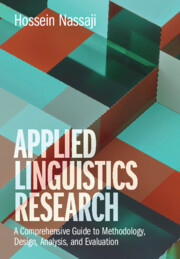
Designed for graduate students, instructors, and seasoned researchers, this is an essential guide for robust research design and methodology in applied linguistics, covering qualitative, quantitative, and mixed methods research. It adopts a structured approach, starting with the foundational principles of research design, methodology, and data collection and analysis, to writing and interpreting, explaining, and reporting research results, bringing together all the steps and processes of research from start to finish in one single volume in a way that is practical, easy to follow, and easy to understand. Throughout, the emphasis is on the process of research and the application of various research techniques and principles across different areas. These characteristics, coupled with numerous pedagogical features such as key term reviews, visuals, research scenarios, and many discussion and activity questions, make the book an indispensable reference and a valuable textbook for courses in second language and applied linguistics research.
The development of academic language in bilingual contexts is under-researched, especially at the critical point of adolescence. This insightful book addresses the onset and development of literacy in bilingual contexts, through a series of original case studies. Covering CLIL, EMI, and bilingual/multilingual education, the authors examine the evolution of the lexis, syntax and discourse in bilingual learning over the years of adolescence and early adulthood at school. Qualitative and quantitative research are integrated, including corpus research, with excerpts from learner corpora; computational linguistics, with metrics from language software tools; and case studies, with analyses of learners and programmes worldwide, including Refugee, Asylum-Seeking and Migrant (RASM) students. It also provides a description of disciplinary language, in domains like science, mathematics, and history in multilingual education. Finally, it delves into language policy and critical linguistics, connecting language description with educational deficits.
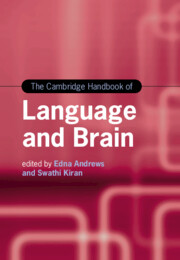
The topic of language and brain is a large and significant area of research and study, and this Handbook provides a state-of-the-art survey of the field. Bringing together contributions from an interdisciplinary team of internationally-renowned scholars, it focuses on important theoretical positions that have changed the study of language and brain in the first two decades of the 21st century. It is split into seven thematic parts, covering topics such as theoretical foundations of language and brain, neuroimaging studies of brain and language, language and cognitive development, building cognitive brain reserve and the importance of proficiency, aphasia and autism spectrum disorders, brain, language and music, and new directions and perspectives. Representing the most powerful trends in the field, it will inform new directions in the study of language and brain, cognitive neuroscience and neuroimaging, and scholars and advanced students will find this compilation an invaluable resource for years to come.
This paper explores temporal relations between clauses in complex sentences. We focus on a specific type of temporal reference, which we call long-distance (relative) temporal reference (LDTR), and which only occurs in deeply embedded clauses. This type of temporal reference is instantiated when the state of affairs expressed in the clause is placed in time relative to the state of affairs of another clause, which is not its immediate matrix clause but appears higher in the embedding structure. Looking for factors that evoke LDTR, we identify some key features of the sentences in which the phenomenon occurs. In the studied sample, the immediate matrix clause of the clause with LDTR has relative temporal reference and is often a complement clause. We also consider the phenomenon of LDTR in a wider context, suggesting that it challenges the idea of recursion as a fundamental property of language.
Digital oratory skills have become essential for academic and professional success in today’s digital world, making it imperative to integrate digital oratory training into public speaking pedagogy. This study examined second language (L2) speakers’ public speaking anxiety and nonverbal speech performance in the context of digital oratory. Participants were 40 English as a second language students enrolled in a public speaking course at a Hong Kong university. Each student recorded and uploaded an 8-minute speech to a digital learning platform. They also completed a questionnaire measuring digital oratory anxiety and participated in semi-structured interviews sharing their perceptions of digital presentation. Nonverbal speech performance was assessed, and correlations with digital oratory anxiety were analyzed. The results showed that cognitive and physiological factors had a greater influence on digital oratory anxiety than behavioral and technical factors. Although no significant correlations were found between digital oratory anxiety and nonverbal speech performances, the technical factor had the least impact on L2 students’ anxiety, leading to positive outcomes regarding the technical quality of the speech videos. Comparatively, eye contact and gestures attained much lower mean scores than voice control and facial expressions. Interview results further elucidated the benefits and challenges students experienced during digital presentations. Pedagogically, the findings highlight the need of a holistic approach considering cognitive, physiological, behavioral, and technical factors to address L2 learners’ digital oratory anxiety. Given its affordability and accessibility, digital oratory can be effectively integrated into instruction to develop L2 students’ multimodal communication and nonverbal delivery skills.
Chapter 4 presents textual features, text types and genres in the detail necessary for elucidating translation practice. Starting with texture as the essential distinction between a sequence of sentences and a text, it examines textual features, that is, those elements that serve to distinguish between texts and non-texts and that give texts their identity. Among the textual features discussed are cohesion and coherence, markers of cohesion and coherence, information structure and information flow (from old to new), and topic and thematic development (along with topic maintenance and the tracing of participants in discourse). Textual functions (text types) and genres are also discussed. The implications for translation of textual features, textual functions and genres are presented throughout the chapter with numerous examples. Armed with these basic concepts, readers are offered tips on textual and parallel text analysis and on how assistive texts (background texts, parallel texts) and online corpus tools can be used for translation tasks.
The past decade has seen a blossoming of emotion research in applied linguistics, which led to a deeper understanding of the crucial role both positive and negative emotions play in the context of foreign language (FL) learning. In this paper, we will outline a research agenda arising from the rich knowledge gained so far, which we hope inspires researchers to pursue future directions which we consider highly relevant for both researchers and practitioners alike. Firstly, we review the development of foreign language learner emotion research and identify research gaps. This will be followed by a discussion of four broad areas in which we perceive the pressing need for future research to advance our understanding of the role of emotions in foreign language learning. These include 1) the diversification of emotions studied, 2) a better understanding of emotion dynamics, 3) the need to diversify research contexts, and 4) bridging the research-practice gap. For each of these areas, we will outline tasks, taking into account the latest developments in theory and methodology, which we hope will advance our knowledge gained from this dynamic, thriving field of study.
This study investigates Turkish-speaking children’s reliability attributions to linguistic indicators of evidential source and whether source reliability has an effect on knowledge generalizability. Ninety-six four- and six-year-olds were first asked to perform a reliability judgement task where informants used the indirect evidential marker -mIş in the contexts of inference and hearsay. Next, they were randomly assigned to three groups and introduced a novel object “blicket” declared to be magnetic, using inference, hearsay, and generic statements, and their generalization behaviours were measured. Results showed that both four- and six-year-olds attributed higher reliability to inference compared to hearsay as evidential source, and six-year-olds did so more than four-year-olds. Four-year-olds generalized more in response to generic statements than inferential or hearsay statements, whereas six-year-olds generalized similarly in all conditions. Although children attributed more reliability to inference than hearsay, they did not generalize inferential statements more than hearsay statements.
Chapter 6 aims to help readers understand how variation and change affect language, so that translation practices and decisions are not based on personal biases and lay views about language but, rather, on a principled understanding of how language interacts with society. Another goal is to create awareness of the impact of social and use-related (contextual) factors on language so that translated texts respond to the requirements of the translation instructions. Other sociolinguistic notions reviewed in this chapter, along with their implications for translation are register, dialectal variation, socioeconomic variation, the nature of language change and variation, prestigious varieties vs. stigmatized varieties, and translating in multilingual societies. The discussion of register includes field of activity, medium and level of formality, as well as the implications for translation of not considering these within the context of the translation brief and translation norms. The connection between register selection and linguistic and translation competence is explained. Illustrative examples are used throughout the chapter.
Chapter 5 shifts the focus from the text to the reader (both the translator and the target-text reader) and the reading process. The misguided belief that reading is decoding and that there is an objective meaning hidden in the text has in turn facilitated the view that translation consists of recoding the decoded meaning into another language, namely, reproducing the objective meaning present in the source text. By providing a more accurate understanding of reading, this chapter presents a more accurate view of translation. It summarizes what reading as an interactive process means for the craft of the translator, including such concepts as background knowledge and its relation to specialized texts, new and old information, word meaning as activation of a potential meaning within a particular text, word meaning and dictionaries, and the translator as a reader. Additional topics discussed are reading and language directionality in translation; reading for translation purposes; and reading in translation process research.
Chapter 3 focuses on language and translation functions by examining pragmatics and its relevance to translation. After a brief introduction to the concept of pragmatics (“doing things with words”), it considers the differences between grammatical/syntactic functions and pragmatic functions; it also addresses speech acts, which are closely related to function and intention, presuppositions (in connection with the idea of information shared by writer and reader) and the non-linguistic context. These notions are discussed in the context of translation and the implications they have for the translator, with multiple examples and practices. The chapter connects with functionalism (the functions of translation) by focusing on the functions of language and how these are formulated differently across languages. It emphasizes that the pragmatic function (what the commissioner intends to “do with their words/text”) guides the choice of words in the target language, rather than the syntactic structure of the source text.
Chapter 7 reviews the challenges presented by translation evaluation. The chapter offers some suggestions for translators and teachers on how to address the topic of quality in a systematic way, connecting it to principles discussed in previous chapters, such as the translation brief, translation norms, textual functions, functional adequacy, and specialized content. It attempts to dispel existing myths about the topic of quality, translation and language. Additionally, the chapter summarizes basic notions of evaluation, while introducing a flexible, customer-defined and easy-to-apply view of quality, which is also functionalist, componential and descriptive. Readers are walked through the use of a translation evaluation tool representative of these features and numerous examples. They are then taught how to review their own translations and monitor quality using the proposed tool, guided by the translation brief and textual considerations; they are also shown how to use customer and instructor feedback to improve their performance in a principled way.